Kategorie: Ausstellungen

  • Henrik Strömberg, Bygones be bygones or: what’s hidden in the snow, will come to light by thaw

    Henrik Strömberg

    Bygones be bygones or: what’s hidden in the snow, will come to light by thaw

    Eröffnung | Opening: 28. April 2023, 18-21h

    Gallery Weekend: 29. + 30. April 2023 13-18 h

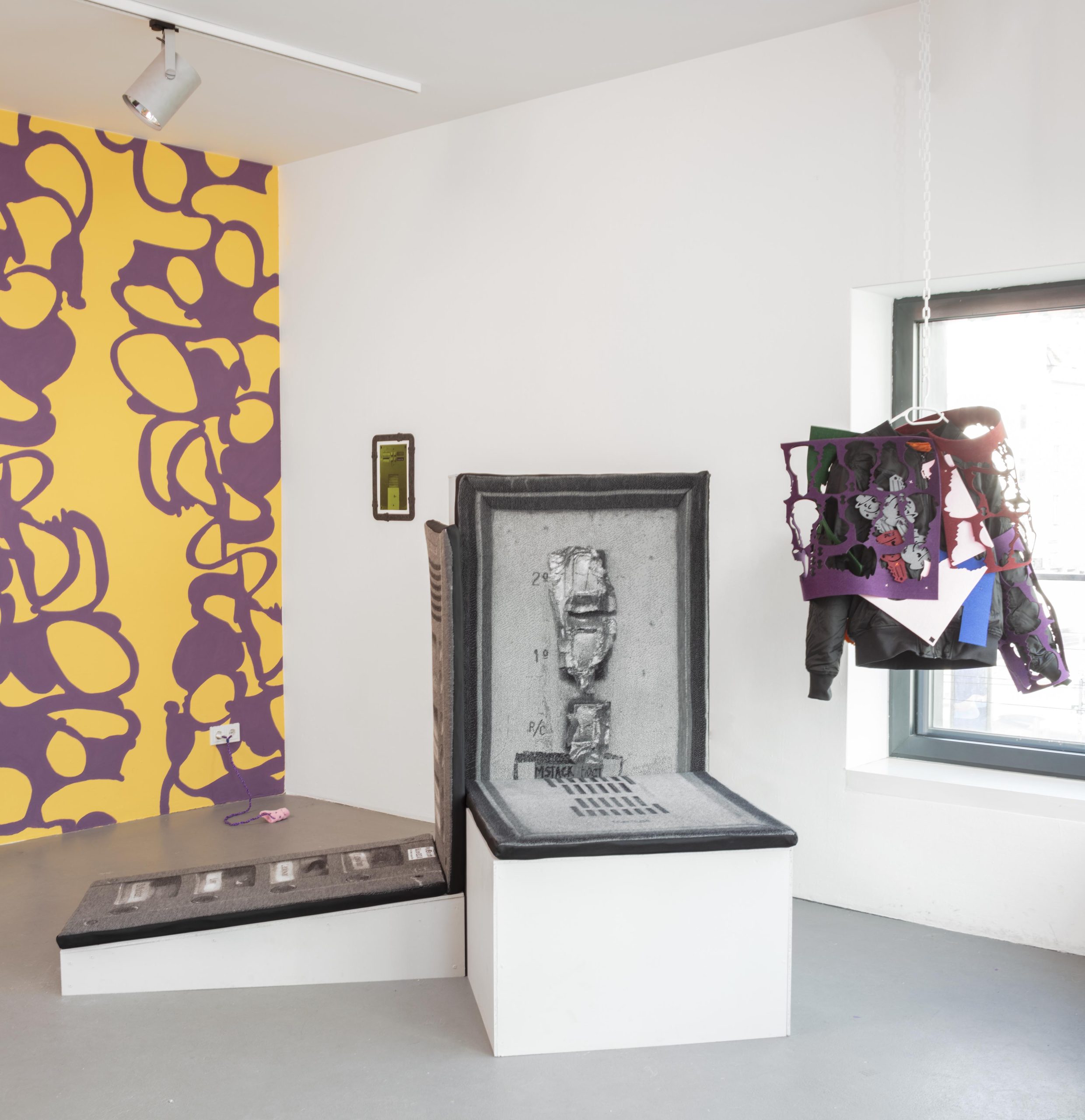
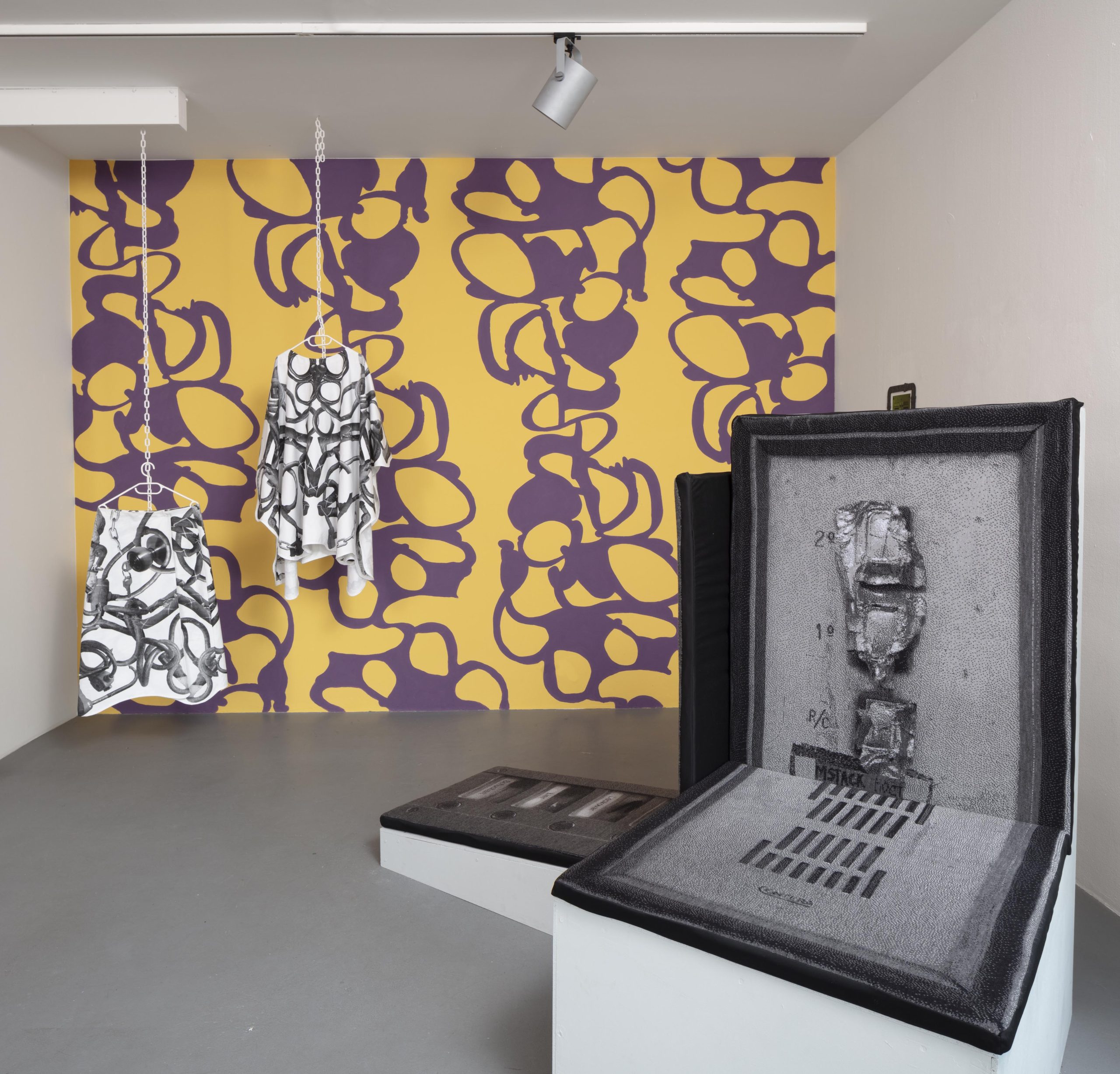
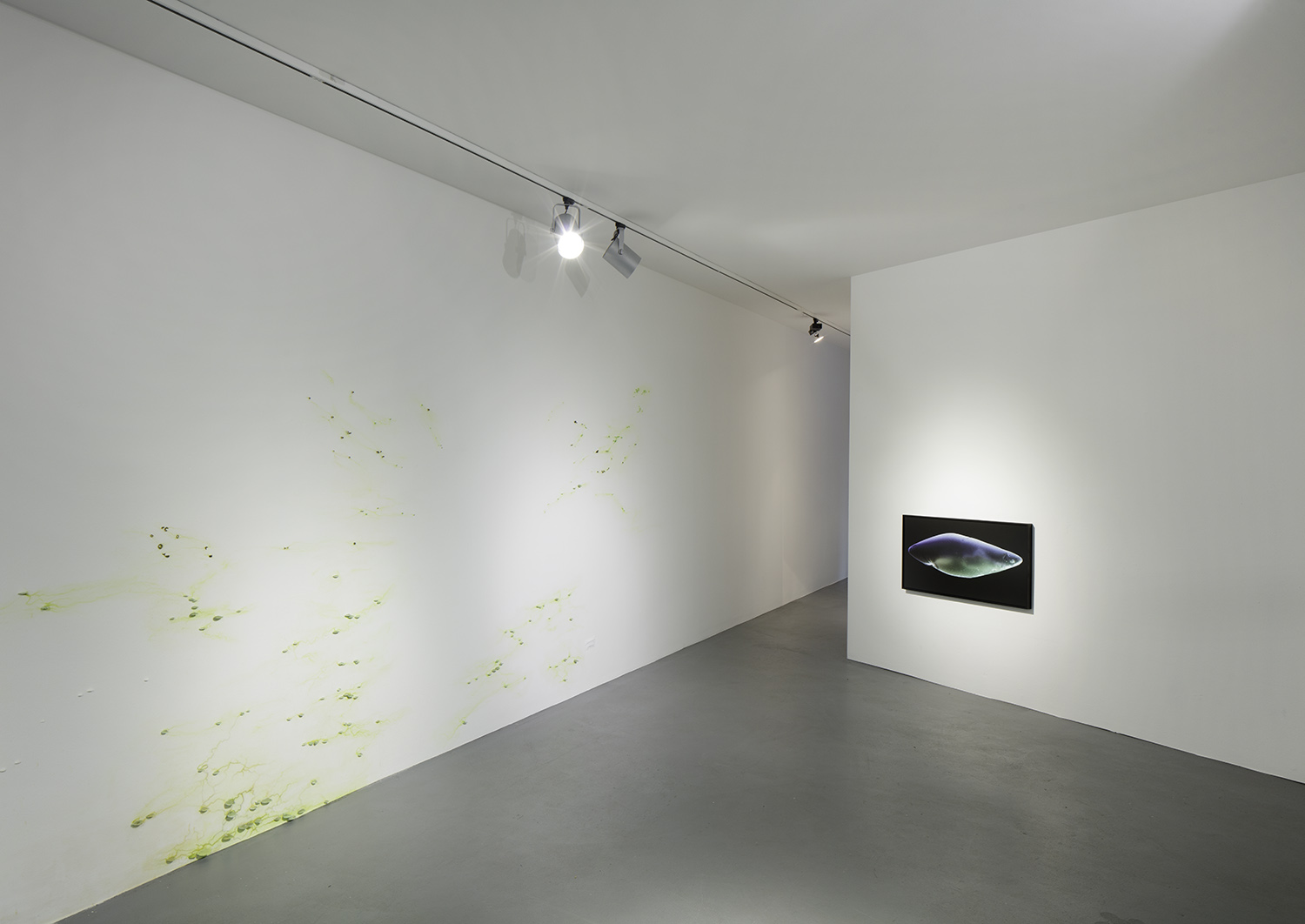
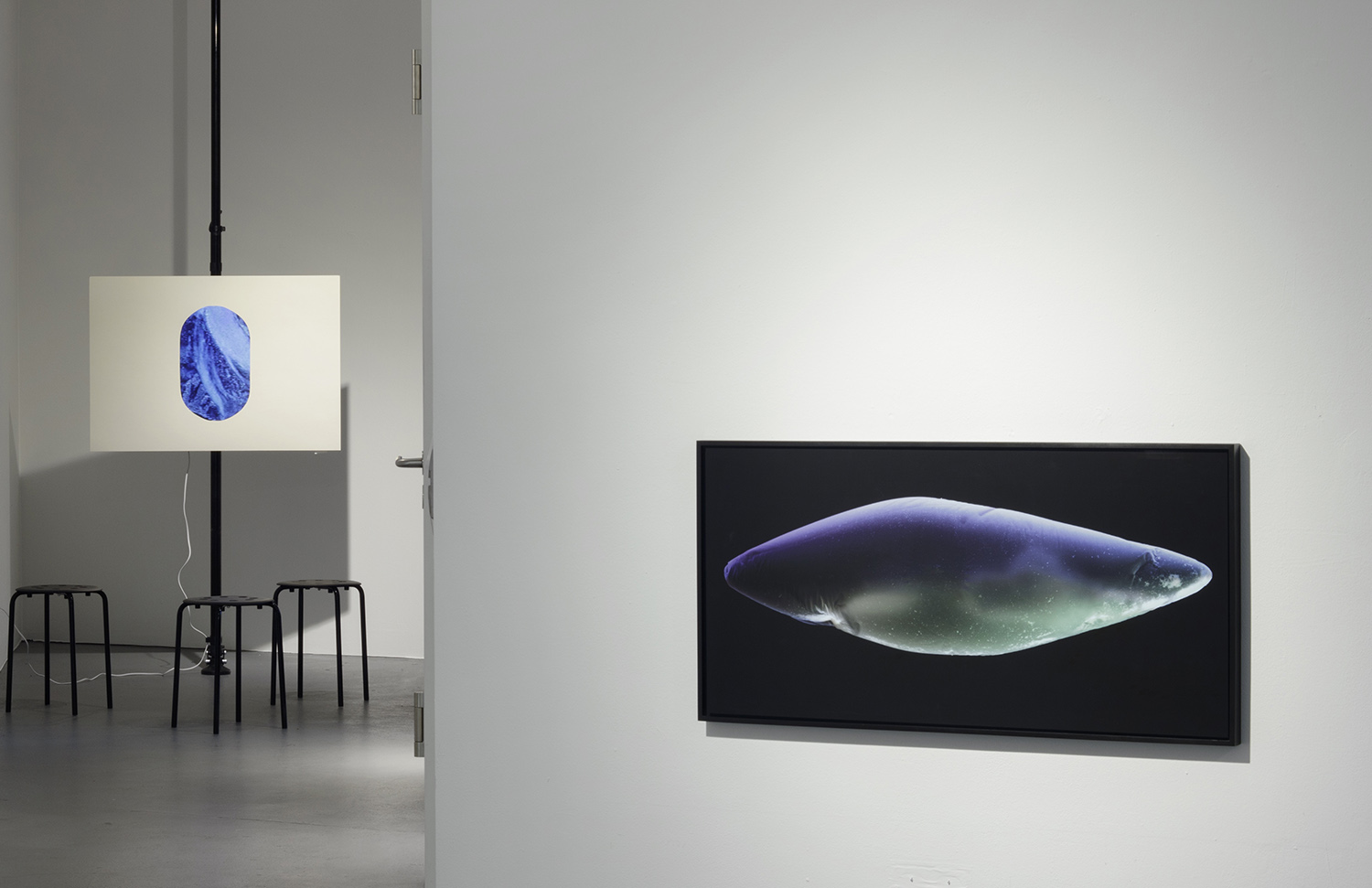
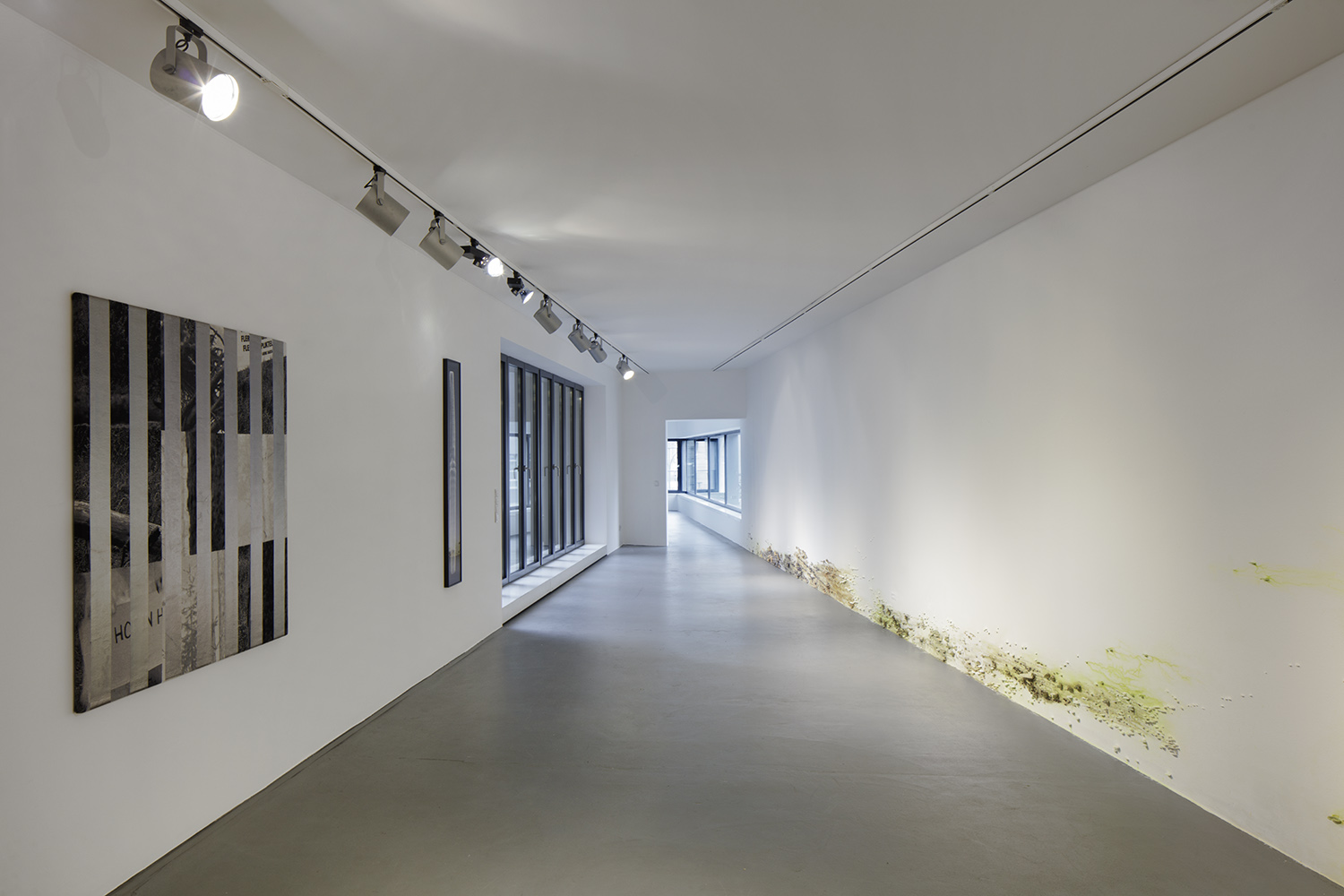
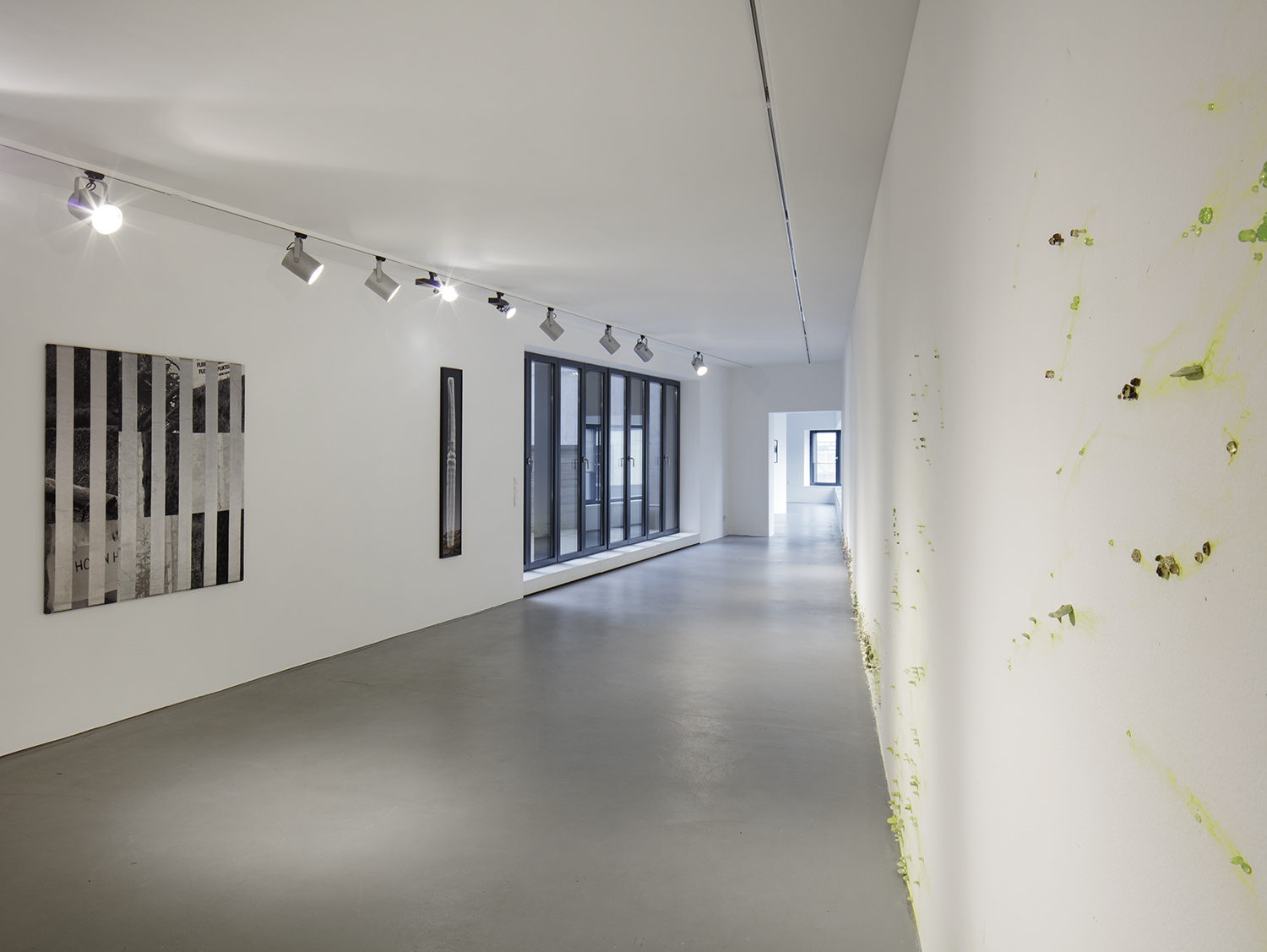
    Enter Henrik Strömberg’s (SE, 1970) immersive installation including sculpture, video, light, sound  and the ‘Bygones be Bygones Bar’.

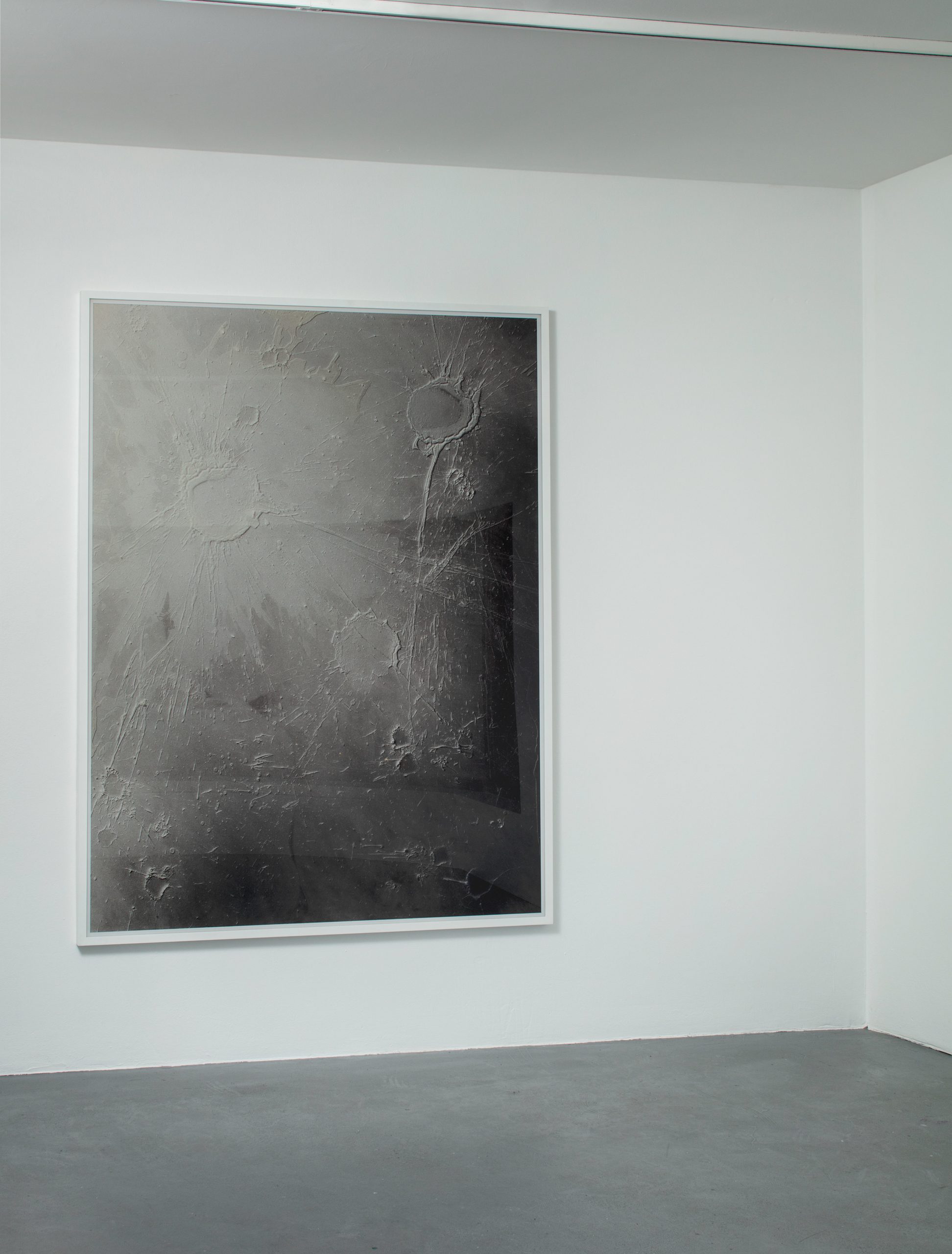
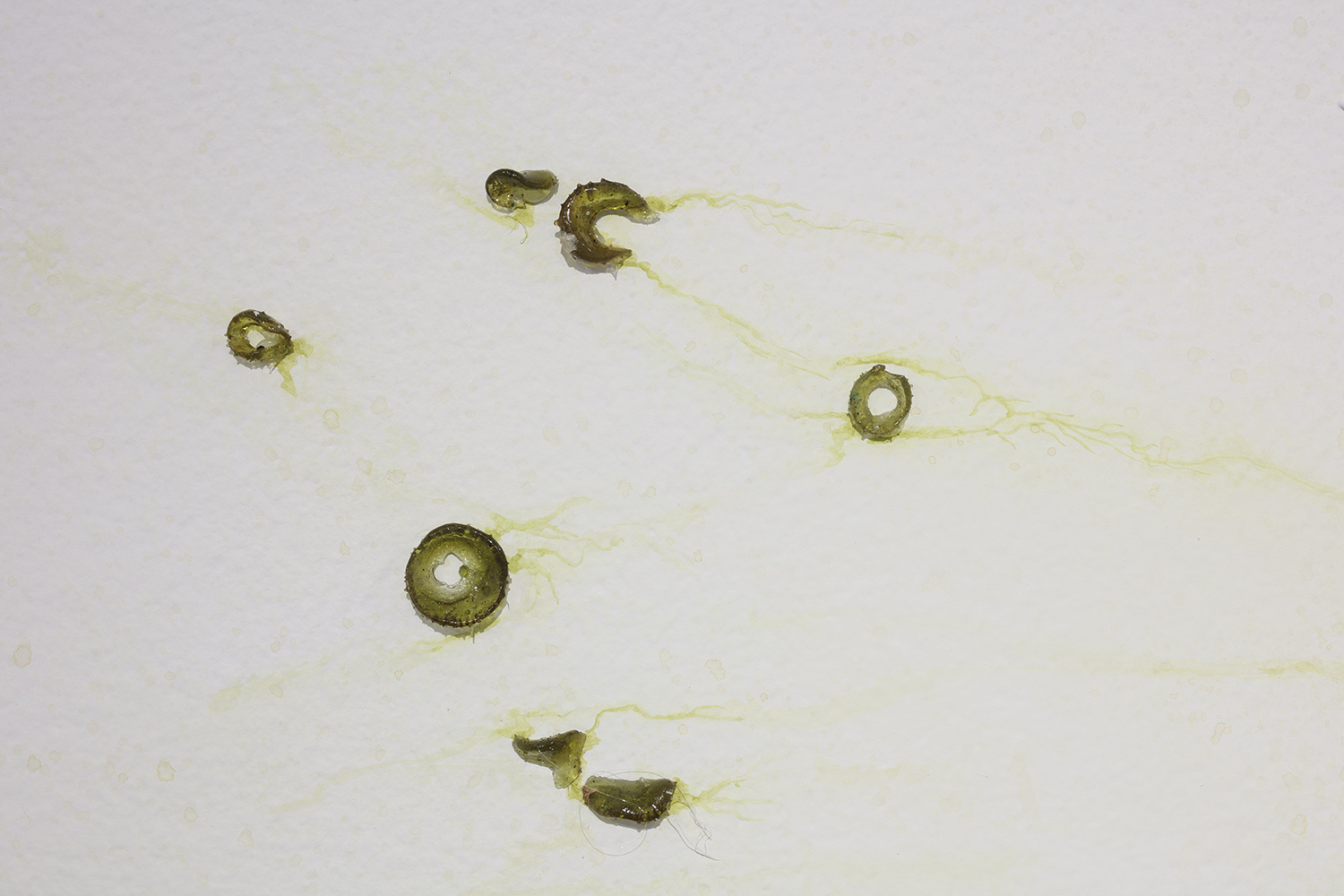
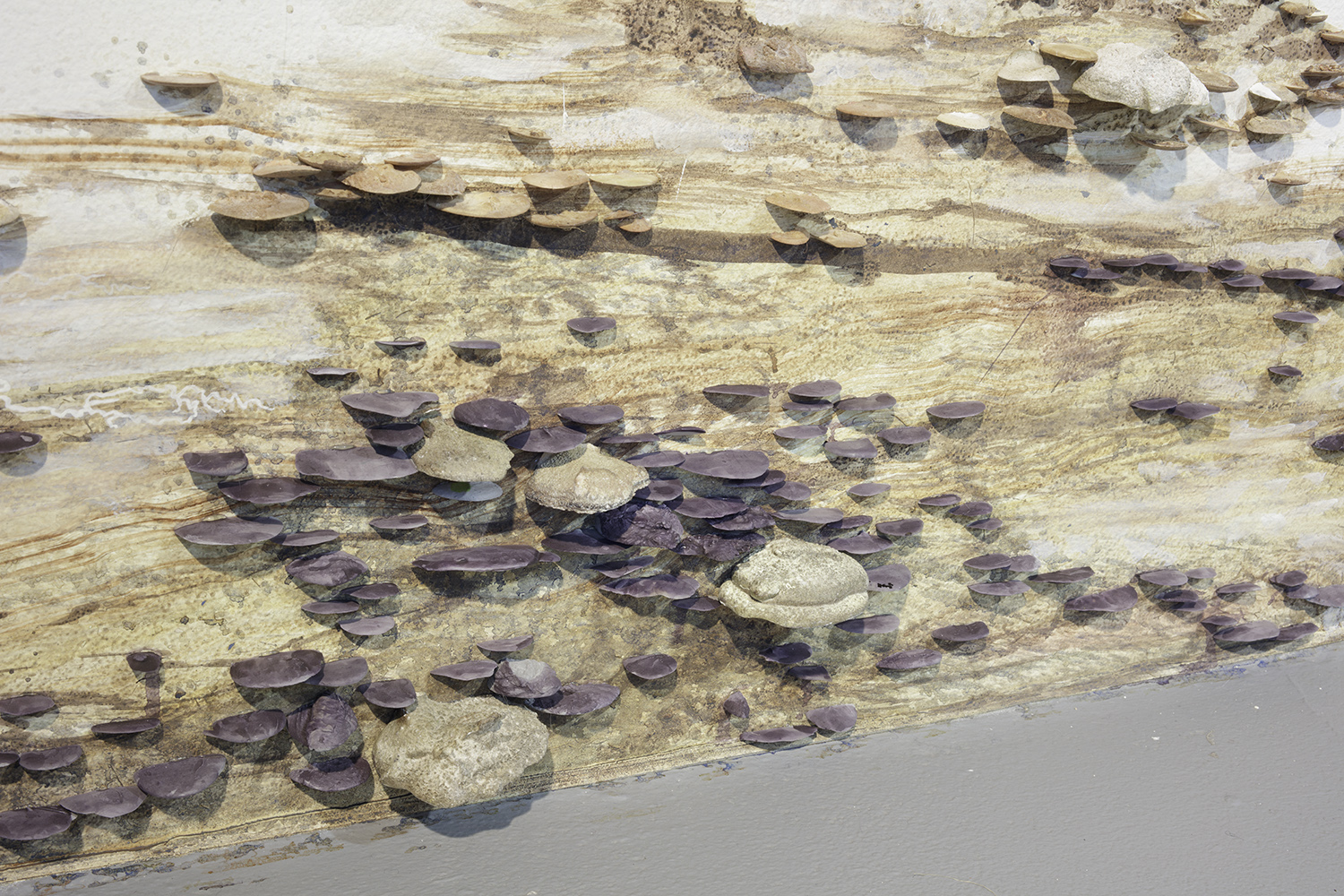
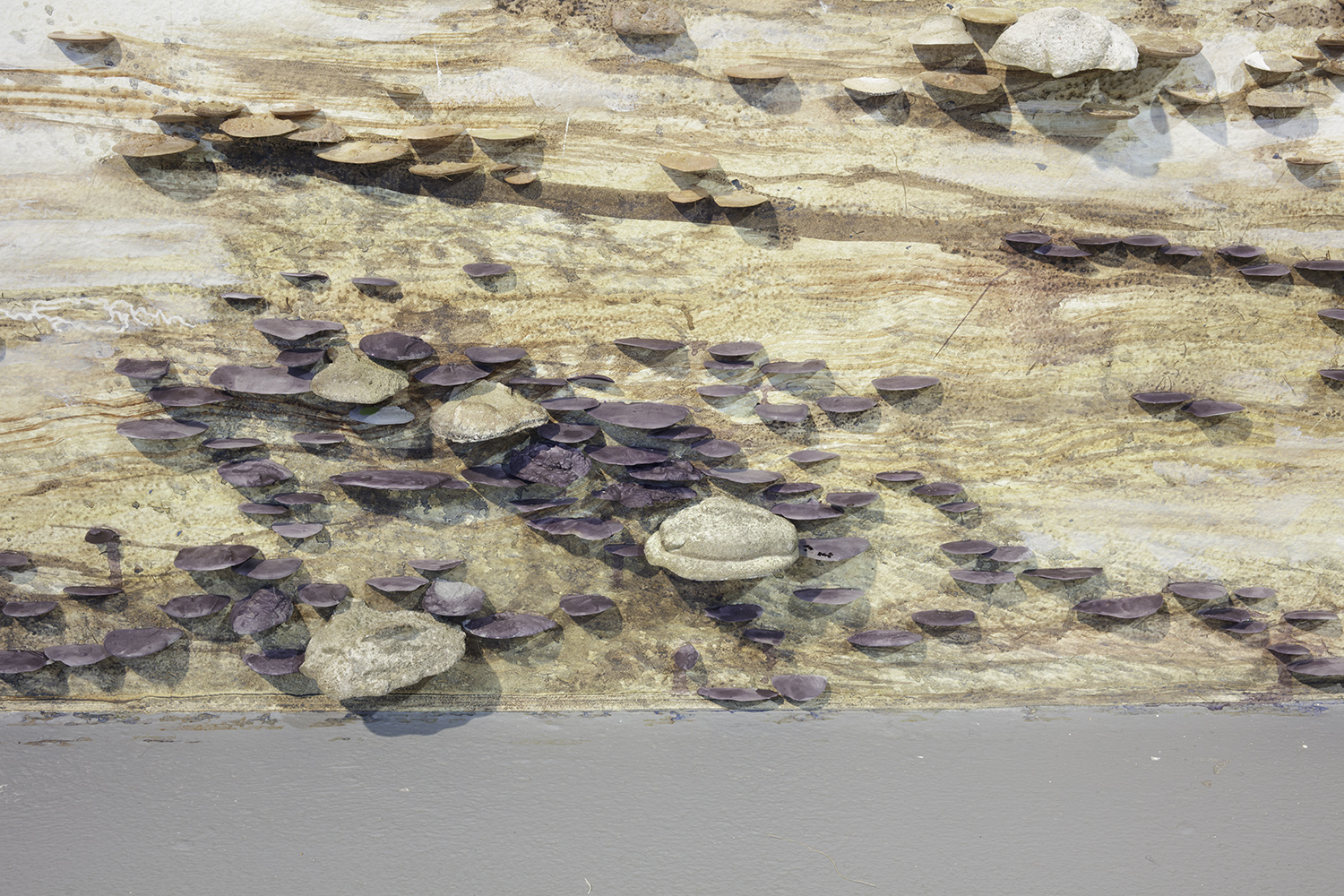
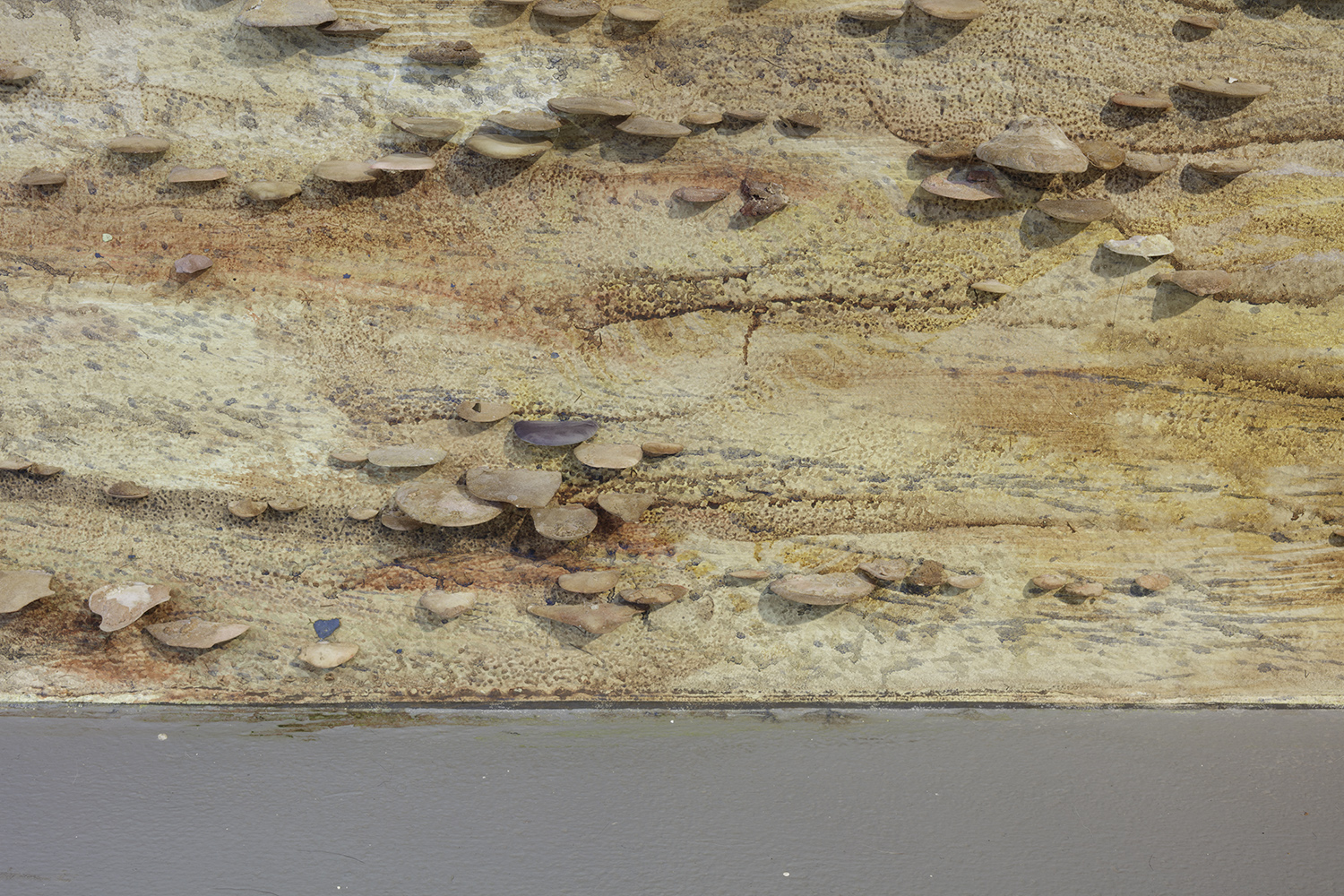
    The show Bygones be bygones or: what’s hidden in the snow, will come to light by thaw explores the ephemeral existence of humanity in relation to its transient, increasingly collapsing environment, the idea of ‘gains and losses’ and the transient, decadent act of mingling, conversing and linger. To keep and let go, to hold on only to forget, to  rediscover, to reassess, the loss of memory and the acquisition of proofs, the growth of technologies and the decay of the environment are all pivotal topics in Strömberg’s artistic process.

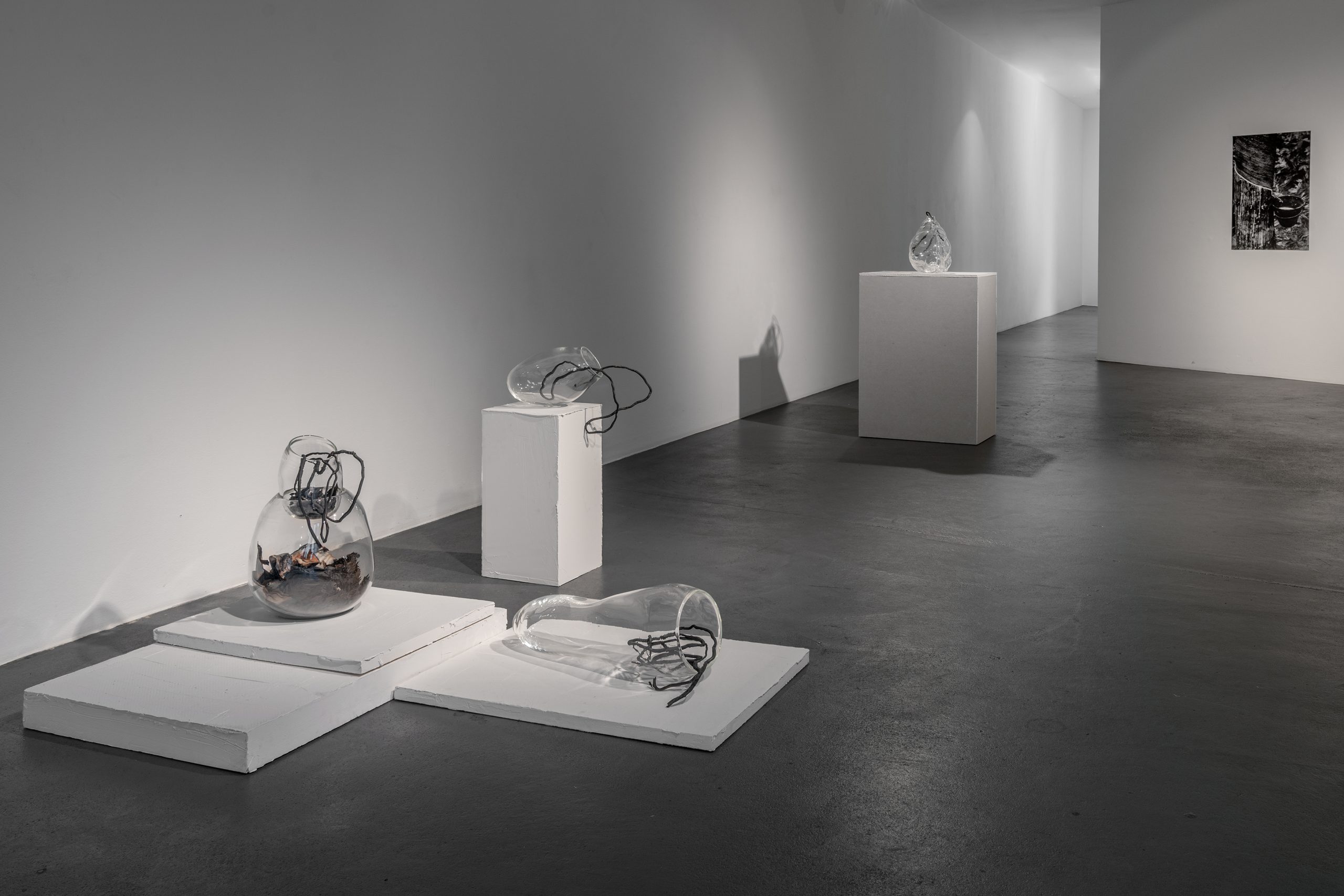
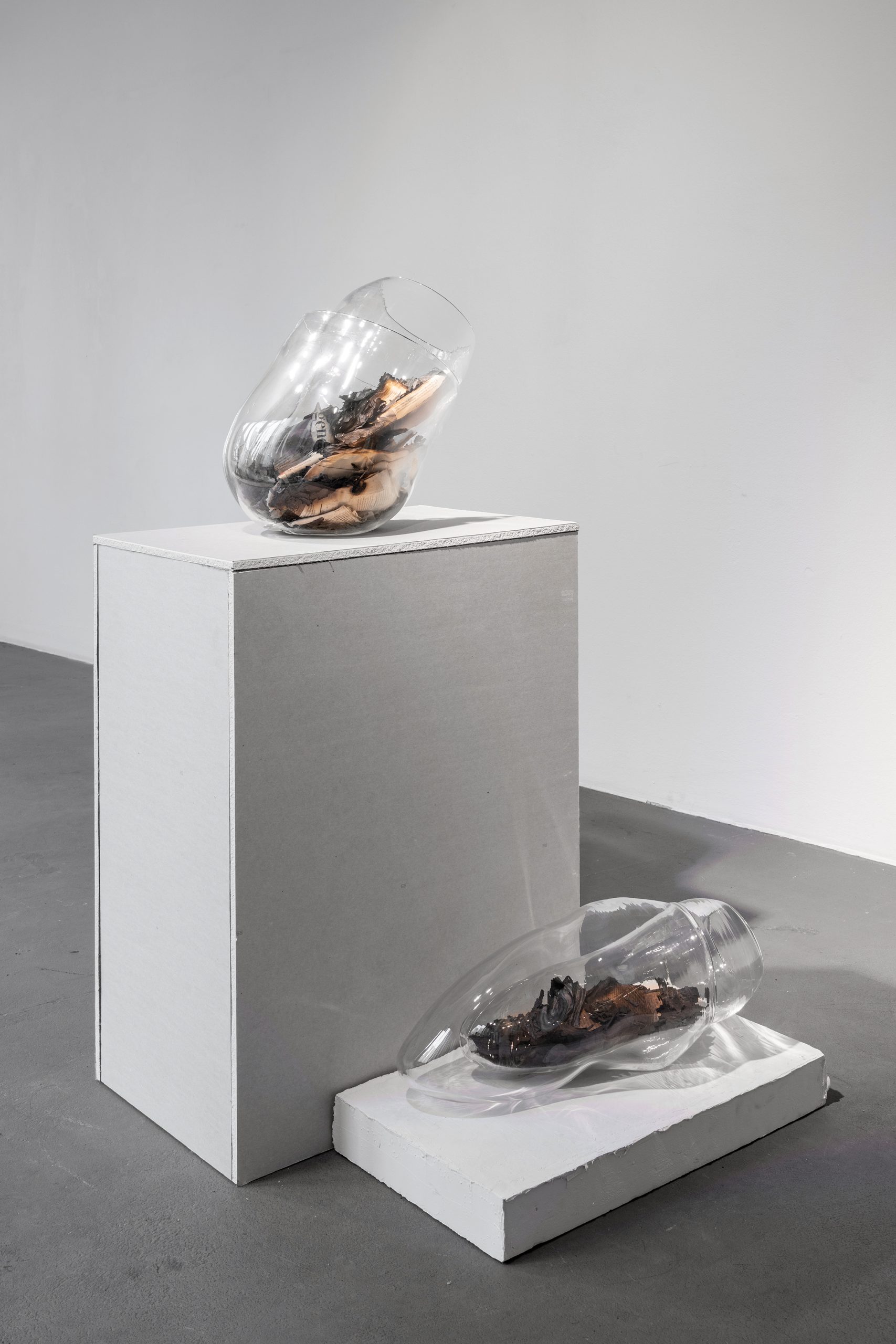
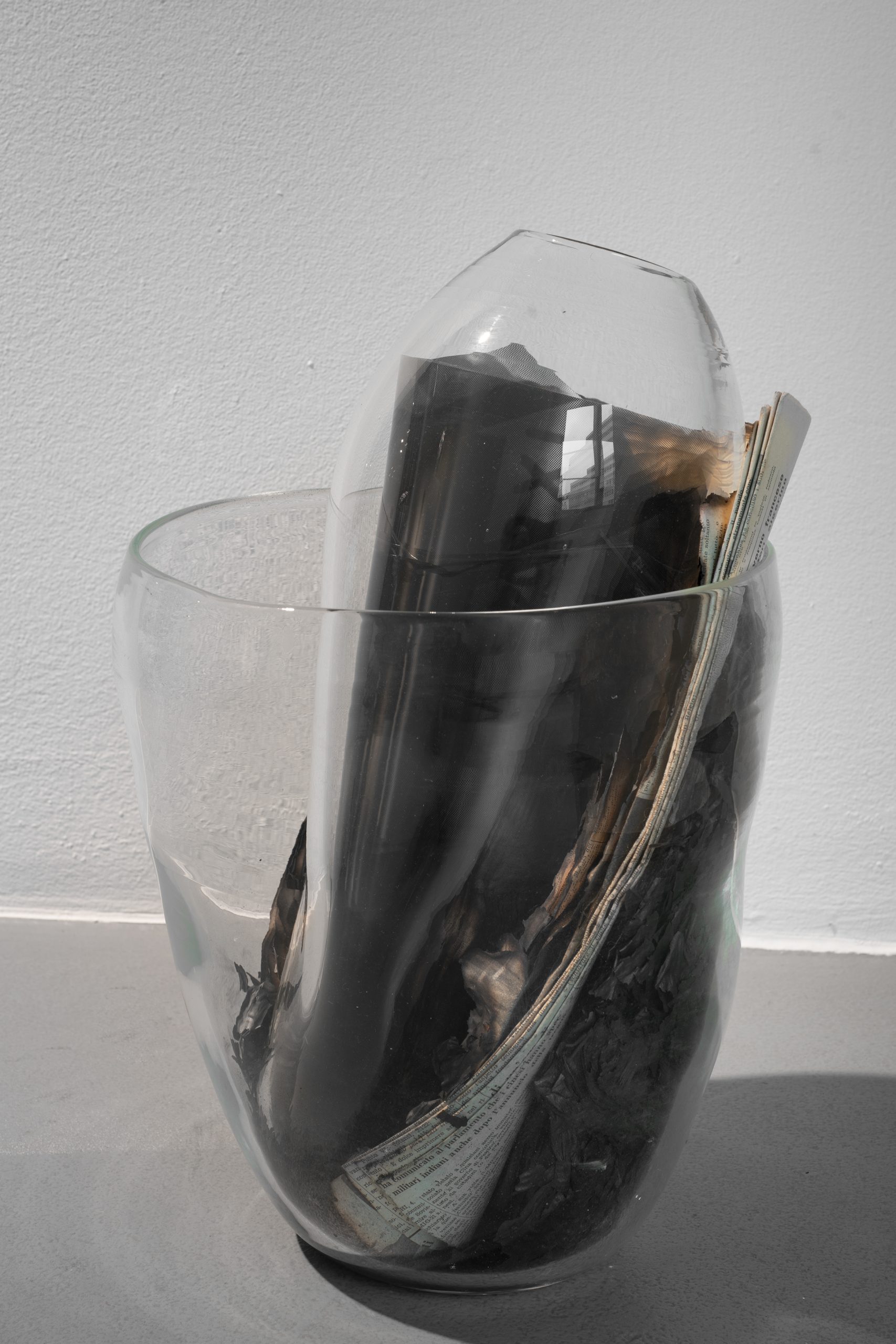
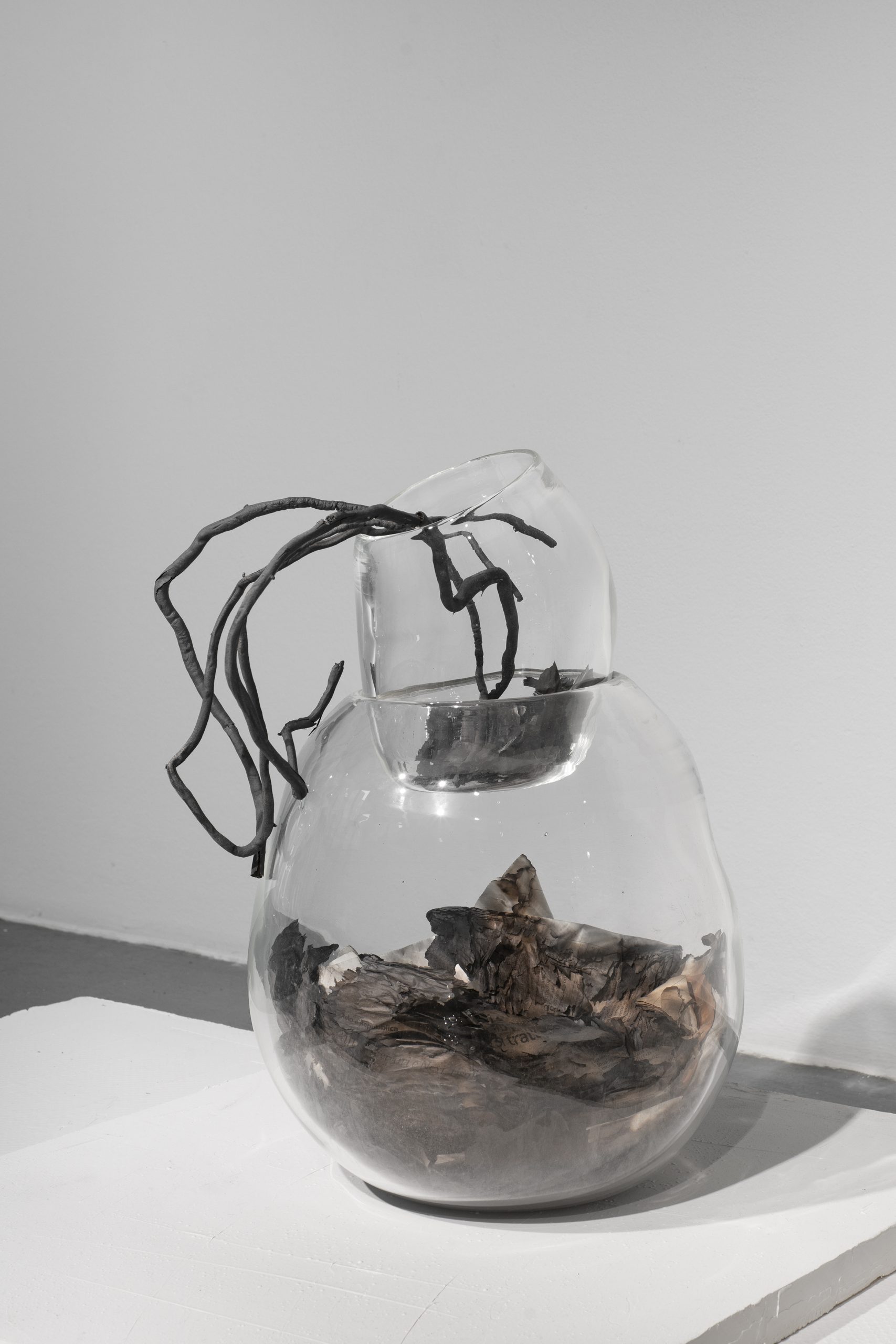
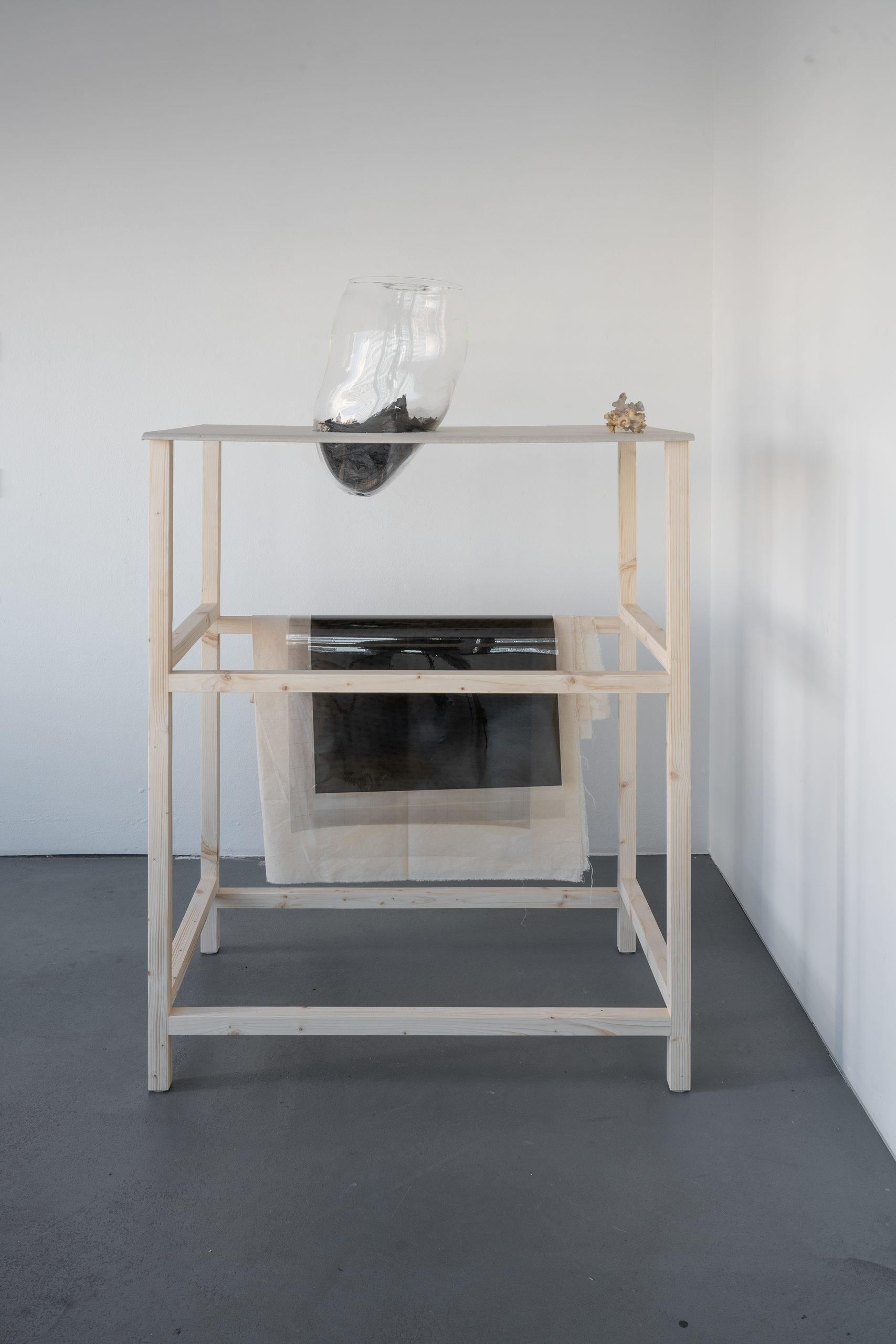
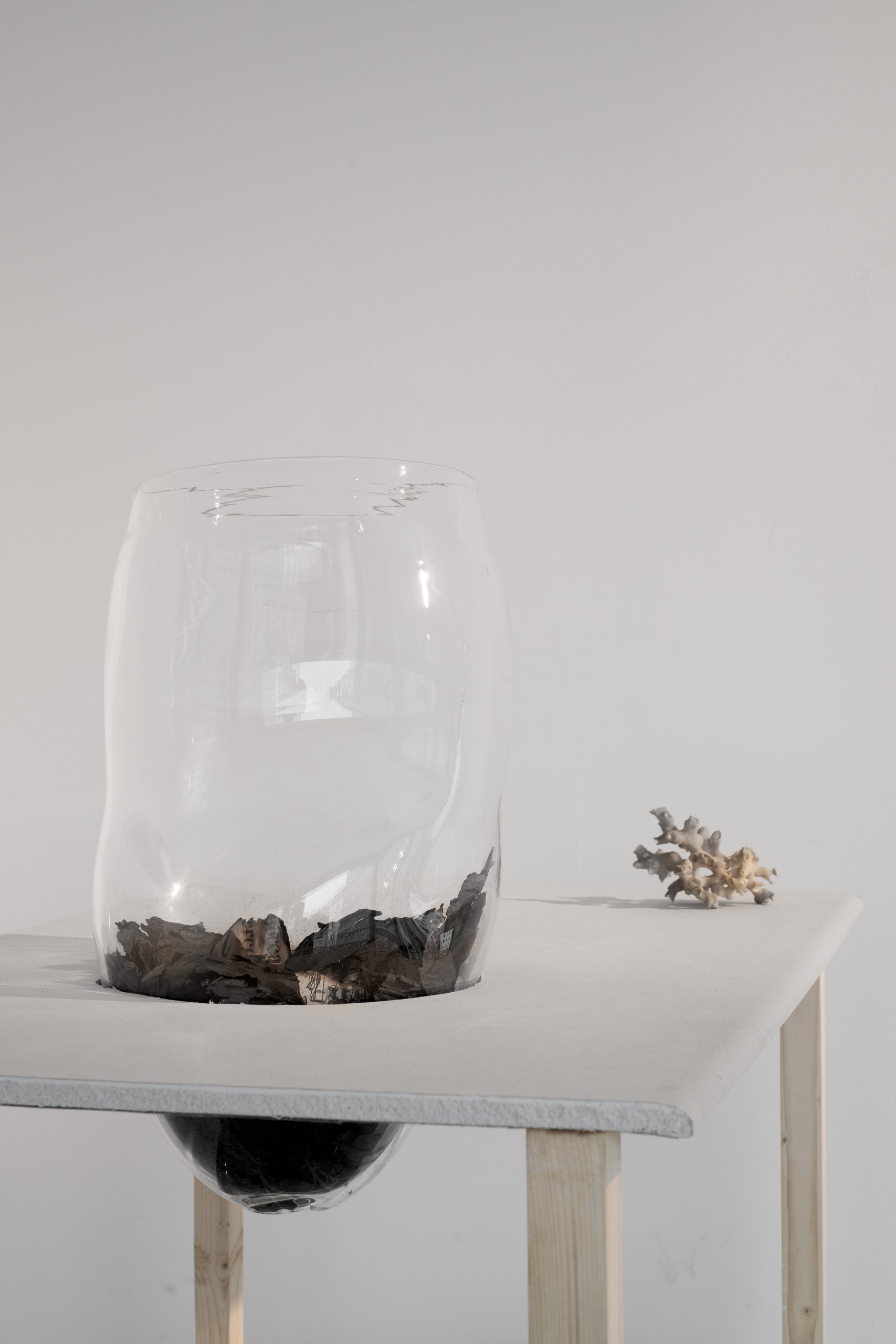
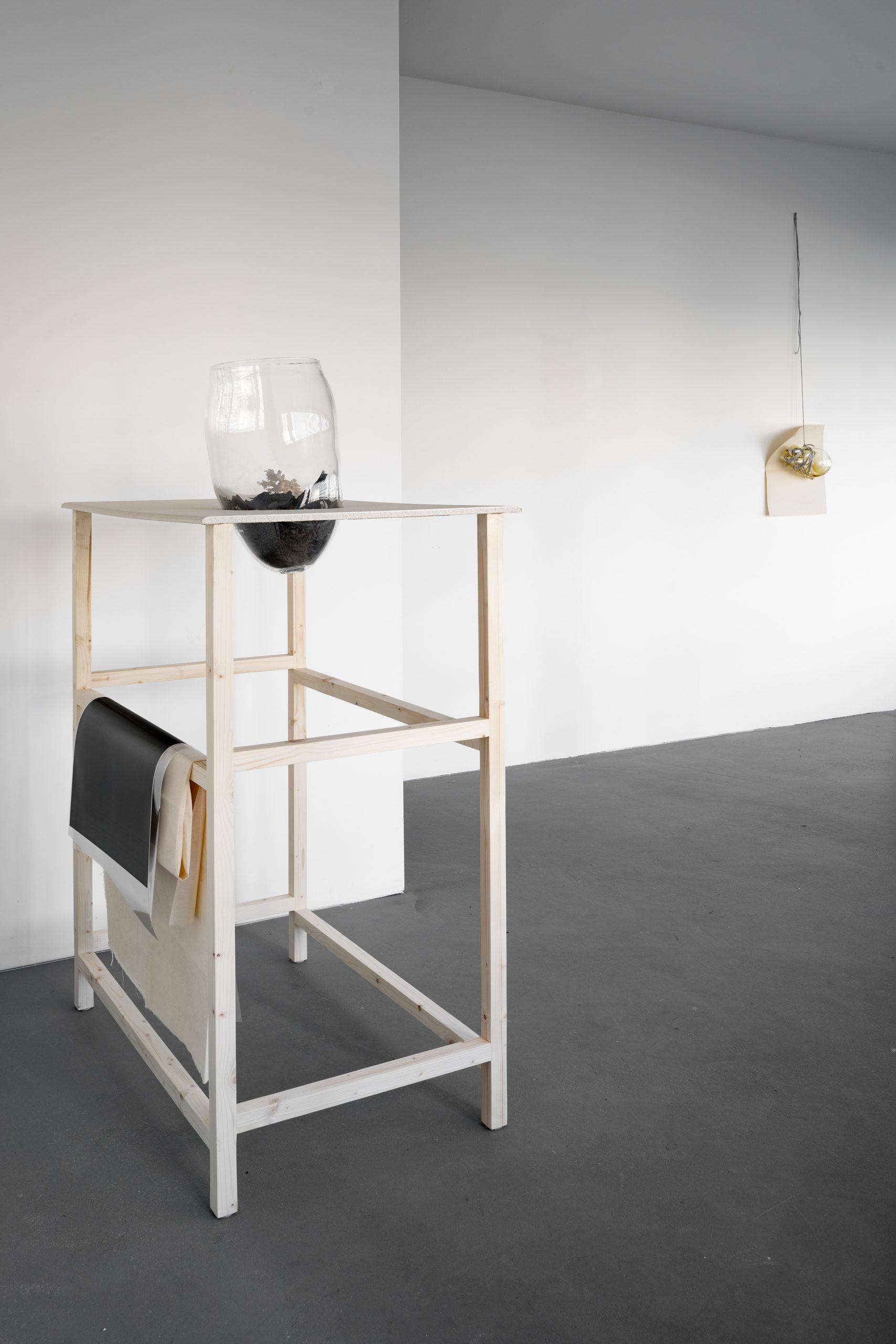
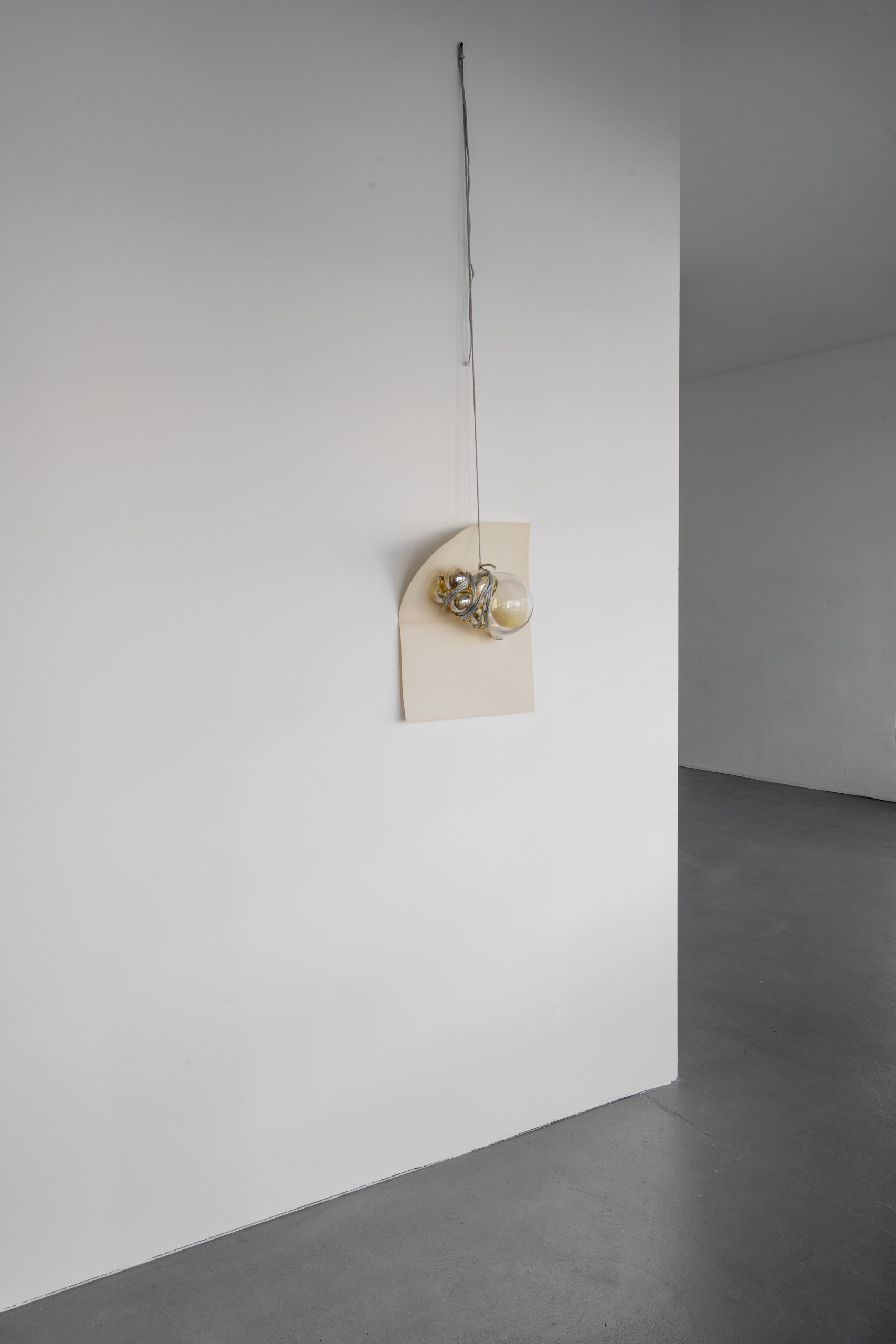
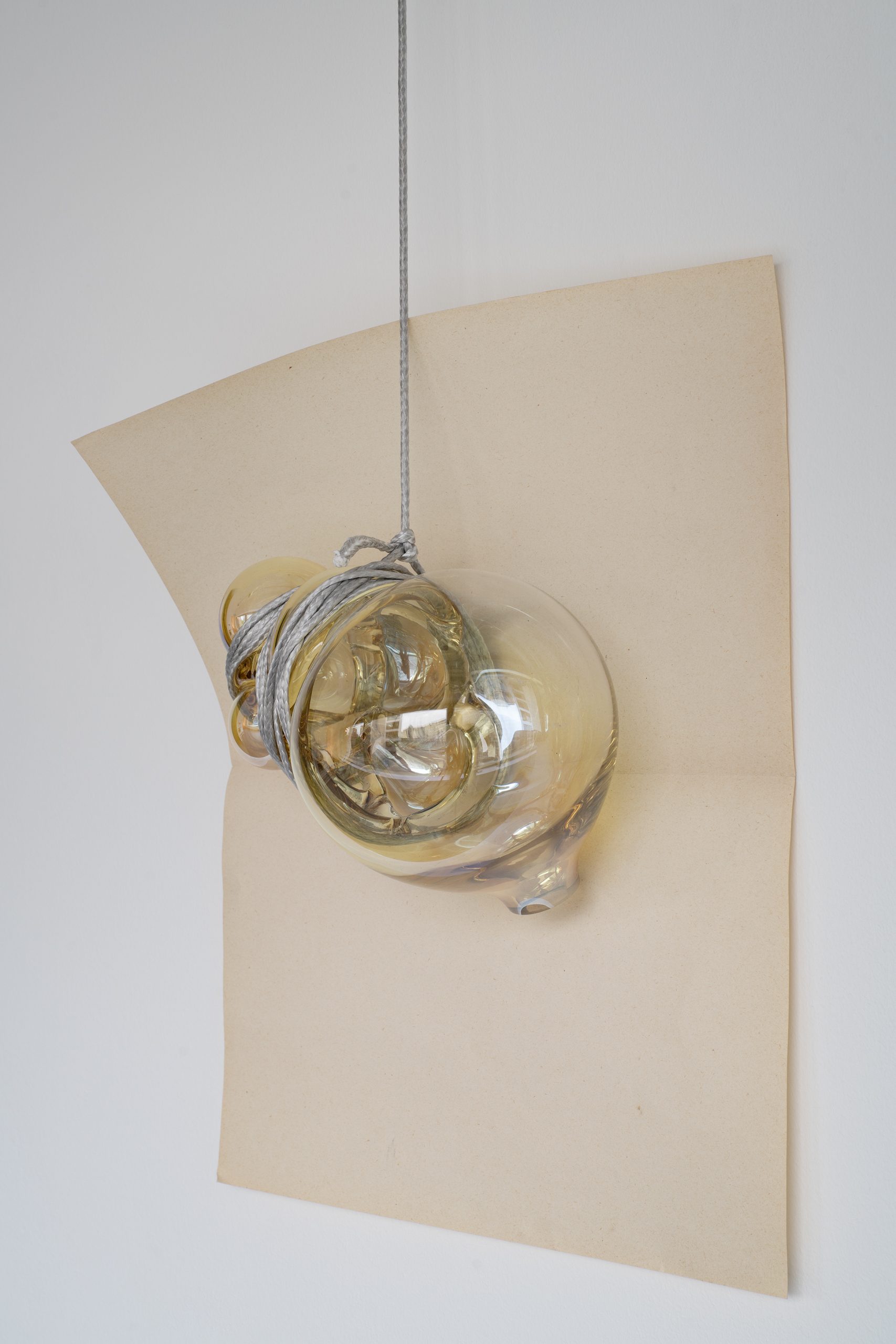
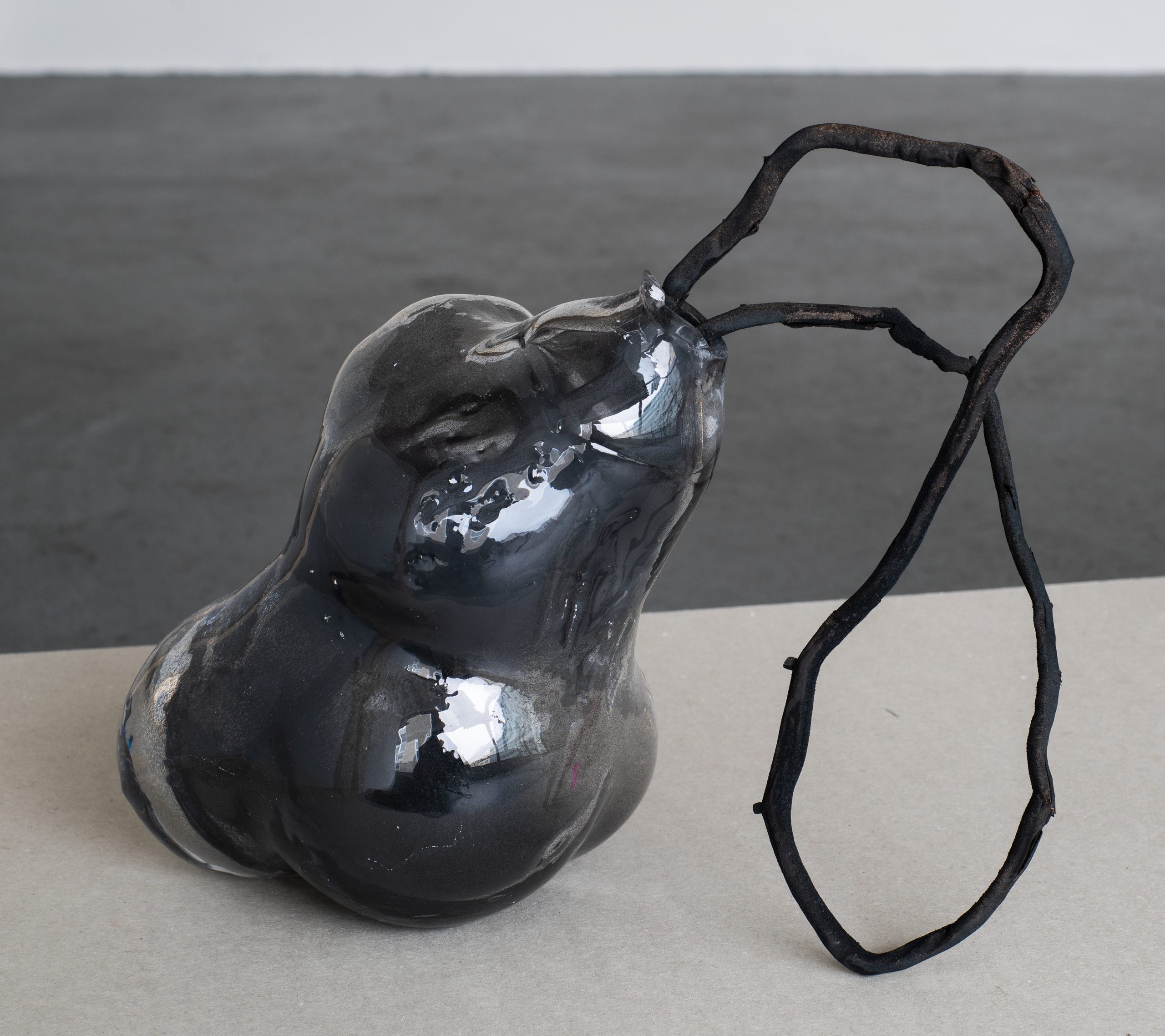
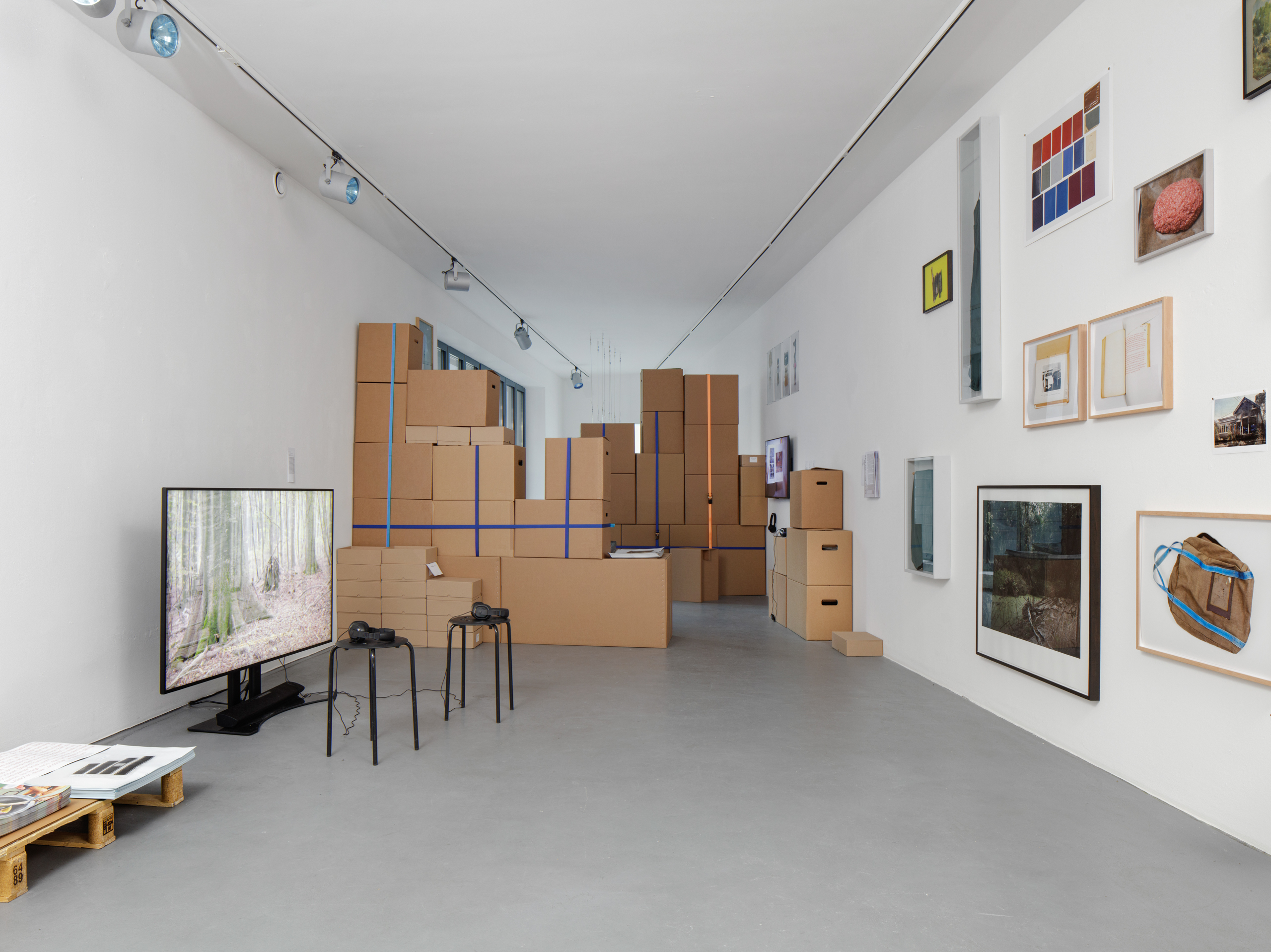
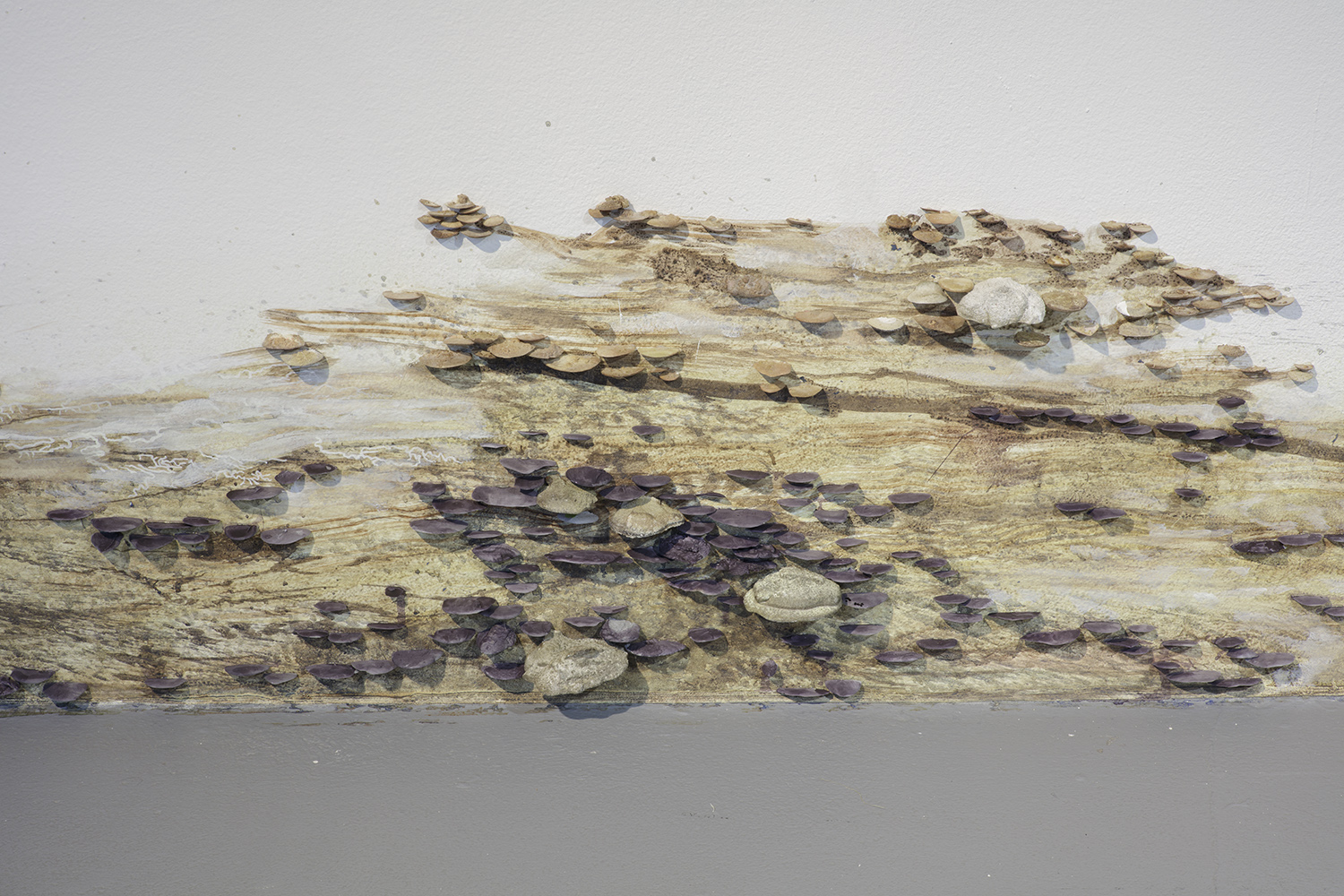
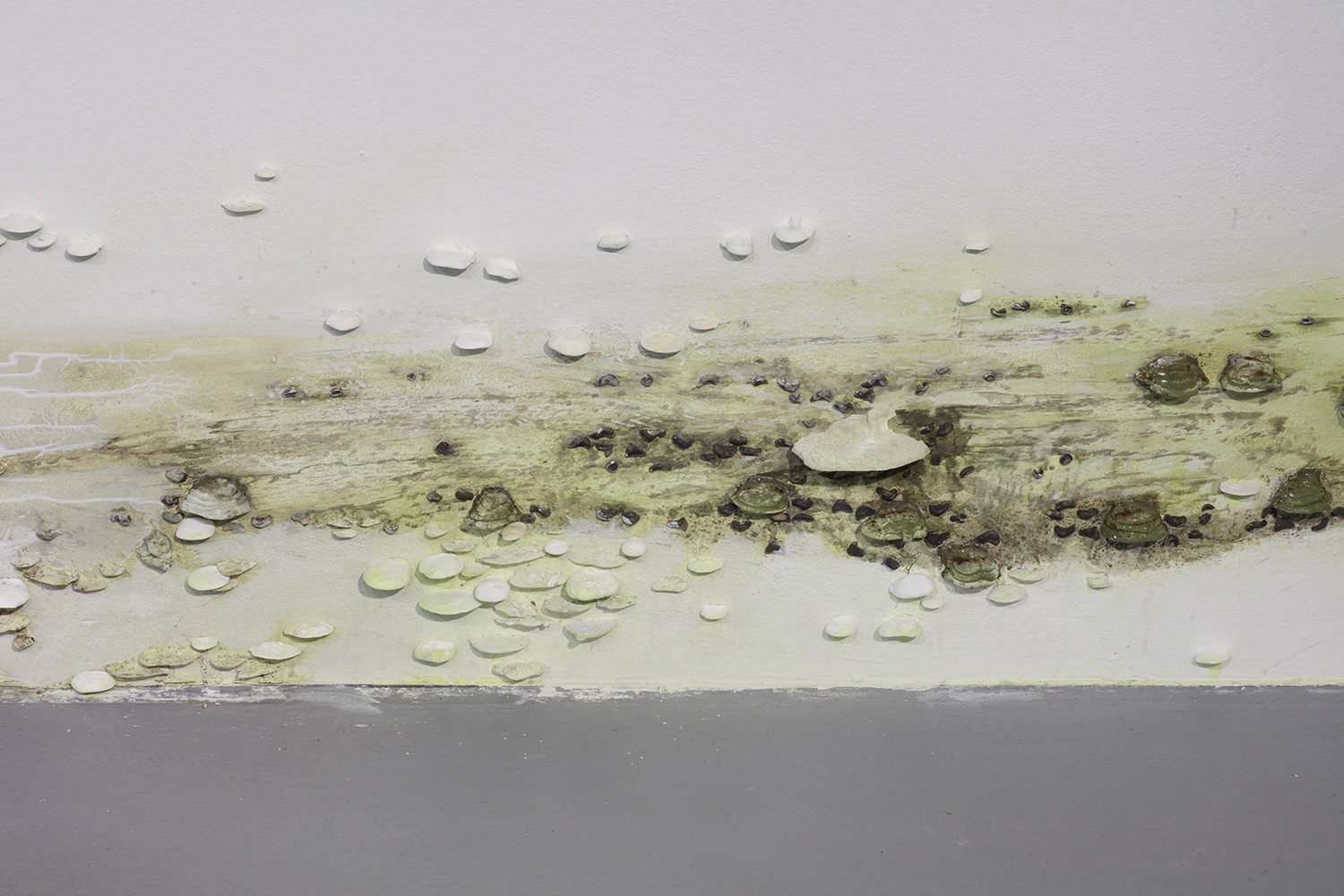
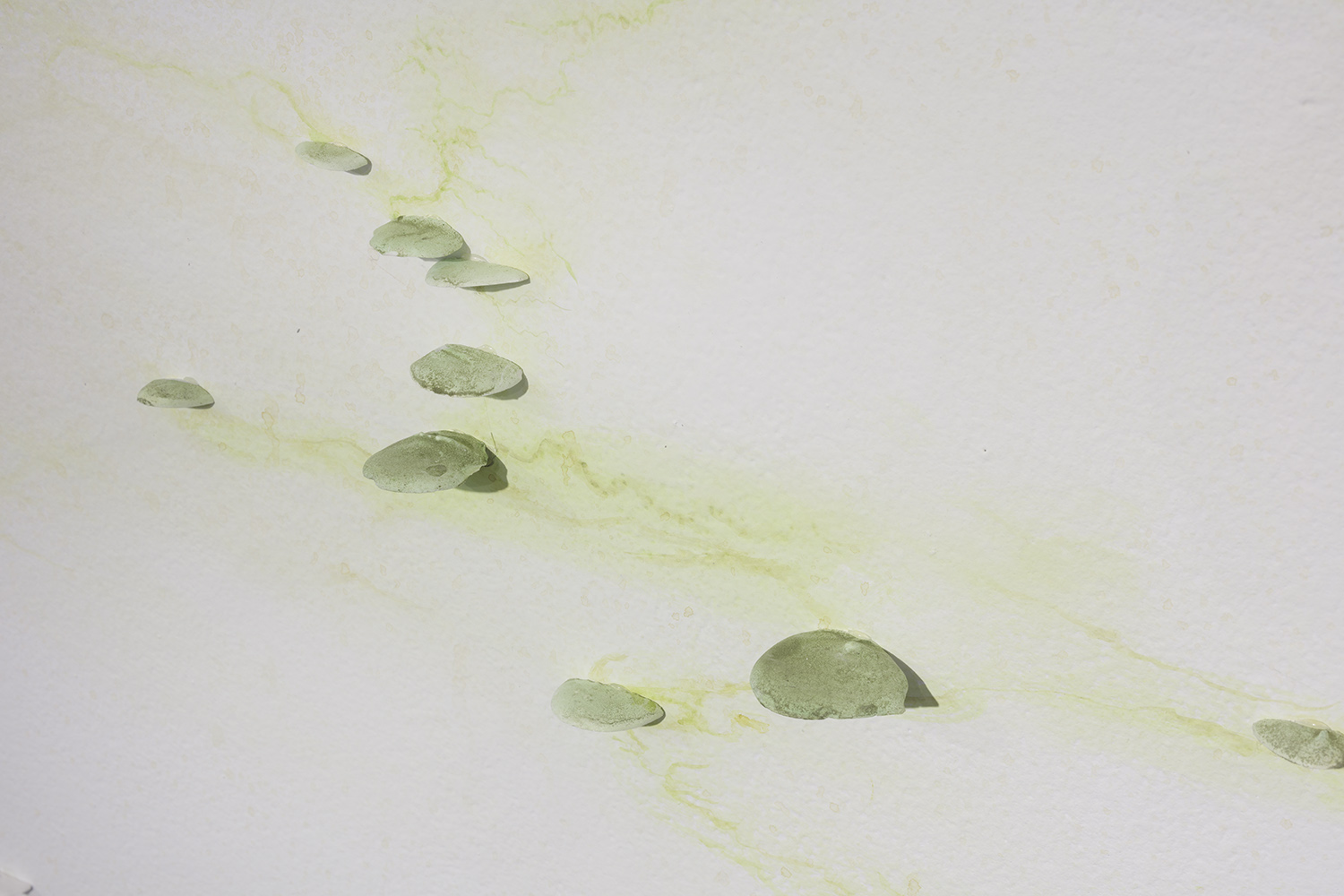
    A landscape of amphora-shaped glass bodies will populate the space, combined with recovered construction elements, plaster, metal and coal to create an expansive installation in which the sculptural volumes will contain and be accumulated with found objects, collected and reused materials and lost, found and repurposed artefacts: burned notebooks and newspapers, corals and branches and vessels of proofs: of memory, history, past and present socio-political entanglements.

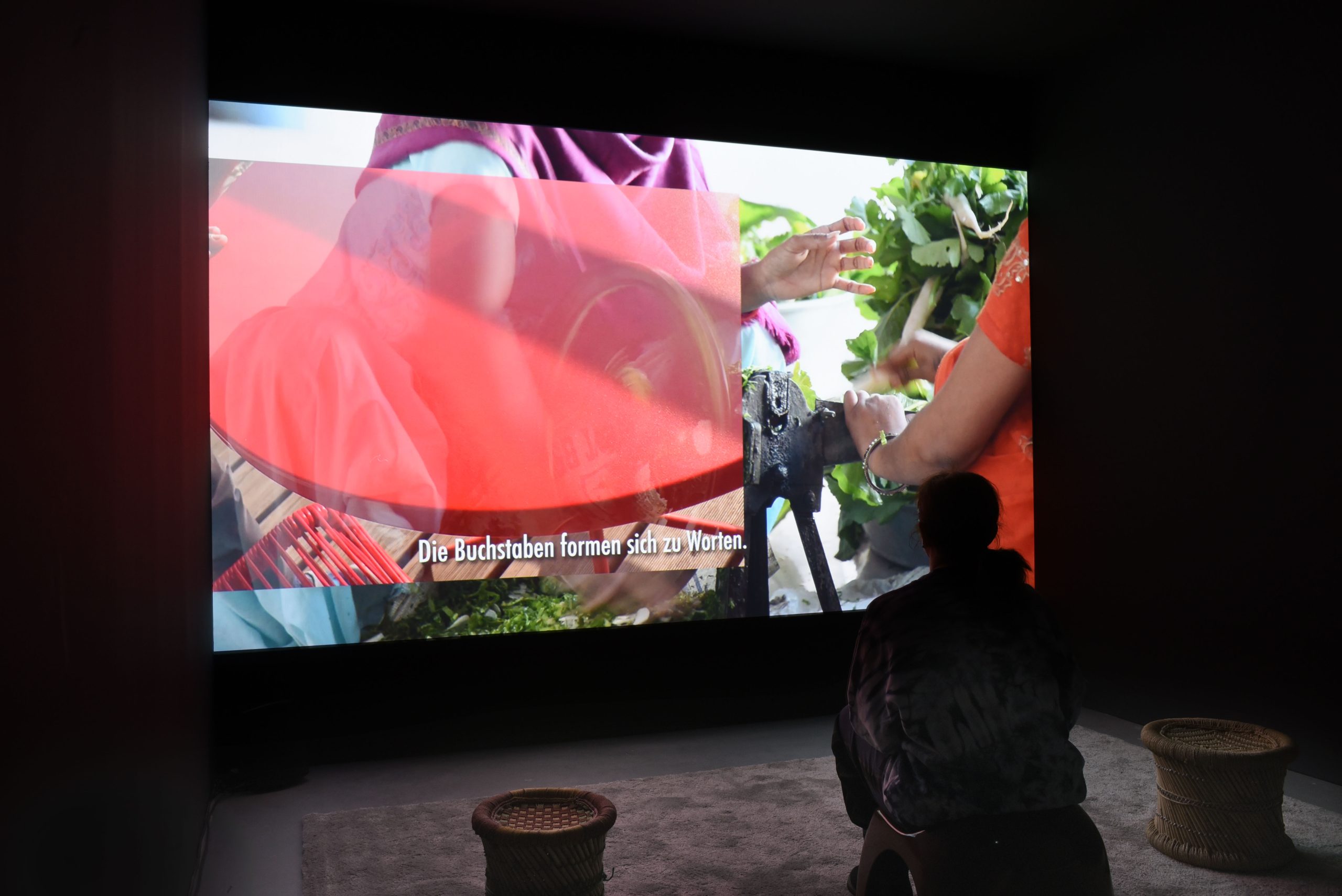
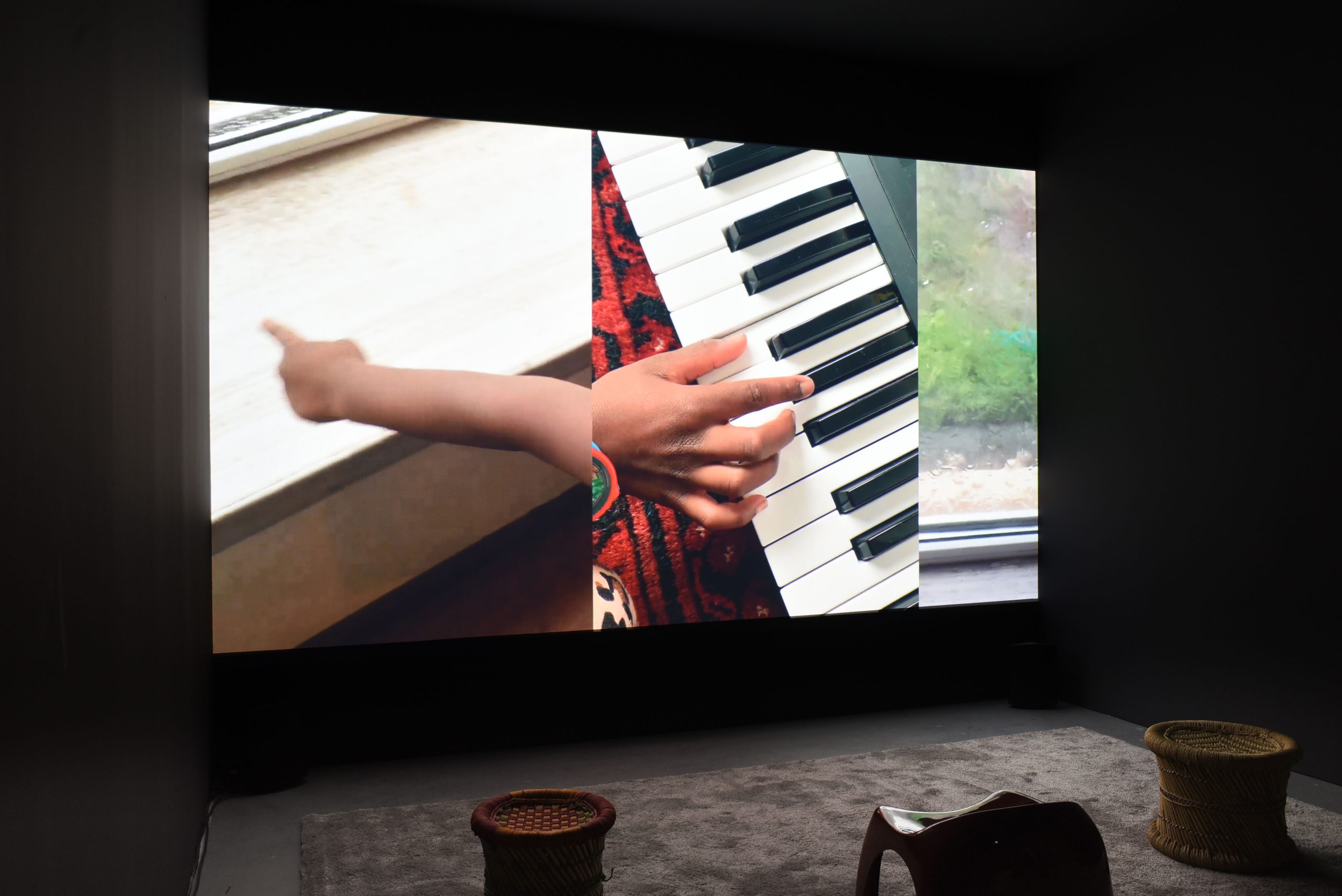
    In the video room a sound and 3-channels video installation will create an all embracing landscape through which the public will be able to walk among flickering images and narratives of times that have been or are still for a moment, while listening to natural and warped, white noise like sounds.

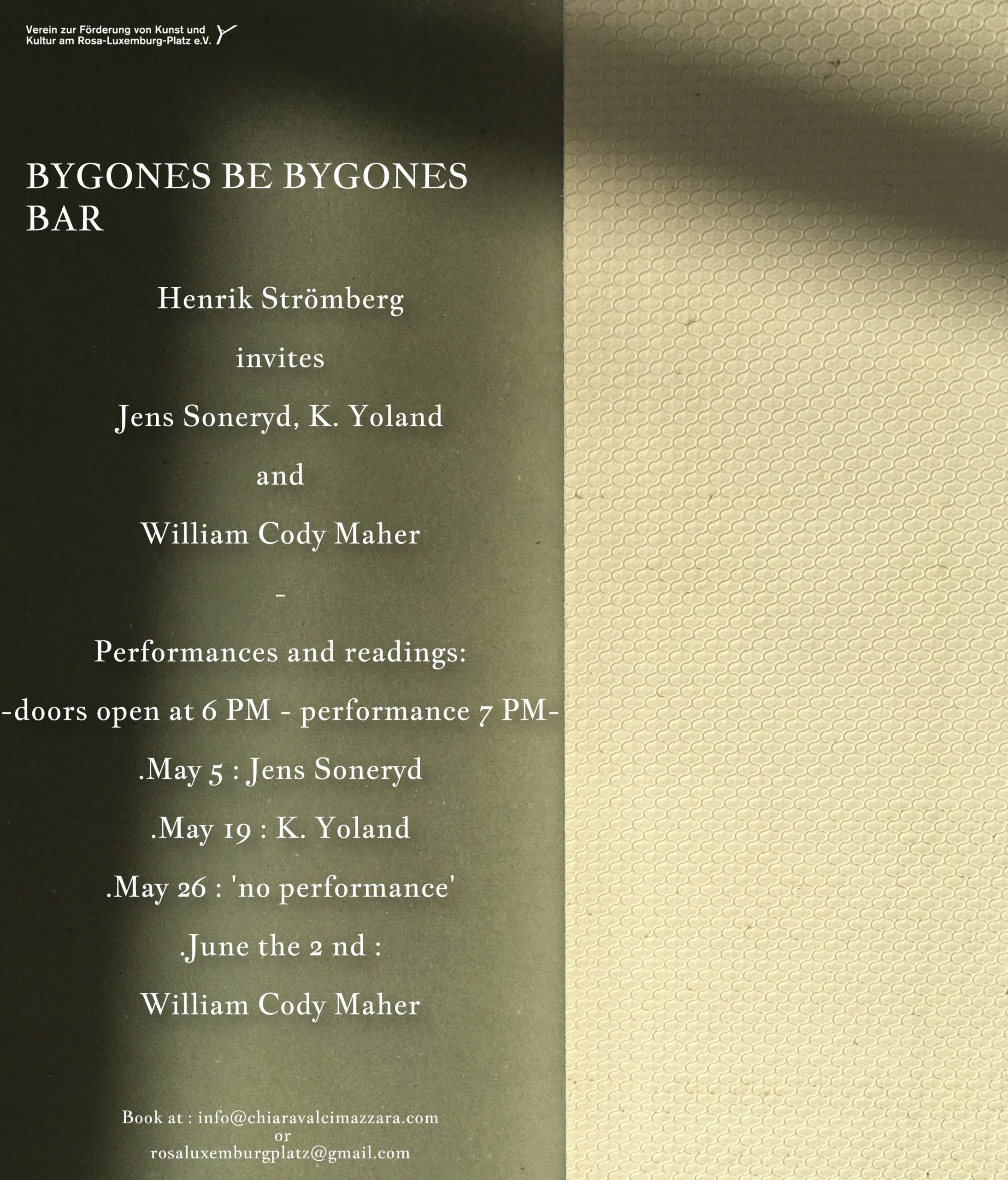
    A program of performances and readings will take place on the stage of a functioning bar counter structure: the “Bygones be Bygones Bar” conceived and realised by the artist for the project. Conversations will be initiated through readings of poetry, philosophy and talks, while the ice cubes are melting in the glasses, the talk will be about the same phenomenon at the poles, about viruses and microorganisms, about memory and loss, about surveillance and much more.

    The special guests invited are: William Cody Maher, Jens Soneryd and K.Yoland.

    The exhibition and performance program  are curated by Susanne Prinz and Chiara Valci Mazzara.

    Henrik Strömberg: (N.Mellby, SE, 1970) lives and works in Berlin. He studied Photography and History of Photography at FAMU, Academy of Performing Arts Prague, Czech Republic and at the Camberwell College of Art, London, UK.

    William Cody Maher  is a writer and performance artist. He lives and works in Berlin. 

    Jens Soneryd  is a poet who writes, edits, curates and collects plants. He is based in Bernshammar and Berlin.

    K.Yoland  is a site-specific and transdisciplinary artist – based in London – examining territoriality and power across large scale terrain, urban planning and international borders. 

    Der Beitrag von K.Yoland (GB) enstand im Zusammenhang mit dem Netzwerkprojekt Spatial Practices in Art and Architecture for Empathetic Exchange (SpaceX), das durch das EU-Programm Horizon 2020 – MSCA gefördert wird. / The inteventon of K.Yoland (GB) connected to the network project Spatial Practices in Art and Architecture for Empathetic Exchange (SpaceX), funded by the EU programme Horizon 2020 – MSCA

    Opening and bar are kindly supported by:
  • Stefan Sehler
    THERE, PARTS

    |

    Stefan Sehler: THERE, PARTS

    Öffnungszeiten Do-Sa 14-18 h und auf Anfrage / Opening hours Thu-Sa 2-6 pm and on request

    Zu sehen / On view: 12.3.-15.4.23

    Öffnungszeiten Do-Sa 14-18 h und auf Anfrage / Opening hours Thu-Sa 2-6 pm and on request

    Samstag, den 8.4.23 bleibt der Kunstverein geschlossen. / The Kunstverein will be closed on Saturday, 8.4.23

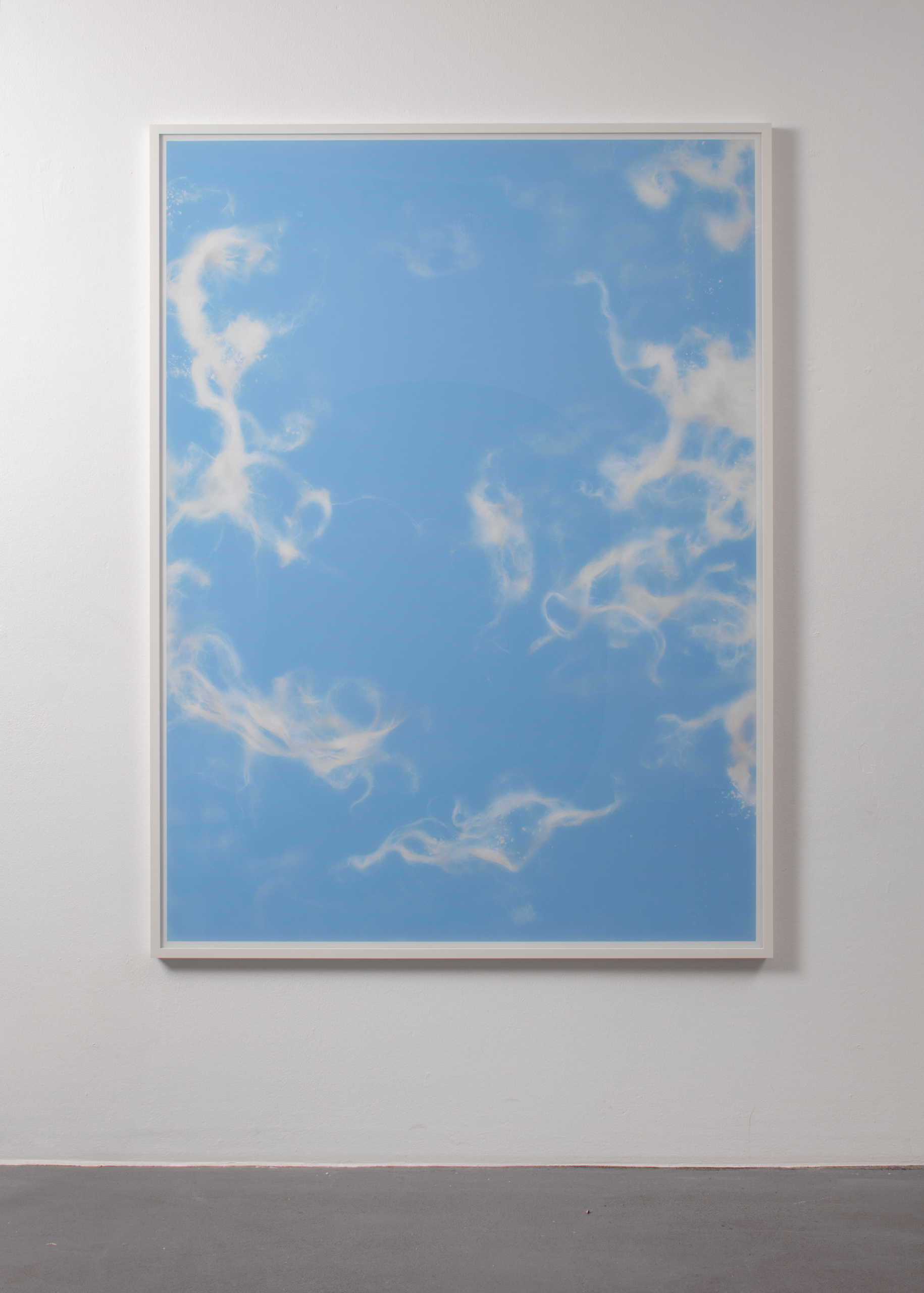
    Das Motiv der Wolken ist nicht nur kunsthistorisch ein präsentes Motiv, sondern unterhält historische Folgelinien von der Astronomie und Wissenschaftsgeschichte allgemein bis in die Strukturen der kapitalistischen und neoliberalen Gesellschaft. Die Spur reicht von modernen Vermessungsdrang der ersten Versuche der Ballonpioniere des 19. Jahrhunderts, in das Innere der Wolke vorzudringen, bis zum aktuellen Traum von Big Data und KI.

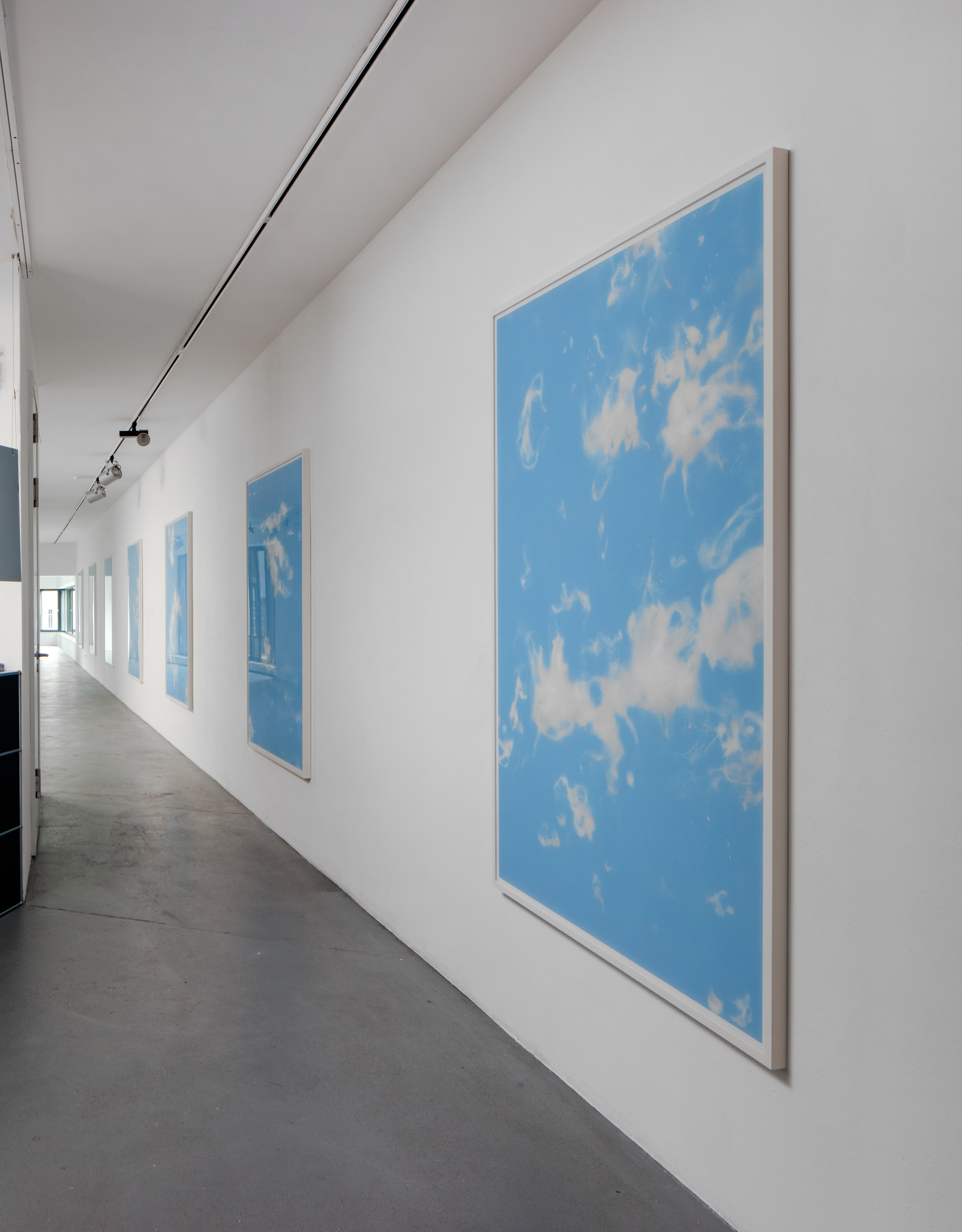
    In seiner Soloausstellung experimentiert Stefan Sehler mit dem Bild der Wolke als eigenständiges Argument. Quasi immateriell und bis heute nicht berechenbar ist sie das ideale Motiv für seine Bilder, deren Gegen- ständlichkeit sich bei genauerem Studium als eine scheinbare erweist. Dabei spielt er mit den Prämissen zeitgenössischer Malerei und entwickelt, mit der Kunst- geschichte als notwendige Folie, eine Reihe leichter, schwebender Naturaufnahmen. Doch was sich aus der Ferne wie eine Fotografie ausnimmt, löst sich bei der Annäherung in reine Farbe auf. Aus dem ästhe- tischen Genuss und der Faszination der gelungenen Täuschung des Auges durch eine kunstvoll konstruierte Wirklichkeit erwächst so eine sanfte Melancholie. Das ist Malerei, verstanden als vollkommen autonomes Mittel. Die Tatsache, dass der gesamte künstlerische Prozess rückwärts abläuft, weil die Bilder hinter Glas gemalt werden und somit Vorder- und Hintergrund in umgekehrter Reihenfolge entstehen, verbindet in idea- ler Weise das Mittel mit dem Motiv. Beides zugleich erweist sich als ein einzigartig geeignetes Bild für die Beweglichkeit des visuellen Denkens; für die Leichtig- keit, mit der ein Bild bestehende gedankliche Verbin- dungen aufruft, andere vernebelt und neue vorschlägt.

    Die Ausstellung is von Susanne Prinz kuratiert.

    Eng.:The motif of clouds is not only present in the history of art, but also maintains historical lines of succession from astronomy and the history of science in general to the structures of capitalist and neoliberal society.

    In his solo exhibition, Stefan Sehler experiments with the image of the cloud as an argument in its own right. Quasi immaterial and to this day incalculable, it is the ideal motif for his images, whose representational nature turns out to be an apparent one upon closer study. In doing so, he plays with the premises of contemporary painting and, using art history as a necessary foil, develops a series of light, floating images of nature.

    This is painting understood as a completely autonomous medium. The fact that the entire artistic process takes place backwards because the pictures are painted behind glass and thus the foreground and background are created in reverse order, ideally connects the means with the motif. Both at the same time prove to be a uniquely suitable image for the mobility of visual thought; for the ease with which an image calls up existing mental connections, clouds others and suggests new ones.

    The exhibition is curated by Susanne Prinz.

  • Paul McDevitt & Tommy Støckel
    UNWEARABLE

    |

    Paul McDevitt & Tommy Støckel UNWEARABLE

    Eröffnung|Opening: 23.2.23, 18-21h, mit|with Sodomland

    Zu sehen|On view: 24.2.-4.3.23

    Täglich 14-18h, außer So/Mo | daily 2-6pm, not Su/Mo

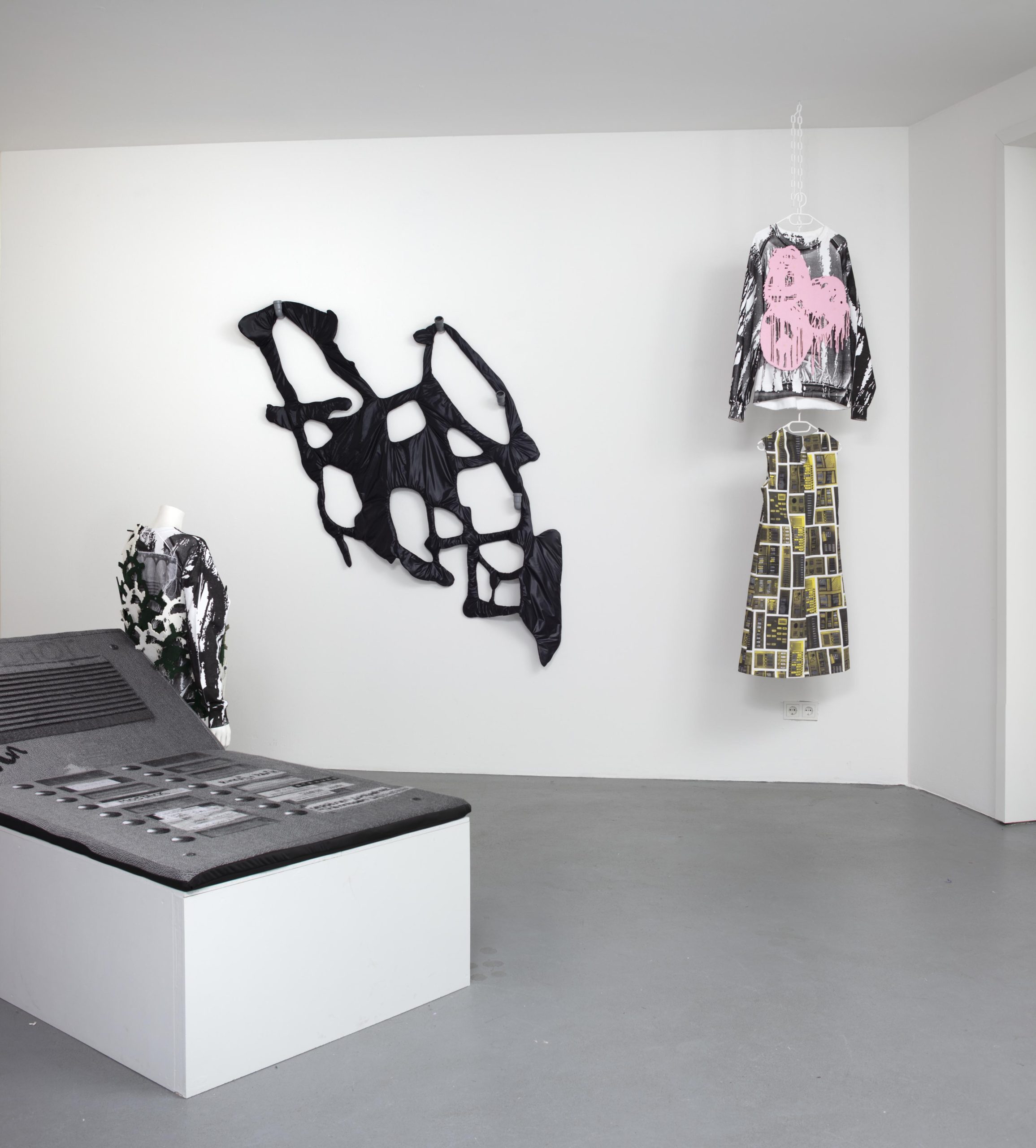
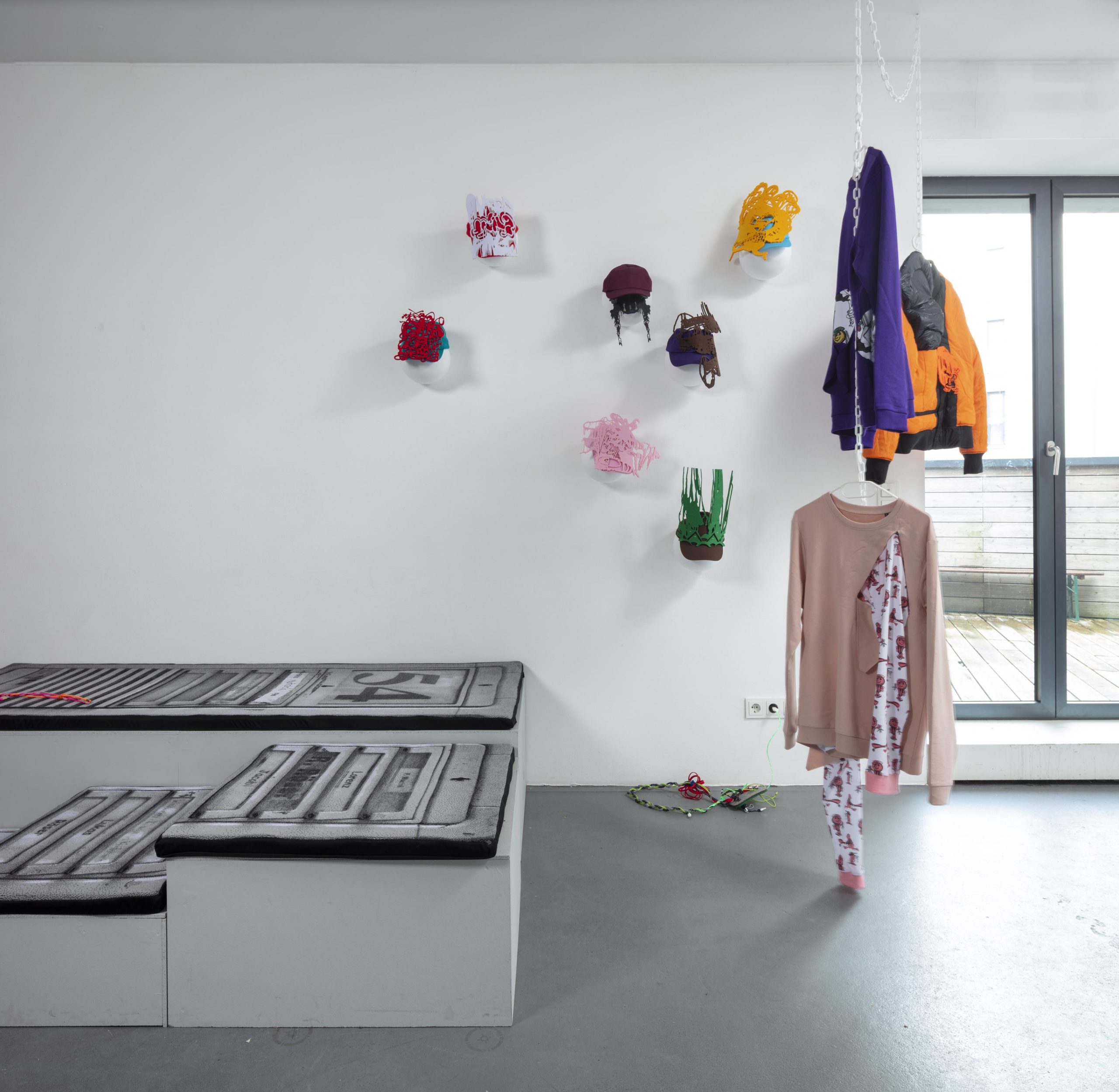
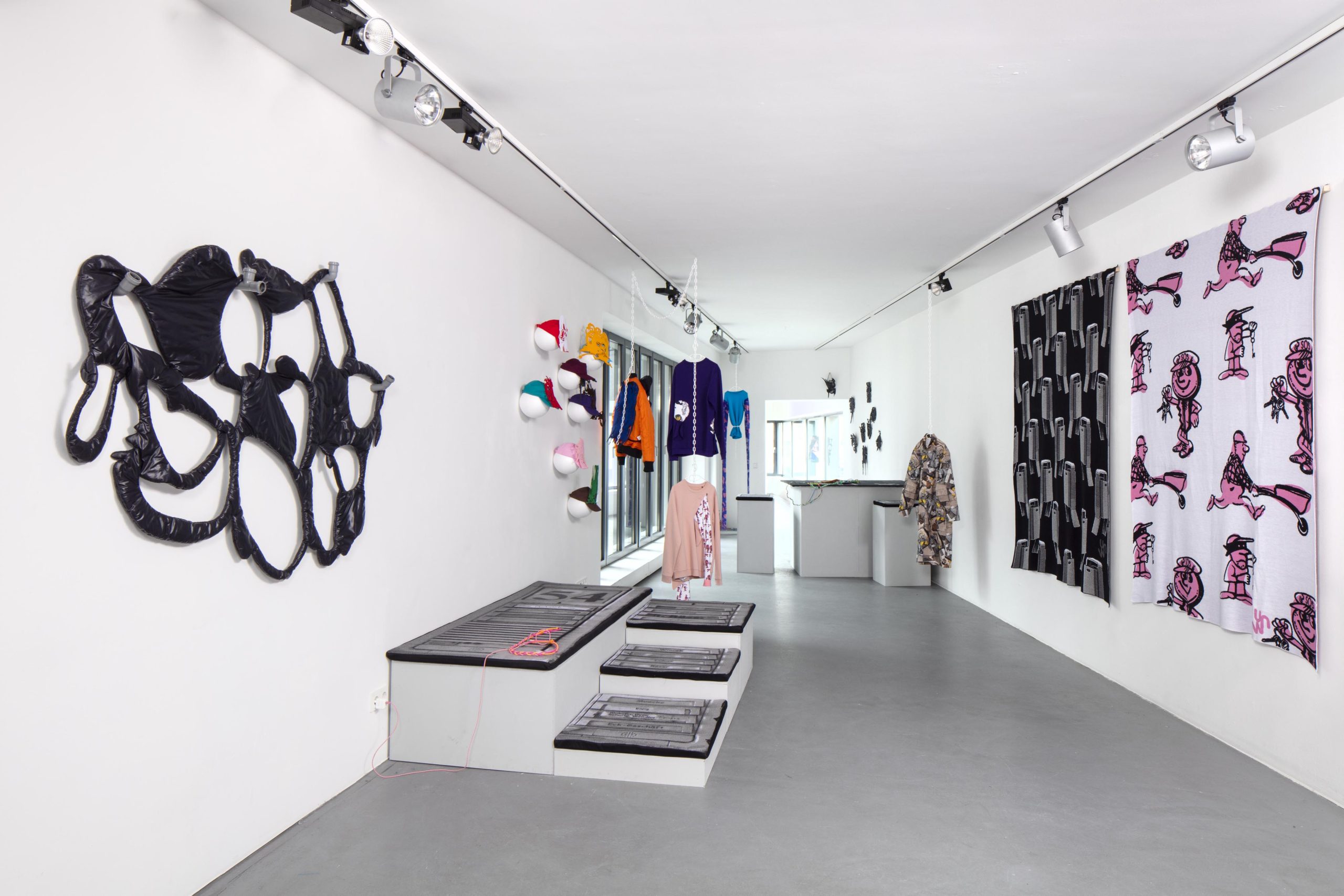
    Unwearable ist ein gemeinsames Projekt der Künstler Paul McDevitt und Tommy Støckel. In verschiedenen Formaten erweitert es McDevitts zweidimensionale grafische Bilder in eine räumliche Dimension, die durch Støckels skulpturale Sprache definiert wird.

    Schon in einem früheren Projekt verschmolzen die beiden ihre jeweiligen Praktiken zu neuen, eigenwilligen Produkten. Gezeigt wurden sie in Form eines Pop-up-Ladens, in dem alles außer „Kunstobjekten“ verkauft wurde. Angeboten wurden Dinge wie Regale, Rahmen, Stühle, Spiegel, Kissen, Taschen, Pullover und Schals – allesamt als erschwingliche und funktionale Editionen hergestellt.

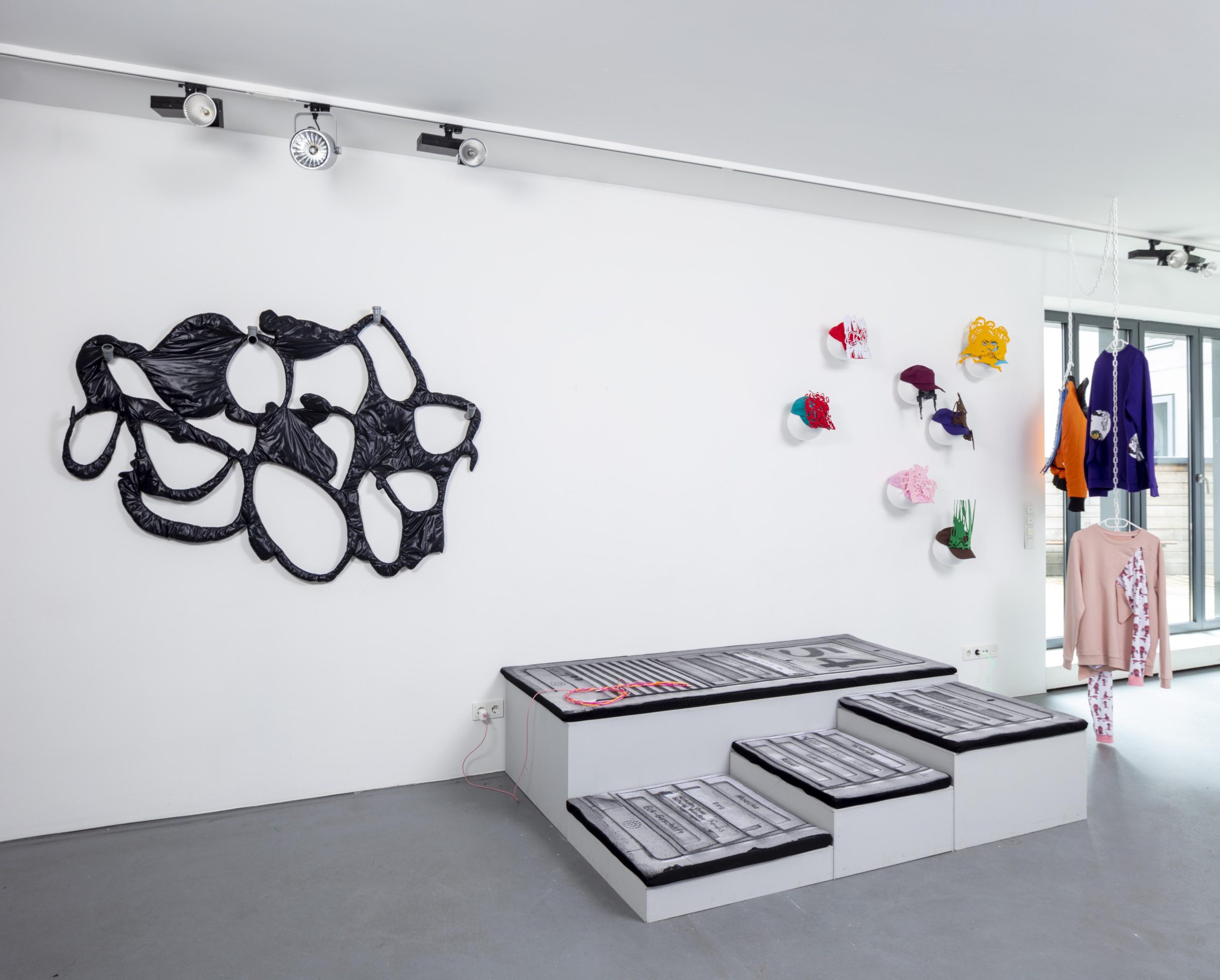
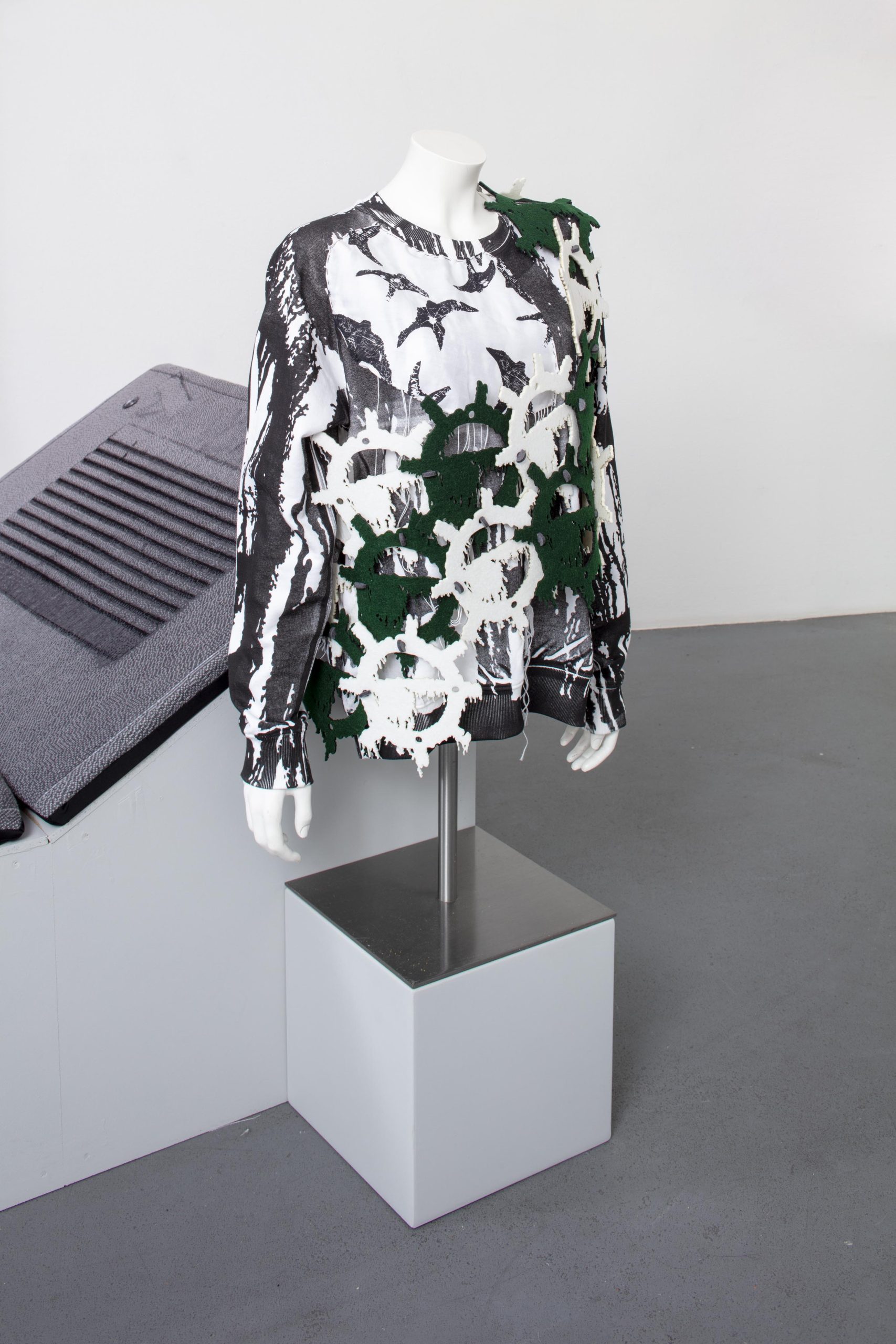
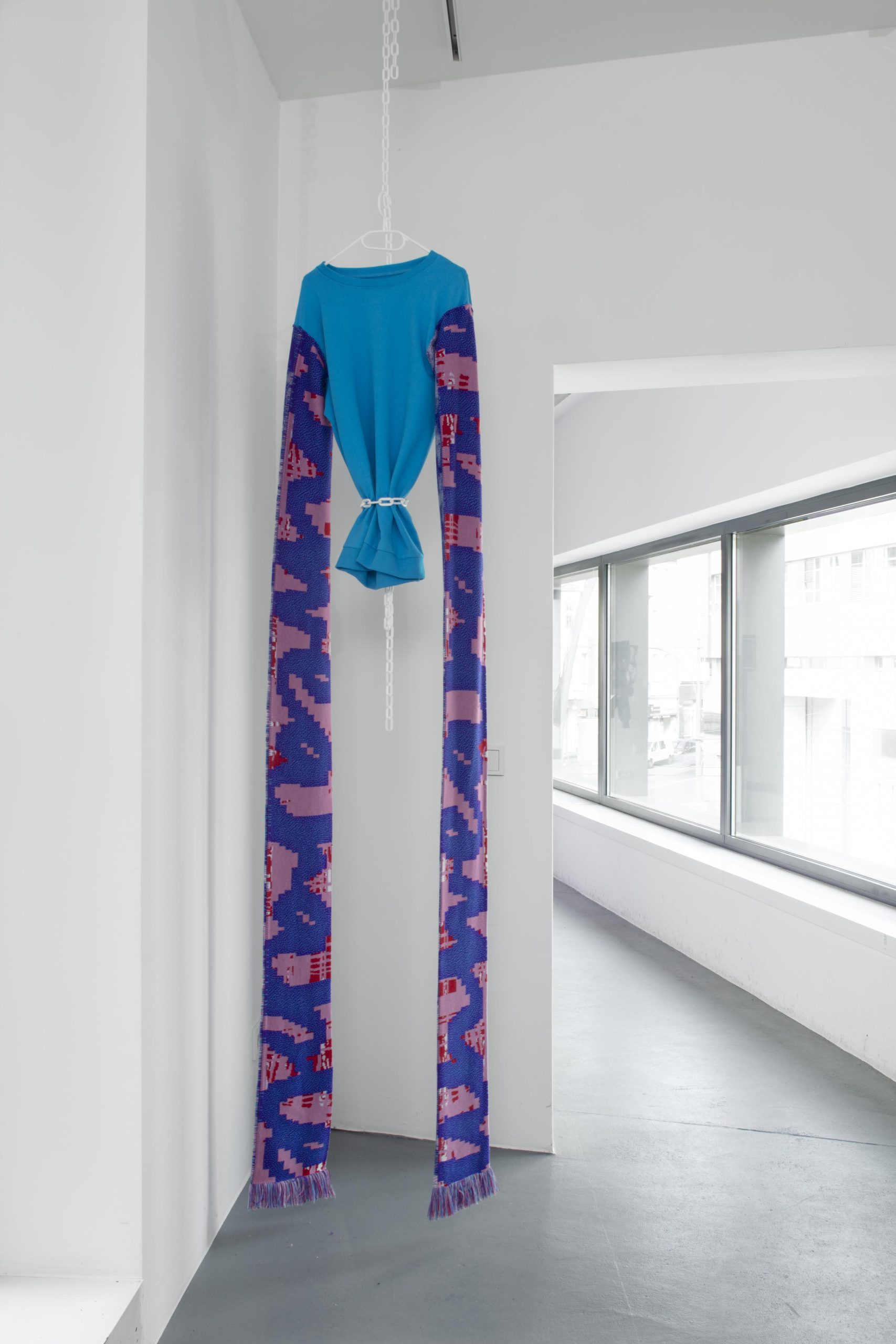
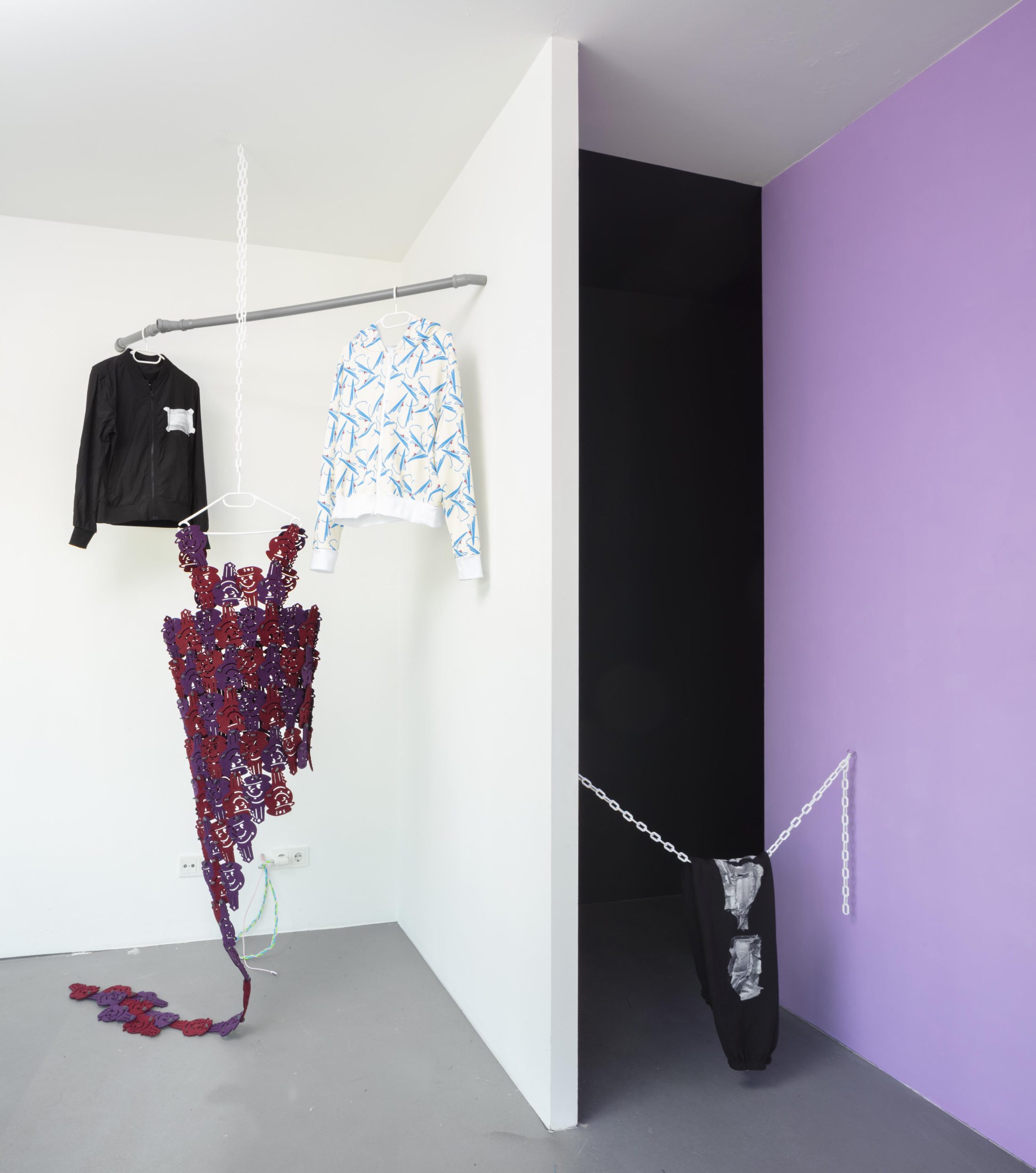
    Bei Unwearable stehen Kunstwerke als tragbare Formen experimenteller skulpturaler Kleidung und Accessoires im Mittelpunkt, die den Träger der Kunstwerke dazu einladen, sie in seinen Alltag zu integrieren. Das Format ist durch unsere allgemeine Vertrautheit mit der Sprache des Einzelhandels, speziell von Modedisplays, sofort zugänglich. Die einzelnen Objekte sind Dinge, die man gerne anfassen, anziehen und im Alltag benutzen würde. Sie haben sowohl eine Form als auch eine Funktion – auch wenn diese nicht immer offensichtlich ist.

    Anders als etablierte künstlerische Tradition, die sich mit Kleidung und Kostümen als Teil von Performances beschäftigen –  Oskar Schlemmer, Yayoi Kusama, Jana Sterbak, Franz Erhard Walther oder Hélio Oiticica sind nur einige Beispiele dafür –  fordert McDevitts & Støckels Unwearable dazu auf, die Werke ins tägliche Leben zu integrieren. Es gilt, für sich herauszufinden, wo und wann Kunst zu Mode wird und ob ein Objekt noch als Skulptur betrachtet werden kann, wenn es getragen wird

    *Paul McDevitts Praxis basiert auf einer umfassenden Erkundung der Zeichnung und einer Vielzahl von grafischen Medien. Seine Werke sind vielschichtige und spielerische Kompositionen, die auf Bildern der Hoch- und Popkultur aufbauen. So stammt ein Großteil seines Bildmaterials unmittelbar aus modifiziert, was auf der Straße zu beobachten ist. Diese Referenzen sind sehr unterschiedlich und reichen von Postern für vermisste Haustiere über Firmenlogos auf weißen Lieferwagen bis hin zu gekritzelten Graffitis.

    *Die skulpturale Arbeiten des dänischen Künstlers Tommy Støckel haben sich durch ein langes Experimentieren mit Räumen, Formen und Materialien entwickelt. Sein Interesse an der Ästhetik der digitalen Medien und Werkzeuge spiegelt sich in den Objekten wider, die die Übersetzung zwischen dem Analogen und dem Digitalen zum Thema haben. Wie McDevitt greift auch Støckel für seine Kunstwerke auf gefundenes Material zurück, sowohl auf Readymades aus der realen als auch aus der digitalen Welt.

    Die Künstler wurden von Susanne Prinz eingeladen.

    Unwearable is the joint project of artists Paul McDevitt and Tommy Støckel. In various formats, it extends McDevitt’s two-dimensional graphic images into a spatial dimension defined by Støckel’s sculptural language. In an earlier project, the two already merged their respective practices to create new, idiosyncratic products. They were shown in the form of a pop-up shop selling everything but „art objects“. On offer were things like shelves, frames, chairs, mirrors, cushions, bags, jumpers and scarves – all made as affordable and functional editions.

    Unwearable focuses on artworks as wearable forms of experimental sculptural clothing and accessories that invite the wearer of the artworks to integrate them into their everyday life. The format is immediately accessible through our general familiarity with the language of retail, specifically fashion displays. The individual objects are things that people would like to touch, wear and use in their everyday lives. They have both a form and a function – even if this is not always obvious.

    Unlike established artistic traditions that deal with clothing and costumes as part of performances – Oskar Schlemmer, Yayoi Kusama, Jana Sterbak, Franz Erhard Walther or Hélio Oiticica are just a few examples – McDevitts & Støckels Unwearable calls for the works to be integrated into everyday life. It is a matter of finding out for oneself where and when art becomes fashion and whether an object can still be considered a sculpture when it is worn.

    The artists were invited by Susanne Prinz.

    Die Ausstellung wird unterstützt von |  the exhibition is supported by:

  • DIE DECKE HAT EIN LOCH [THE HOLE IN THE BLANKET]

    DIE DECKE HAT EIN LOCH [THE HOLE IN THE BLANKET]

    mit ALEF BLA, NOMBUSO DOWELANI, ANNETTE HOLLYWOOD, LAURA HORELLI, SVEN JOHNE, JANA MÜLLER, ALINA SIMMELBAUER, OFW/PHILIPP URRUTIA, SIMON WACHSMUTH, MOIRA ZOITL

    Ausstellung / Exhibition: 17.11.22 – 28.1.23
    Öffnungszeiten / Opening hours: Do – Sa / Thu – Sat 14 – 18 h und nach Vereinbarung / and by appointment

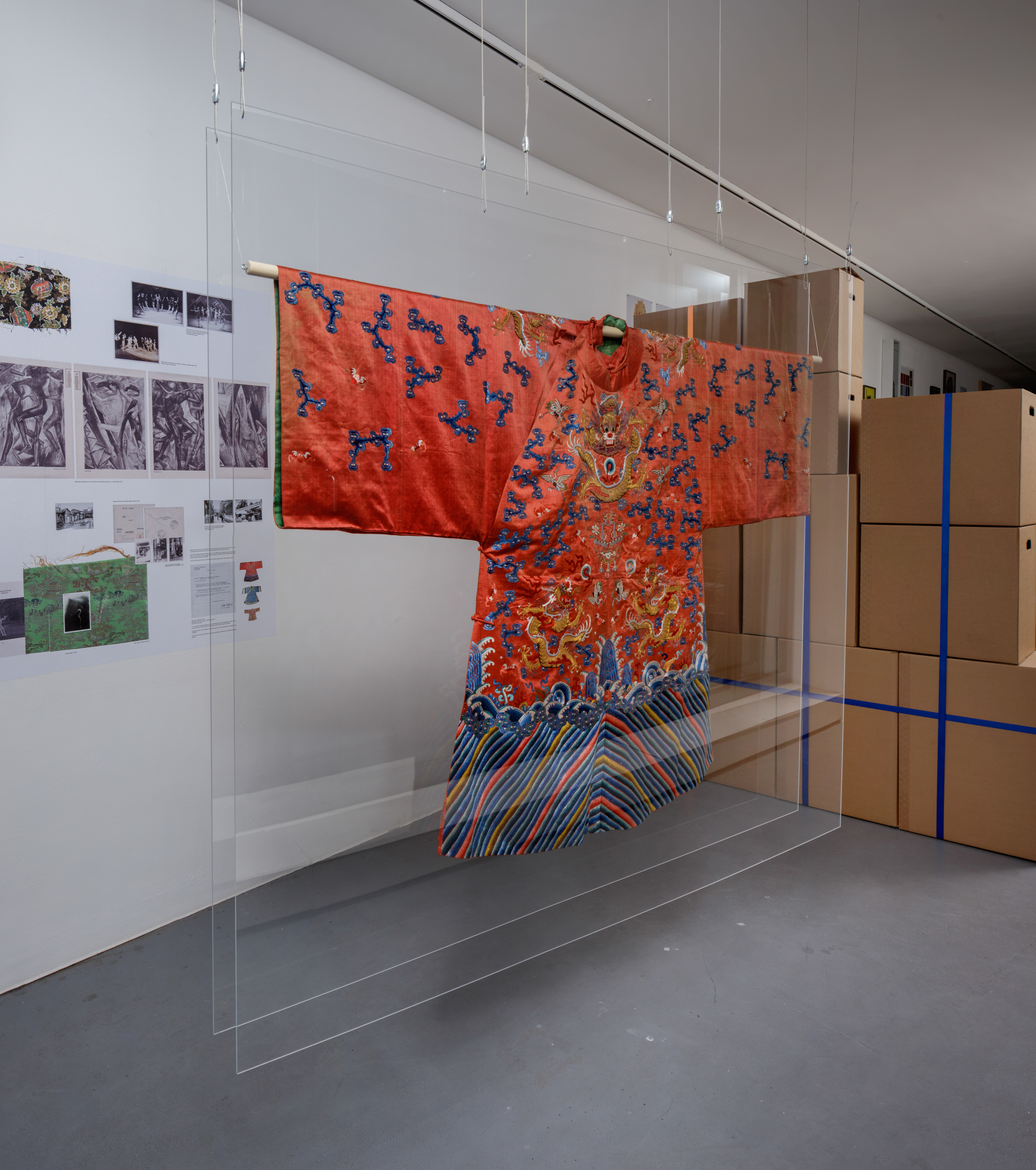
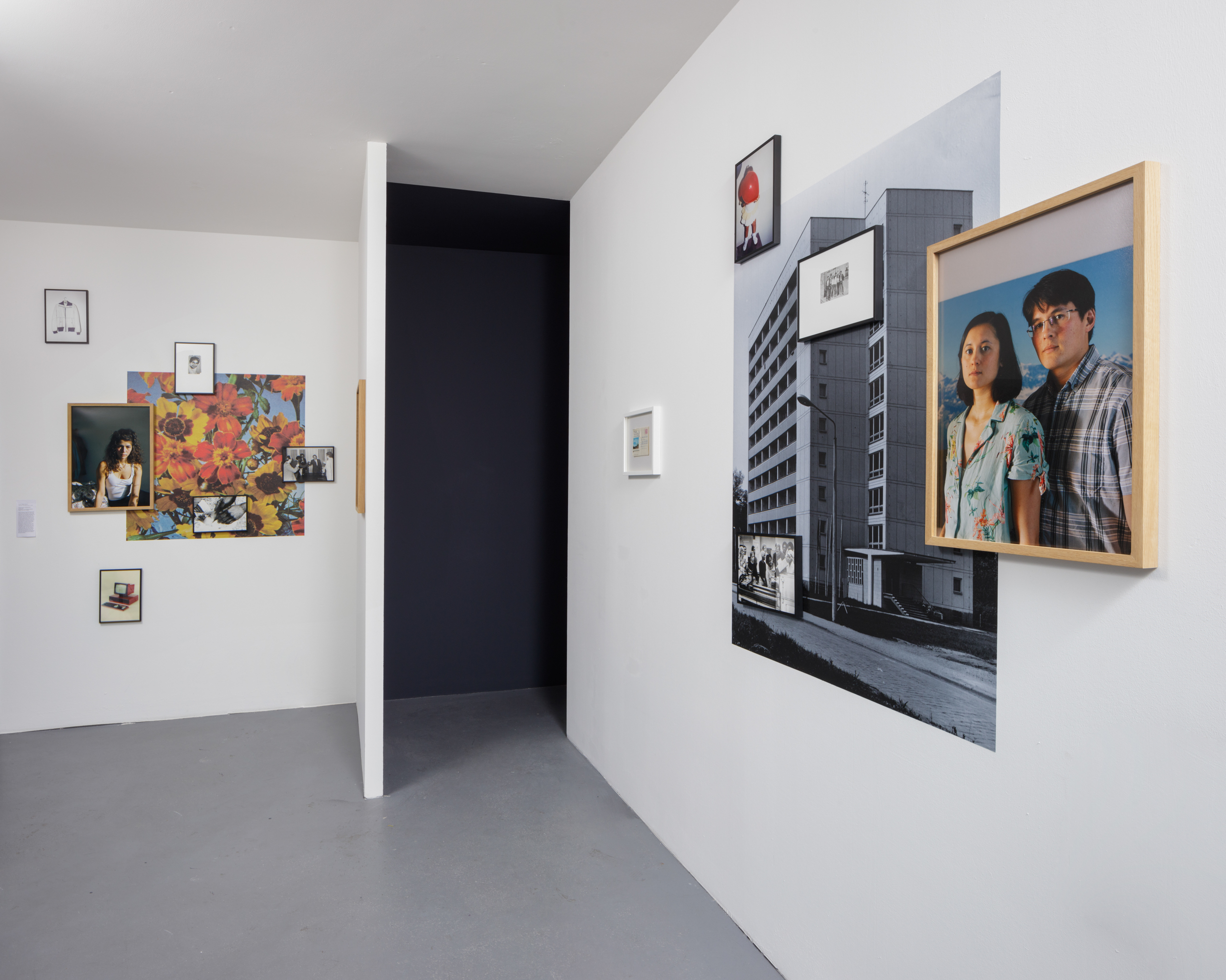
    (scroll down for English) Die Decke hat ein Loch ist ein Ausstellungs- und Rechercheprojekt der Künstlerinnen annette hollywood, Jana Müller und Moira Zoitl in Zusammenarbeit mit dem Kunstverein am Rosa- Luxemburg-Platz Berlin/Susanne Prinz, in dem mit Hilfe von (auto)biografischen Erzählungen Material-, Zeit- und Kulturgeschichte abseits der Mehrheitsgesellschaft untersucht wird. Die Arbeitsweisen der teilnehmenden Künstler*innen überschneiden sich, indem sie mit verschieden forschenden und künstlerisch-wissenschaftlichen Methoden Archivbestände befragen. In den künstlerischen Arbeiten werden Spuren unterschiedlicher Archivorte sichtbar gemacht, überarbeitet und zu neuen Erzählungen verknüpft. Objekte, Dokumente oder andere Narrative aus institutionellen Archiven werden bewusst mit Wissen und Gegenständen aus dem privaten Umfeld verschränkt. Damit wird das Konstruierte, Poröse, und Vorläufige von Wissensarchiven thematisiert, das die Perspektive vieler Lebenswirklichkeiten verfälscht darstellt oder vollständig ausspart. Entsprechend dem titelgebenden Klatschspiel, das sich weiterreimt mit „… da sah ich sie dann doch.“, folgt das Ausstellungsprojekt der Idee, dass erst bei erneutem Hinsehen durch die Löcher und Brüche von Wissensarchiven hindurch ein genaueres und diverseres Bild von Gesellschaft entsteht.

    Zur Eröffnung fand eine musikalische Intervention von Sabrina Ma und Katie Kelly im Rahmen von itinerant interludes (kuratiert von Laurie Schwartzt) statt.

    |

    Die Decke hat ein Loch [The Hole in the Blanket] is an exhibition and research project by the artists annette hollywood, Jana Müller and Moira Zoitl, in collaboration with the Kunstverein am Rosa- Luxemburg-Platz Berlin/Susanne Prinz, in which (auto)biographical narratives are used to examine material, contemporary and cultural histories that lie outside of mainstream society. The working methods of the participating artists overlap in questioning archival inventories using different research and artistic-scientific methods. In artistic works, traces of archive materials are linked, reworked and made visible to form new narratives. Artefacts, documents and other narratives from institutional archives are consciously intertwined with knowledge and objects from the private sphere. The constructed, porous and temporary state of the nature of archives is addressed, a condition that distorts or completely omits the perspective of many realities of life. In accordance with the children’s clap­ping game that gives the title, and which continues to rhyme with “… da sah ich sie dann doch.” […I then saw her after all.], the exhibition project follows the idea that only by looking once again through the holes and fractures of historical archives, a more accurate and diverse picture of society emerges.

    The opening featured a musical intervention by Sabrina Ma and Katie Kelly as part of itinerant interludes (curated by Laurie Schwartzt).

    |

    PROGRAMM

    27.11.2022, 16 h  FÜHRUNG durch die Ausstellung mit / GUIDED TOUR through the exhibition with Jana Müller + Moira Zoitl

    3.12.2022, 16 h  LIGHTING THE ARCHIVE, Projektpräsentation von / Project presentation by Maren Lübbke-Tidow + Rebecca Wilton, mit anschließendem Gespräch / followed by a discussion.

    8.12.2022, 18 h  BABYLON (Rosa-Luxemburg-Str. 30, 10178 Berlin) Filmprogramm mit / Film program with Mohammad Shawky, Hassan, Kerstin Honeit, Betina Kuntzsch, Simon Wachsmuth, mit anschließendem Gespräch / followed by a discussion.

    10.12.2022, 15 h  FÜHRUNG durch die Ausstellung mit / GUIDED TOUR through the exhibition with annette hollywood, Jana Müller + Moira Zoitl;

    16 h  PRÄSENTATION der Onlinearchive von / Presentation of the online archives of annette hollywood + Jana Müller (anderkawer.annettehollywood.com & falscherhase.jana-mueller.de)

    19.1.2023, 19 h  SPINNBODEN LESBENARCHIV Filmpräsentation des Projektes [anderkawer] von annette hollywood im Gespräch mit Katja Koblitz, Archivleitung Spinnboden, Spinnboden Lesbenarchiv & Bibliothek e. V., Anklamer Str. 38, 10115 Berlin (www.spinnboden.de) in Kooperation mit: Regenbogenfamilienzentrum Berlin SPINNBODEN LESBENARCHIV Film presentation of the project [anderkawer] by annette hollywood in conversation with Katja Koblitz, Archive Manager Spinnboden, Spinnboden Lesbenarchiv & Bibliothek e. V., Anklamer Str. 38, 10115 Berlin (www.spinnboden.de) in cooperation with: Rainbow Family Centre Berlin

    28.1.2023, 15 h  FINISSAGE Führung durch die Ausstellung mit / guided tour through the exhibition with annette hollywood + Moira Zoitl

    16 h  INTRO Performative Führung von OfW über den Rosa-Luxemburg-Platz / OfW guided tour of Rosa-Luxemburg-Platz

    Ausstellung wird unterstützt von / Exhibition is supported by:

  • Stefan Panhans & Andrea Winkler
    ANIMA OVERDRIVE

    Ausstellung / Exhibition: 15.9. – 22.10.22
    Öffnungszeiten / Opening hours: Do – Sa / Thu – Sat 14 – 18 h und nach Vereinbarung / and by appointment

    15.10.22 19 h Vortrag der Kuratorin und Kunsthistorikerin / Lecture by the curator and art historian Katharina Brandl *

    22.10.22 19 h Lesung des Romanautors / Reading by novelist Tom McCarthy*

    * Der Kunstverein bleibt an Veranstaltungstagen durchgehend geöffnet. / The Kunstverein remains open throughout on event days.

    (scroll down for English) Kunst ist eine Sirene – die meisten Künstler_innen glauben daran. Sie ertragen Miniwohnungen und ein Leben von der Hand in den Mund, weil sie an etwas fast Heiligem teilhaben: der menschlichen Kreativität. Andere Selbstständige haben diesen Trost nicht. Immerhin – denken viele vermutlich, – führen sie ein freies, auf jeden Fall ein dem 21. Jahrhundert angemessenes Leben. Also akzeptieren sie ein Dasein unter Druck, voller Missionen, die sich nicht auszahlen.

    Die Filme und die mit ihnen verbundenen Installationen der Künstler_innen Stefan Panhans und Andrea Winkler, die in Berlin und Hamburg leben, kreisen seit einiger Zeit um dieses Problem. Dabei argumentieren sie nicht aus überlegener Warte, weil sie von Künstlern und Darstellern gemacht werden, die genau diesen Zwängen ausgesetzt sind, die zunehmend von breiteren Bevölkerungsgruppen geteilt werden.

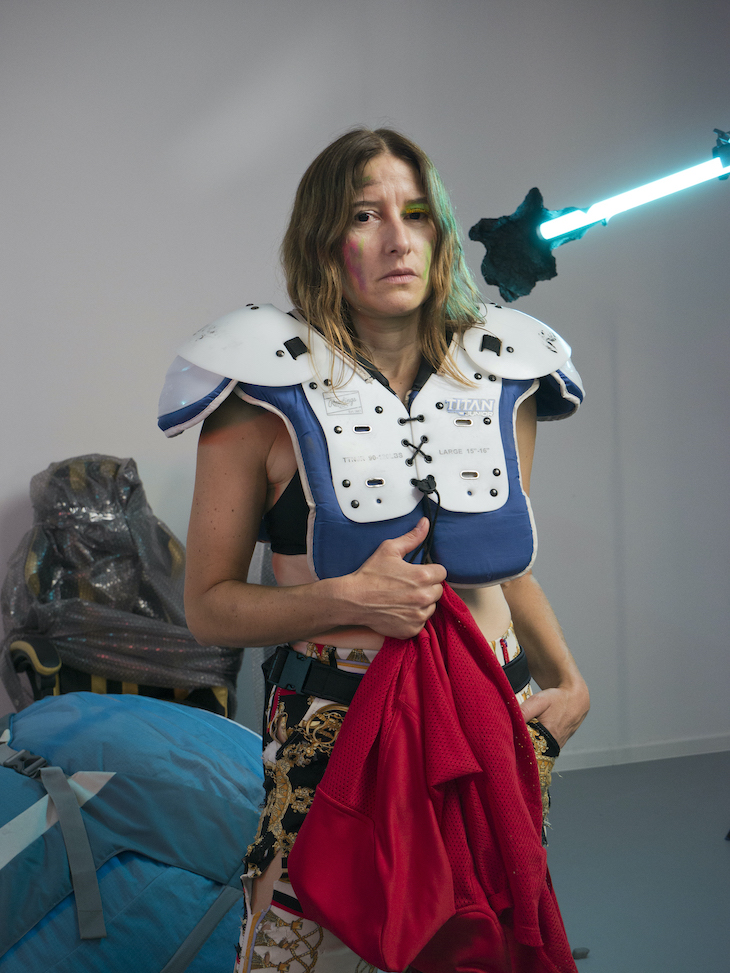
    Genau hier knüpft auch ihr neuestes Projekt Anima Overdrive (2022) an, das im Kunstverein Premiere hat. »Deliver, deliver, deliver, deliver, I’m your deliver delivery, I’m your delivery deliver, I’m your delivery deliver delivery, I deliver tokenism, I deliver you a boss, I deliver your perfect coach & artsy art consulter, I deliver minijobs and alcopops, I deliver all your medicine right before you know you’re ill, I deliver liver! … « rapt die Delivery Heroine (Lisa Marie Janke) im labellosen, gepanzerten American Football Shirt und mit verwildertem Make-up zum treibenden Beat – allein in einem Lagerraum vor einem riesigen Rucksack und in Luftpolsterfolie eingepackte Gaming-Stühlen. Um die allgegenwärtigen Lieferdienste von Amazon über Gorillas bis Zalando geht es hier nur bedingt. Anima Overdrive liefert vielmehr Text und Bild zur um sich greifenden Erschöpfung in einer Welt, die zunehmend von Algorithmen und K.I. im Dienst eines turbobeschleunigten Plattformkapitalismus bestimmt wird. Eine Welt in der alles zur Ware wird: Arbeitskraft, Körper, Gefühle, Bewegungsmuster, Mimik …. Selbstoptimierung versteht sich unter diesen Umständen von selbst: Sie ist ein ständiges Bootcamp für die Bewältigung des Alltags, eine Möglichkeit, mikrokosmische Kontrolle auszuüben, wenn alles andere außer Kontrolle gerät – »I deliver everything!«

    Defender (2021), entstanden in den Pandemie-Jahren und erstmals in Berlin zu sehen, ist ein Mini- (und auch Anti-) Musical. Drei Frauen (Anne Ratte-Polle, Lisa Marie Janke und Olivia Hyunsin Kim) bilden eine Art Arbeits- oder Serviceteam, das auf unbekannte Mission in eine Tiefgarage geschickt wird. Dort steht nur ein einziges Fahrzeug: ein großer schwarzer Geländewagen in einer Art „Erlkönig“-Tarnung, die von der Automobilindustrie verwendet wird, um Design-Neuheiten zu verstecken und gleichzeitig bei Testfahrten mit Prototypen besondere Aufmerksamkeit zu erregen. Um das mysteriöse Objekt, das wie ein ‚McGuffin‘ für das soziale Unbewusste fungiert, entfaltet sich ein kataraktartiger Trialog aus vermeintlich verinnerlichter Selbstverbesserungsrhetorik, Fragmenten aus SUV-Werbespots und Selbsthilfebotschaften von Megachurch-Gurus, nur unterbrochen durch Burn-out-Symptome, sowie der aus Büchners Lenz zitierenden Sprachassistentin des SUV namens Concierge.  Mit Gesangseinlagen, Workout- und Tanzübungen umkreisen sie ihn ergebnislos, um sich schließlich mit Tierlauten zu befreien. Symptome der Bedingungen unserer Arbeits- und Lebenswelt werden direkt verknüpft mit unseren individuellen Ängsten, Wünschen und Sehnsüchten. Resilienztraining, SUVs und Pseudoreligion zumindest scheinen aber nicht die Lösung zu sein.

    Der dritte Film der Ausstellung »  If You Tell Me When Your Birthday Is« (2020), nistet sich in den Schnittstellen zwischen analoger und der virtueller Welt ein und kombiniert 3D-Scanning von realen Objekten und Menschen, CGI- World-building, Avataring und Motion-Capture-Elemente. Wie bei jeder ‚Machinima‘-Produktion wurde in Echtzeit generierte, grafische 3D-Umgebungen verwendet. In dieser virtuellen Welt wurde der gesamte Film gedreht. Inhalt und Methode ist dabei der sogenannte Linguistischen Kapitalismus und dessen aktuelle Trends in der digitalen, K.I.- und Roboter-gesteuerten kulturindustriellen Sprachproduktion. So beruht das Skript vollständig auf Dialogen der Künstler_innen mit sogenannten künstlichen Intelligenzen aus verschiedensten Alltagsbereichen, und Kommunikation derselben – z.B. algorithmisch gesteuerter Chatbots – untereinander. Dabei wurden gezielt die absurden, gelegentlich komischen oder sogar unheimlichen Unzulänglichkeiten dieser ‚Technik-Collage‘ im Film belassen. In Anlehnung an das Bad Painting der ’Neuen Wilden’ Maler Des Deutschland der 1980er Jahre, haben wir es hier vielleicht mit einer ‚Bad Virtual‘ Ästhetik des 21. Jahrhunderts zu tun.

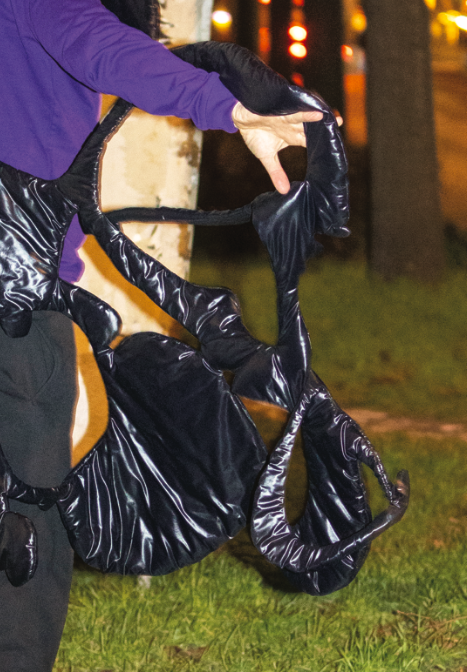
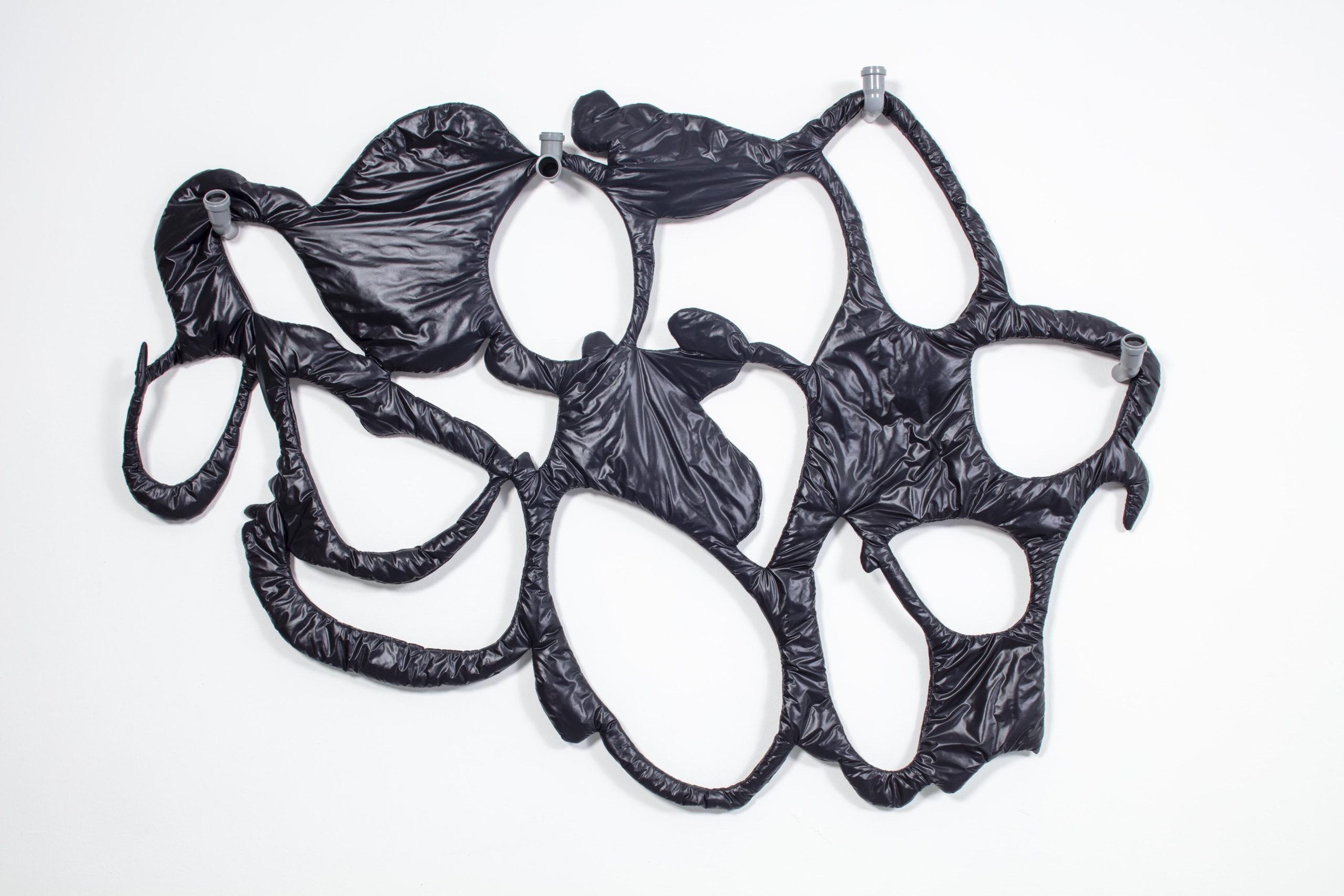
    Über Objekte im Raum, die auch in den Videos eine Rolle spielen, breiten sich die Filme von Panhans & Winkler oft in den Ausstellungraum aus und ziehen uns ins Bild. So begegnen wir dem Rucksack und den Gaming-Stühle aus Anima Overdrive, die jetzt ganz praktische Sitzfunktionen erfüllen. Daneben tauchen weitere Objekte auf, die auf den ersten Blick verwandt wirken, bei näherer Betrachtung  aber zu klein, vernäht, aufgeblasen, kurz: unbrauchbar erscheinen. Sie bestehen vor allem aus Hightech-Stoffen aus den Bereichen Sport, Outdoor, Sicherheit und Schutz. Es sind Materialien, die den Körper sichern, ihn verbessern – sogenannte Enhancer. Aus ihnen fertigt Andrea Winkler ihre dreidimensionalen Stoffcollagen, denen – zwischen Körperfragment und Kleidungsstück changierend – das Versprechen innewohnt, körperliche Defizite auszugleichen, vielleicht sogar unverwundbar zu machen. Sie sind letztlich dysfunktional und doch, in den Worten von Donna Haraway »fähig zur Verbindung mit anderen«, offen für neuartige Strukturen und Werdensformen.

    Die begleitenden Bilder aus der Fotoserie Bringing the WoW Home (2021) von Stefan Panhans – schon im Titel eine Hommage an die ikonische Fotoserie Bringing the War Home von Martha Rosler – erscheinen dann wie ein Kommentar zur Gamifizierung der Gesellschaft. Die Art und Weise, wie Fotograf und Darstellerin (Lisa Marie Janke) kongenial den Spiel-Kontext von den aggressiven Kampfposen und Kabuki-haften Grimassen der monströsen Superhelden aus World of Warcraft (abgekürzt WoW) subtrahieren, bis diese dann in ihrer aggressiven Übertreibung irgendwie etwas verloren in der Wohnküche rumstehen, entblößt die theatralischen Gesten der ‚Originale‘ in ihrer ganzen Affektiertheit und entbehrt nicht eines gewissen Humors.

    Die Ausstellung ist kuratiert von Susanne Prinz.

    |

    Art is a siren – most artists believe this. They endure mini-apartments and hand-to-mouth living because they share in something almost sacred: human creativity. Other self-employed people do not have this comfort. After all – many presumably think – they lead a free life, certainly a life appropriate to the 21st century. So they accept an existence under pressure, full of missions that don’t pay off. The films and the installations associated with them by the artists Stefan Panhans and Andrea Winkler, who live in Berlin and Hamburg, have been revolving around this problem for some time. In doing so, they do not argue from a superior point of view, because they are made by artists and performers who are exposed to precisely these constraints, which are increasingly shared by broader sections of the population.

    This is precisely where their latest project, Anima Overdrive (2022), which is premiering at the Kunstverein, picks up. »Deliver, deliver, deliver, deliver, I’m your deliver delivery, I’m your delivery deliver, I’m your delivery deliver delivery, I deliver tokenism, I deliver you a boss, I deliver your perfect coach & artsy art consulter, I deliver minijobs and alcopops, I deliver all your medicine right before you know you’re ill, I deliver liver! … « raps the Delivery Heroine (Lisa Marie Janke) in an unlabelled, armoured American football shirt and feral make-up to the driving beat – alone in a storage room in front of a huge backpack and gaming chairs wrapped in bubble wrap. The ubiquitous delivery services from Amazon to Gorillas to Zalando are only partly the point here. Rather, Anima Overdrive delivers text and image on the rampant exhaustion in a world increasingly defined by algorithms and A.I. in the service of turbo-accelerated platform capitalism. A world in which everything becomes a commodity: Labour, body, feelings, movement patterns, facial expressions …. Self-optimisation is self-evident under these circumstances: It is a constant boot camp for coping with everyday life, a way of exercising microcosmic control when everything else is spinning out of control – »I deliver everything!«.

    Defender (2021), created in the Pandemic years and first seen in Berlin, is a mini- (and also anti-) musical. Three women (Anne Ratte-Polle, Lisa Marie Janke and Olivia Hyunsin Kim) form a kind of work or service team that is sent on an unknown mission into an underground car park. There is only one vehicle there: a large black SUV in a kind of „Erlkönig“ camouflage, which is used by the automobile industry to hide design novelties and at the same time attract special attention during test drives with prototypes. Around the mysterious object, which acts like a ‚McGuffin‘ for the social unconscious, a cataract-like trialogue unfolds from supposedly internalised self-improvement rhetoric, fragments from SUV commercials and self-help messages from megachurch gurus, interrupted only by burn-out symptoms, as well as the SUV’s voice assistant named Concierge quoting from Büchner’s Lenz.  With song interludes, workout and dance exercises, they circle him fruitlessly, finally freeing themselves with animal sounds. Symptoms of the conditions of our working and living environments are directly linked to our individual fears, wishes and desires. Resilience training, SUVs and pseudo-religion at least do not seem to be the solution.

    The third film in the exhibition, If You Tell Me When Your Birthday Is (2020), nests at the intersection of the analogue and virtual worlds, combining 3D scanning of real objects and people, CGI world-building, avataring and motion-capture elements. As with any ‚machinima‘ production, real-time generated, graphic 3D environments were used. The entire film was shot in this virtual world. The content and method is so-called linguistic capitalism and its current trends in digital, A.I. and robot-controlled culture-industrial language production. The script is based entirely on the artists‘ dialogues with so-called artificial intelligences from various areas of everyday life, and their communication with each other – e.g. algorithmically controlled chatbots. The absurd, occasionally comical or even uncanny shortcomings of this ‚technology collage‘ were deliberately left in the film. In reference to the Bad Painting of the ‚Neue Wilde‘ painters of 1980s Germany, we are perhaps dealing with a ‚Bad Virtual‘ aesthetic of the 21st century.

    Via objects in the room that also play a role in the videos, Panhans & Winkler’s films often spread into the exhibition space and draw us into the picture. Indeed, we encounter the backpack and the gaming chairs from Anima Overdrive, that now fulfil quite practical seating functions. In addition, other objects appear that seem related at first glance, but on closer inspection seem too small, stitched, puffed up, in short: unsuitable for use. They consist mainly of high-tech fabrics from the fields of sport, outdoor, safety and protection. They are materials that secure the body, improve it – so-called enhancers. Andrea Winkler uses them to make her three-dimensional fabric collages, which – oscillating between body fragment and garment – hold the promise of compensating for physical deficits, perhaps even making them invulnerable. They are ultimately dysfunctional and yet, in the words of Donna Haraway, „capable of connection with others“, open to completely new kinds of structures and forms of becoming.

    The accompanying images from the photo series Bringing the WoW Home (2021) by Stefan Panhans – already in the title an homage to the iconic photo series Bringing the War Home by Martha Rosler – then appear like a commentary on the gamification of society. The way the photographer and the actress (Lisa Marie Janke) congenially subtract the game context from the aggressive fighting poses and Kabuki grimaces of the monstrous superheroes from World of Warcraft (abbreviated WoW) until they are standing around in the kitchen in their aggressive exaggeration, somehow somewhat lost, exposes the theatrical gestures of the ‚originals‘ in all their affectation and is not without a certain humour.

    The show is curated by Susanne Prinz.

    |

    Im Zusammenhang mit der Ausstellung entstand eine Edition von NFTs. Release am 17. September via untenstehendem QR Code / An edition of NFTs was created in connection with the exhibition. Release on 17 September via the QR code below:

    Ausstellung und Film werden unterstützt von / Exhibition and film are supported by:

    image

  • Hannes Brunner, ENTWURFSANLAGEN +/- circular economies

    Hannes Brunner                           ENTWURFSANLAGEN +/- circular economies

    Eröffnung: 14 Juli 2022, 18h

    Öffnungszeiten: 15. – 30. Juli 2022 jeweils Do-Sa 14-18h;  1.-27. August 2022 ausschließlich über Terminreservierung über: besuch@einmalvorort.de

    Die öffentlichen Interventionen trash +/- value finden am 16.,24. und 30. Juli 2022* statt. *( 16-19 h)

    „Algorithmen und Künstliche Intelligenz sind gekommen, um zu bleiben. Doch was wissen Menschen […] darüber und wie nehmen sie den Einfluss dieser digitalen Technologien auf ihr Leben und die Gesellschaft wahr?“ (Markus Overdiek / Algorithmenethik).

    Der aus der Schweiz stammende Berliner Künstler Hannes Brunner beschäftigt sich seit langem mit der Modellierung von etablierten Handlungsbereichen, die oft eine lange anthropomorphische Entwicklungsgeschichte haben, sich heute aber zunehmend nach algorithmisch erfassten Expertisen richten. Seine Modelle sind Spiele, Partituren und Übungen und bieten in sinnbildlicher, metaphorischer oder synonymer Übersetzung Verweise auf gedanklich Erfahrbares. Es sind Ansätze zu potenziellen Weiterentwicklungen, Unfertigkeiten, die sich als Angebot zur Kommunikation und damit als Bestandteil eines Dialogs verstehen.

    Die im Kunstverein am Rosa-Luxemburg-Platz gezeigten Arbeiten beziehen sich explizit auf einen derartigen Austausch. Video-Installationen wie Drivers Comments: wären ohne die Beifahrer – allesamt vom Künstler eingeladene Kulturvermittler*innen – nicht denkbar. Sie kommentieren jeweils die Inseln im Zentrum der unzähligen Verkehrskreisel, die Künstler und Vermittler*in in irrwitzigen Kreisfahrten umrunden. Brunner stellt den Videos eine Reihe begehbarer Modelle gegenüber, die jeweils die Kreisbewegung wie ein Karussell in entgegengesetzter Richtung zu drehen scheinen. Bewegung wird so in den Raum übersetzt und ermöglicht verwandte und neue Erfahrungen.

    Brunners Modellierung einer Fahrschule für autonomes Fahren, eine Fiktion als solche, Tautologie oder Pleonasmus, beschäftigt sich mit einer anderen, seit langem viel diskutierten Auswirkung der Automatisierung. Hier möglicherweise einfach eine Art doppelte Erklärung oder die erhoffte Option, Algorithmen doch noch zu beherrschen.

    Im Außenraum baut Brunner, gemeinsam mit einer Gruppe wechselnder Kollaborateur*innen temporäre Gerüstbauten auf und wieder ab. Fragen zur Algorithmisierung des Arbeits- und Materialwertes werden in Spielformaten abgehandelt. trash +/- value ist ein spontaner Versuch, den Tausch von Arbeit und Material aus dem Moment heraus neu zu gestalten und Geschichten über Weggeworfenes und dessen Rückholung zu entwicklen.

    Die Ausstellung entstand in Zusammenarbeit mit dem Kunstmuseum Thurgau und wurde von Markus Landert und Susanne Prinz gemeinsam mit dem Künstler entwickelt und in einem Katalogbuch begleitet.

    + / –

    „Algorithms and artificial intelligence are here to stay. But what do people […] know about them and how do they perceive the influence of these digital technologies on their lives and society?“ (Markus Overdiek / Algorithm Ethics).

    The Berlin-based Swiss artist Hannes Brunner has long been concerned with modelling established areas of action that often have had a long anthropomorphic development, but are now increasingly guided by algorithmically recorded expertise. His models are games, scores and exercises and offer references to the mentally experiential in allegorical, metaphorical or synonymous translation. They are approaches to potential further developments that see themselves as an offer for communication and thus as a component of a dialogue.

    The works shown at the Kunstverein am Rosa-Luxemburg-Platz explicitly refer to such an exchange. Video installations such as Drivers Comments: would be inconceivable without the passengers – all of them cultural mediators invited by the artist. They comment on the islands at the centre of the countless roundabouts that the artist and the mediator drive around in crazy circles. Brunner juxtaposes the videos with a series of walk-in models, each of which seems to turn the circular movement in the opposite direction like a carousel. Movement is thus translated into space and enables related and new experiences.

    Brunner’s modelling of a school for autonomous driving deals with another impact of automation that has been much discussed for a long time – a fiction as such, tautology or pleonasm. Here, possibly simply a kind of double explanation or the hoped-for option of mastering algorithms after all.

    In the outdoor space, Brunner builds temporary scaffolding constructions together with a group of changing collaborators and takes them down again. Questions about the algorithmisation of work and material value are addressed in play formats. trash +/- value is a spontaneous attempt to reshape the exchange of work and material out of the moment and to develop stories about the discarded and its reclamation for this purpose.

    The exhibition was created in collaboration with the Kunstmuseum Thurgau and was developed by Markus Landert and Susanne Prinz together with the artist and accompanied by a catalog book.

    + / –

    Mitwirkende sind | Cooperators are: Alan Trapp, Florian Techel, Marina Resende-Santos+Jakob Wirth, Jérémie Le Hénaff, Paul Ohnesorgen, Abie Franklin, Ulrike Mohr, Wolfgang Knapp, Ivanna Heredia, Hannes Brunner, u.a.

    Hannes Brunner lebt in Berlin und der Schweiz | Hannes Brunner lives in Berlin and Switzerland.

    Die Projekte und ein anschließender Katalog werden unterstützt durch die Kulturstiftung des Kanton Thurgau | The projects and a subsequent catalogue are supported by the Cultural Foundation of the Canton of Thurgau

  • Maja Wirkus & Eric Pries, We Are Millennium Stars

    Ausstellungsdauer 29.April – 1.Juli 2022, Mi-Fr 14-18 h und auf Anfrage oder per Zufall (geschlossen an gesetzlichen  Feiertagen)

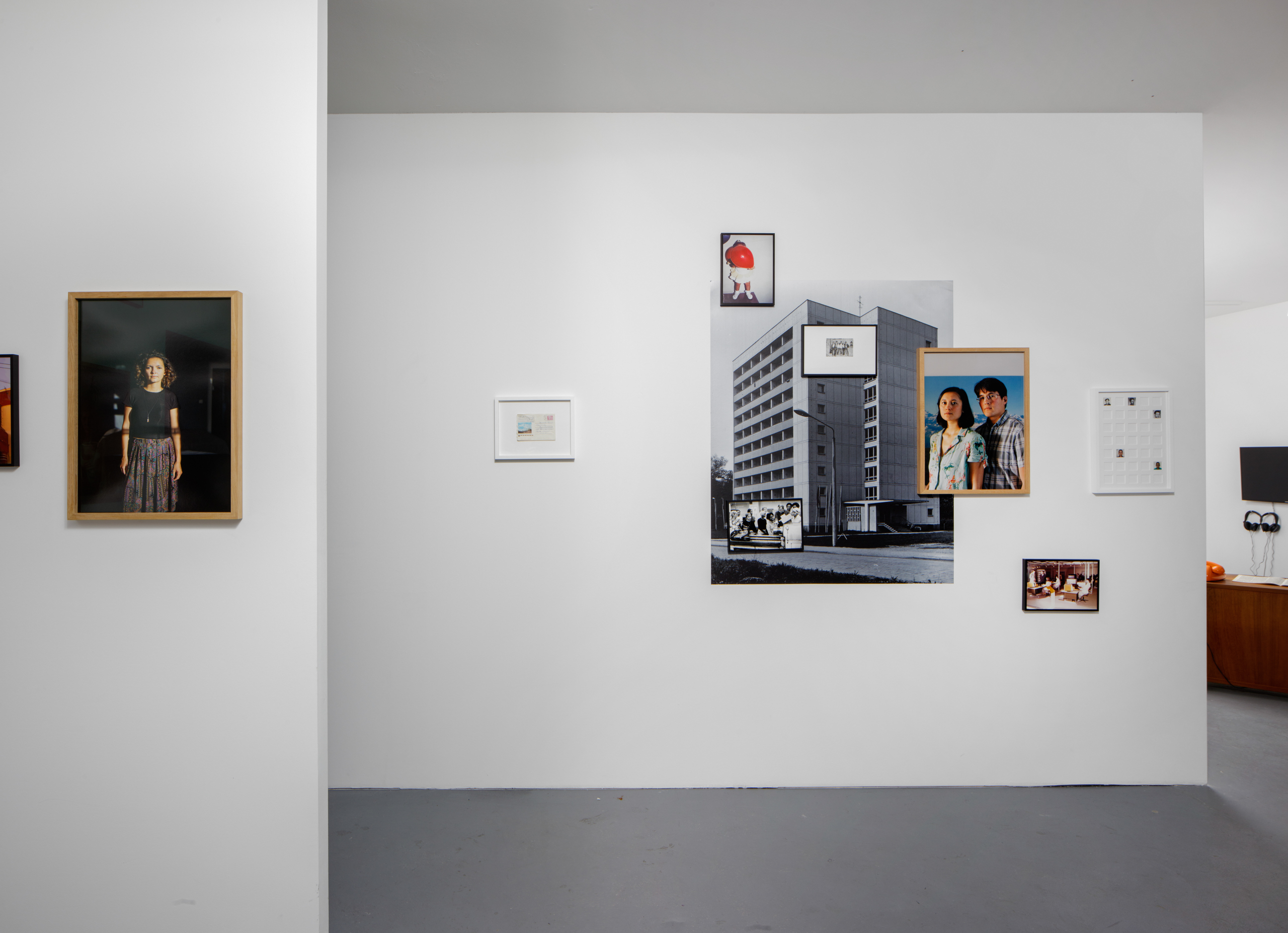
    Das Künstlerpaar Maja Wirkus und Eric Pries setzt sich seit einigen Jahren intensiv mit der Architektur der hierzulande wenig bekannter Moderne in den europäischen Peripherien auseinander. Die Künstler interessiert dabei die darin festgehaltenen Erzählungen und Erfahrungen als Grundlage für die Ergänzung eines zumeist euroamerikanisch geprägten Architekturdiskurses, der noch immer weite Teile des mittel- und osteuropäischen Einflusses auf die gemeinsame Kulturgeschichte ausspart. So entstehen Rechercheprojekte, die in raumbezogenen Installationen eigene Arbeit den in Archiven gewonnenen Einblicken gegenüberstellen. Ihr neuestes Ausstellungsprojekt We Are Millennium Stars beschäftigt sich mit Aspekten der Ökonomie von Netzwerken und der politischen Dimension von Freundschaft.

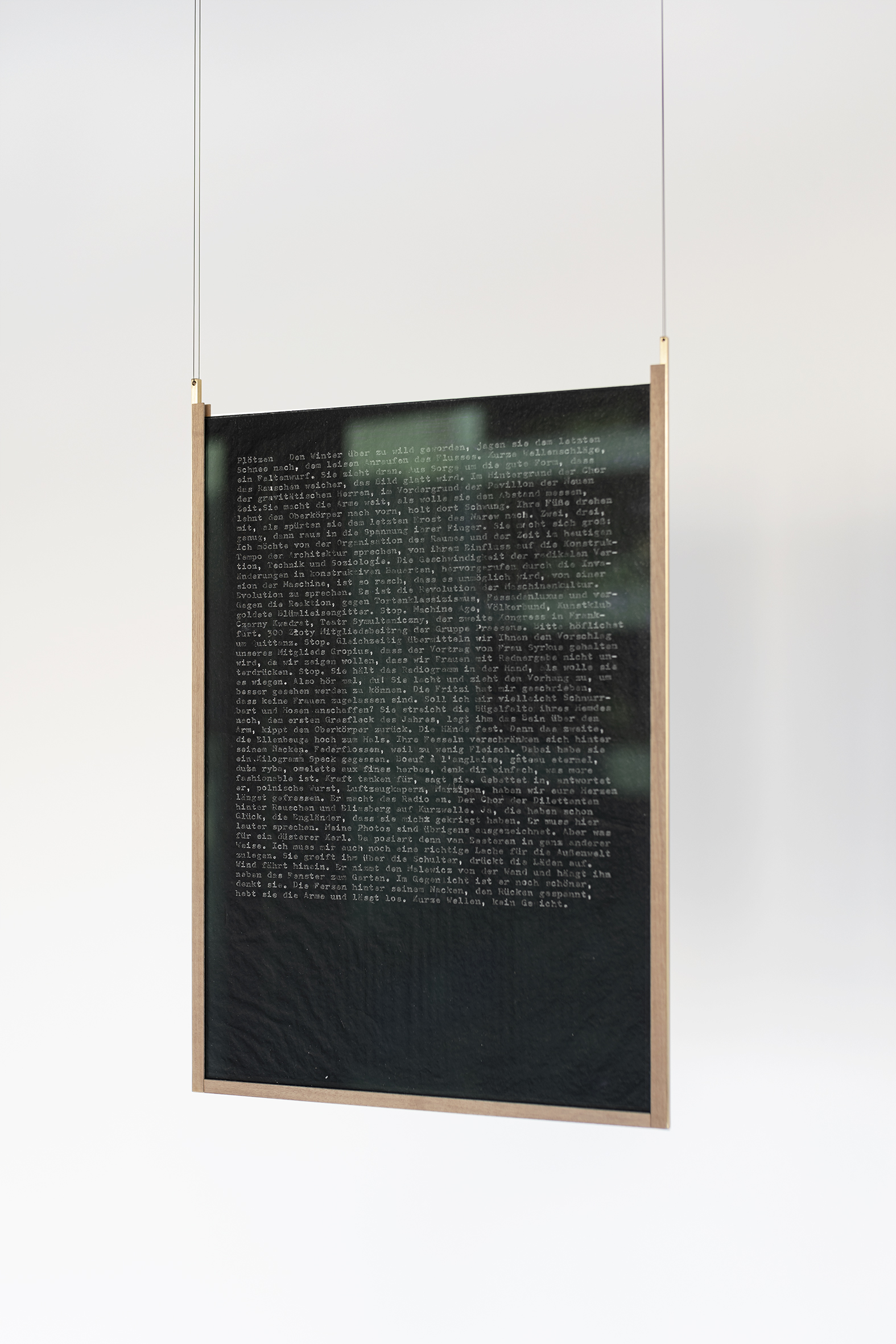
    Inspirationsort der titelgebenden Textarbeit ist ein Haus am Fluss: Serock, Rybaki 2, südlich von Warschau, direkt am Narew gelegen. Es handelt sich um das Wochenendhaus des Architektenpaares Syrkus. We Are Millennium Stars beruht auf der von dort in alle Welt gehenden Korrespondenz von Helena Syrkus mit dem weltumspannenden Netzwerk der internationalen Moderne. In ihr überschreiben sich als private biografische Erinnerung die Ereignisse der 1920er und 1930er Jahre, die Zeit des Zweiten Weltkriegs und die der Blockbildung danach. WIRKUS PRIES übersetzen die Brüche und Lücken in der sich entfaltenden Erzählung in eine poetische Textcollage. Der Text collagiert die historischen Zeitläufe mit den Briefen der Protagonist*innen und anderen Einflüssen, die WIRKUS PRIES bei der künstlerischen Arbeit begleitet haben. So überlagern sich konkrete Wissensräume und verweisen auf die permanente Gleichzeitigkeit von Gegensätzlichen.

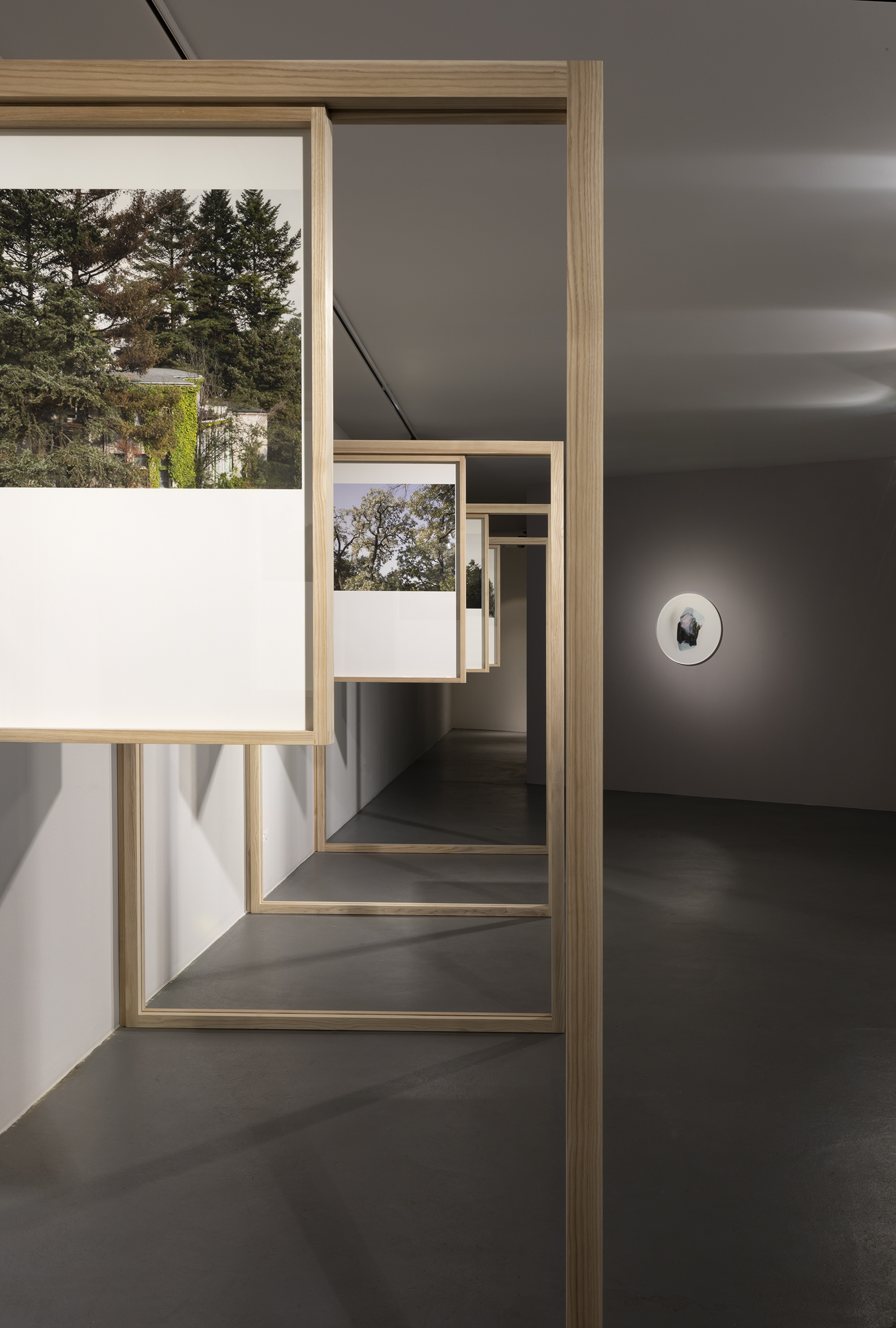
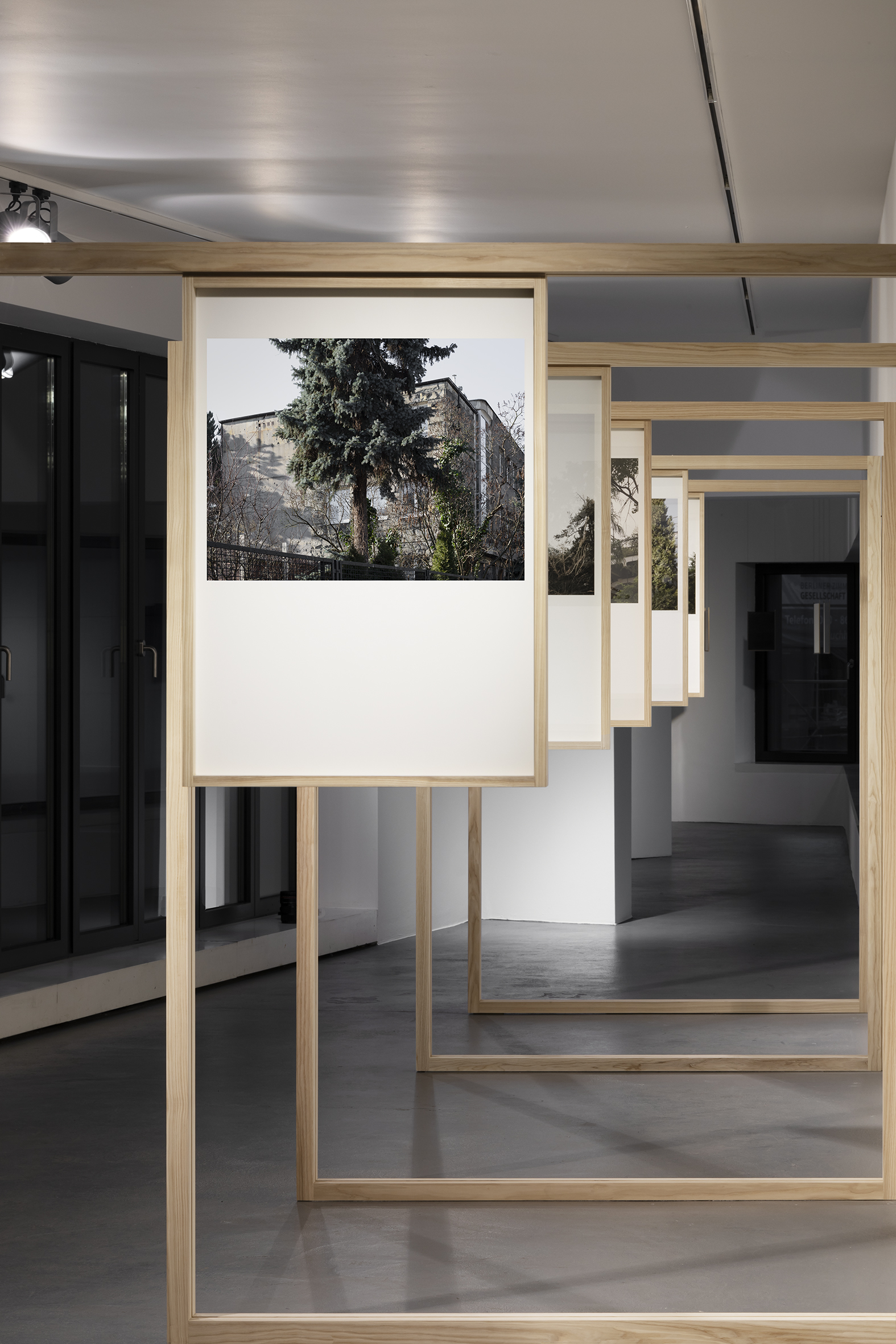
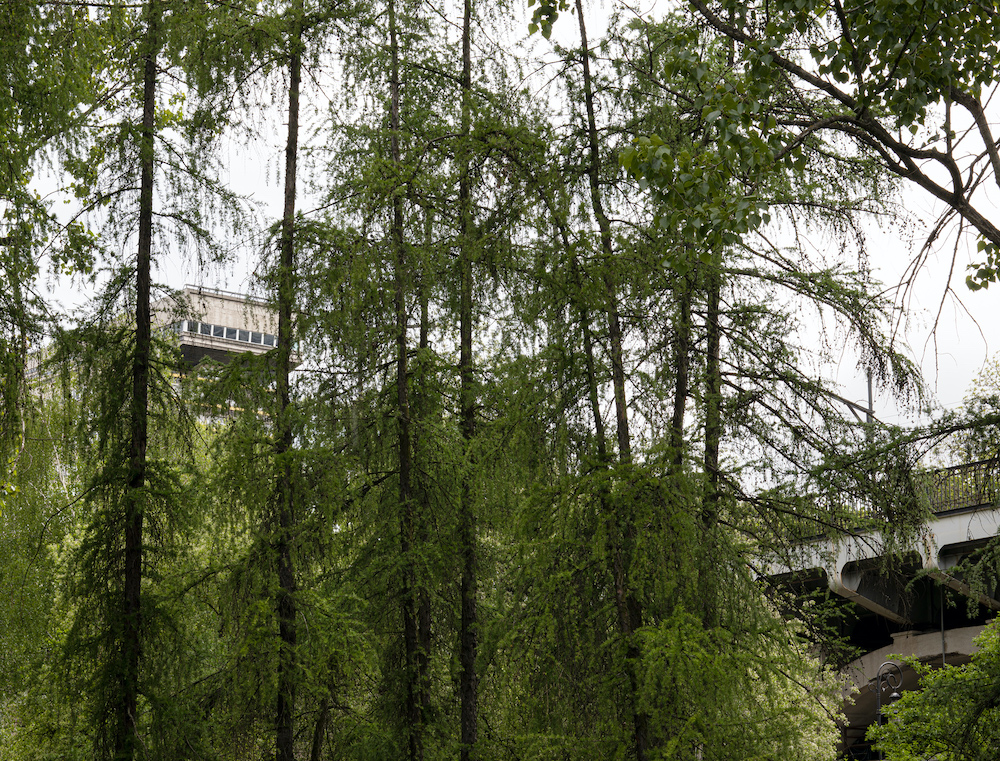
    Konkret wird die Überlagerung in der im Untertitel bereits auf den gelenkten Blick verweisende Installation Ohne Titel (Wzrok).  Die Fotografien zeigen modernistische Architekturen in Warschau, die alle hinter dichten Bewuchs verborgen sind. Diese Bilder reflektieren einerseits unmittelbar die mangelnde Präsenz selbst bedeutender osteuropäischer Architekt*innen und Stadtplaner*innen, und verweisen gleichzeitig auf die hochaktuelle Diskussion einer klimapolitisch notwendigen Veränderung von Stadtarchitektur und -grün.

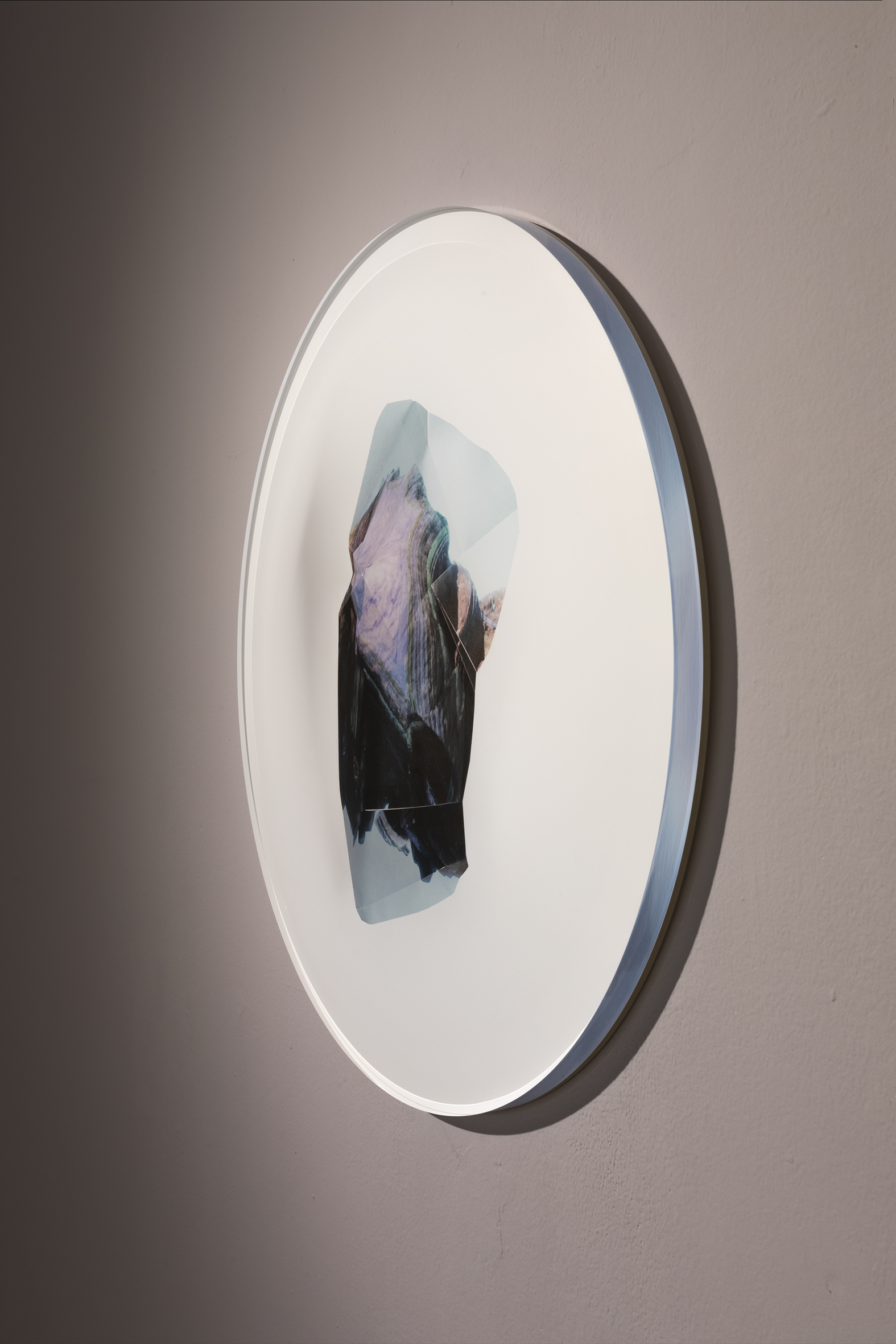
    Grundsätzliche Fragen stellen die Stop-Motion-Filme, an denen WIRKUS PRIES seit 2019 kontinuierlich arbeiten und in deren Kosmos auch der schwere Tondo aus Acrylglas gehört. Beide basieren auf Collagen, Architekturfragmente und Papierobjekte, die während ihrer Recherchen zur Architekturgeschichte entstehen. Auswahl und Überformung der einzelnen Objekte ist dabei stets bedingt durch die jeweilige Fragestellung. Das sind beispielsweise Fragen nach dem Verhältnis von Wirklichkeit und Abbild in der Architekturfotografie, der Transformation von Informationen in Kopierprozessen, der Aneignung von Architektur und dessen Umwertung oder auch der Frage nach Leerstellen – Informationslücken – in Archiven und anderenorts und deren Potential für künstlerische Eingriffe. Ergänzt wird die Filmarbeit durch eine parallele zweistündige Soundarbeit, die sich gemeinsam Zygmunt Baumanns Konzept der „flüssigen Moderne“ zu eigen machen und die Artefakte, die vordergründig für das Immobile stehen, in Bewegung setzen.

    Die Ausstellung wurde kuratiert von Susanne Prinz.

    For several years now, the artist couple Maja Wirkus and Eric Pries have been intensively examining the architecture of modernism in the European peripheries, which is little known in this country. In doing so, the artists are interested in the narratives and experiences recorded in them as a basis for supplementing a mostly Euro-American architectural discourse that still leaves out large parts of the Central and Eastern European influence on our common cultural heritage. This results in research projects that juxtapose their own work with insights gained in archives in space-related installations. Her latest exhibition project We Are Millennium Stars deals with aspects of the economy of networks and the political dimension of friendship.

    The place of inspiration for the titular text work is a house on the river: Serock, Rybaki 2, north of Warsaw, situated directly on the Narew. It is the weekend house of the architect couple Syrkus. We Are Millennium Stars is based on Helena Syrkus‘ correspondence with the global network of international modernism, which goes out from there to all corners of the world. In it, the events of the 1920s and 1930s, the period of the Second World War and the subsequent formation of the blocs thereafter, are overwritten with private biographical memories. WIRKUS PRIES translate the breaks and gaps in the thus unfolding narrative into a poetic text collage. The text collages the historical periods with the letters of the protagonists and other influences that accompanied WIRKUS PRIES in their artistic work. In this way, concrete spaces of knowledge overlap and refer to the permanent simultaneity of opposites.

    The superimposition becomes concrete in the installation Untitled (Wzrok), which refers to the directed gaze in its subtitle.  The photographs show modernist architecture in Warsaw, all hidden behind dense vegetation. On the one hand, these images directly reflect the lack of presence of even important Eastern European architects and urban planners, and at the same time refer to the highly topical discussion of a change in urban architecture and city green that is necessary for climate policy.

    The stop-motion films, which WIRKUS PRIES has been working on continuously since 2019 and whose cosmos also includes the heavy acrylic glass tondo, pose fundamental questions. Both are based on collages, architectural fragments and paper objects created during their research into architectural history. The selection and reshaping of the individual objects is always conditioned by the respective question. These are, for example, questions about the relationship between reality and image in architectural photography, the transformation of information in copying processes, the appropriation of architecture and its revaluation, or the question of empty spaces – gaps in information – in archives and elsewhere and their potential for artistic intervention. The film work is complemented by a parallel two-hour sound work, both appropriating Zygmunt Baumann’s concept of ‚liquid modernity‘ and setting in motion the artefacts that ostensibly stand for the immobile.

    The exhibition was curated by Susanne Prinz.

    Maja Wirkus und Eric Pries leben in Warschau, Berlin und Kassel. Beide arbeiten auch unabhängig. | Maja Wirkus and Eric Pries are based in Warsaw, Berlin and Kassel. Both also work individually.

    Während der Ausstellung erscheint ein Überblickskatalog | An overview catalogue will be published during the exhibition.

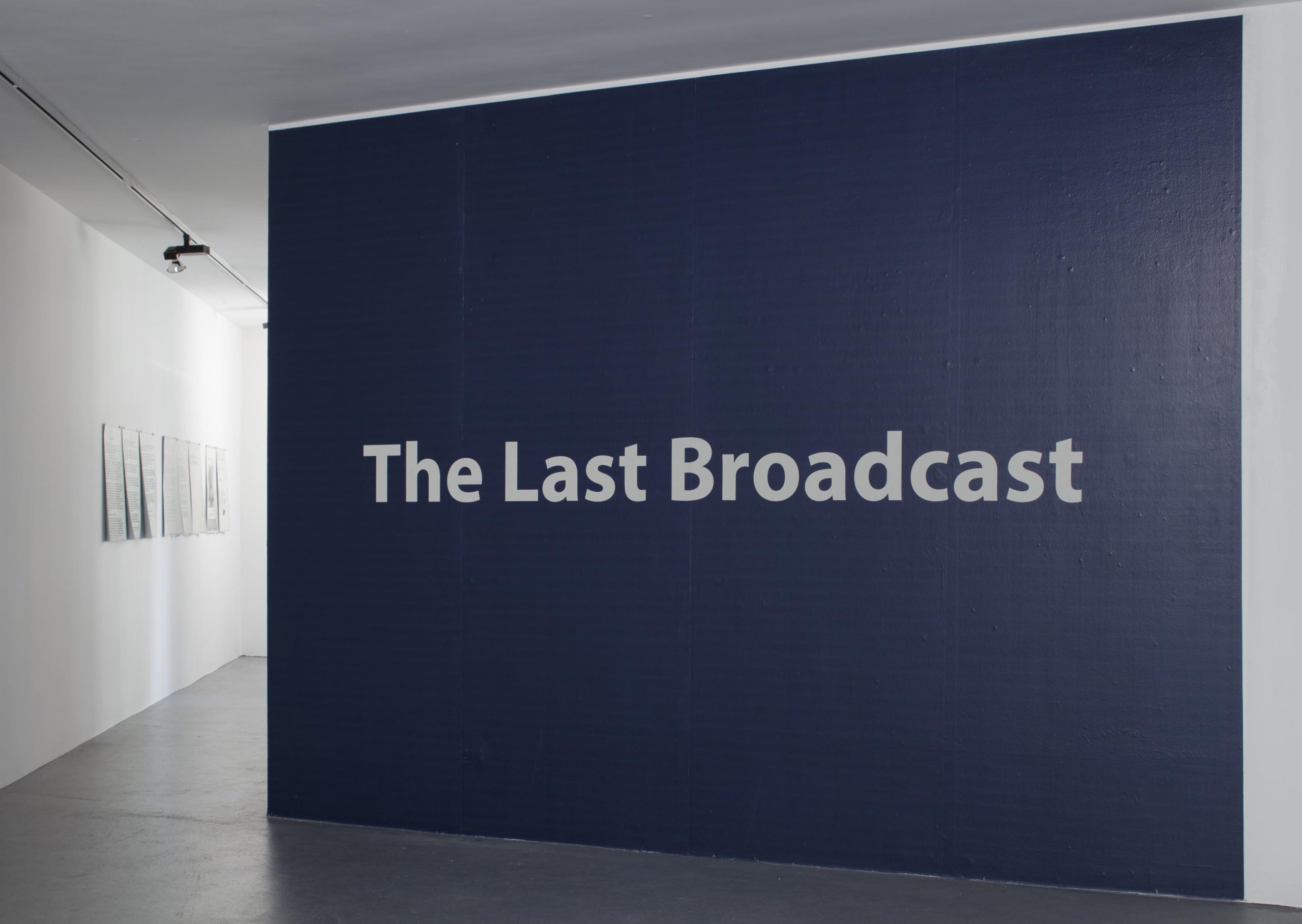
  • THE LAST BROADCAST

    THE LAST BROADCAST

    by DECLAN CLARKE

    Finissage with launch of the catalogue The Museum of Broadcasting and Loneliness: April 7, 2022 | 18 h*

    25.02. – 8.04.22  |  Mi-Fr / Wed-Fri 14-18:00 h + nach Vereinbarung und per Zufall / upon appointment and randomly

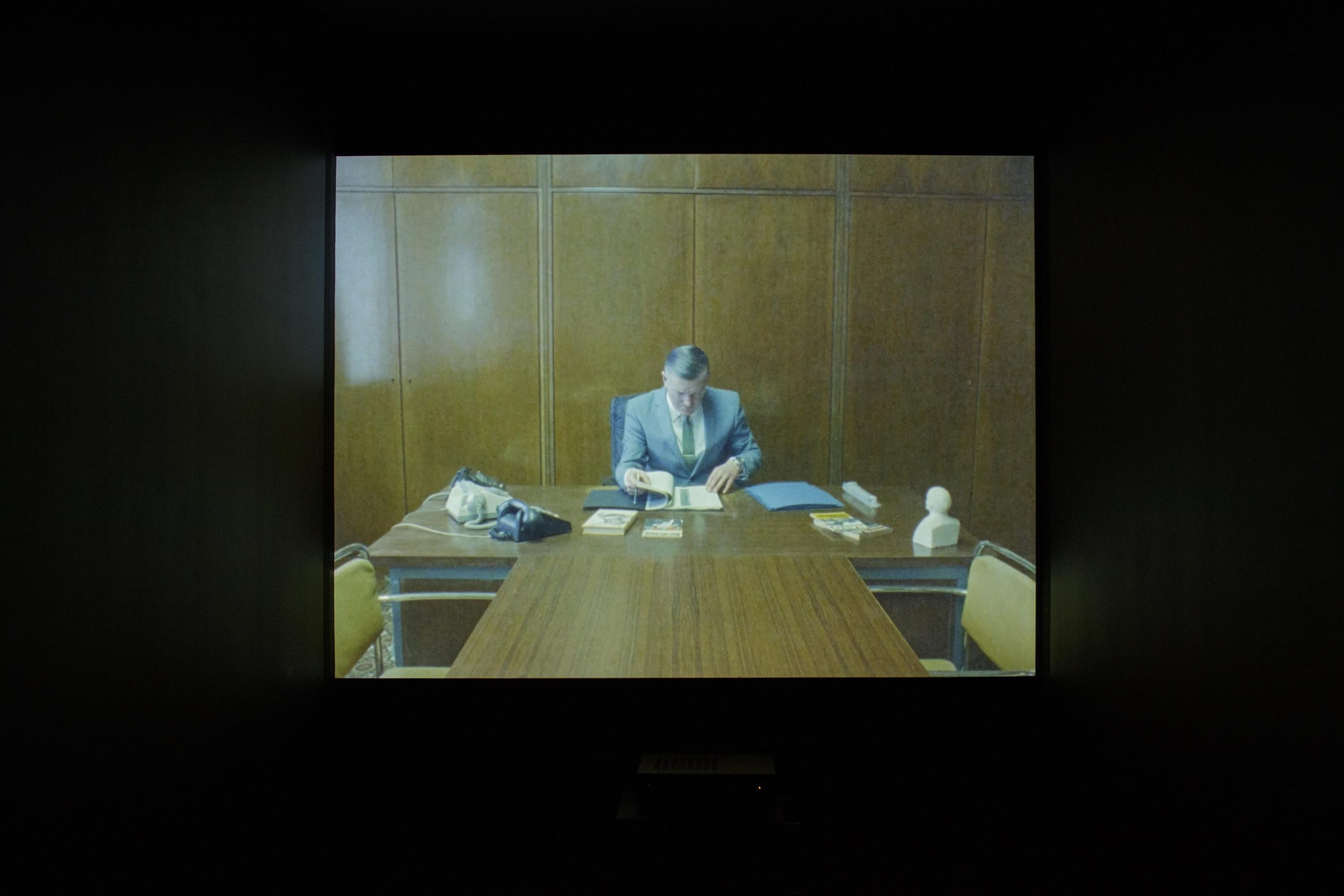
    Im Zentrum von Declan Clarkes Ausstellung The Last Broadcast steht sein neuer Film What Are the Wild Waves Saying?, der hier Premiere hat. Der romantische Titel, der auf ein Lied aus der Mitte des 19. Jhdts zurückgeht, dass einen Dialog des berühmten Geschwisterpaares aus Dickens Dombey and Son imaginiert, dient Clarke in erster Linie als metaphorische Analogie zwischen den Wellen des Meeres und denen des Rundfunks.

    Tatsächlich erzählt der Film eine vielschichtige und komplexe Geschichte von Transition und Transmission, von medialer Beeinflussung, von überraschenden Zusammenhängen und gewissen historischen Parallelen zwischen einem geteilten Irland und einem gleichermaßen getrennten Deutschland, inklusive der dazugehörigen Geschichte von Desinformation und Spionage. Mit Stuart Ryan steht erstmals eine reale Figur im Mittelpunkt, die ihre fiktiven Vorläufer aus früheren Filmen des Künstlers an suspekter Undurchsichtigkeit und charakterlicher Ambiguität weit übertrifft.

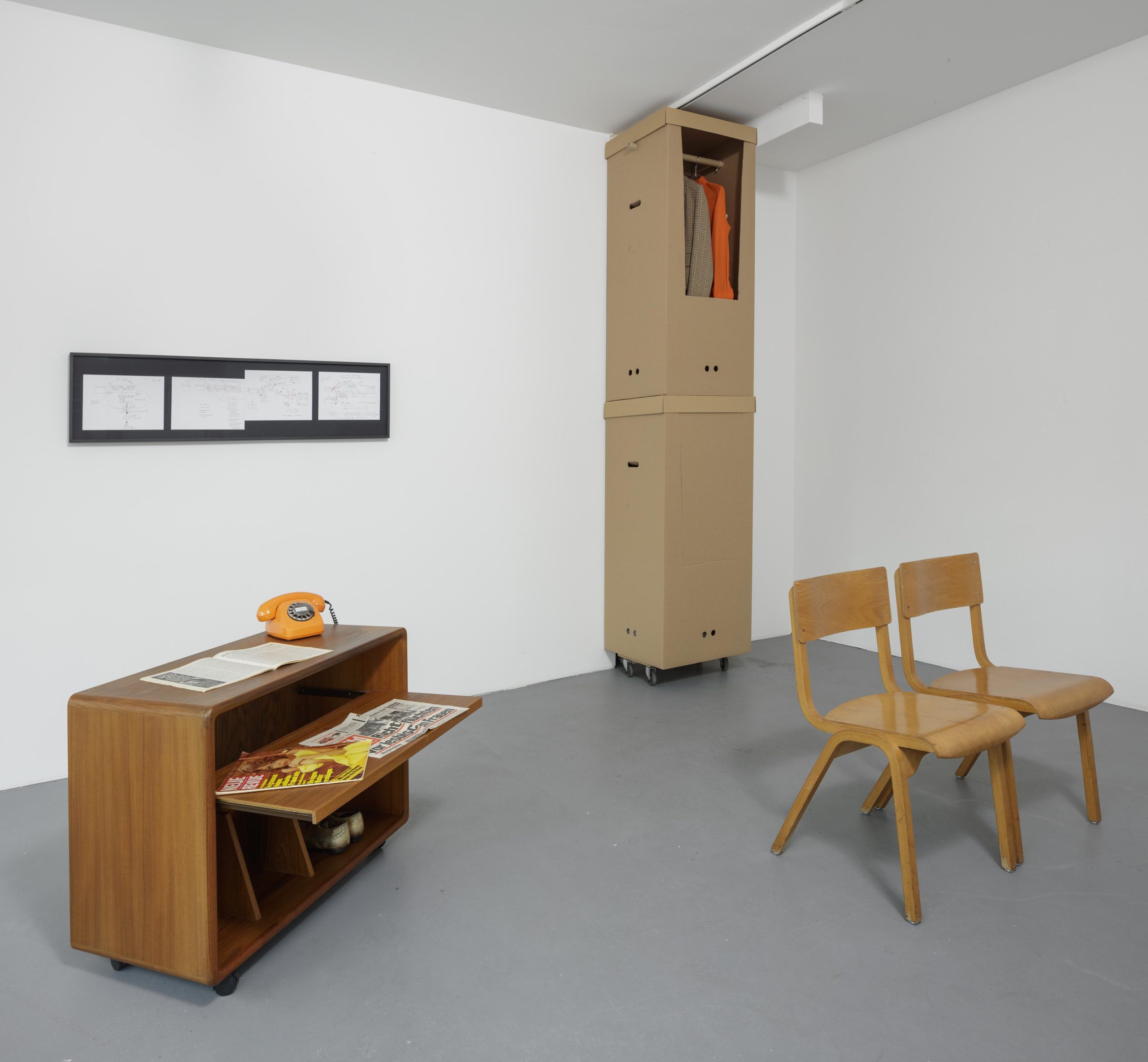
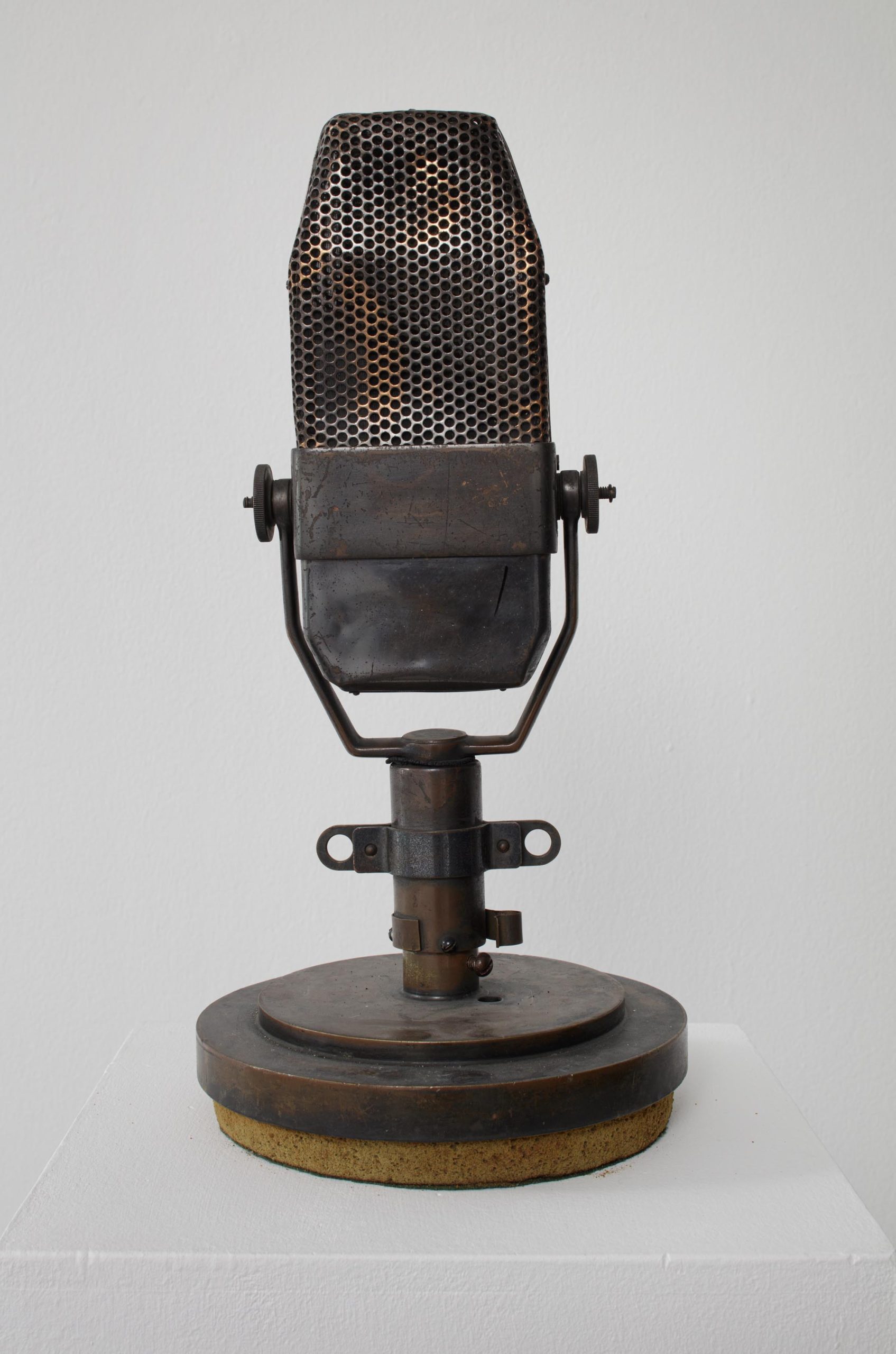
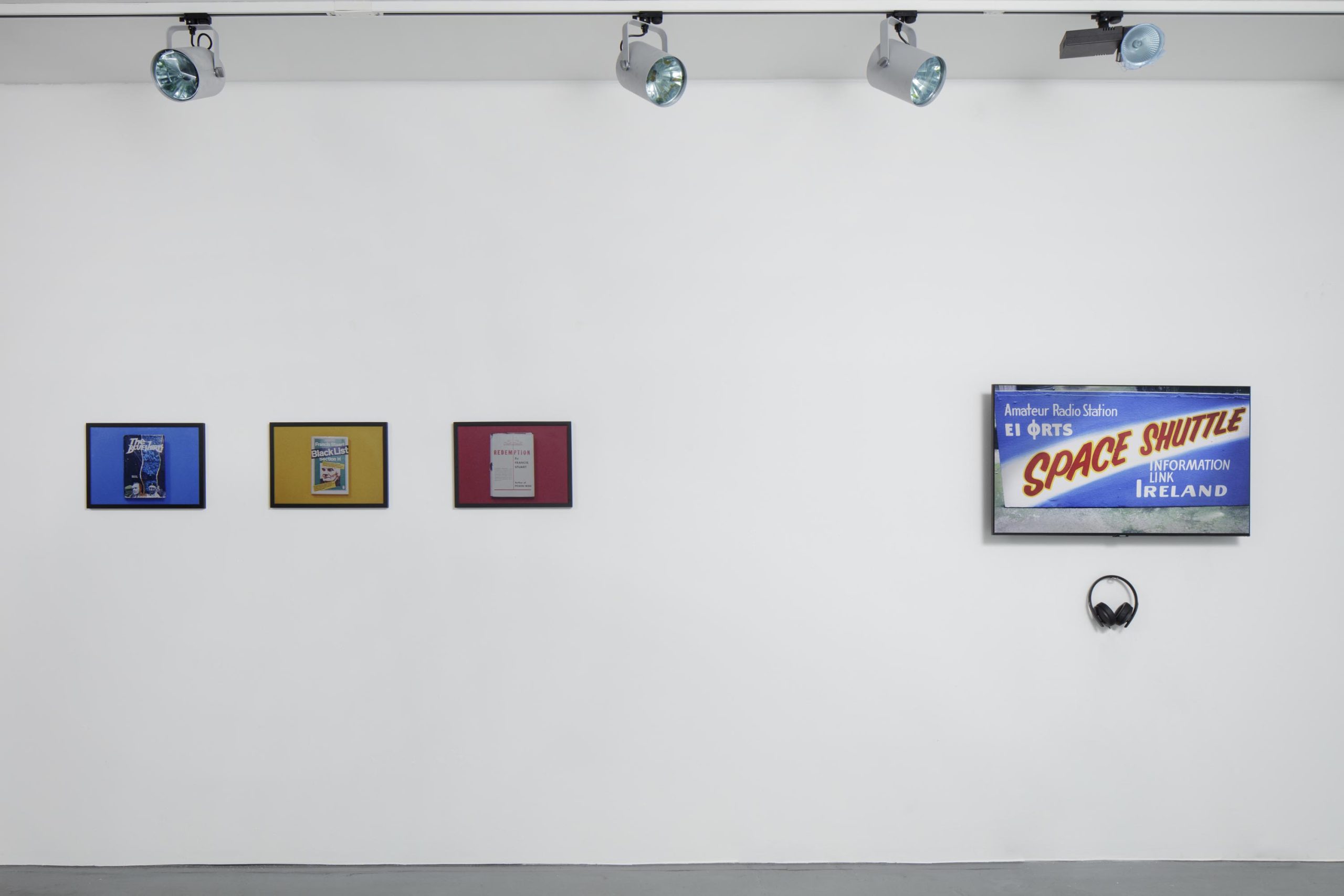
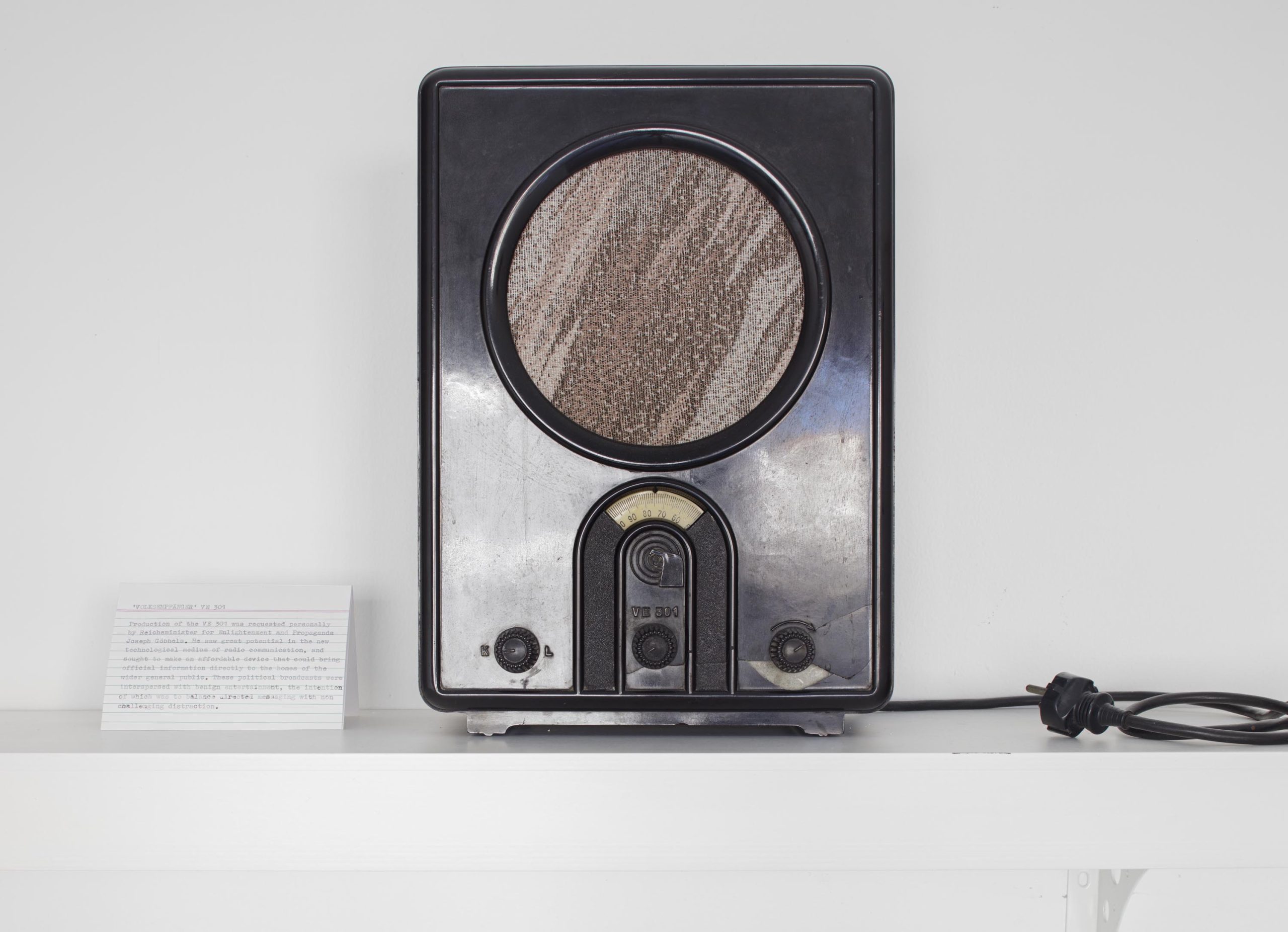
    Wie mehrmals zuvor arbeitet Clarke auch in diesem Film parallel im narrativen und im Dokumentationsmodus und verbindet diese mit Elementen des Noir- und Spionagegenres. Speziell für die Ausstellung im Kunstverein  produziert, wird der Film von einer Installation begleitet, die Requisiten, Fotos, Texte und historische Exponate aus einem realen, aber heute geschlossenen Rundfunkmuseum zu einem assoziationsreichen Netz verwebt.

    Der Film wie auch die Installation nehmen intensiv Bezug auf die Rolle des Rundfunks in Konfliktzeiten, wie er sie durch die Verbreitung politischer Propaganda besonders während des Zweiten Weltkriegs und des darauffolgenden Kalten Krieges spielte. Als in Berlin lebender Ire war es naheliegend, diese zentralen Themen anhand einer Reihe historischer Verbindungen zwischen Irland und Deutschland zu untersuchen.

    Die Ausstellung hatte 2021 ein Prequel im Kunstverein am Rosa-Luxemburg-Platz und knüpft thematisch an Clarkes Einzelaustellung 2020 im Salzburger Kunstverein an. 2023 wird sie eine Forstsetzung in der RHA (Royal Hibernian Academy) in Dublin finden, wo die Gesamtschau aller ‚Museum of Loneliness’-Filme und -Installationen geplant ist.

    Declan Clarke, geb. 1971, lebt in Berlin, wohin er nach seinem Studium am Chelsea College of Art (London) und National College of Art & Design in Dublin zog. Seine Filme werden auf internationalen  Filmfestivals wie dem Tromsø International Film Festival , dem New York Underground Film Festival  und dem FID Marseille gezeigt, wo er 2021 mit dem Georges de Beauregard International Award ausgezeichnet wurde. Er hat im PS1 MoMA (New York) der Tate Britain (London) dem HKW Berlin, dem Beijing Art Museum of Imperial City, der 2. Moskauer Biennale und dem Centre for Contemporary Art (Lagos) ausgestellt.

    Ausstellung und Film sind von Susanne Prinz produziert.


    At the heart of Declan Clarke’s exhibition The Last Broadcast is his new film What Are the Wild Waves Saying?, which premieres here. The romantic title, which harks back to a mid-19th-century song imagining a dialogue between the famous Dickens siblings from his novel Dombey and Son, serves Clarke primarily as a metaphorical analogy between the waves of the sea and those of the radio.

    In fact, the film tells a multi-layered and complex story of transition and transmission, of media influence, of surprising connections and certain historical parallels between a divided Ireland and an equally divided Germany, including the associated history of disinformation and espionage. With Stuart Ryan, a real character is the focus for the first time, who far surpasses its fictional predecessors from the artist’s earlier films in terms of suspicious opacity and character ambiguity.

    As some times before, Clarke works in this film in parallel in narrative and documentary mode and combines them with elements of the noir and espionage genre. Produced especially for the exhibition at the Kunstverein, the film is accompanied by an installation that weaves props, photos, texts and historical exhibits from a real but now closed broadcasting museum into a network rich in associations.

    Both the film and the installation make intense reference to the role of broadcasting in times of conflict, as it played it through the dissemination of political propaganda, particularly during World War II and the subsequent Cold War. As an Irishman living in Berlin, it was natural to explore these central themes through a range of historical connections between Ireland and Germany.

    Our exhibition had a prequel in 2021 and ties in thematically with his solo exhibition in 2020 at the Salzburger Kunstverein. It will be continued in 2023 at the RHA (Royal Hibernian Academy) in Dublin, where the overall view of all ‚Museum of Loneliness‘ films and installations is planned.

    Declan Clarke, born in 1971, lives in Berlin, where he moved after studying at Chelsea College of Art (London) and the National College of Art & Design in Dublin. His films are screened at international film festivals such as Tromsø International Film Festival, New York Underground Film Festival and FID Marseille, where he received the Georges de Beauregard International Award in 2021. He has exhibited at PS1 MoMA (New York), Tate Britain (London), HKW Berlin, Beijing Art Museum of Imperial City, 2nd Moscow Biennale and Center for Contemporary Art (Lagos).

    Exhibition and film are produced by Susanne Prinz.

    * Die Eröffnung findet unter Berücksichtigung der gültigen Covid-Regeln statt (2G+ und FFP2 Maske) / The opening will be withing established covid-19 guidelines.

    Film und Ausstellung wurden ermöglicht durch / film and exhibition have been supported by:
  • Moos oder eine Studie über zerebrale Abgründe, die durch das Leben unter borealen Bedingungen verursacht werden

    Finissage, 29.1.22, 14-18 h

    20.11.21 — 28.1.22  |  Mi-Sa / Wed-Sat 14-18 h und auf Anfrage oder per Zufall / upon request and randomly  |

    for English please scroll down 
    Aus Unkenntnis, hedonistischem Desinteresse oder im Zuge der Verdrängung der eigenen Mitverantwortung nehmen wir den drastischen Kahlschlag der Arten und Spezies gar nicht wahr. Die Systemökologie hat die Zusammenhänge, die dazu führen, längst geklärt, dennoch dominiert abseits der Biologie noch heute die Vorstellung von der Natur als harmonischem System, in das sich der Mensch mit etwas gutem Willen einordnen kann.Unzweifelhaft ist das Anthropozän noch nicht im Kopf angekommen. Natur ist dort zu tief als Metapher eingeschrieben. Was ihr nicht entspricht, genießt kaum Aufmerksamkeit. So verändert sich der globale Norden, aus dem das schmelzende Eis und der zusätzliche Regen kommen, die in absehbarer Zukunft erst das Bikini-Atoll und dann Amsterdam untergehen lassen, nahezu unbemerkt. Tatsächlich ist die Landschaft dort relativ artenarm und erholt sich daher im Vergleich zu anderen Vegetationen ungleich langsamer von menschlichen Eingriffen und Umweltkatastrophen. Dennoch spekulieren nicht wenige unverdrossen mit den im schwindenden Eismeer zu erwartenden neuen offenen Schiffrouten, mit der leichteren Zugänglichkeit und damit Wirtschaftlichkeit beim Abbau von Bodenschätzen, mit ganzjährig abbaubaren Torfbeständen und frostfreien Erdölfeldern.Je kleiner die Lebensform desto weniger wird dabei über sie nachgedacht. Moos – genau wie Pilze, Flechten oder Bakterien – existiert in dieser Vorstellungswelt unterhalb des Radars. Sie alle sind kleine, aber zentrale Teile des Ökosystems borealer Landschaften, deren Bild – wie es sowohl die Soziologie als auch die Anthropologie lehren – ein kultureller Entwurf ist, der sich aber dennoch, oder gerade deshalb wirkmächtig in Mentalitäten einschreibt. Moos verweist im Rahmen des Ausstellungskonzepts daher nicht nur auf sich selbst, sondern steht für die Zukunft und die Vergangenheit, aber auch für Sensualismus und Idealismus. Moos steht für ‚imaginierten Norden‘, der von außen an die Region herangetragen wurde und tief im Selbstbild der Bewohner ganzer Nationen verankert ist. Die Ausstellung vereint Arbeiten von Künstler*innen, die sich vor dem Hintergrund der realen Entwicklung und mit dem Erbe eines gescheiterten romantischen Idealismus im Gepäck, explizit mit den Bildern und Realitäten des globalen Nordens auseinandersetzen. Sie alle teilen die Überzeugung, dass Kunst neben dem visuellen vor allem für das kritische Bewusstsein einer Gesellschaft Verantwortung trägt.Das finnische Duo IC-98 (Visa Suonpää und Patrik Söderlund) inszeniert in seinem Film Omnia mutantur (2018) in poetischen Bildern die Langsamkeit subpolarer Natur, indem sie an einer einzigen Stelle Versionen der gleichen Landschaft zu verschiedenen Zeiten zeigen– wie es vor den Menschen war und wie es aussehen wird, wenn wir schon lange nicht mehr da sind. Die Kollaboration mit kleinsten, nicht-menschlichen Organismen kennzeichnet die Bilder und Installationen von Alma Heikkilä, denen sich auch die Rasterelektronenmikroskopbilder aus den Serien 8 Heads High (2016) und Hybrid Matter (2018) von Andreas Greiner zuwenden. Julian Charriére & Julius von Bismarcks Fotografien dokumentieren eine Serie von Interventionen in die Natur 2012/13, die sich mit der disparaten Wahrnehmung der Natur zwischen Realität und Vorstellung und den daraus resultierenden Problemen auseinandersetzt. Ähnlich argumentiert Goshka Macugas Teppichbild Latent Image (2020) aus der Serie ihrer großen Wald-Bilder. Es reflektiert das historisch und ökonomisch bedingte, sich in vielschichtigen inneren Bildern manifestierende Verhältnis des Menschen zum Ökosystem Wald. Antti Majava wird im Rahmen der Ausstellung eine Lecture Performance über ökonomische Aspekte des Waldes als CO2-Speicher halten.Die Ausstellung ist kuratiert von Susanne Prinz und entstand in Kooperation mit dem Finnland-Institut, Berlin.*ITINERANT INTERLUDES präsentiert kurze performative Interventionen in ausgewählten Berliner Galerien/Kunstvereine. Performances reichen von der zeitgenössischen Avantgarde über Elektroakustik bis hin zu Improvisation und sind in Zusammenarbeit mit den beteiligten Künstler, Galeristen und Musiker konzipiert. Ziel der Serie ist es, eine Schnittstelle anzubieten und damit einen lebendigeren Dialog zwischen Rezipienten visueller und audio-akustischer Künste anzuregen. ITINERANT INTERLUDES 2021 wird durch die freundliche Unterstützung der initiative neue musik (INM) ermöglicht und kuratiert von Laurie Schwartz.

    Bitte haben Sie Verständnis dafür, dass für alle Veranstaltungen die 2G+ Regeln gelten. | Please understand that the 2G+rules apply to all events.

    Out of ignorance, hedonistic disinterest, or due to suppressing our own shared responsibility, we do not even notice the drastic elimination of all kinds of species. Systems ecology has long since clarified the connections that lead to this. Besides that, the idea of nature as a harmonious system still dominates today, into which, with a little good will, humans can integrate themselves.

    There is no doubt that the Anthropocene has not yet reached our heads. Nature is inscribed in us too deeply as a metaphor. What does not relate to it attracts hardly any attention. With the exeption of the poles the global north, from which melting ice and extra rain come which in foreseeable future will first sink Bikini Atoll and then Amsterdam, is changing almost unnoticed. This is despite the fact, that the landscape there is relatively poor in species and recovers much more slowly from human interference and environmental disasters compared to other vegetations. Nevertheless, many speculate undauntedly that the new expected open shipping routes through the dwindling Arctic Ocean will bring easier accessibility and thus economic efficiency while mining of mineral resources as well as year-round degradable peat stocks and frost-free oil fields are  an added plus. 

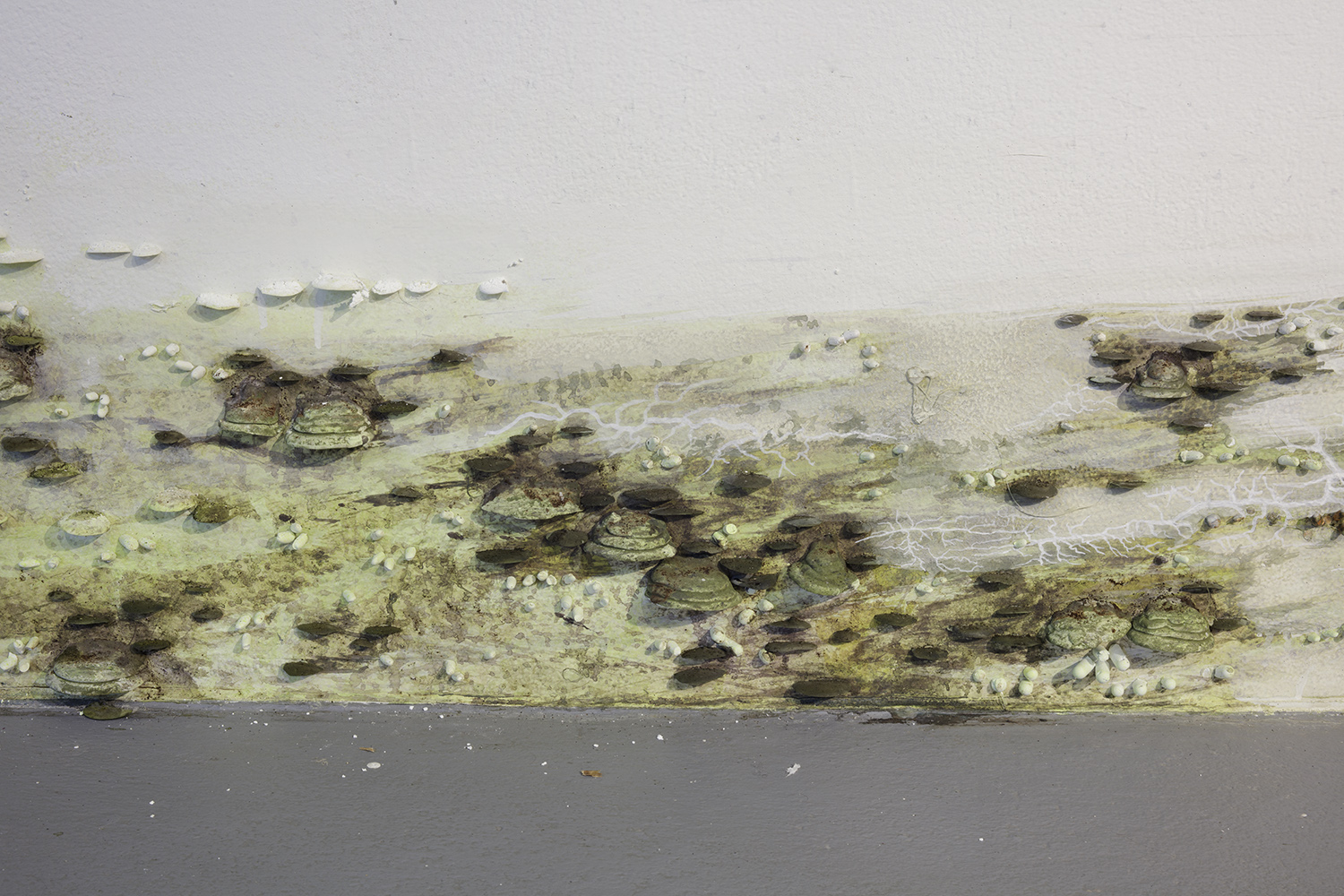
    The smaller the life form, the less thought is given about it. Moss – just like fungi, lichens or bacteria – exists in our world of imagination under the radar. They are all small but central parts of the ecosystem of boreal landscapes. That image – as both sociology and anthropology teach – is a cultural blueprint that nevertheless, or precisely because of this, is effectively inscribed in mentalities. In the context of the exhibition concept, Moss not only refers to itself, but also stands for the future and the past, and for sensualism and idealism. Moss stands for ‚imagined north‘, which once was brought to the region from outside and is now deeply anchored in the self-image of the inhabitants of entire nations. The exhibition connects works by artists who explicitly deal with the images and realities of the global north with the background of real developments and the legacy of failed romantic idealism. They all share the conviction that art, in addition to the visual, is primarily responsible for a society’s critical awareness.

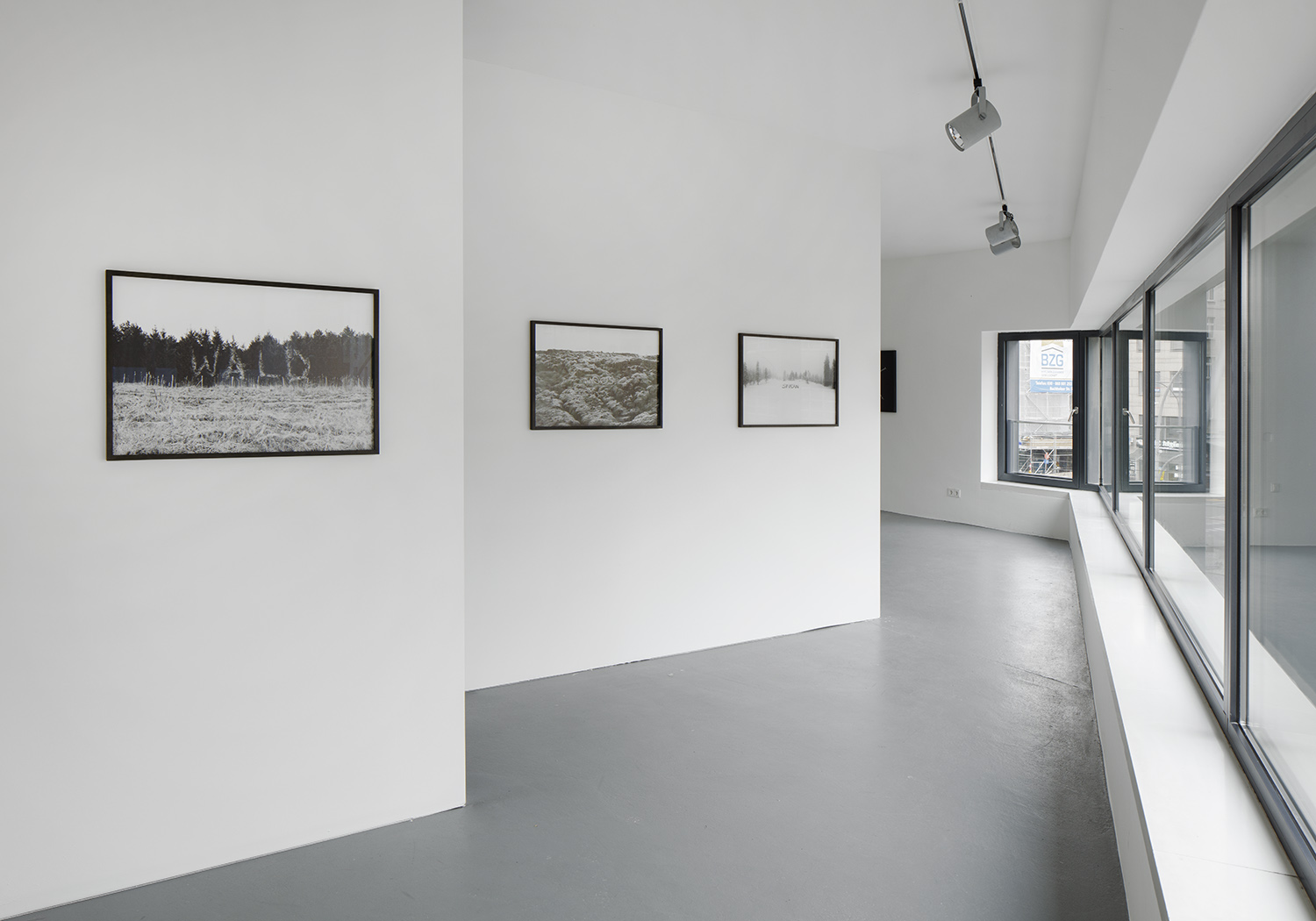
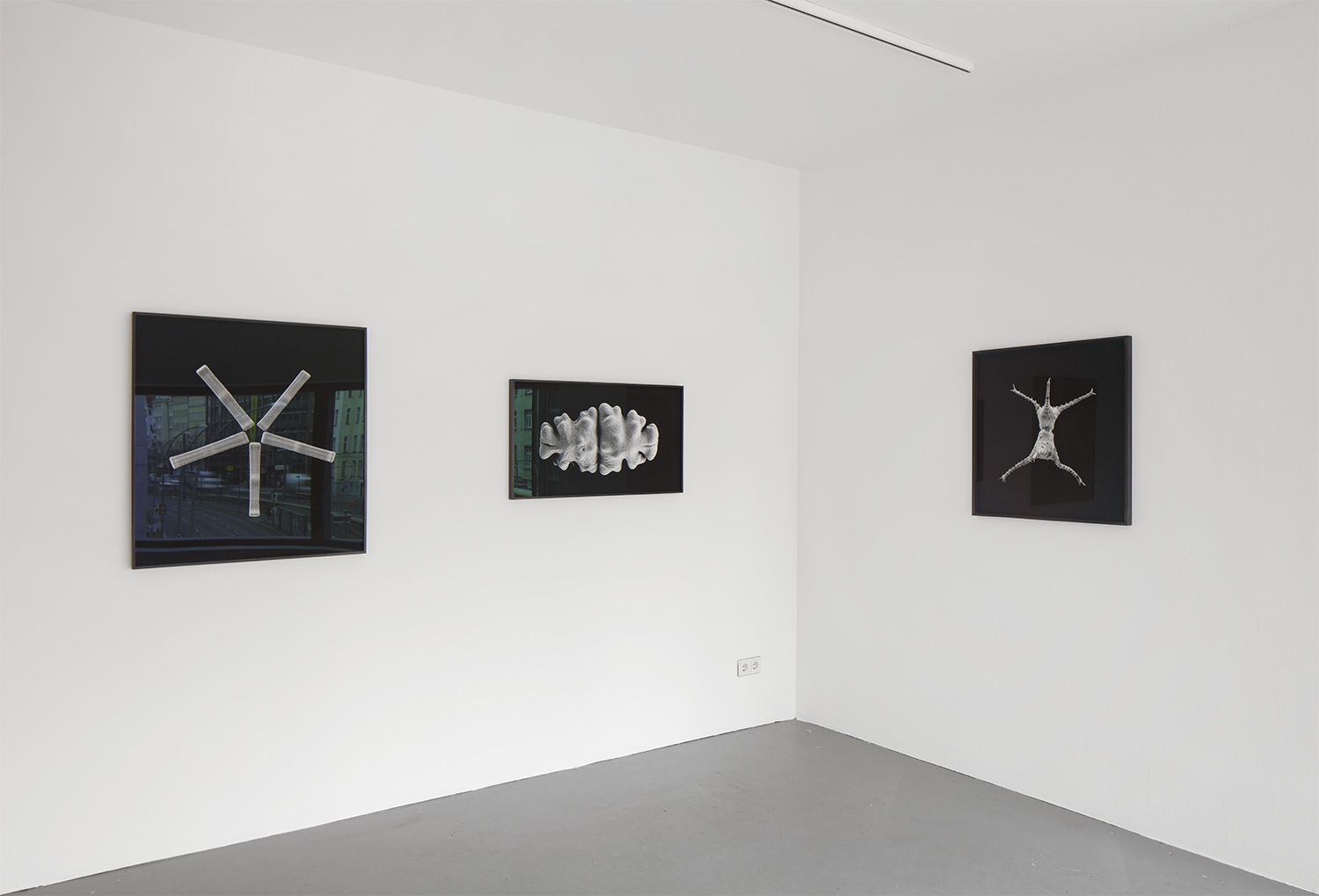
    In their film Omnia mutantur (2018), the Finnish duo IC-98 (Visa Suonpää and Patrik Söderlund) stages the slowness of subpolar nature in poetic images by showing versions of the same landscape at different times in a single place – how it was before the people and what it will look like when we have not been there for a long time. The collaboration with the smallest, non-human organisms characterizes the images and installations by Alma Heikkilä, to which the scanning electron microscope images from the series 8 Heads High (2016) and Hybrid Matter (2018) by Andreas Greiner also is directed. Julian Charrière & Julius von Bismarck’s photographs document a series of interventions in nature 2012/13, which deal with the disparate perception of nature between reality and imagination and the problems resulting from it. Goshka Macuga’s carpet work Latent Image (2020) argues similarly. The work reflects the historically and economically determined relationship between humans and the forest ecosystem, which manifests itself in multi-layered inner images. As part of the exhibition, Antti Majava will give a Lecture Performance on economic aspects of forests as CO2 storage.

    Interludes are by Martyna Poznańska, who is a transdisciplinary artist and explores symbiotic relationships between human and non-human beings, and the British-Pakistani soprano Mimi Doulton who will deconstruct some Scandinavian classics from the age of romanticism.*

    The exhibition is curated by Susanne Prinz in collaboration with the Finland-Institute, Berlin.

    19.11.21, interludes von Mimi Doulton (Sopran) und Martyna Poznańska (Electronics)*

    ITINERANT INTERLUDES presents pop-up performances in select galleries and institutions of art throughout Berlin. Programs range from the contemporary avant-garde to improvisation, from the acoustic to the electronic, and are curated in collaboration with respective galleries, artists and musicians. The series aims to provide a point of intersection and, ultimately, to stimulate a more vibrant dialogue between audiences of the visual and aural arts. The 2021 series is made possible with support from the initiative neue musik berlin. The project is curated by Laurie Schwartz.

  • Home, sweet home … oder unterdrückte, wertkonservative Sehnsucht

     16.9.- 2.10.2021  |  Mi-Fr / Wed-Fri 14-19 h + nach Vereinbarung / upon appointment | Aufgrund einer privaten Veranstaltung  ist am 24.9.21 nur bis 17 h geöffnet

    mit Arbeiten von /with works by Kathryn Andrews, Fehmi Baumbach, Thomas Baldischwyler, Dirk Bell, Michael Beutler, Thomas Demand, Anna Fasshauer, Philipp Fürhofer, Martin Kippenberger, Elke Krystufek, Dominik Steiner, Jan Timme, Michaela Eichwald, Michael Krebber, Michaela Meise, Henning Bohl, Giorgia Gardner Gray, Michael Sailstorfer, Alex Müller, Jana Müller, Christian Philipp Müller, Julian Turner, Mirjam Thomann, Geerten Verhuis, Iskender Yediler, Heimo Zobernig aus der Sammlung SteDi / from the SteDi Collection

    ausgesucht von / selected by Frank Hauschildt und Susanne Prinz

    Inspiriert von den neo-dadaistisch geprägten, subversiven Werken der Sammlung gibt die Ausstellung in einer imaginierten Inszenierung Einblick in das Leben mit Kunst aus einer ganz individuellen Perspektive.

    Die Sammlung SteDi ist eine Privatsammlung und umfasst zeitgenössischer Kunst der letzten 30 Jahre mit Schwerpunkt auf der deutschen Kunstszene inklusive gelegentlicher Einsprengsel von Arbeiten gleichgesinnter Künstler*innen aus Europa und den USA.

    / Inspired by the neo-Dadaist, subversive works of the collection, the exhibition gives an imagined staging and insight into life with art from a very individual perspective. The SteDi Collection is a private collection and comprises contemporary art from the last 30 years with a focus on the German art scene, including the occasional sprinkling of works by like-minded artists from Europe and the USA

    Seit 20.8.21 gilt wieder die 3G-Regel. Darum bitte Impf-, Genesungs- oder Testnachweise mitbringen. Kommen Sie bitte auch weiterhin mit FFP2-Maske.