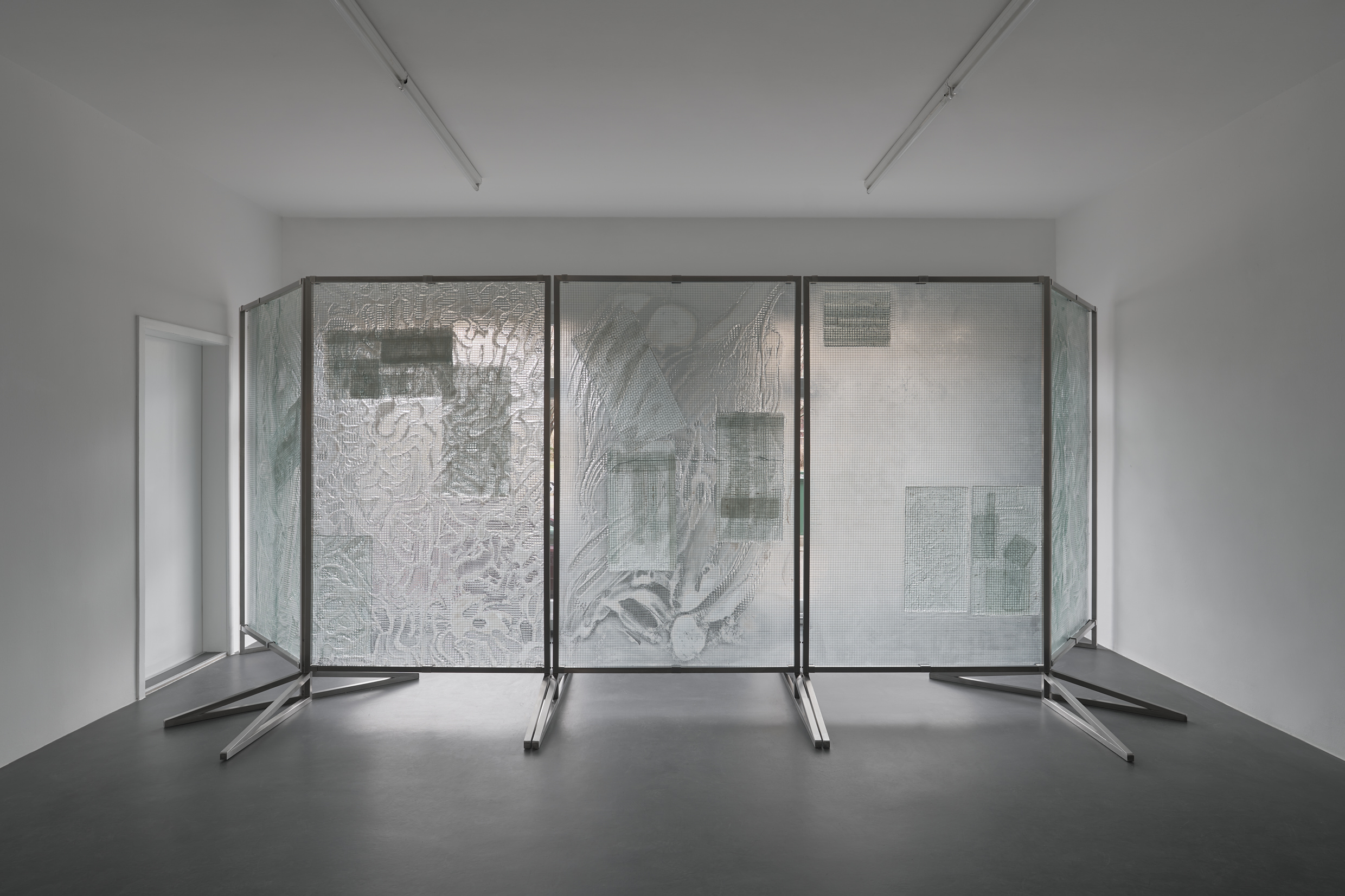
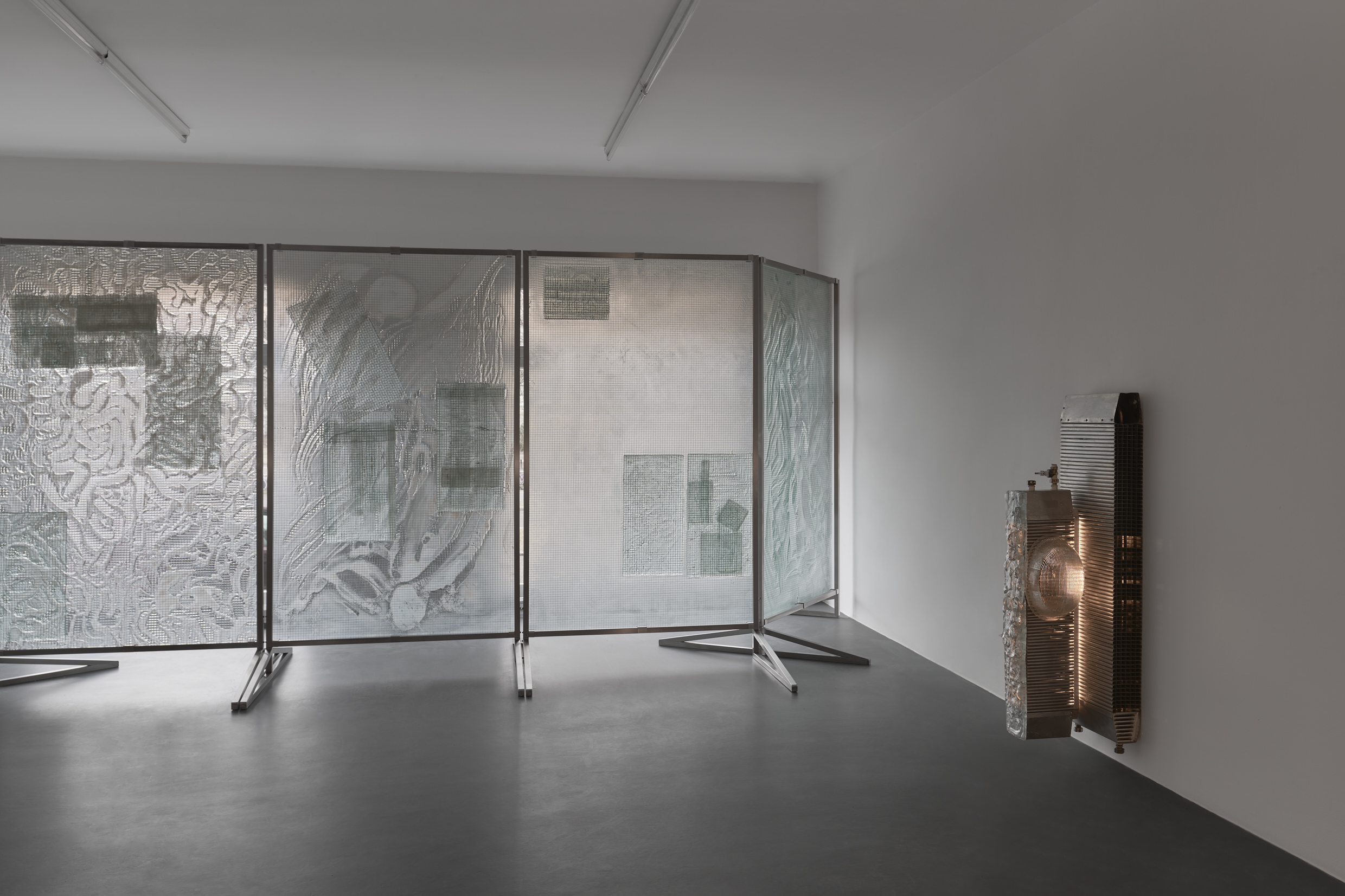
Ausstellungsdauer / Exhibition dates: bis 16.05.2026 / until 16.05.2026 Do–Sa 14–18 Uhr / Thu–Sat 2–6 pm
Gallery Weekend: 1.–3.05.2026, 14–18 Uhr / 2–6 pm
mit/with
Kathryn Andrews, Thomas Baldischwyler, Bernd & Hilla Becher, Cosima von Bonin, Monica Bonvicini, Leda Bourgogne, Ulla von Brandenburg, Andreas Diefenbach, Mark Dion, Nombuso Dowelani, Michaela Eichwald, Jonas Fahrenberger, Teresa Kutala Firmino, Georgia Gardner Gray, Sayre Gomez, Marc Henry, Elke Silvia Krystufek, Mark Leckey, Christian Philipp Müller, Yuval Pudik, Odur Ronald, Amanda Ross-Ho, Sterling Ruby, Zandile Tshabalala, Malte Urbschat, Geerten Verheus, Christine Tien Wang, Alex Wissel, Heimo Zobernig
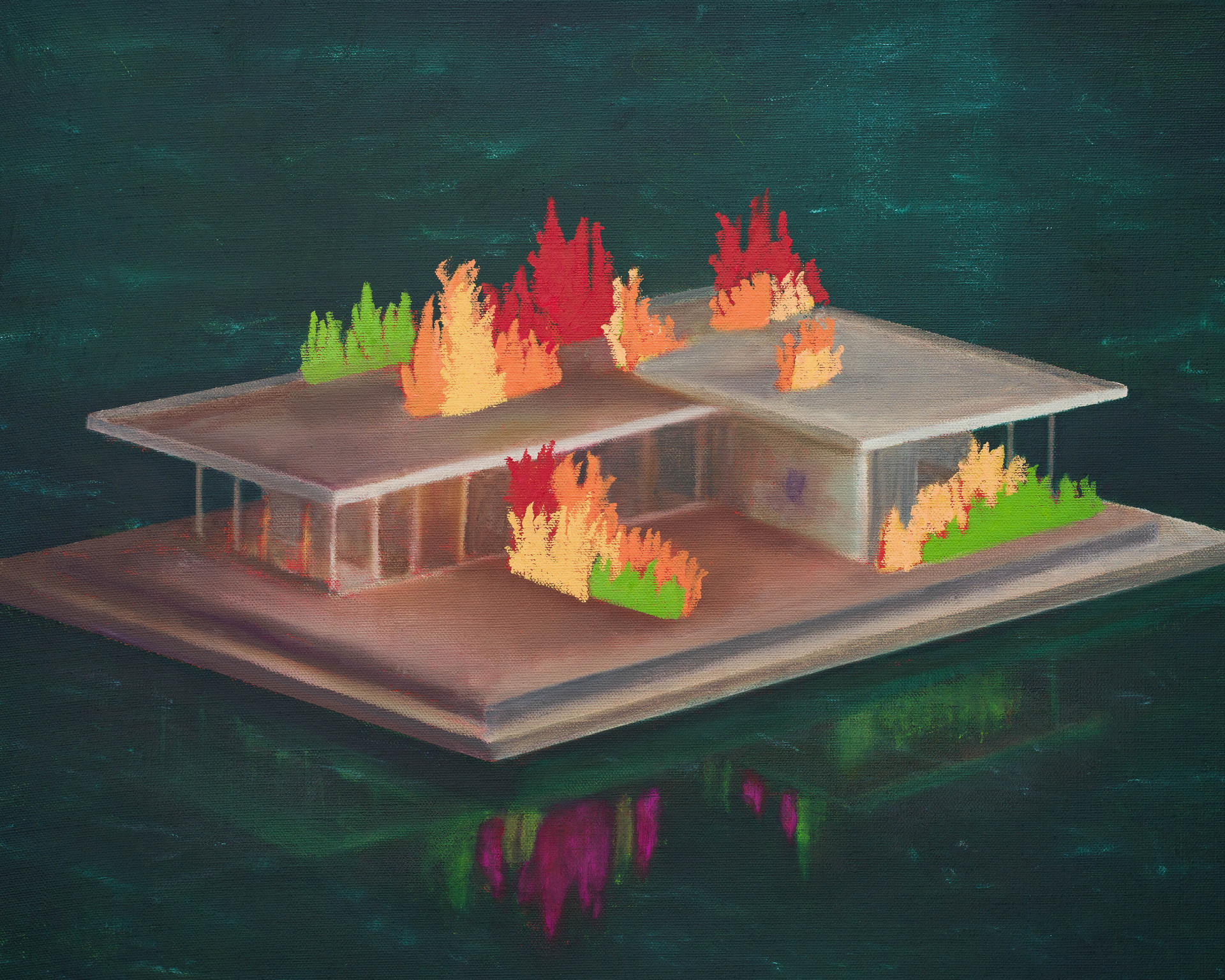
Image: Marc Henry, Model (Home), 2025, courtesy of Anton Janizewski Gallery, photo: Jana Perusich
17.4.2026 ab/from 19 h Intervention:ITINERANT INTERLUDE #2
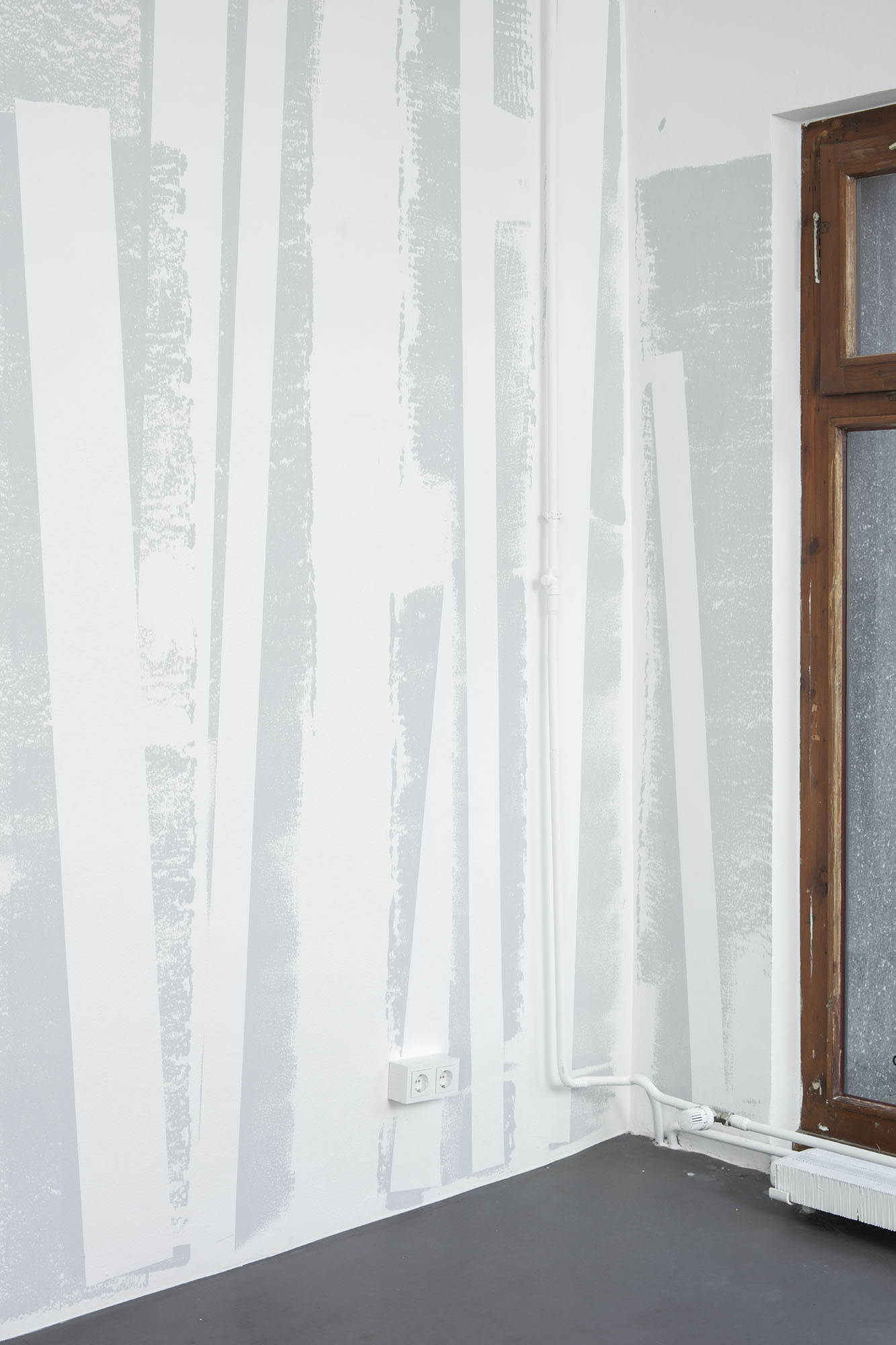
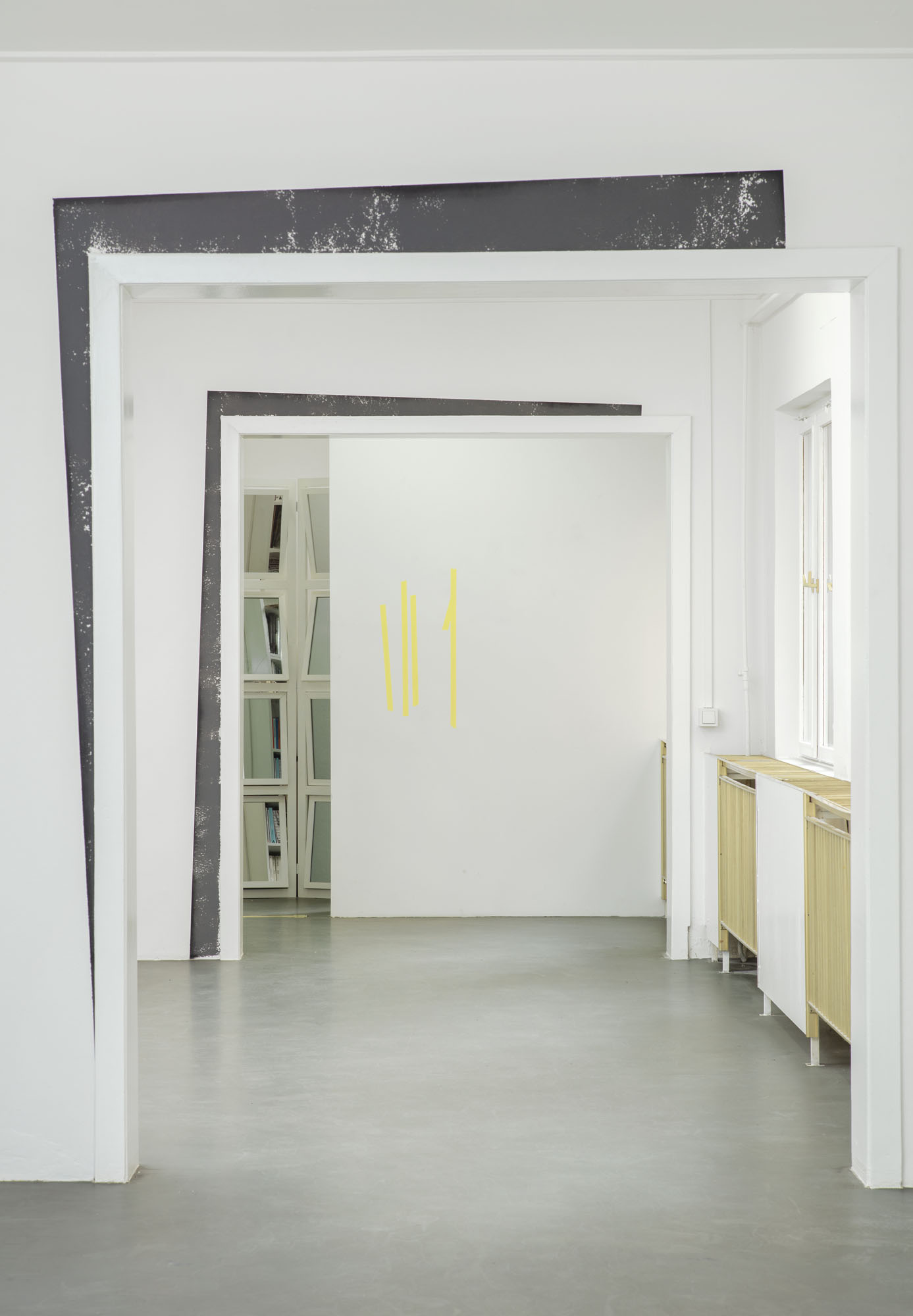
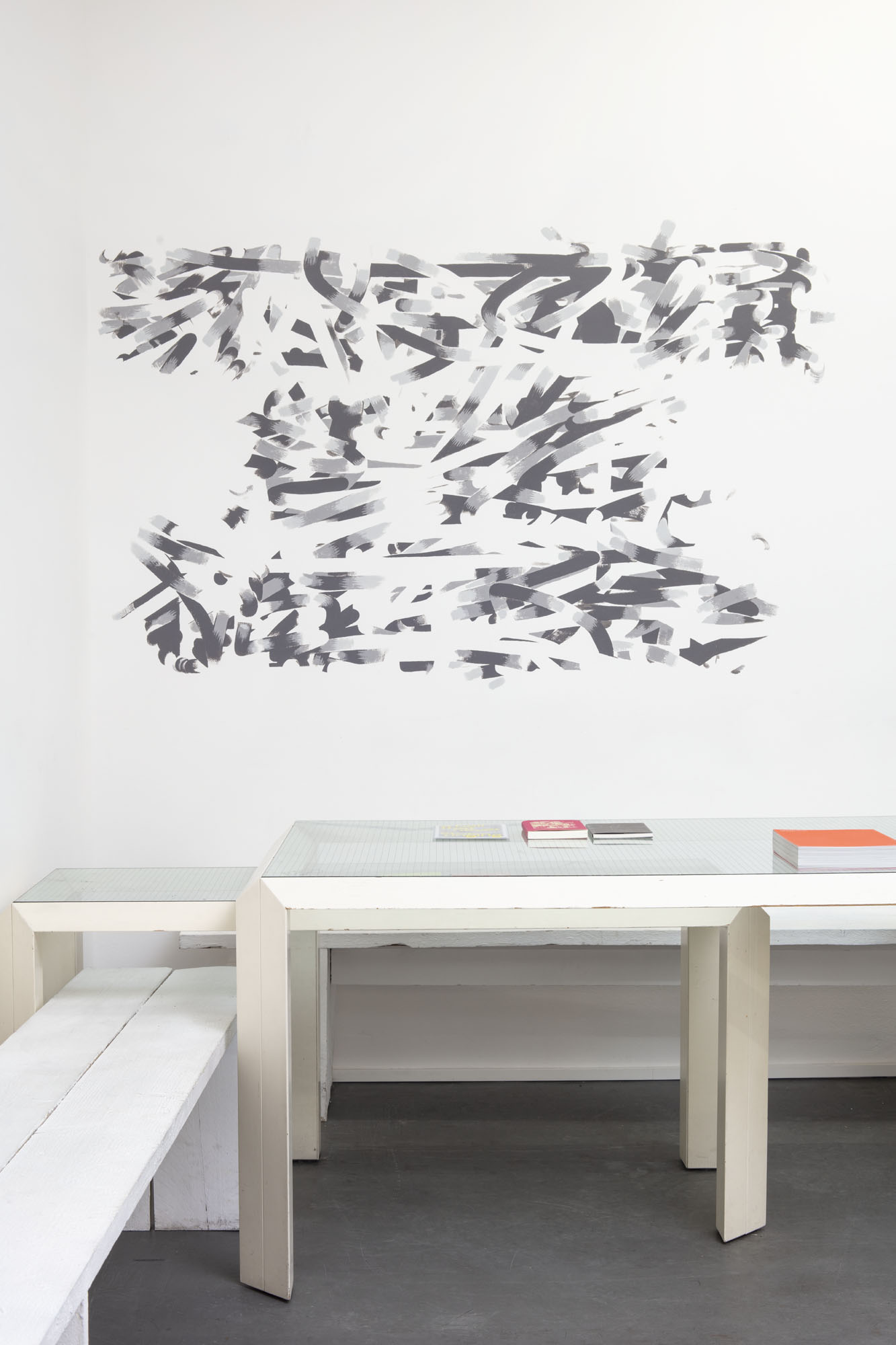
Die in Berlin lebenden Künstler:innen Friederike Feldmann und Paul McDevitt präsentieren ein gemeinsames Projekt, das sich nahezu vollständig entlang der Wände des Ausstellungsraums entfaltet. Renovieren ist eine kluge, unterhaltsame und meisterhaft ausgeführte Reflexion des Mediums Malerei mit seinen eigenen Mitteln und gleichzeitig eine feinsinnige Selbstreflexion der beiden Maler:innen über ihr eigenes künstlerisches Tun.
Thematisch wie motivisch speist sich das Projekt im Wesentlichen aus dem Repertoire jener anderen „Maler“, der Dekorateure und Anstreicher, deren Berufsbezeichnung mit der der Künstler:innen identisch ist.
Feldmanns expansive malerische Gesten, in denen Pinsel und Oberfläche ineinander übergehen, greifen in diesem Kontext noch stärker als sonst in die Architektur aus und lösen die Grenze zwischen Bild und Wand auf. McDevitt, dessen Praxis in Zeichnung, Druckgrafik und grafischer Intervention verwurzelt ist, bringt eine eigenständige, geschichtete Bildsprache ein, geprägt von Unmittelbarkeit und Rhythmus, verbunden mit einer überraschend spielerischen Haltung gegenüber den Werkzeugen und Materialien des handwerklichen Maleralltags, den vertrauten Utensilien seiner beruflichen Namensvetter.
In ihrer räumlichen Verschränkung entsteht eine vielschichtige Bildarchitektur, die den Innenraum des Kunstvereins transformiert und die Besucher:innen dazu einlädt, die Wände nicht als bloßen Hintergrund, sondern als aktive, reagierende Oberflächen zu erfahren.
Kuratorische Leitung: Susanne Prinz
Zum Abschlusswochenende veranstalten wir einen besonderen Performance-Abend im Rahmen von ITINERANT INTERLUDES, kuratiert von Laurie Schwartz. Die Reihe bringt Künstler*innen aus den Bereichen Klang und Performance in Dialog mit aktuellen Ausstellungen in ganz Berlin und schafft Begegnungen zwischen visuellen und auditiven Praktiken.
17. April, ab 19 Uhr: ITINERANT INTERLUDE #2: Alexey Kokhanov und Natalia Pschenitschnikova, Stimmen ITINERANT INTERLUDES wird unterstützt durch Initiative Neue Musik Berlin.
Berlin-based artists Friederike Feldmann and Paul McDevitt present a joint project occupying almost the entire wall surface of the exhibition space. Renovieren – English “to renovate” – is a clever, entertaining, and masterfully executed reflection on the medium of painting using its own means, and at the same time a subtle self-reflection by the two painters on their own artistic practice.
Thematically and materially, the project draws almost entirely on the repertoire of other “painters”: those decorators and house painters whose professional title happens to be identical to that of the artists.
Feldmann’s expansive painterly gestures, where brush and surface blur into one another, extend in this context even more than usual onto the architecture, dissolving the boundary between image and wall. McDevitt, whose practice is rooted in drawing, print, and graphic intervention, introduces a distinct layered visual language marked by immediacy and rhythm, coupled with a surprisingly playful engagement with the tools and materials of a renovation site – the everyday instruments of his professional namesakes. In their spatial convergence, the works generate a charged visual field that transforms the interior of the Kunstverein, inviting visitors to encounter the walls not as backdrop but as active, responsive surfaces.
Curatorial lead: Susanne Prinz
To mark the closing weekend, we are hosting a special evening of performances as part of ITINERANT INTERLUDES, curated by Laurie Schwartz. The series brings together artists working with sound and performance in dialogue with ongoing exhibitions across Berlin, creating encounters between visual and aural practices.
April 17, from 19 h: ITINERANT INTERLUDE #2: Alexey Kokhanov and Natalia Pschenitschnikova, Stimmen ITINERANT INTERLUDES is supported by:
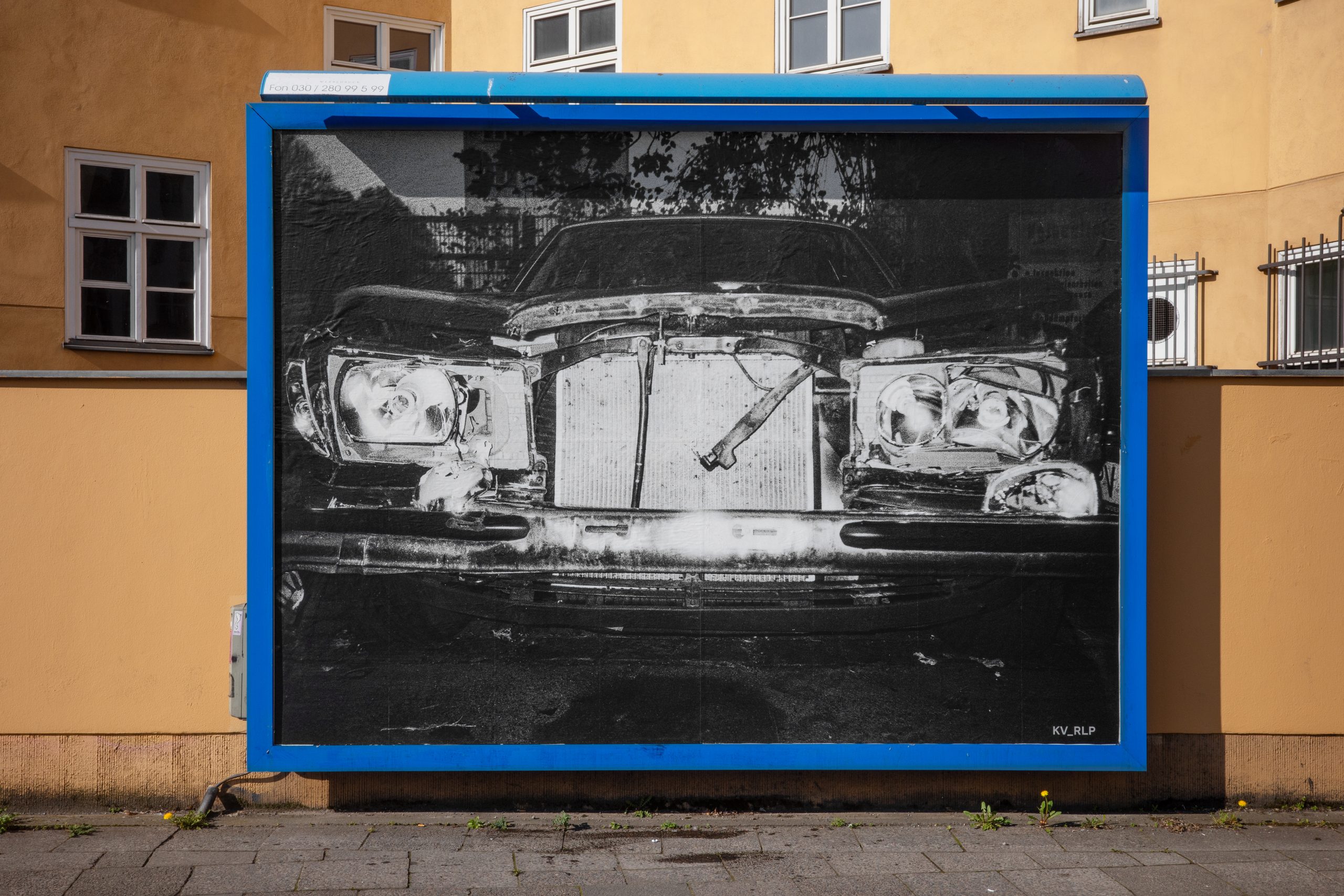
16. April 2026, 19h Ort / Where: Plakatwant / billboard–Torstraße / Karl-Liebknecht-Straße (Google-Koordinaten: 52.527189, 13.415033)
Sichtbar/Visible: 24/7
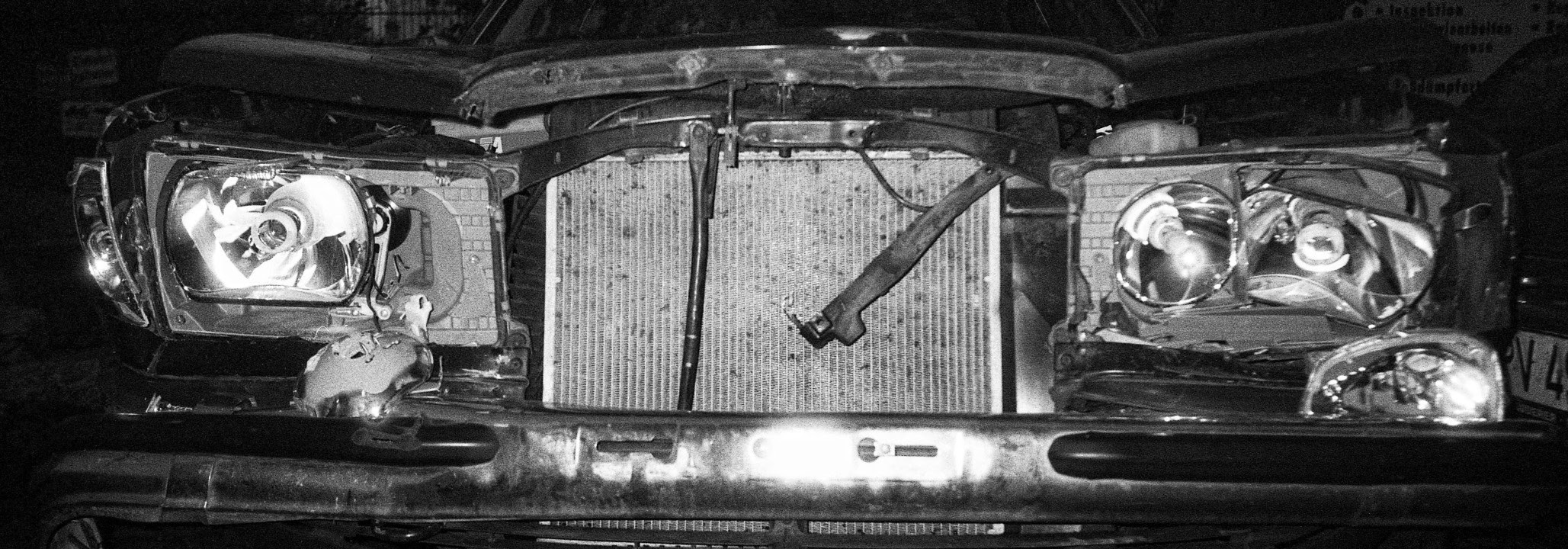
Während am Rosa-Luxemburg-Platz alles seinen gewohnten Gang geht, hat sich nur wenige Blocks weiter leise eine Intervention formiert. Ab dem 16. April erscheint Turn of Events des in Berlin lebenden schwedischen Künstlers Henrik Strömberg. Ein schwarz-weißes Bild eines Fahrzeugs – mehr Kreatur als Maschine – wird über der großen Verkehrskreuzung auf der Plakatwand thronen.
Das Projekt markiert den Auftakt von drei Interventionen, die anlässlich der Veröffentlichung des neuen Buches des Künstlers, Chronos: Present Ubiquitous, entwickelt wurden. Die Serie der Installationen wird sich über verschiedene Städte und Länder erstrecken; der zweite Standort sowie das Buch selbst werden im Juni angekündigt und vorgestellt.
Buch und Intervention werden von Chiara Valci Mazzara betreut.
Feiern Sie mit uns die erste der drei Intervention von Henrik Strömberg am Donnerstag, 16. April 2026, 19 Uhr, vor der Plakatwand.
Eng.: While everything at Rosa-Luxemburg-Platz continues as usual, an intervention has quietly taken shape just a few blocks away. As of April 16, Turn of Events by Berlin-based Swedish artist Henrik Strömberg will appear. A black-and-white image of a vehicle—resembling more a beast than a machine—will loom over the major traffic junction in front of the billboard.
The project marks the first of three public interventions developed on the occasion of the launch of the artist’s new book, Chronos: Present Ubiquitous. The series of public installations will unfold across different cities and countries, with the second chapter location—as well as the book itself—to be announced and presented in June.
Book and intervention are curated by Chiara Valci Mazzara
Join us in celebrating the first of Henrik Strömberg’s three interventions on Thursday, April 16, 2026, at 7 pm, in front of the billboard.
Am 15. März 2026 veranstaltete der Kunstverein am Rosa-Luxemburg-Platz ein Werkstattgespräch mit Teilnehmern aus Polen, Schweden und Deutschland, organisiert von Zofia Nierodzińska und Susanne Prinz. Die Idee zu diesem Workshop entstand in Folge einer Talkrunde in der Galerie WY in Łódź im Rahmen des Ausstellungsprojekts KRES, das von der Stiftung für deutsch-polnische Zusammenarbeit unterstützt wurde, und der lockeren Veranstaltungsreihe Samla Skog – Gathering Forest in Bernshammar (S) und im Kunstverein.
Die Veranstaltung widmete sich dem Wald als ökologisch und historisch belasteter Realität und griff Themen aus Martin Pollacks Konzept der „kontaminierten Landschaften“ auf. Der Nachmittag begann mit einer poetischen Lesung von Jens Soneryd aus seiner fortlaufend wachsenden Sammlung von Namen verlorener und noch existierender Wälder und deren lokale Toponyme.
Die Teilnehmer:innen diskutierten in drei thematischen Panels: Gruppe 1: Denken mit dem Wald Gruppe 2: Landschaften in tiefer Zeit Gruppe 3: Situierte Wälder
Die Sitzung endete mit „Eine andere Methode des Erinnerns“: Linda Soneryd (Soziologin) sprach über die Sammlung mündlicher Zeugnisse zum Waldverlust in Schweden.
Die geschlossene Werkstatt (auf Englisch und Deutsch) diente als offenes Forum für den Austausch interessierter Künstler und Künstlerinnen, knüpfte an das KRES-Projekt an und verknüpfte es mit dem laufenden internationalen Netzwerk Samla Skog/Gathering Forest. Sie untersuchte, wie Wälder als lebende Gedächtnisarchive fungieren – Zeugen der Geschichte, komplexe symbolisch-materielle Ökosysteme – als Zeitzeugen, manchmal als Komplizen und oft als Schutzräume.
Teilnehmer:innen
Aleksandra Janus, Anthropologin
Anna Siekierska, Künstlerin/Aktivistin
Christl Mudrak, Künstlerin/Forscherin
Henrik Strömberg, Künstler
Kasia Hertz, Künstlerin/Aktivistin
Martin Geschicht, Künstler
Susanne Prinz, Kuratorin, Kunsthistorikerin
Ulrike Gerhardt, Forscherin
Vanessa Gravenor, Künstlerin/Forscherin
Zofia Nierodzińska, Künstlerin/Kuratorin
ENG: On March 15, 2026, following the KRES exhibition (Łódź, Oct–Dec 2025), Kunstverein am Rosa-Luxemburg-Platz hosted a private round-table organized by Zofia Nierodzińska and Susanne Prinz.
The gathering focused on the forest as an ecologically and historically burdened reality, drawing on themes from Martin Pollack’s notion of “contaminated landscapes.” The afternoon opened with a poetic reading by Jens Soneryd, enumerating names of lost and existing forests to evoke remembrance.
Participants met in three thematic panels: Group 1: Thinking with the Forest Group 2: Landscapes in Deep Time Group 3: Situated Forests
The session concluded with “Another Method of Remembering”: Linda Soneryd (sociologist) discussed oral witness collection on forest loss in Sweden.
The session concluded with “Another Method of Remembering”: Linda Soneryd (sociologist) discussed oral witness collection on forest loss in Sweden.
This closed-door workshop (in English and German) served as an open forum for exchange, following up on the KRES project and linking it to the ongoing Samla Skog/Gathering Forest international network. This closed-door workshop (in English and German) served as an open forum for exchange, following up on the KRES project and linking it to the ongoing Samla Skog/Gathering Forest international network. It explored how forests function as living archives of memory—witness to history, sites of violence and refuge, and thresholds between human and wild.
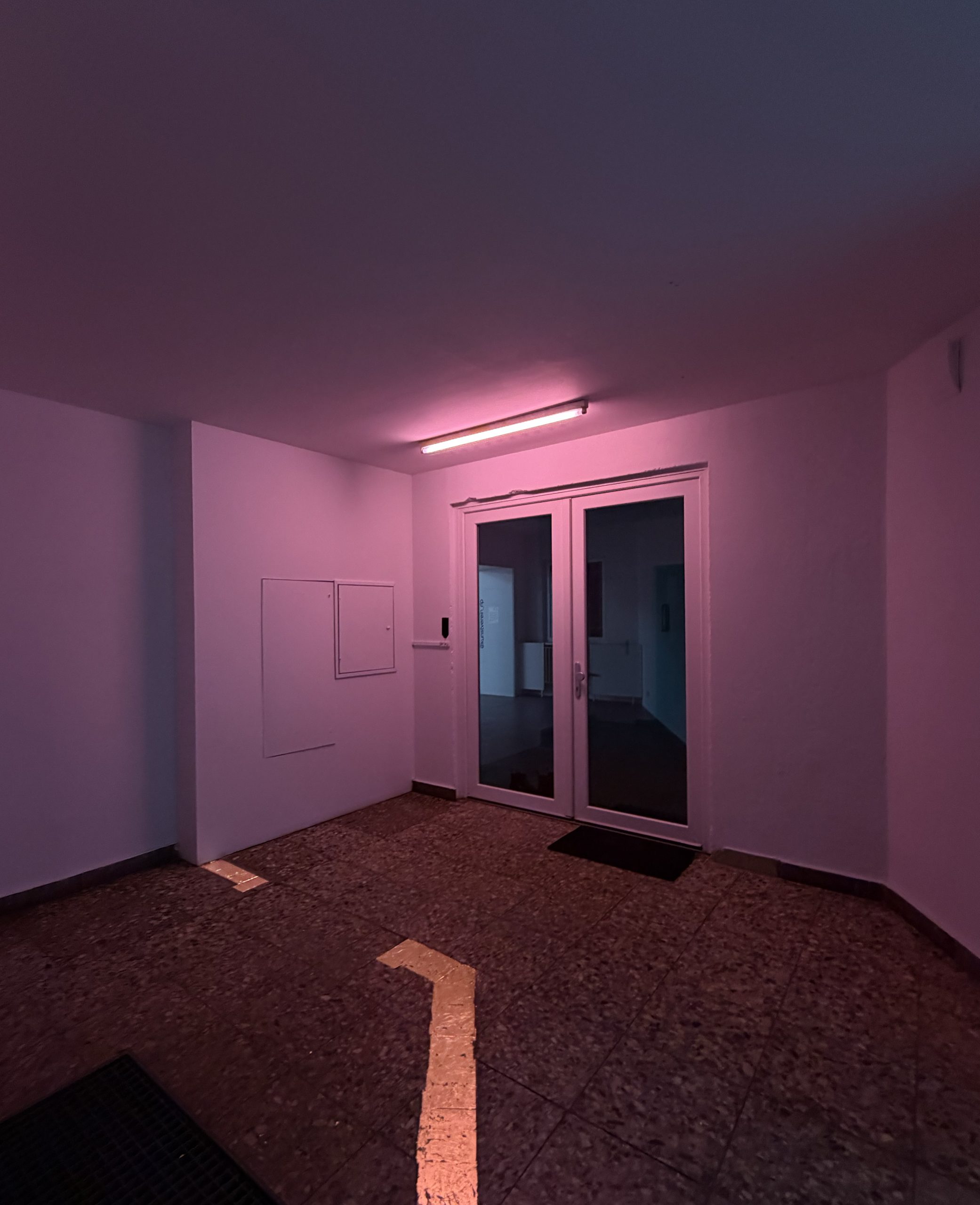
Conceived as an off-program intervention between two exhibitions, circa unfolds at the Kunstverein am Rosa-Luxemburg-Platz during a moment of institutional suspension. The project occupies a space that remains physically untouched, unlit, and formally undecided. Rather than proposing answers, the exhibition addresses the public through questions, activating perception instead of assertion.
The exhibition takes the threshold as both subject and condition: a space of uncertainty in which time loosens its grip and architecture becomes temporarily soft. In this interstitial moment—neither exhibition nor void—the Kunstverein appears less as a container of meaning than as a site of latency. Siciliano’s interventions are deliberately ephemeral, defined by their temporary presence and by subtle shifts in light, attention, and bodily awareness.
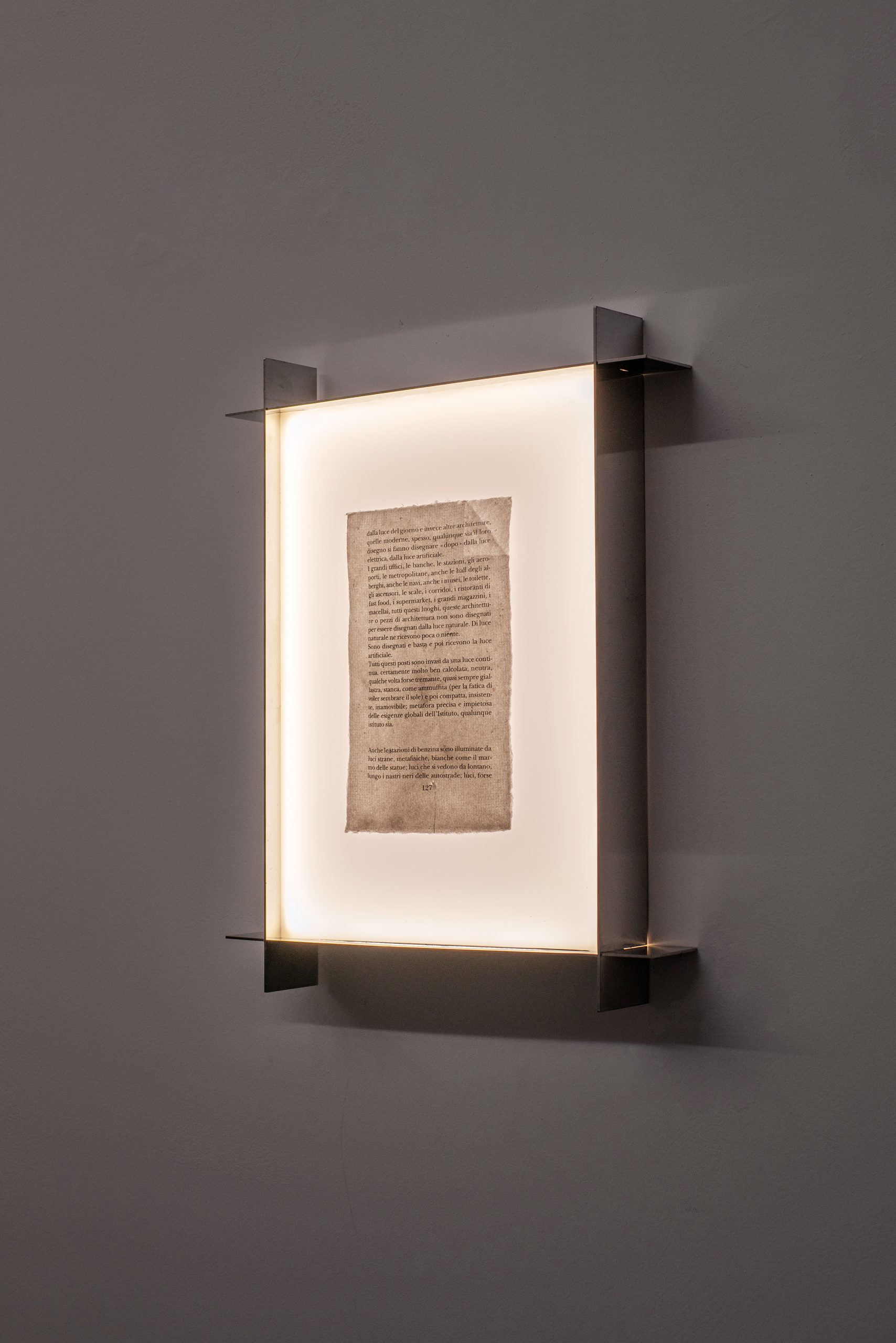
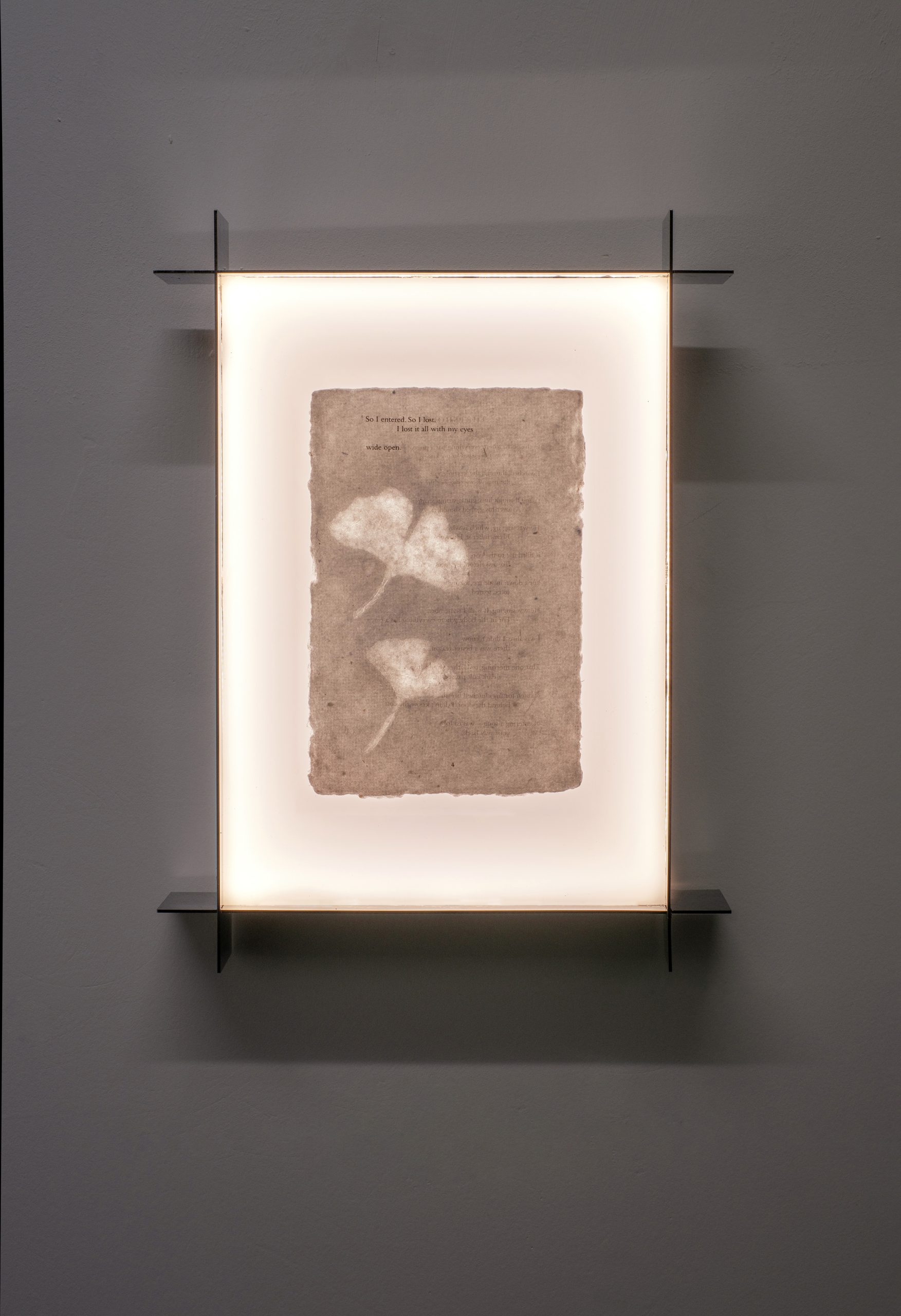
Light functions as the fil rouge of the exhibition, articulating a sequence with a beginning, an interlude, and an end. Each of the three site-specific installations is introduced by a single page from a book relating to it. Recreated on handmade paper, these pages bear watermarks that become visible only through backlight, recalling the traces of dried leaves or dog-eared corners that render books singular over time. The texts revealed—Ocean Vuong’s Threshold from Night Sky with Exit Wounds (2017), Ettore Sottsass’s Di chi sono le case vuote? (2021), and Paul B. Preciado’s Can the Monster Speak? (2020)—form a constellation of voices reflecting on vulnerability, abandonment, and the possibility of speech from within liminal states.
The first installation, 23:59, reflects on the construct of time that defines midnight as a decisive threshold. That single minute which marks the passage from one day to the next—mythically charged as the moment when reality alters—appears here as a suspended image in space. The refracted reflections of a disco ball are painstakingly hand-painted onto the walls using phosphorescent pigment. Charged throughout the day by natural and artificial light, these fragments emerge in darkness and slowly fade, disappearing only to be reactivated again. Time is neither linear nor resolved, but caught in a loop of appearance and disappearance.
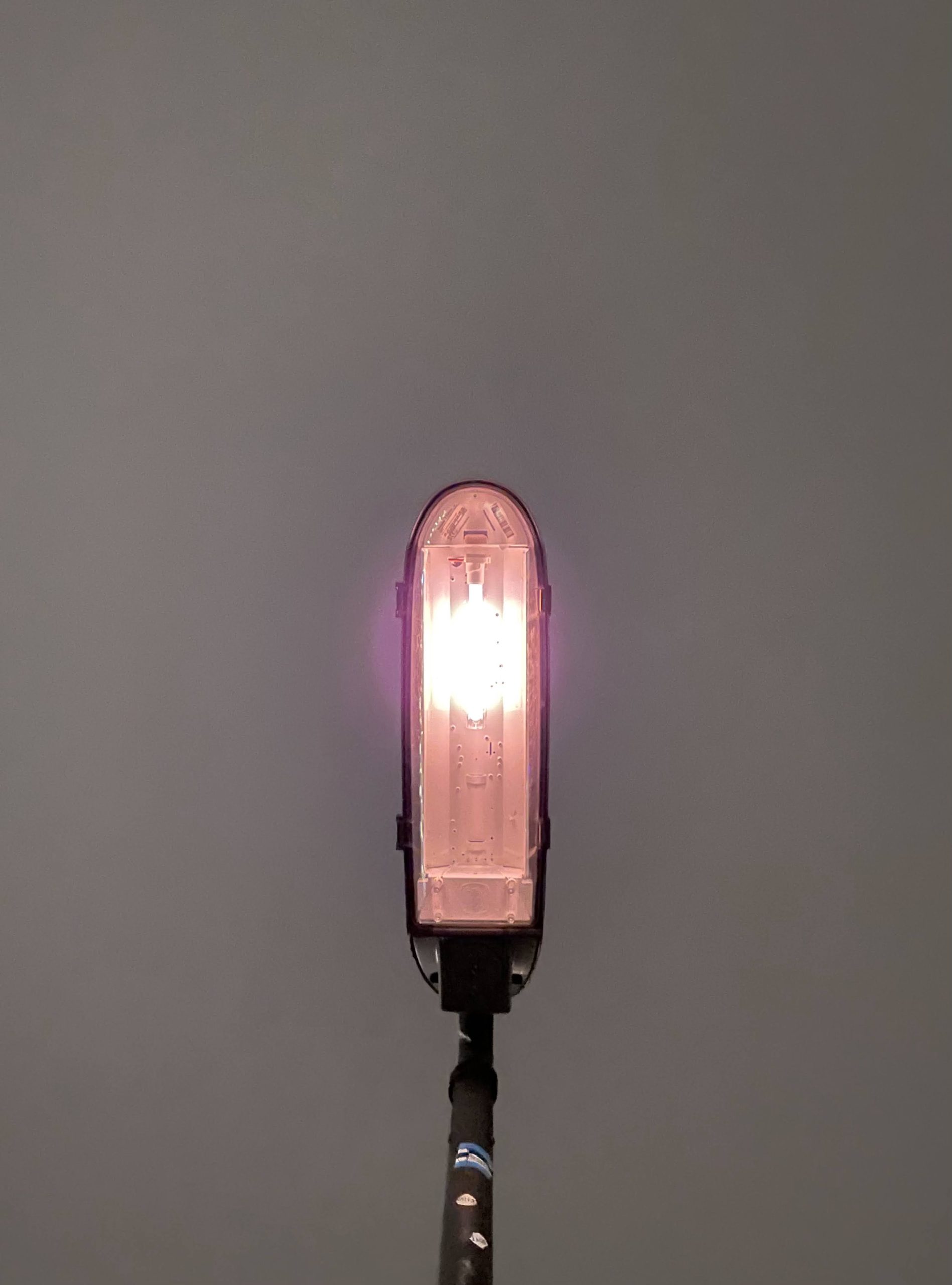
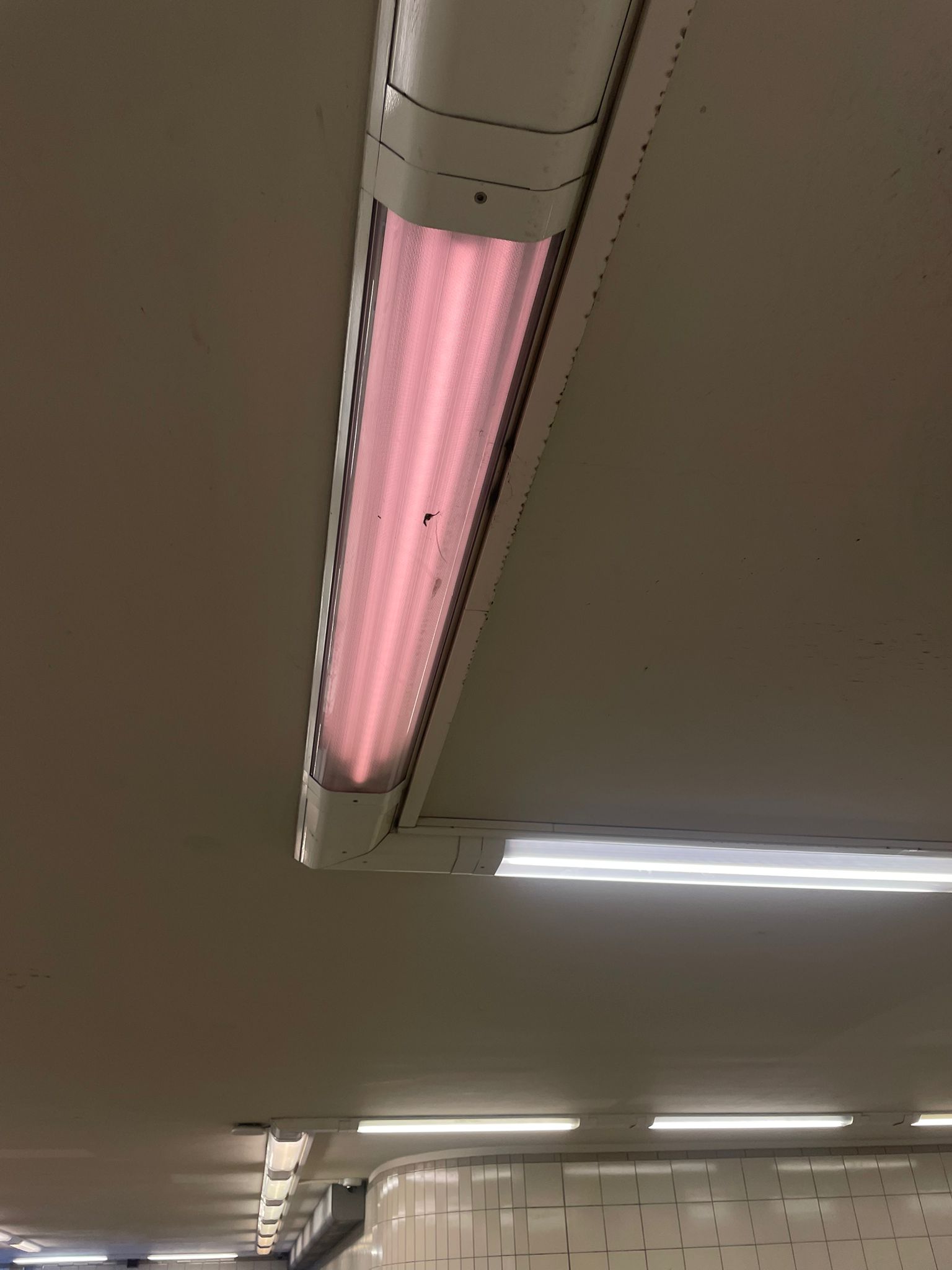
Circa 2026 turns to the architecture of exhibition-making itself, reflecting on the white cube and its anticipated exhaustion. Neon lights—the emblematic infrastructure of contemporary display—are here replaced with tubes nearing the end of their lifespan. Flickering or shifting toward a soft pink hue, they cast the space into a state of near-darkness. The visitor enters an environment suspended in an undefined “circa,” uncertain of when illumination will fully cease. The gallery becomes a place on the verge of disappearance, a limbo removed from the certainties of both function and duration.
A third intervention, titled 37° 18’ 14,688” N, 14° 12’ 54,078” E, occupies a small window visible only from outside the Kunstverein. Printed on semi-transparent fabric, it depicts an image of sunlight filtering through shutters onto a curtain, evoking a domestic interior displaced into the public realm. The work plays with perception across time, geography, and point of view, folding present and past into a single, fragile image. Light once again defines an indefinite temporality, one that hovers between memory and immediate experience.
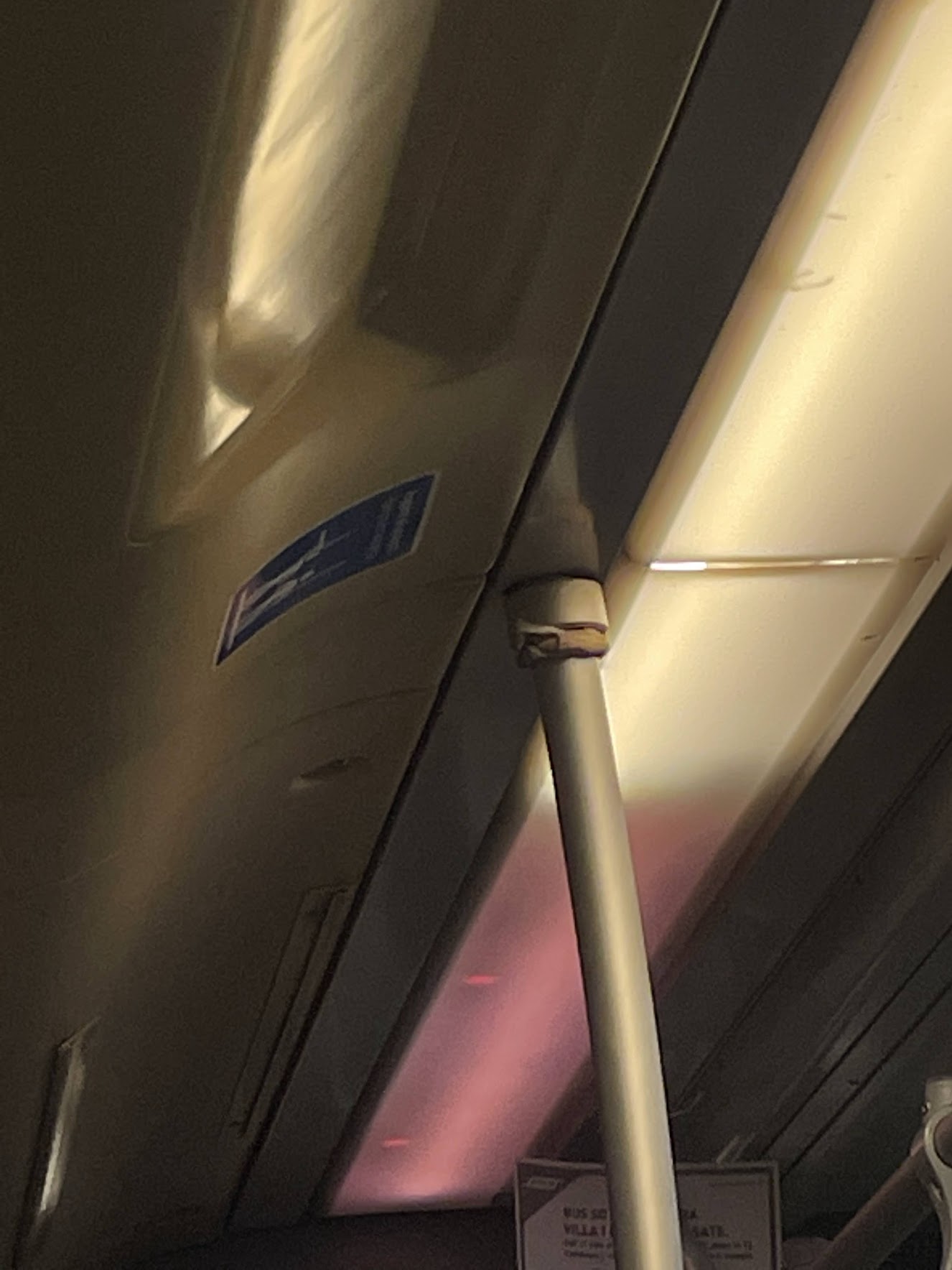
Elsewhere, hidden within the gallery’s restroom, an audio installation introduces recordings from other lavatories. While preserving the room’s function, the intimate sounds of anonymous bodies generate an uncanny parallel reality, collapsing private and public into a shared acoustic space.
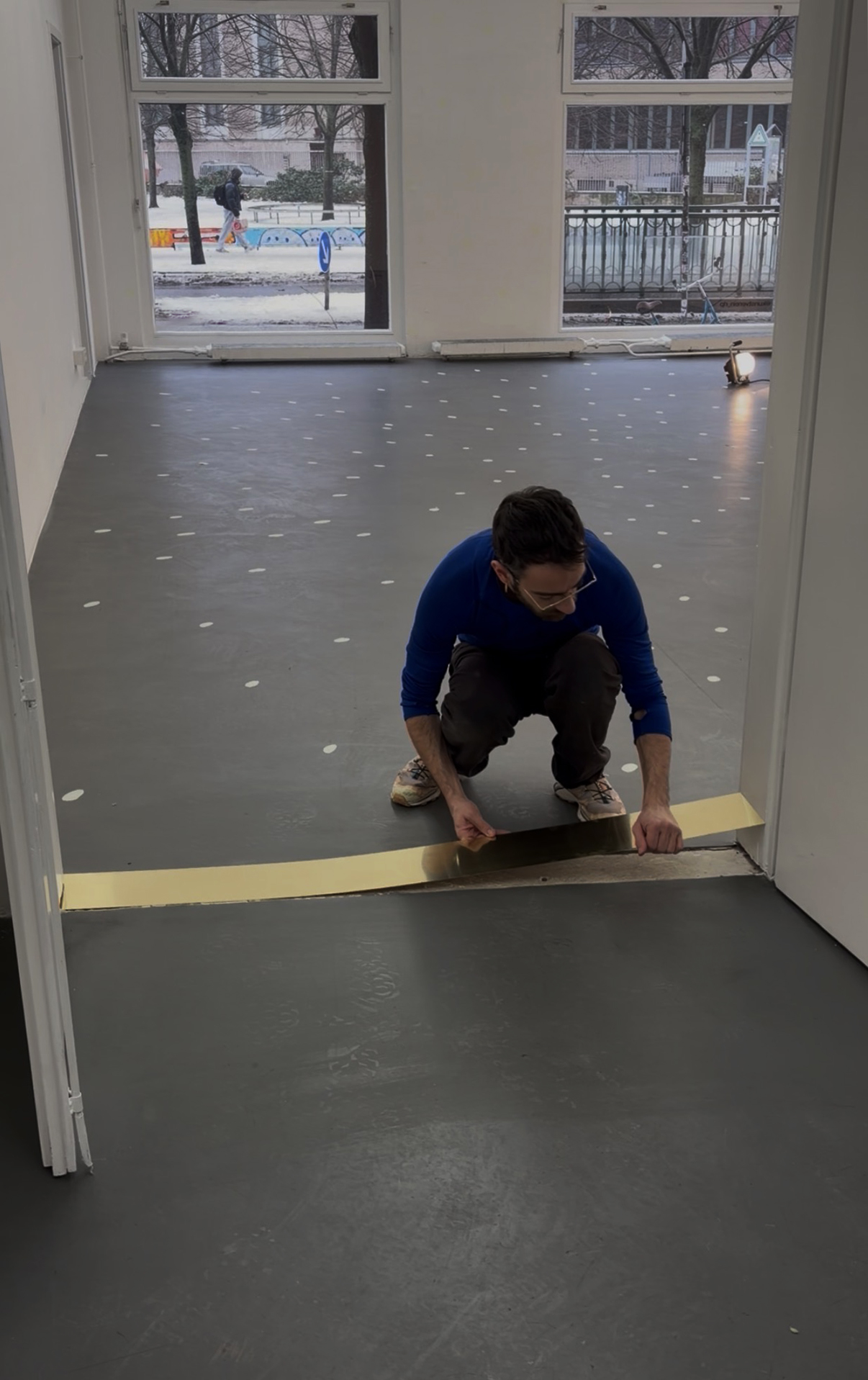
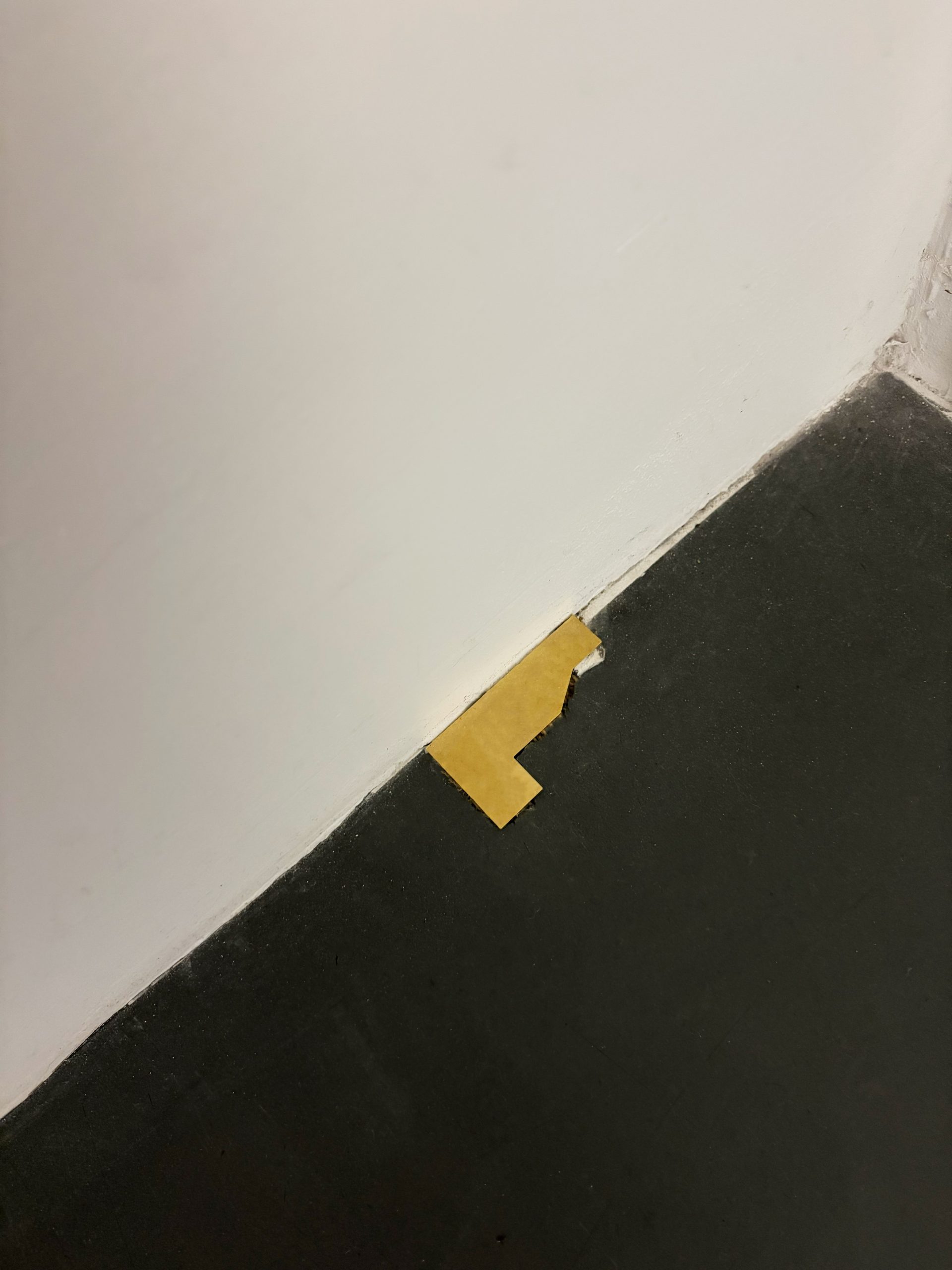
Moving through the anteroom—whether arriving, leaving, or simply lingering—visitors encounter golden markers embedded in the floor. These reflective inlays trace the outlines of walls that no longer exist, foregrounding the layered architectural history of the site. In contrast to the exhibition’s ephemeral gestures, these markers insist on material memory, raising quiet questions about former uses, vanished divisions, and the persistence of spatial meaning. Where do these marks come from, and what do they continue to hold?
Curated by Chiara Valci Mazzara and Susanne Prinz
Marco Siciliano was born in 1991 in Caltagirone and grew up in Milan. He now lives and works in Berlin, alternating periods in Sicily and Milan. He holds a Master’s degree in Interior Design from the Politecnico di Milano and studied sculpture with Monica Bonvicini at the Universität der Künste Berlin, where he was awarded the title of Meisterschüler in 2024. His practice explores thresholds between public and private, inside and outside, visible and invisible. Working with repurposed and deconstructed materials, Siciliano questions architectural conventions and the social orders they sustain. Across his work, transitional spaces become sites of heightened bodily awareness—moments in which one foot remains suspended, and the next step has not yet been taken.
The round table and book presentation dedicated to the artistic practice and to the most recent publication of Daniel Peltz, The Schol of Shy-ing a Way.
Daniel Peltz, refuging in Rejmyre - 2017 - ongoing

enter like an unemployed elephant
which is to say
begin to wonder
what an unemployed elephant might need
upon entering
begin by building a ramp
a ramp that allows one to overcome one’s
own inclinations
begin by not knowing
not knowing whether you have entered
when you might have entered
begin by being sure you will not know
when exit has been achieved
someone will have to tell you
to point it out
or to point up
and for you to look out instead
an act of defiance that might lead you
to a moment of knowing
that you have entered
that you are inside
begin with the assumption that you were
always already inside
your task is not to enter
but to move, already from within

Daniel Peltz - 2017 -
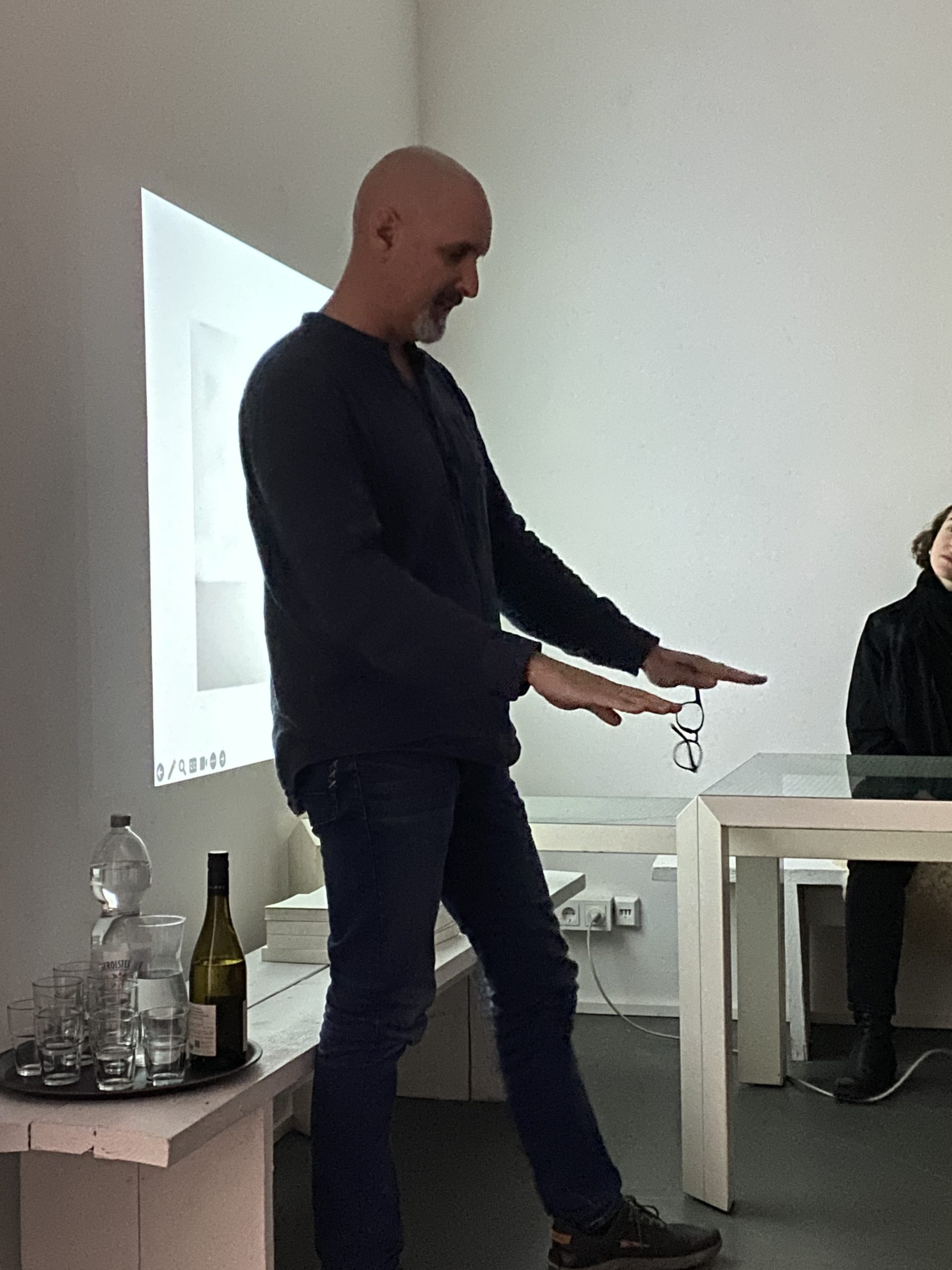
Daniel Peltz will share his artistic practice, which involves long-term engagements with specific sites, including an ongoing 18-year engagement with a rural, glass factory town in Sweden. His presentation will also include a recently released book of field notes, The School of Shying a Way, from a collaborative research project on the aesthetics of shyness conducted as part of a Finnish/African innovation platform.
From Shying a Way:
The School of Shying a Way attempts to craft a space, and provide an ideological support, for a set of resistances: to the collective/individual binary, to the limited conscious – ness of fixed meaning, to the locating of knowledge as something and somewhere outside of the study and the student.
Daniel Peltz is an artist and international educator. Through public projects, performances and media installations, Peltz’ artworks explore complex social systems, attempting to provoke ruptures in the socio/cultural fabric through which new ways of being may emerge and be considered. To accomplish these goals, he uses a range of intervention, ethnographic and performance strategies. His projects often take the form of existing social systems to directly engage non-art audiences in the language of critical art practice.
Artifacts from Peltz’ public projects and performances have been exhibited in international solo and group exhibitions at institutions including Färgfabriken and Botkyrka Konsthall in Stockholm, the Cable Factory in Helsinki, Galleri F15 in Moss and the Norrköpings Konstmuseum. He has been a resident artist at Yaddo in the USA; Helsinki International Artist Program in Finland; International Artists Studio Program in Sweden; Artspace in Australia; Cemeti Art House in Indonesia; and Spaced in Western Australia.
From 2004-2020 Peltz served as Professor of Film and Video at the Rhode Island School of Design in the U.S. Since 2020, Peltz is Professor of Time and Space Arts with a specialization in Site and Situation Specific Art at the Finnish Academy of Fine Arts, Uniarts Helsinki. Growing out of a 2007 artistic-research Fulbright term in Sweden, Peltz co-founded the artist-run, long-term, place-based research project Rejmyre Art Lab’s Center for Peripheral Studiesin the glass-factory town of Rejmyre, Sweden that continues to be at the center of his art and curatorial practice.
Der Kunstverein am Rosa-Luxemburg-Platz freut sich, P.OST, die erste institutionelle Einzelausstellung des polnischen Künstlers Mateusz Choróbski in Deutschland, zu präsentieren. Speziell für den Kunstverein entwickelt, versammelt die Ausstellung Klang, Video-, Licht- und skulpturale Installationen, um über Erinnerung, Transformation und der vielschichtigen Identität des Rosa- Luxemburg-Platzes nachzudenken.
Choróbskis Arbeiten erkunden das Spannungsevrhältnis zwischen Nostalgie und Erinnerung, hinterfragen die Tendenz, die Vergangenheit zu idealisieren, und fragen, wie Nostalgie verstanden werden kann – als Sentimentalität, als Erbe oder als Missverständnis. So verweist bereits der Titel P.OST zugleich auf den verschwundenen OST – Schriftzug der Volksbühne und auf die Frage, was „nach dem Osten“ kommt.
Inspiriert von der architektonischen und kulturellen Geschichte des Rosa-Luxemburg-Platzes – besondere von Hans Poelzigs Entwürfen für das Babylon-Kino – verwandelt Choróbski den Ausstellungsraum in eine Bühne aus Spuren, Schatten und Fragmenten urbanen Umfelds. Seine Arbeit spannt einen weiten Bogen über Video, Installation, Performance, Klang und Skulptur. Häufig setzt der Künstler den menschlichen Körper neben und in Architekturen und untersucht, was bleibt, wenn soziale, politische oder materielle Systeme an ihre Grenzen gelangen – verfallene modernistische Gebäude, die Schuld(en)lasten oder der verletzliche Körper in Ruhe. Diese Überreste werden Ausgangspunkte, um über Verletzlichkeit, Resilienz und sich stetig ändernde kulturelle Narrative nachzudenken.
Mit gefundenen Glasobjekten, zu neuen Formen verschmolzen, verwandelt er Licht in ein Gefäß für Geschichte und Erinnerung. Dafür nutzt er eine komplexe Technologie, die Licht von Zeit und Ort entkoppelt und es in der Ausstellung neu einsetzt – so wird Licht aus entfernten Orten oder Zeiten in der Ausstellung wieder sichtbar und erfahrbar.
Gleich beim Betreten des Gebäudes begegnen Besucher*innen einem Türgriff, gegossen aus eingeschmolzenen polnischen Ein-Grosz-Münzen, modelliert nach Poelzigs historischen Entwürfen. Eine Klanginstallation – ein gelooptes Einatmen – erfüllt den Eingangskorridor und verwandelt die Schwelle in eine Zone erhöhter Wahrnehmung, die physische Berührung mit einem subtilen Hinweis auf Atem und Erwartung verbindet.
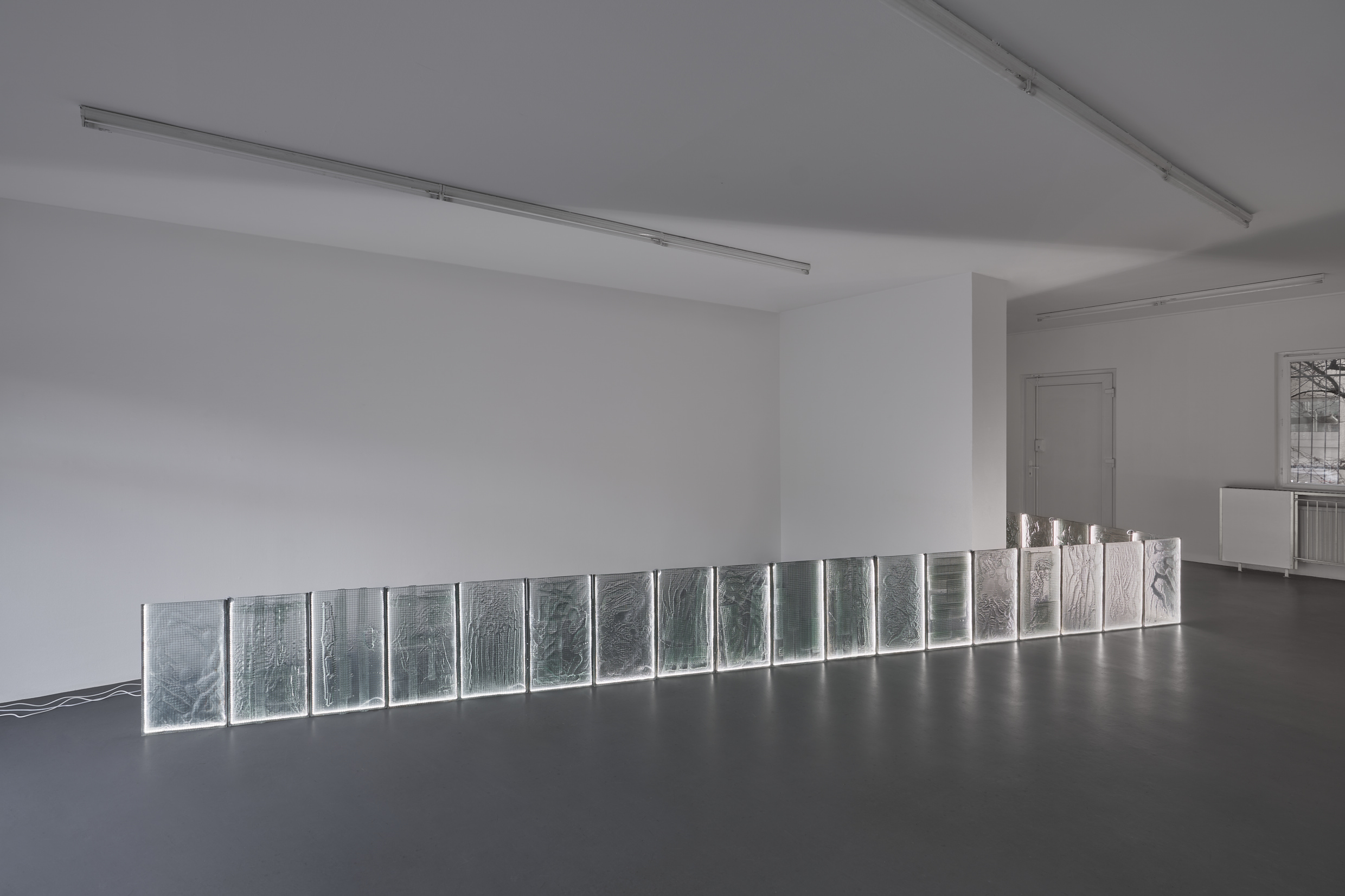
Im ersten Galerieraum führt eine zehn Meter lange Linie aus eingeschmolzenen Drahtglasplatten, beleuchtet von versteckten LEDs, exakt das Licht wieder ein, das am Vortag auf dem Rosa-Luxemburg-Platz aufgezeichnet wurde. Die unregelmäßigen, organischen Oberflächen tragen Spuren von Zeit und Atmosphäre in sich, spiegeln die wechselnden Bedingungen draußen wider und laden dazu ein, über Erinnerung, Präsenz und den Fluss der Zeit nachzudenken.
Ein zweiter Raum zeigt eine großformatige Installation aus Glasplatten, die mit Überresten früherer Arbeiten des Künstlers verschmolzen sind. Leicht über dem Boden schwebend und von der Straße aus sichtbar, wird die Arbeit zu einer Art Schattentheater: Silhouetten der Besucher*innen beleben die Oberfläche, machen das Publikum zum integralen Bestandteil der Arbeit und erweitern die Dramaturgie der Ausstellung in den öffentlichen Raum hinein.
Im abgeschlossenen Schaufenster projiziert eine Video die Hand eines Dirigenten, der Musik aus dem Stummfilm Der Golem, wie er in die Welt kam (1920)* dirigiert, für den Poelzig das Bühnenbild entworfen hat. Zur Straße hin projiziert, antwortet die Geste auf die Rhythmen und Stimmungen des Platzes und spürt seinen fortwährenden Puls von Spannung, Inszenierung und gemeinsamer Präsenz.
Die Ausstellung wurde kuratiert von Chiara Valci Mazzara und Susanne Prinz.
Die Ausstellung wird unterstützt von der Alexander Tutsek Stiftung und ermöglicht durch durch die Stiftung für deutsch-polnische Zusammenarbeit, mit Beteiligung von OP Enheim. Sie wurde vom Adam-Mickiewicz-Institut ko-organisiert und kofinanziert vom Ministerium für Kultur und Nationales Erbe der Republik Polen.
*„Der Golem, wie er in die Welt kam“, Partitur für kleines Orchester von Hans Landsberger, rekonstruiert und orchestriert von Richard Siedhoff, wurde uns freundlicherweise aus dem Bestand des Ries & Erler Musikverlags zur Verfügung gestellt.
[Eng] The Kunstverein am Rosa-Luxemburg-Platz is pleased to present P.OST, the first institutional solo exhibition in Germany by Polish artist Mateusz Choróbski. Developed specifically for the Kunstverein, the exhibition brings together sound, video, light, and sculptural installations that reflect on memory, transformation, and the layered identity of Rosa-Luxemburg-Platz.
Choróbski’s work explores the tension between nostalgia and memory, questioning the tendency to idealize the past and examining how nostalgia can be understood – as sentimentality, heritage, or misunderstanding. The title P.OST refers both to the vanished OST sign on the Volksbühne and to the question of what comes “after the East.” Drawing inspiration from the architectural and cultural history of Rosa-Luxemburg-Platz, particularly Hans Poelzig’s designs for the Babylon cinema, he transforms the gallery into a stage built from traces, shadows, and fragments of the surrounding urban fabric.
His broader practice spans video, installation, performance, sound, and sculpture. Choróbski frequently juxtaposes the human body with architecture, exploring what remains when social, political, or material systems reach exhaustion—ruined modernist buildings, the weight of debt, or the fragile body at rest. These remnants become points of departure for thinking about vulnerability, resilience, and shifting cultural narratives. Working with found glass objects fused into new forms, he turns light into a vessel of history and remembrance, using a technology he developed that captures and reproduces light from other parts of the world in real time.
Entering the building, visitors encounter a door handle cast from melted Polish one-grosz coins, modeled after Poelzig’s historic designs. A sound installation—a looped inhalation—fills the entrance corridor, transforming the threshold into a zone of heightened awareness that blends physical contact with a subtle suggestion of breath and anticipation.
Inside the first gallery, a 10-meter line of melted reinforced-glass panels, illuminated by hidden LEDs, reintroduces the exact light recorded on Rosa-Luxemburg-Platz the previous day. The irregular, organic surfaces hold traces of time and atmosphere, echoing the shifting conditions outside and inviting reflection on memory, presence, and the passage of time.
A second room presents a large-format installation of glass panels fused with remnants of the artist’s earlier works. Slightly elevated above the floor and visible from the street, the piece becomes a kind of shadow theatre: silhouettes of visitors animate the surface, making the audience an integral part of the work and extending the exhibition’s dramaturgy into public space.
In the window room, a video projection shows a conductor’s hand performing music from the 1920 silent film Golem: How He Came into the World—for which Poelzig created the set design. Projected toward the street, the gesture responds to the rhythms and emotional atmospheres surrounding the square, underscoring its continual state of tension, performance, and collective presence.
The exhibition was curated by Chiara Valci Mazzara and Susanne Prinz.
The show is supported by the Alexander Tutsek Stiftung. Made possible by the Stiftung für Deutsch-Polnische Zusammenarbeit, with the participation of Op Enheim, co-organized with the Adam Mickiewicz Institute and co-financed by the Ministry of Culture and National Heritage of the Republic of Poland.
The sheet music Der Golem, wie er in die Welt kam. Für kleines Orchester by Hans Landsberger, reconstructed and orchestrated by Richard Siedhoff, was kindly provided from the holdings of Ries & Erler Musikverlag.Mateusz Choróbski (b. 1987, Radomsko) graduated from the University of the Arts in Poznań and the Academy of Fine Arts in Warsaw. He works across sculpture, installation, video, performance, and sound, engaging with architectural history, material transformation, and the conditions of contemporary life. Selected institutional solo exhibitions include: H.aven, Éva Kahán Foundation, Vienna (2024); Hide And Seek, Fabbrica del Vapore, Milan (2023); What the Barbarians Did Not Do, Opole Centre for Contemporary Art (2021); Mateusz Choróbski, Fondazione Nicola Del Roscio, Rome (2019); and The Loneliness of the Long Distance Runner, Manifesta 11, Zurich (performance, 2016).Adam Mickiewicz Institute (IAM) brings Polish culture to people around the world. As a state institution, it creates lasting interest in Polish culture and art through strengthening the presence of Polish artists on the global stage. It initiates innovative projects, supports international cooperation and cultural exchange. It promotes the work of both established and promising artists, showing the diversity and richness of our culture. The Adam Mickiewicz Institute is also responsible for the Culture.pl website, a comprehensive source of knowledge about Polish culture. More information: www.iam.pl.The Foundation for Polish-German Cooperation(SDPZ/FWPN) fosters good relations between Poland and Germany. For over 30 years, it has co-financed 16,000 bilateral projects, supporting partnerships between institutions, educational initiatives, scientific collaboration, and artistic and literary exchange. The Foundation also initiates its own projects—study visits, scholarships, publications, and debates—to inspire dialogue and strengthen Polish-German cooperation in a modern, open, and socially just European context. More information: sdpz.orgAdam Mickiewicz Institute (IAM) brings Polish culture to people around the world. As a state institution, it creates lasting interest in Polish culture and art through strengthening the presence of Polish artists on the global stage. It initiates innovative projects, supports international cooperation and cultural exchange. It promotes the work of both established and promising artists, showing the diversity and richness of our culture. The Adam Mickiewicz Institute is also responsible for the Culture.pl website, a comprehensive source of knowledge about Polish culture. More information: www.iam.pl.The Foundation for Polish-German Cooperation(SDPZ/FWPN) fosters good relations between Poland and Germany. For over 30 years, it has co-financed 16,000 bilateral projects, supporting partnerships between institutions, educational initiatives, scientific collaboration, and artistic and literary exchange. The Foundation also initiates its own projects—study visits, scholarships, publications, and debates—to inspire dialogue and strengthen Polish-German cooperation in a modern, open, and socially just European context. More information: sdpz.org
Wie Rahel malt – ein (Be)deutungsversuch von Lina Louisa Krämer
Die Malereien bewegen sich so an einer Grenze von Figuration und Abstraktion, sie sind geprägt von einer intensiven Farbigkeit, die sich aus dem Gebrauch verschiedenster Malmittel und der Art des Auftragens, des Integrierens eben dieser in das Bild ergibt. Durch das Spielen mit angewöhnten Betrachtungsweisen, durch das Erinnern an bekannte Formen, werden Assoziationen ausgelöst und durch ihre Unvollständigkeit doch wieder genommen. Fragen gestellt nach zu viel oder zu wenig. Ebenso lassen sich Zahlen und Buchstaben verstehen, die mal Wörter, mal Sätze ergeben, manchmal aber auch unleserlich bleiben. Die Künstlerin beschreibt ihren Einsatz als einen Versuch, zum Nachdenken anzuregen. Das Gehirn zum Laufen zu bringen, ohne vorzugeben, wohin.
Folglich bleibt die Erkenntnis, dass sich die Malereien von Rahel Sorg nicht wirklich in Worte fassen lassen, eben weil sie sich einer eindeutigen Lesbarkeit bewusst entziehen. Genau darin liegt die intendierte Wirkung, die Denkanstöße geben will, in verschiedene Richtungen verweist und den Einsatz von Malerei und Sprache darauf konzentriert, in der Vielschichtigkeit einfach zu sein, ohne Vorgaben oder Beschränkungen aufzustellen.
Innehalten, aushalten, weitermachen, fertig.
Wir danken Lina Louisa Krämer, Deborah Sorg, Anna Virnich und Winfried Virnich, ohne die diese Ausstellung nicht möglich wäre, sowie der Kunsthochschule Mainz für die Unterstützung des Katalogs.
Volksbühne und Galerien, Concept Stores und Babylon, Kunstverein und die dort lebenden Künstler*innen: Der Rosa-Luxemburg-Platz ist eine Ausnahme in Berlin, fast alles ist anders. Die Ausstellung umfasst Positionen aus der SteDi Sammlung sowie Werke von Akteur*innen des Platzes, die sich jetzt hier im Plattenbau begegnen.
Eine Hommage kuratiert von Frank Hauschildt.
Volksbühne and galleries, concept stores and Babylon, the Kunstverein and the artists who live there: Rosa-Luxemburg-Platz is an exception in Berlin – almost everything is different. The exhibition brings together works from the SteDi Collection alongside pieces by local actors from the square, who now encounter each other here in the Plattenbau.
Human Mycelium ist eine Performance und textile Installation von Thomas De Falco, geschaffen für den Kunstverein am Rosa-Luxemburg-Platz in Berlin. Sie erforscht die Verbindungen zwischen Mensch und Natur sowie die emotionalen und physischen Netzwerke, die uns miteinander verbinden, mit besonderem Fokus auf Nähe, Berührung und Verlust.
Die Arbeit lässt sich von menschlichen Venen und Myzelien — dem unterirdischen Pilznetzwerk, das Bäume und Pflanzen verbindet — inspirieren und nutzt sie als Metaphern für menschliche Verbundenheit. In diesem Kontext setzt De Falco die Farbe Preußischblau als zentrale Metapher ein: sie steht für Ruhe, Klarheit und Mitgefühl.
Die Installation besteht vollständig aus wiederverwendeten Materialien wie Planen, Schlafsäcken, alter Kleidung, Taschen und Fäden, die zu skulpturalen Formen verwoben werden. Drei Performer bewegen sich in dieser textilen Landschaft, teils verschmolzen mit Skulpturen, die an verlängerte Wurzeln oder anthropomorphe Gliedmaßen erinnern. Ihre Gesten sind langsam und organisch, ähnlich wie Bäume oder Pflanzen sich dem Licht — oder einander — entgegenstrecken. Die Körper berühren sich nie, streben aber danach. Die gesamte Performance handelt letzlich von Sehnsucht und ist vom Streben nach Berührung geprägt.
Musik von Francesco Fusco begleitet die Performance, mal sanft, mal dramatisch, und spiegelt die emotionale Spannung der Körper wider. Ein besonderes Motiv ist die „Unterwäsche-Serie“: intime Kleidungsstücke, die in die Skulpturen eingearbeitet sind und als Träger von Erinnerung, Körperlichkeit und Verletzlichkeit fungieren. Diese Kleidungsstücke reflektieren die Herkunft des Körpers, Fortpflanzung und geteilte Verletzlichkeit. Indem sie die intimsten Bereiche des Körpers bedecken und schützen, stehen sie als Symbole sowohl persönlicher als auch universeller Erfahrung — als taktile Spur von Leben und Verbindung.
Human Mycelium ist ein Raum für Langsamkeit, Fragilität und Verbundenheit — eine Einladung, über Fürsorge, Nähe und die unsichtbaren Verbindungen zwischen Menschen und Natur nachzudenken.
Performers: Marie Zechiel, Bien Adami, Shaun Monahan| Music, sound: Francesco Fusco| Assistant to the artist: Sonnhild Maria Schietzel Curated byChiara Valzi Mazzara
Performance und Installation sind Teil einer beginnenden Recherchereihe über das Verhältnis zwischen Wäldern und Menschen, mit besonderem Fokus auf Verlust konzipiert von Jens und Linda Soneryd, Susanne Prinz und Chiara Valci Mazzara
ENG: Human Mycelium is a performance and textile installation by Thomas De Falco, created for the Kunstverein am Rosa-Luxemburg-Platz in Berlin. The work explores the deep connections between the human body, the natural world, and the emotional and physical networks that weave us into a shared whole.
The piece takes inspiration from systems like human veins and mycelium — the underground network of fungi that connects trees and plants — as metaphors for human connection. De Falco starts with the color Prussian blue as a central element: for him, this shade of blue carries emotional and symbolic weight. It represents calmness and peace in the face of a chaotic world. It is the color of the sky, of water, of veins — the very elements of life itself. Blue becomes a way for the artist to speak about a desire for clarity, connection, and compassion.
The performance and installation unfold within a landscape created entirely from repurposed materials: tarps, sleeping bags, old clothes, purses, natural and synthetic threads. These everyday objects — often associated with protection, care, or shelter — are woven into sculptural forms that become part of both the environment and the performers themselves. De Falco gives symbolic meaning to each material: tarps, for example, are used to cover and protect but also to isolate, echoing themes of vulnerability and care.
Three performers move within this textile landscape, partly merged with the sculptures that resemble extended roots or anthropomorphic limbs. Their gestures are slow and organic, resembling the way trees or plants stretch toward light — or toward one another. The bodies do not touch, but they strive to. The entire performance is about longing: for touch, for understanding, for human closeness.
Music plays a central role in guiding this movement. Sometimes gentle and poetic, sometimes harsh or dramatic, the sound mirrors the emotional tension of the bodies in space. It follows the rhythm of desire, resistance, and connection.
One of the central motifs of the installation is what De Falco calls his “underwear series” — intimate garments worked into the textile sculptures. Many of these pieces have been worn by performers in past works, and by reusing them, De Falco creates a direct link between the performative act and the sculptural object. The underwear, having carried the memory of past performances, becomes a vessel of bodily presence and emotional residue. These garments reflect on the body’s origins, reproduction, and shared vulnerability. By covering and protecting the most intimate areas of the body, they stand as symbols of both personal and universal experience — a tactile trace of life and connection.
Human Mycelium offers a space of slowness, fragility, and interconnection. It is a reflection on the emotional and physical entanglements of our time — a moment to consider how we care for one another, how we reach out, and how, even when not touching, we remain deeply connected.
Performers: Marie Zechiel, Bien Adami, Shaun Monahan| Music, sound: Francesco Fusco| Assistant to the artist: Sonnhild Maria Schietzel
Curated byChiara Valzi Mazzara
concept sketch – detail @ Thomas de Falco
Thomas des Falco (IT 1982) lives in Paris and works between Europe and the US. De Falco works with performance, tapestry and textile installation. His research focuses on themes related to nature and the environment, human relations and the socio-political entanglements those express and elaborate within he most important institutional shows, installation and performances are the Venice Architecture Biennale – Italian Pavilion 2025; PAC Milan Contemporary Art Pavilion, Milan 2017; Triennale Di Milano 2017; MAXXI Museo nazionale delle Art del XXI secolo, Rome 2016; Museo Marino Marini, Florence, 2015.
Performance and Installation form part of a newly initiated series of research into the fragile relationship between forests and humans, with a particular focus on experiences of loss, conceived by Jens and Linda Soneryd, Susanne Prinz and Chiara Valci Mazzara