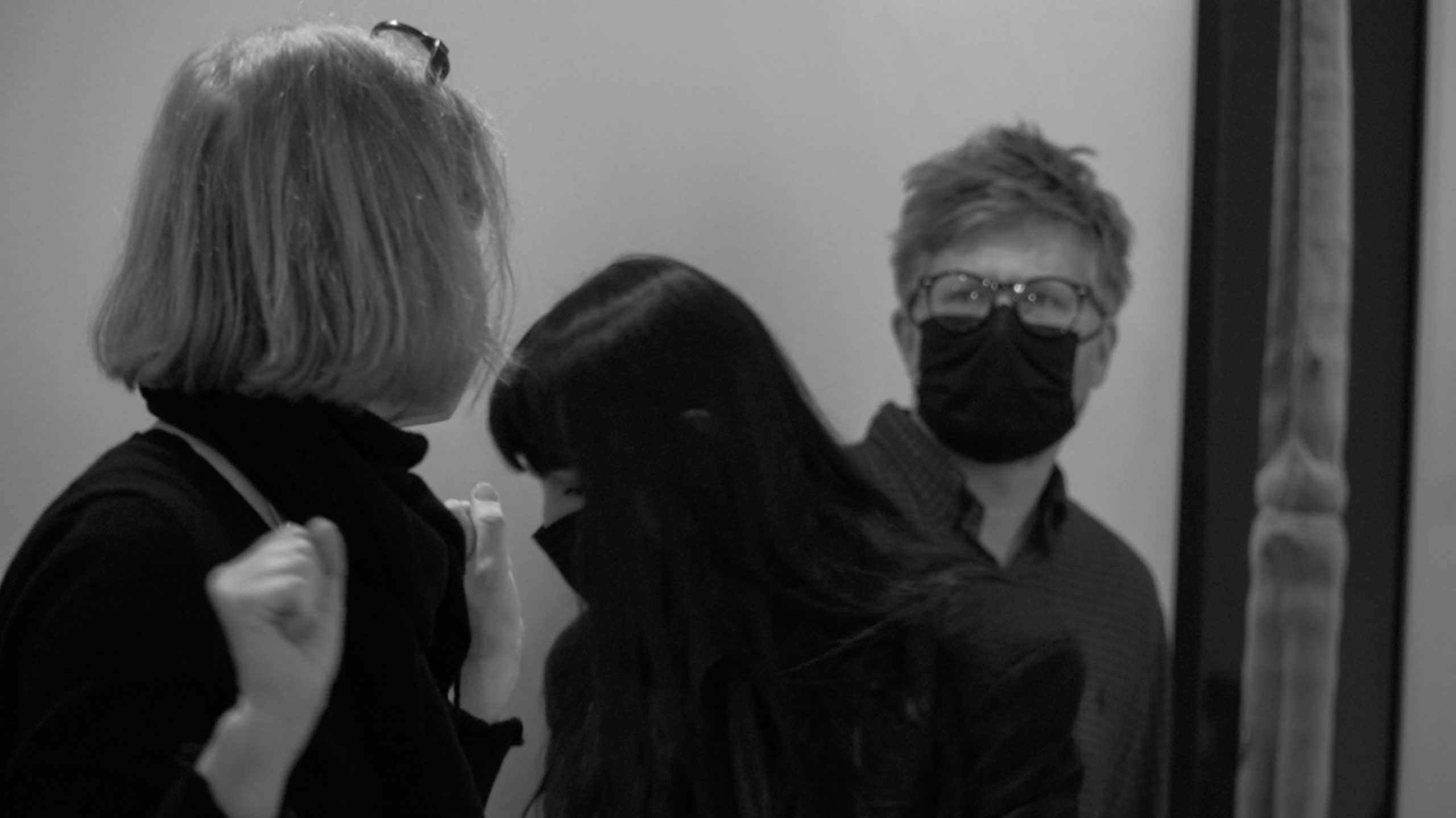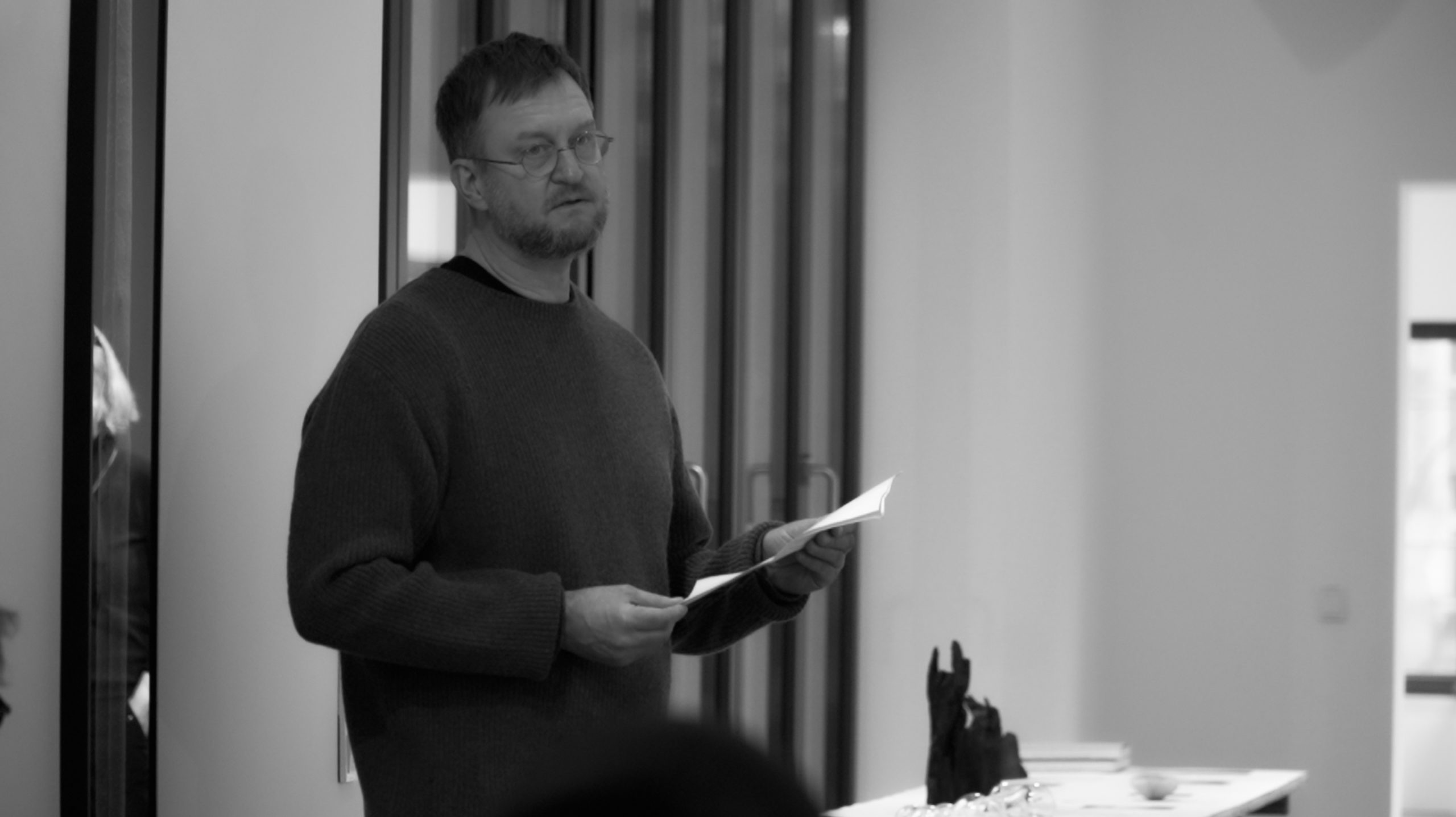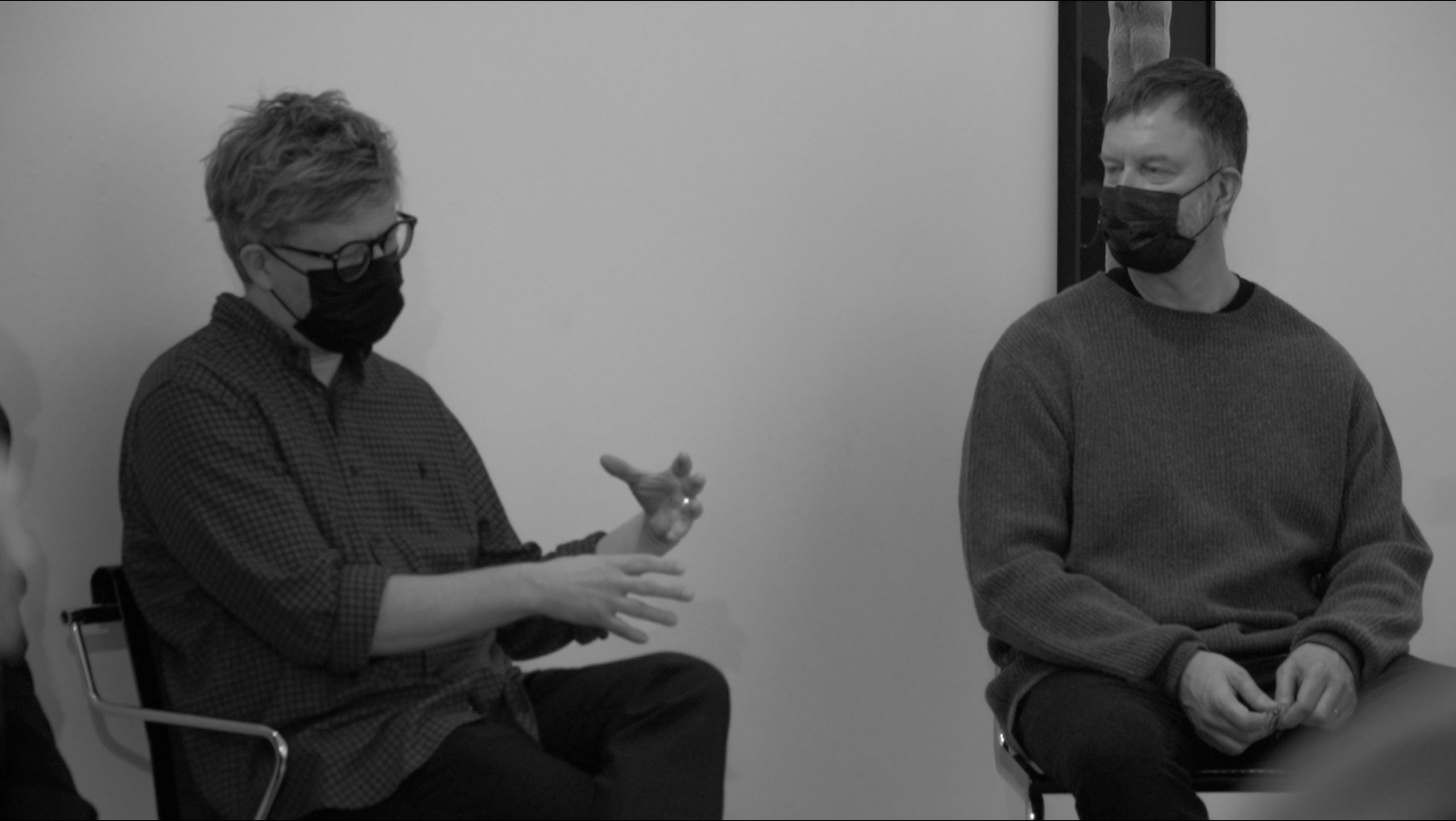
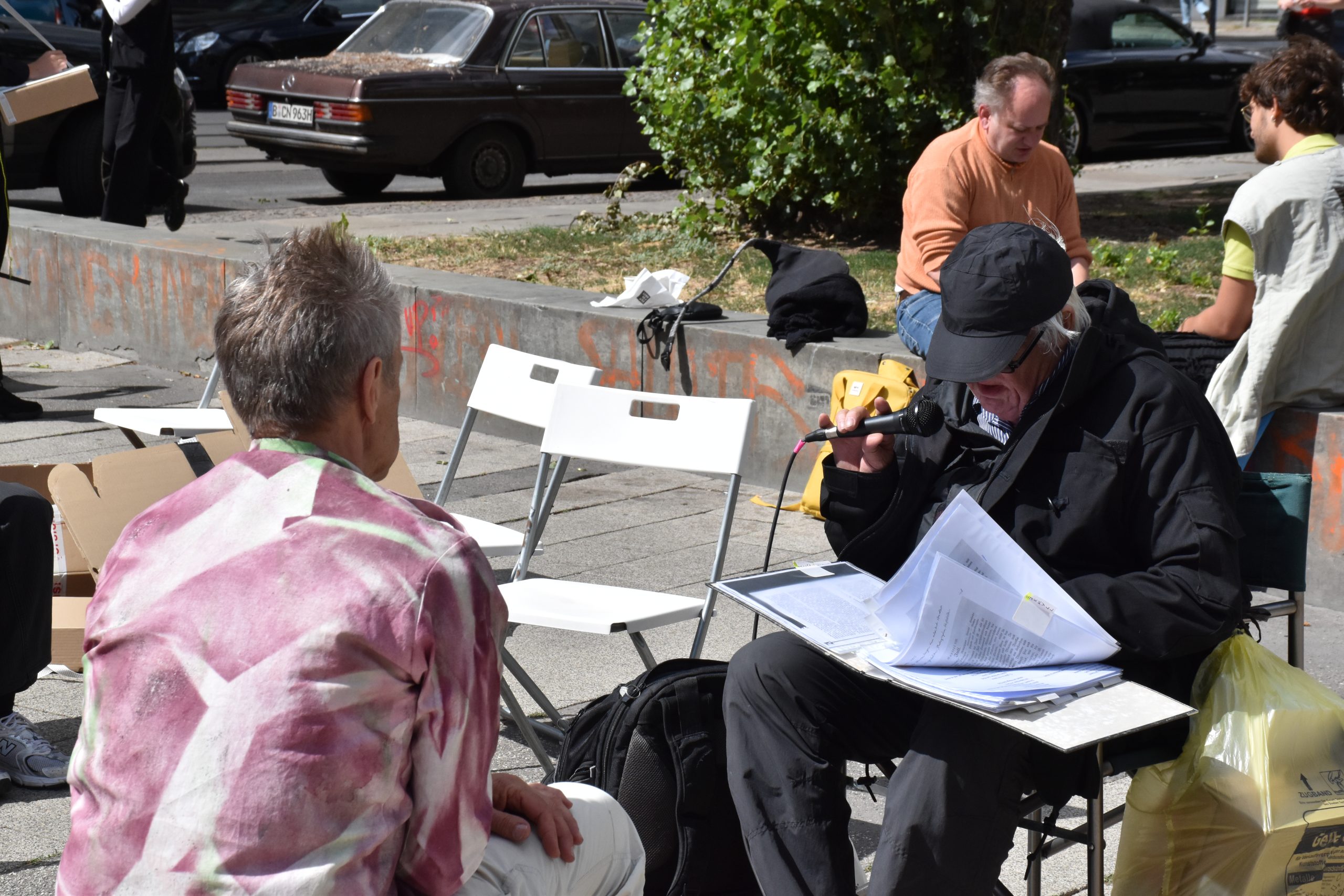
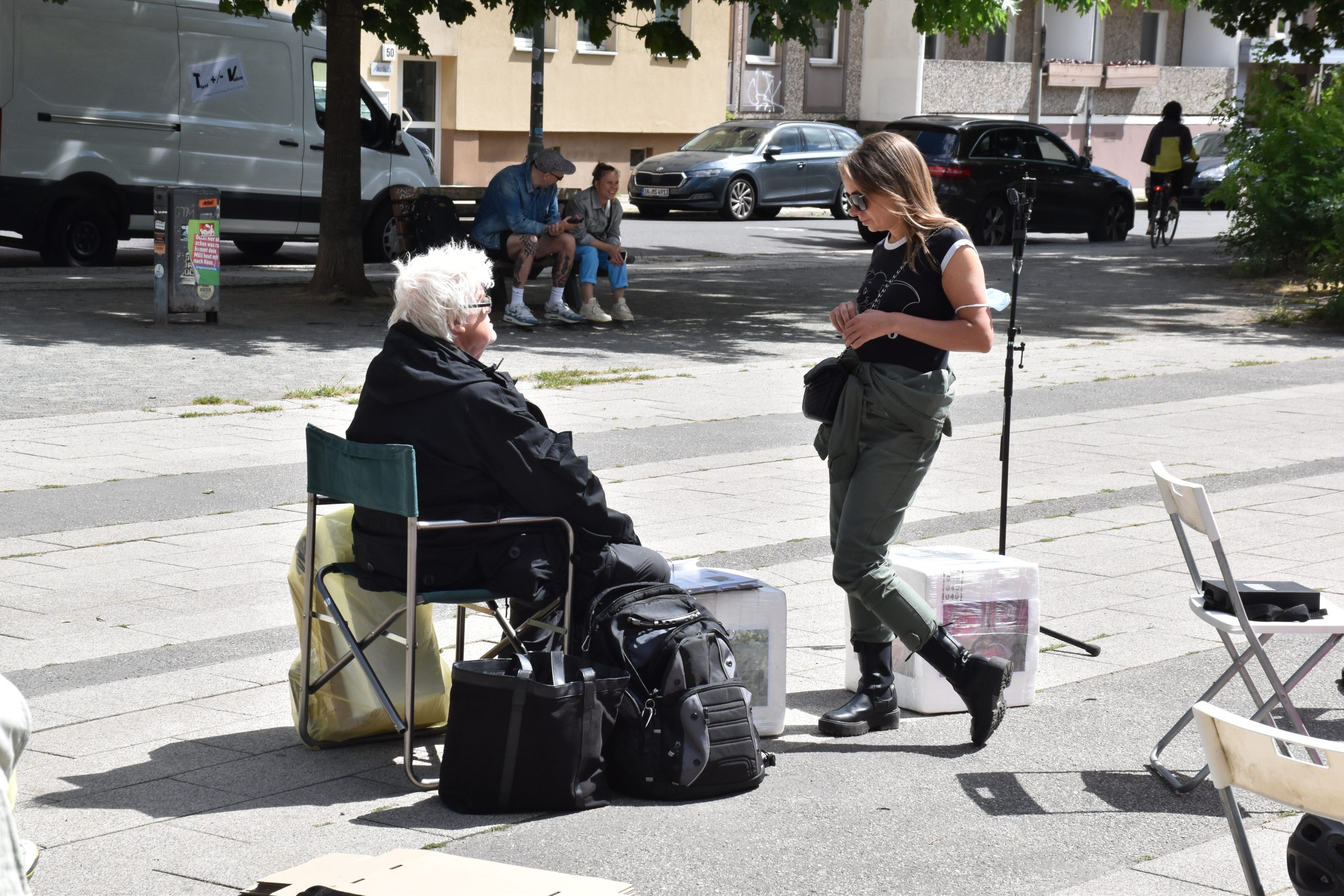
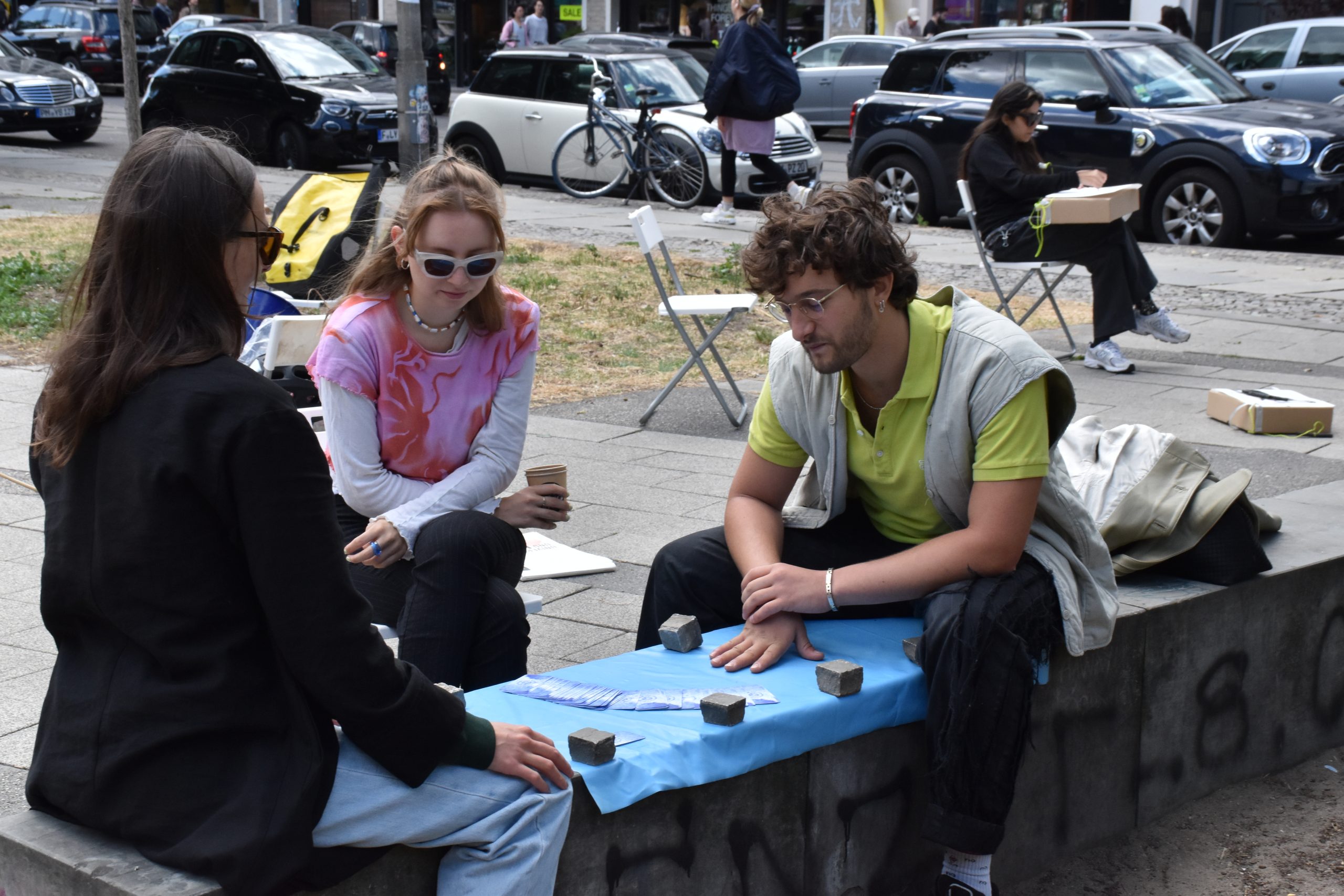
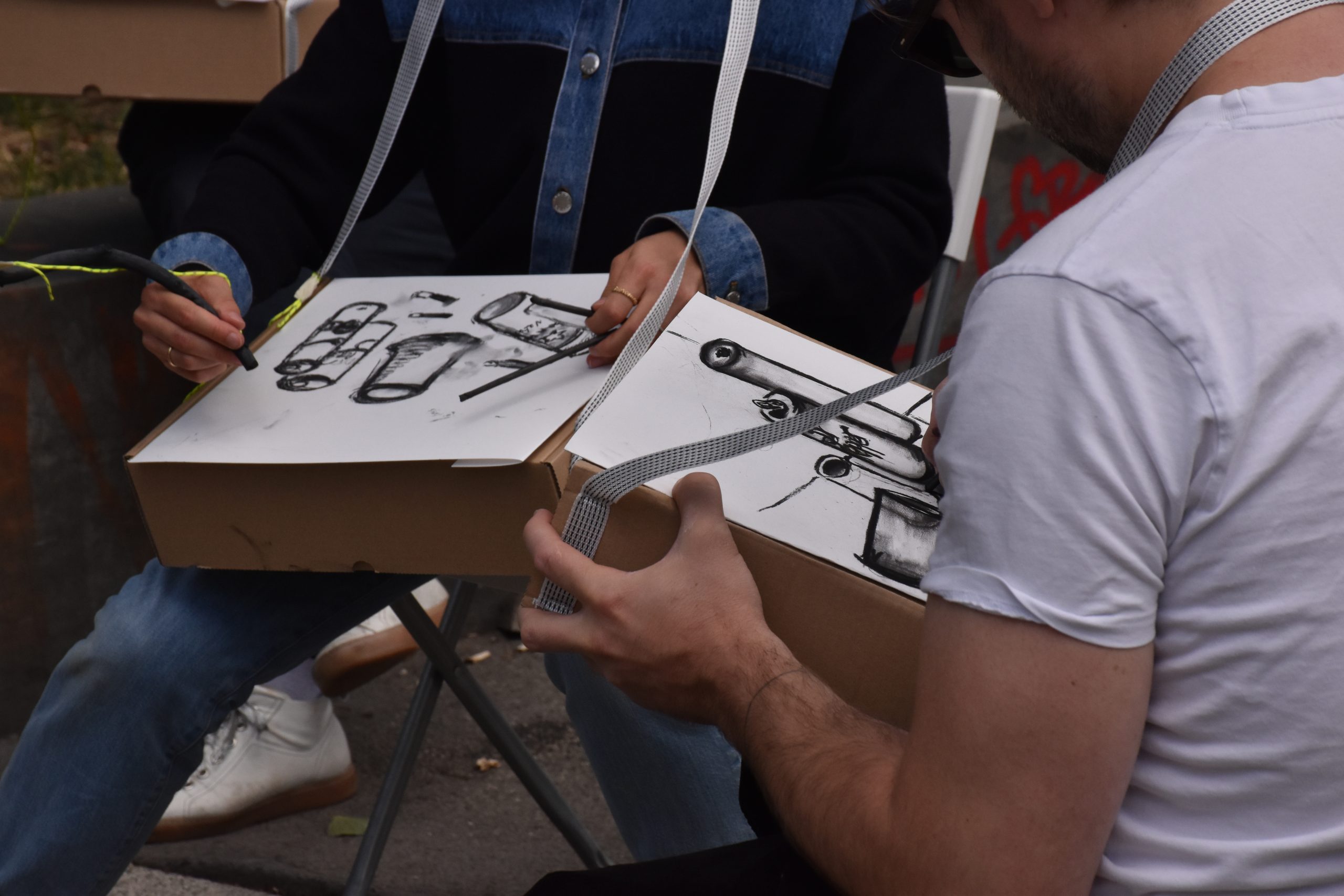
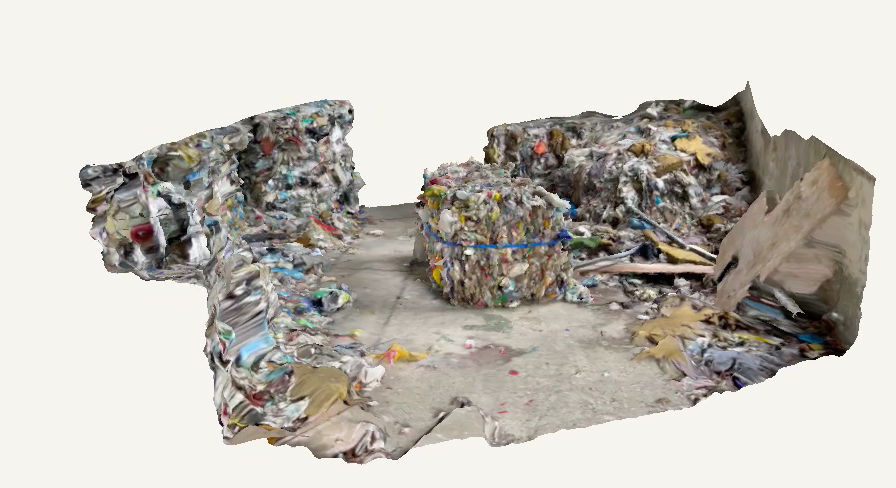
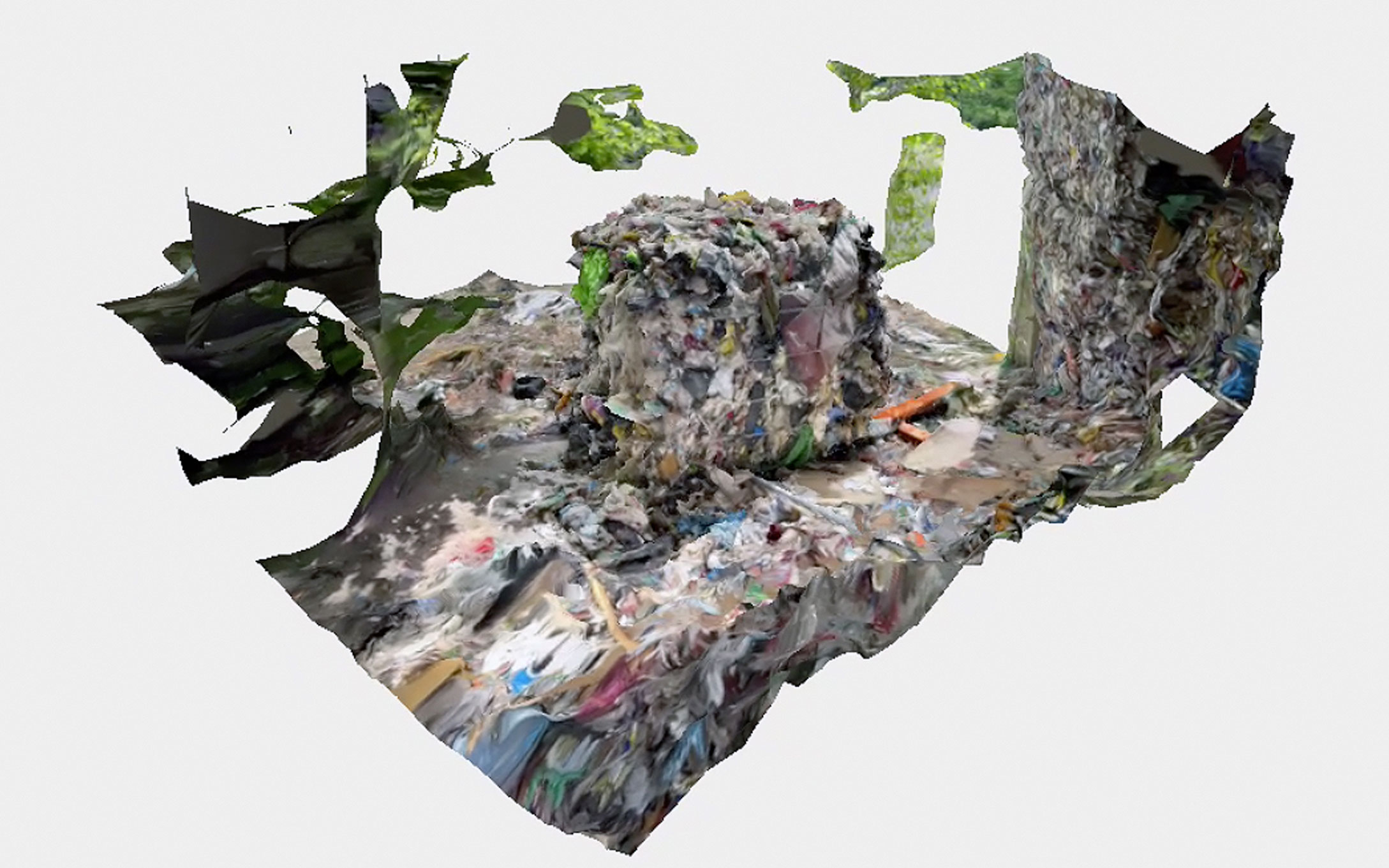
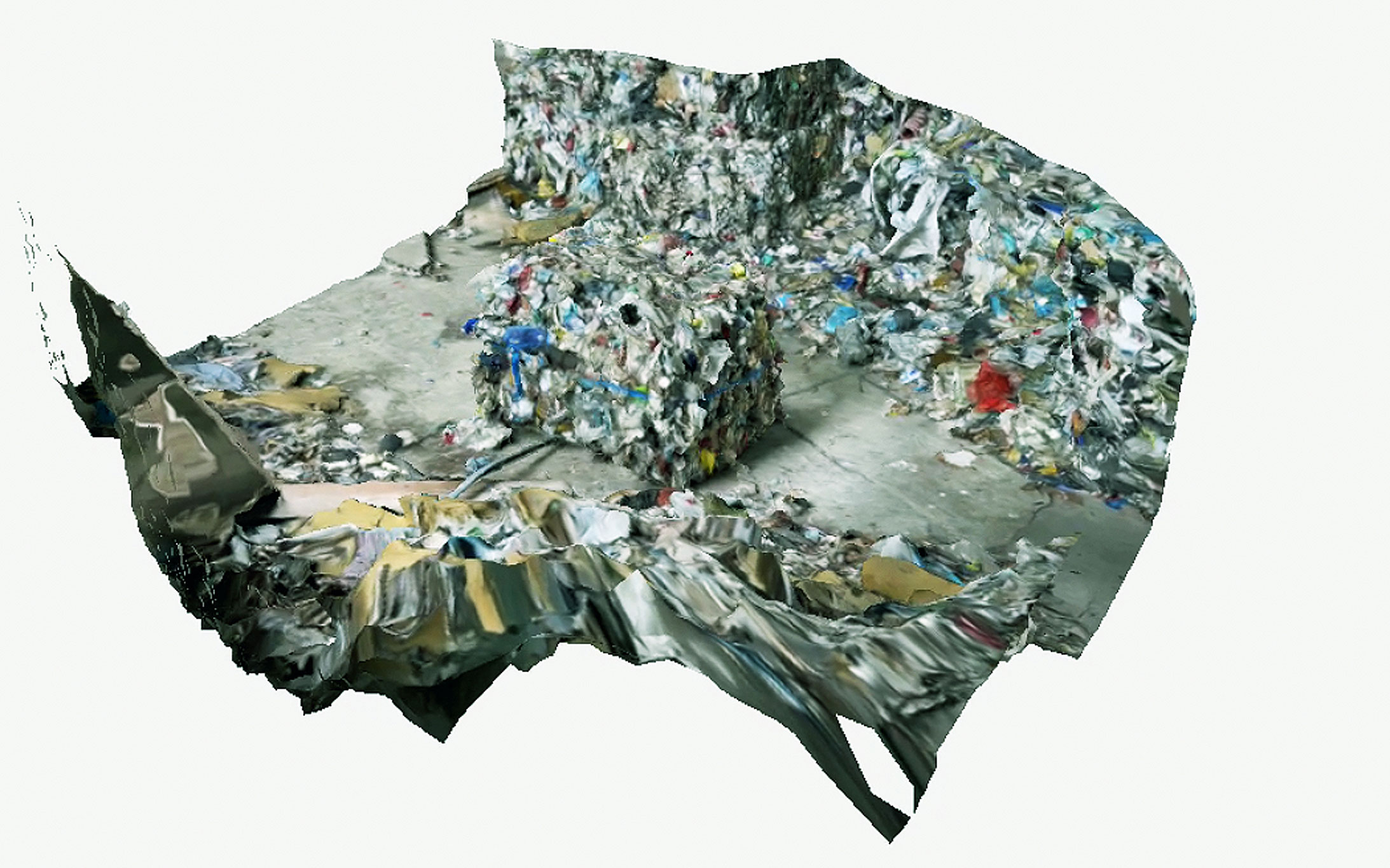
Autor: Susanne

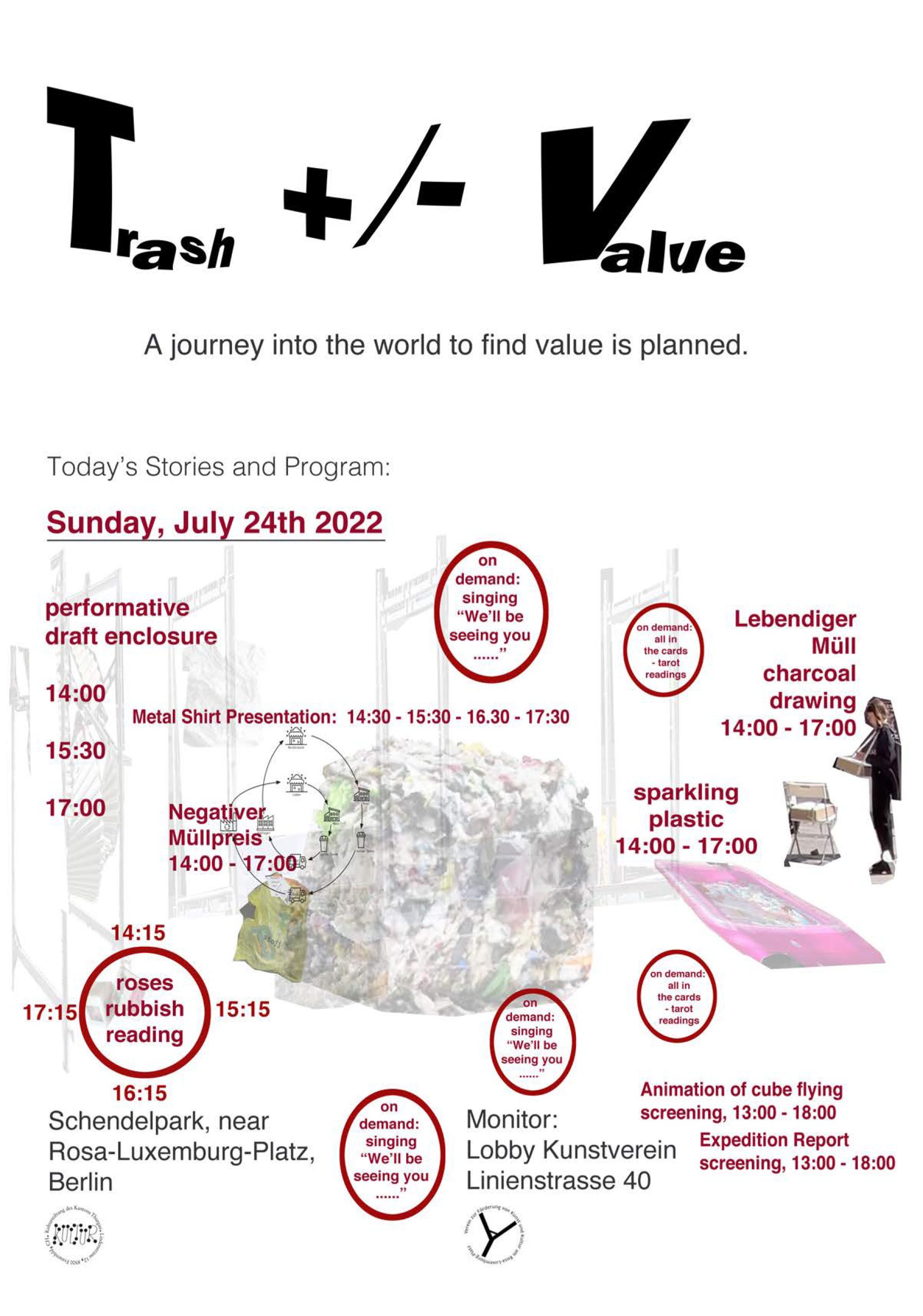
  • 16., 24. + 30.7.2022: trash +/- value

    Öffentliche Interventionen von und mit u.a. Hannes Brunner, Alena Trapp, Florian Techel, Marina Resende-Santos + Jakob Wirth, Jérémie Le Hénaff, Paul Ohnesorgen, Olga Shalashova, Abie Franklin, Ulrike Mohr, Wolfgang Knapp, Ivanna Heredia

    16., 24. und 30. Juli 2022*    (letzte Vorstellung *16-19h)

    Die Interventionen sind Teil der Ausstellung ENTWURFSANLAGEN +/- circular economies von Hannes Brunner, zu sehen 15. – 31. Juli 2022 jeweils Do-Sa 14-18h;  1.-27. August 2022 mit Terminreservierung über: besuch@einmalvorort.de

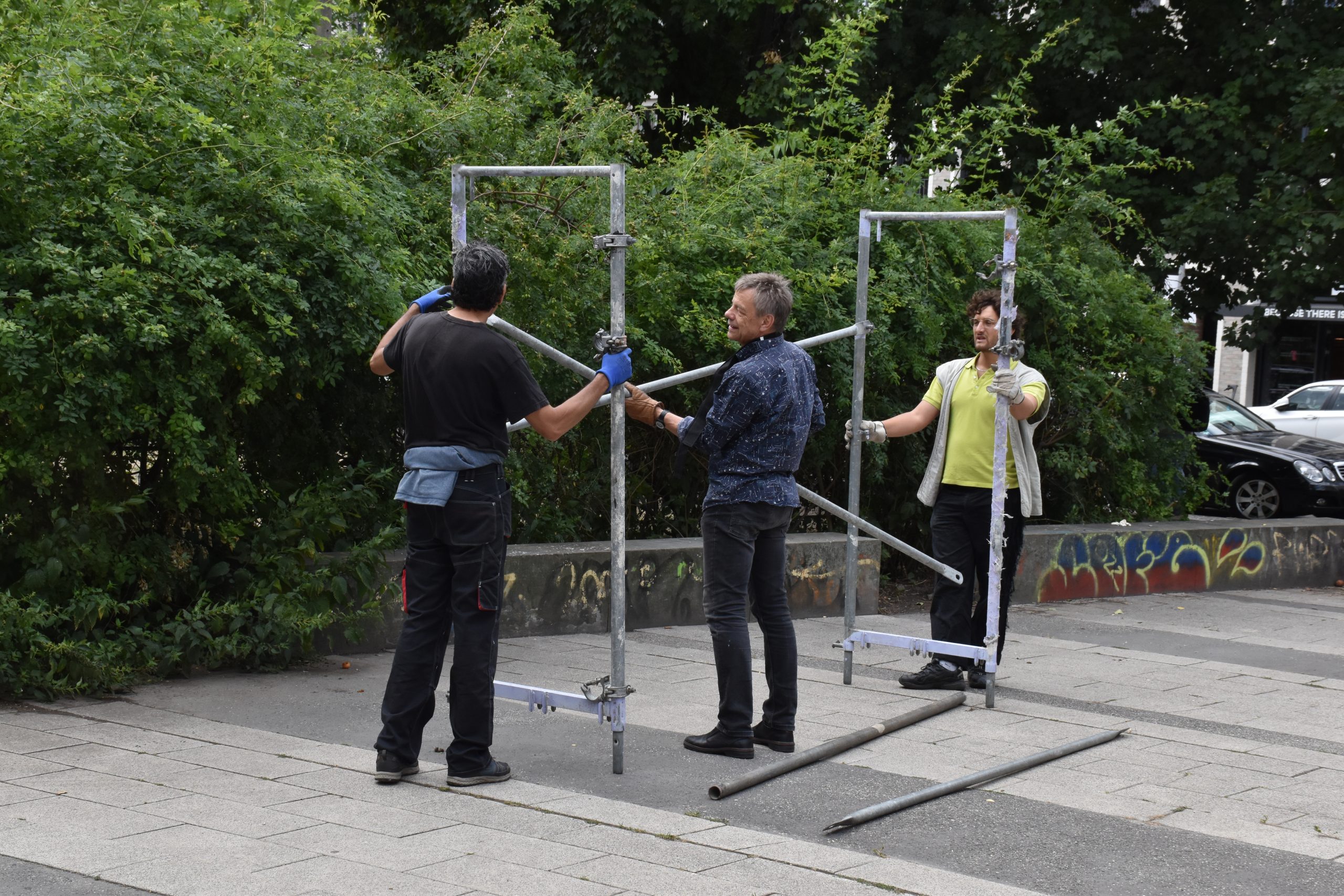
    Die Installation aus Gerüststangen ist ein Informations- und Marktstand sowie eine Bühne für wechselnde performative Aktionen im öffentlichen Raum. Sie ermöglicht es, kulturelle Produktion aus dem Moment heraus in neue Kontexte zu stellen. Sie ist Ort des symbolischen und realen Austauschs. Das bevorzugte Mittel ist das Spiel. Es geht um das Weggeworfene, scheinbar Wertlose, um den Umgang mit dem Material, um Vorschläge und Ideen für einen alternativen Umgang mit dem Zurückgelassenen.

    The small installation made of scaffolding poles is an information and market stand as well as a stage for changing performative actions in public space. It allows cultural production to be placed in new contexts out of the moment. It is a place of symbolic and real exchange. The preferred means is play. It is about the discarded, seemingly worthless, about dealing with the material, about suggestions and ideas for an alternative way of dealing with what is left behind.

    + / –

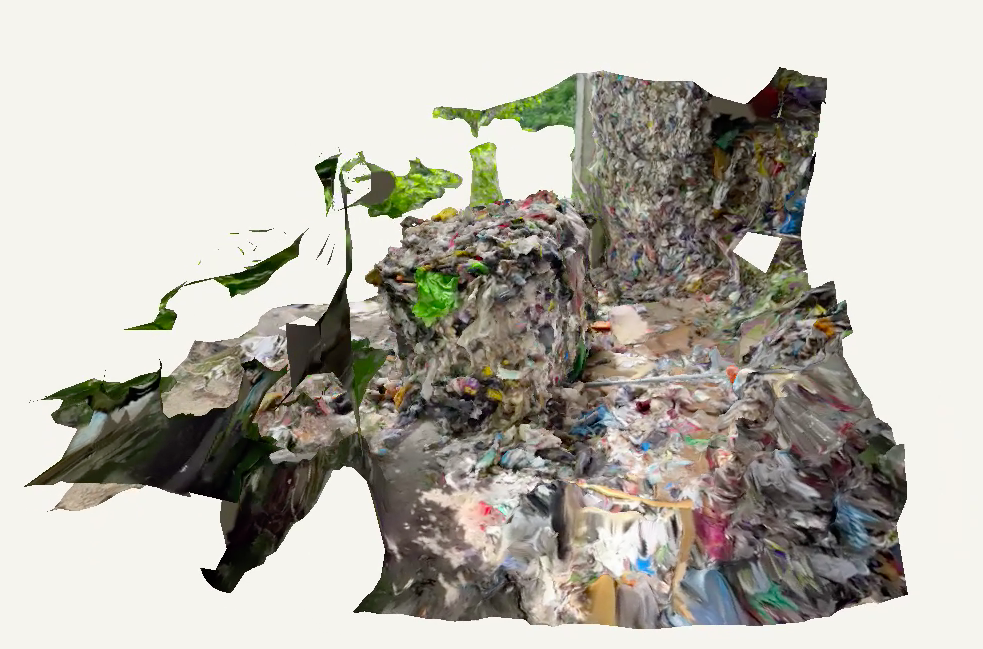
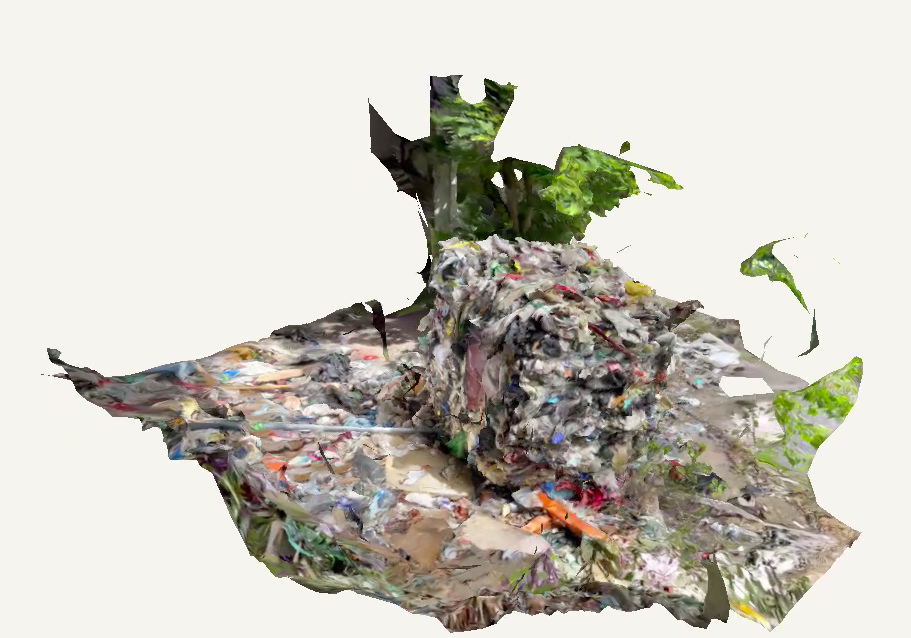
    Die gemeinsam von Marina Resende-Santos und  Jakob Wirth  konzipiere Arbeit Negativer Preis für Müll schließt den Wert(stoff)kreislauf, der normalerweise durch die Ablagerung von Kunststoff auf Deponien unterbrochen wird. Verbraucher haben bei dem Kunstprojekt die Möglichkeit, etwas Müll zurückzunehmen und die zuvor gezahlte Recyclinggebühren zurückzuerhalten, um ihn dann erneut in die Gelbe Tonne und dadurch zurück in die Müllwirtschaft zu geben.

    Das Projekt kommentiert die weitgehend intransparente Ökonomie des Wertstoffs und aller daran Beteiligten: Produzenten, Staat, Verbraucher, Transport- und Recyclingunternehmen. Es zielt speziell auf die Reihe von Wertübertragungen, die üblicherweise zu einer extremen Wertminderung führen. Ein Verlust, der letztlich nicht nur des Material, sondern auch die Chancen am menschlichen Verhältnis zur Erde etwas zu verändern, betrifft.

    The work Negative Price for Garbage, conceived jointly by Marina Resende-Santos + Jakob Wirth, closes the value (material) cycle that is normally interrupted by the dumping of plastic in landfills. In the art project, consumers have the opportunity to take back some rubbish and get back the recycling fees they previously paid, only to put it back into the yellow bin and thus back into the waste industry.

    The project comments on the largely non-transparent economy of recyclables and all those involved in it: producers, the state, consumers, transport and recycling companies. It specifically targets the series of value transfers that usually lead to extreme depreciation. A loss that ultimately affects not only the material, but also the chances of changing something about the human relationship to the earth.

    Marina Resende ist Künstlerin, Autorin und Forscherin. Ihre Arbeiten sind meist ortsspezifisch und umfassen Interventionen im öffentlichen Raum, Installationen und konzeptionelle Systeme, die sich mit Fragen der Nachhaltigkeit und Technologie, der Raumpolitik und der Wertschöpfung befassen.

    Marina Resende is an artist, writer and researcher. Her work is mostly site-specific and includes public space interventions, installations and conceptual systems that address issues of sustainability and technology, spatial politics and value creation.

    Jakob Wirth ist Künstler, Aktivist und Soziologe. Er arbeitet im öffentlichen Raum und wählt seine künstlerische Sprache prozesshaft, je nach Kontext und Thema. Sie reicht von Performancekunst, sozialer Praxis und direkten Guerilla-Interventionen, die fast ausschließlich im öffentlichen Raum realisiert werden. (www.jakobwirth.net)

    Jakob Wirth is an artist, activist and sociologist. He works in public space and chooses his artistic language processually, depending on context and theme. It ranges from performance art, social practice and direct guerrilla interventions, which are almost exclusively realised in public space. (www.jakobwirth.net)

    + / –

    Alena Trapp ist Künstlerin, Musikerin, Politikwissenschaftlerin und queer-feministische Aktivistin und lebt in Berlin und Bremen. Sie hat Kommunikations- und Medienwissenschaft und Politik studiert. Sie (re)kombiniert und programmiert verschiedene Disziplinen und Felder neu. Mit diesem Ansatz versucht sie, die Grenzen zwischen Wissenschaft, Kunst und Aktivismus zu verwischen. Sie ist vor allem im Bereich der Performance, der bildenden Kunst und der (sozialen) Bildhauerei zu Hause.

    Mit ihrer Performance für das Projekt Trash +/- Value thematisiert Alena die Rolle des Abfalls in westlichen Gesellschaften. Wie gehört der Abfall zu uns? Welche Art von Aufmerksamkeit schenken wir ihm, oder sogar wie sichtbar wollen wir ihn haben? Wie beeinflussen wir andere Wesen mit unserem Verhalten im Alltag, in der Arbeit und im Kreislauf von Produktion und Konsum? Als ein Teil des gesamten Forschungsprozesses adressiert die Performance diese Fragen im öffentlichen Raum.

    Alena Trapp is an artist, musician, political scientist and queer-feminist activist living in Berlin and Bremen. She studied communication, media science, and politics. She (re)combines and reprograms different disciplines and fields. With this approach she tries to blur the boundaries between science, art and activism. She is particularly at home in the fields of performance, visual art and (social) sculpture.

    With her performance for the project Trash +/- Value, Alena wants to explore the role of waste in Western societies. How does waste belong to us? What kind of attention do we pay to it, or even how visible do we want it to be? How do we influence other beings with our behaviour in everyday life, in work and in the cycle of production and consumption? As a part of the whole research process, the performance addresses these questions in public space.

    + / –

    Olga Shalashova ist eine in Paris lebende Künstlerin. In ihren Arbeiten verwendet sie recycelte und gebrauchte Materialien wie Haushaltsgeräte, Plastik und Textilien. Sie gibt Objekten, die zuvor als nutzlos und unansehnlich galten, eine neue Bedeutung und Interpretation, indem sie ihnen durch ihre verbesserte Ästhetik Schönheit und Poesie verleiht.

    Ein Performance-Projekt mit dem Titel Sparkling Plastic wirft Fragen über den täglichen Konsum und die Schuldgefühle auf, die er hervorruft. Es gibt Aufschluss über die Wünsche und den freien Willen des Menschen. Gibt es eine Entscheidung zwischen Konsum und Abfallzirkulation, oder ist es ein unendlicher, unaufhaltsamer Prozess?

    Olga Shalashova is an artist living in Paris. In her work, she uses recycled and used materials such as household appliances, plastic and textiles. She gives new meaning and interpretation to objects that were previously considered useless and unsightly, infusing them with beauty and poetry through their enhanced aesthetics.

    A performance project titled Sparkling Plastic raises questions about everyday consumption and the guilt it creates. It sheds light on human desires and free will. Is there a choice between consumption and waste circulation, or is it an endless, unstoppable process?

    + / –

    Abie Franklin is an Israeli artist living in Berlin. His practice centers around boundaries: between mediums, artificial and natural, body and space, material and matter. He is mainly engaged in projects that supplant the painterly conception of landscape. He studied fine art- painting at Weißensee academy of Art Berlin, where he worked as a tutor for Prof. Nader Ahriman.

    Speculative Action Cards wurde von Abie Franklin und der Kuratorin Annalena Amthor Basierend auf der formalen Struktur von Tarotkarten entwickelt. Die Karten zeigen Auszüge aus Franklins Werk, das sich mit aquatischen Hybriden befasst. Die Karten weisen Portale für spekulative Aktionen und Erzählungen auf, wobei die Durchlässigkeit zwischen Individuen und Ökosystemen im Mittelpunkt steh

    Abie Franklin ist ein in Berlin lebender israelischer Künstler. In seiner Praxis geht es um Grenzen: zwischen Medien, künstlich und natürlich, Körper und Raum, Material und Materie. Er beschäftigt sich hauptsächlich mit Projekten, die eine rein malerische Auffassung von Landschaft ablösen. Er studierte Bildende Kunst – Malerei an der Kunsthochschule Weißensee Berlin, wo er als Tutor bei Prof. Nader Ahriman arbeitete.

    Speculative Action Cards was developed by Abie Franklin and curator Annalena Amthor based on the formal structure of tarot cards. The cards feature excerpts from Franklin’s work dealing with aquatic hybrids. The cards allocate portals for speculative action and narrative, focusing on the permeability between individuals and ecosystems.

    + / –

    Als ausgebildetet Architekt beschäftigte sich Florian Techel seit seinen Studium in den 1980er Jahren intensiv mit der Integration von Computern in den Entwurf, die Planung und Durchführung von Gebäuden, seit der Jahrtausendwende speziell mit Building Information Modeling (BIM). In ca. 30 Jahren als Hochschullehrer in Deutschland und den Vereinigten Arabischen Emiraten hat er diese Paradigma über 1500 Studenten nahe gebracht. Unter anderem hat er diese Technologie zuletzt für den Bau seines Null-Energie-Hauses praktisch verwendet. Für dieses Projekt hat Florian Techel Animationen und Renderings beigesteuert.

    As a trained architect, Florian Techel has been intensively involved with the integration of computers in the design, planning and execution of buildings since his studies in the 1980s, and especially with Building Information Modelling (BIM) since the turn of the millennium. In about 30 years as a university lecturer in Germany and the United Arab Emirates, he has taught this paradigm to over 1500 students. Among other things, he most recently used this technology in practice for the construction of his zero-energy house. Florian Techel contributed animations and renderings for this project

    + / –

    Paul Ohnesorgen studiert derzeit Bildhauerei an der Kunsthochschule Weissensee in Berlin. Seine multidisziplinäre Praxis dreht sich um die Themen räumliche Gestaltung und Transformation, Wahrnehmung und soziales Verhalten sowie die Kommunikation von Ideen durch Materialien, Erfindungen und kreative Prozesse.

    Performative Draft Enclosure ist ein einaktiges Theaterstück über die Geschichte des menschlichen Designs, seine Methoden, Prozesse und Auswirkungen auf die soziale Ordnung der Gegenwart.  Intellekt, Kultur und Technologie haben die menschliche Errungenschaft in das Zeitalter des Anthropozäns gebracht, in dem die menschlichen Gestaltungs- und Ordnungssysteme eine Schwelle erreicht haben, die ihre eigene Nachhaltigkeit bedroht.

    Paul Ohnesorgen is currently studying sculpture at the Weissensee School of Art in Berlin. His multidisciplinary practice revolves around spatial design and transformation, perception and social behaviour, and the communication of ideas through materials, invention and creative processes.

    Performative Draft Enclosure is a one-act play about the history of human design, its methods, processes and impact on the social order of the present.  Intellect, culture and technology have brought human achievement into the age of the Anthropocene, where human systems of design and order have reached a threshold that threatens their own sustainability.

    + / –

    Ulrike Mohr ist eine bildende Künstlerin. Sie lebt in Berlin und arbeitet mit dem Konzept der Zeichnung, des Raums, der Zeit und der Kohle. Mohrs künstlerischer Ansatz nutzt Transformationsprozesse von Materialien, die von komplexen Forschungsergebnissen, traditionellem Wissen und Zufall beeinflusst sind. Durch die Beobachtung von Natur und Materialität schaffen die Arbeiten ihre eigene materielle Präsenz.

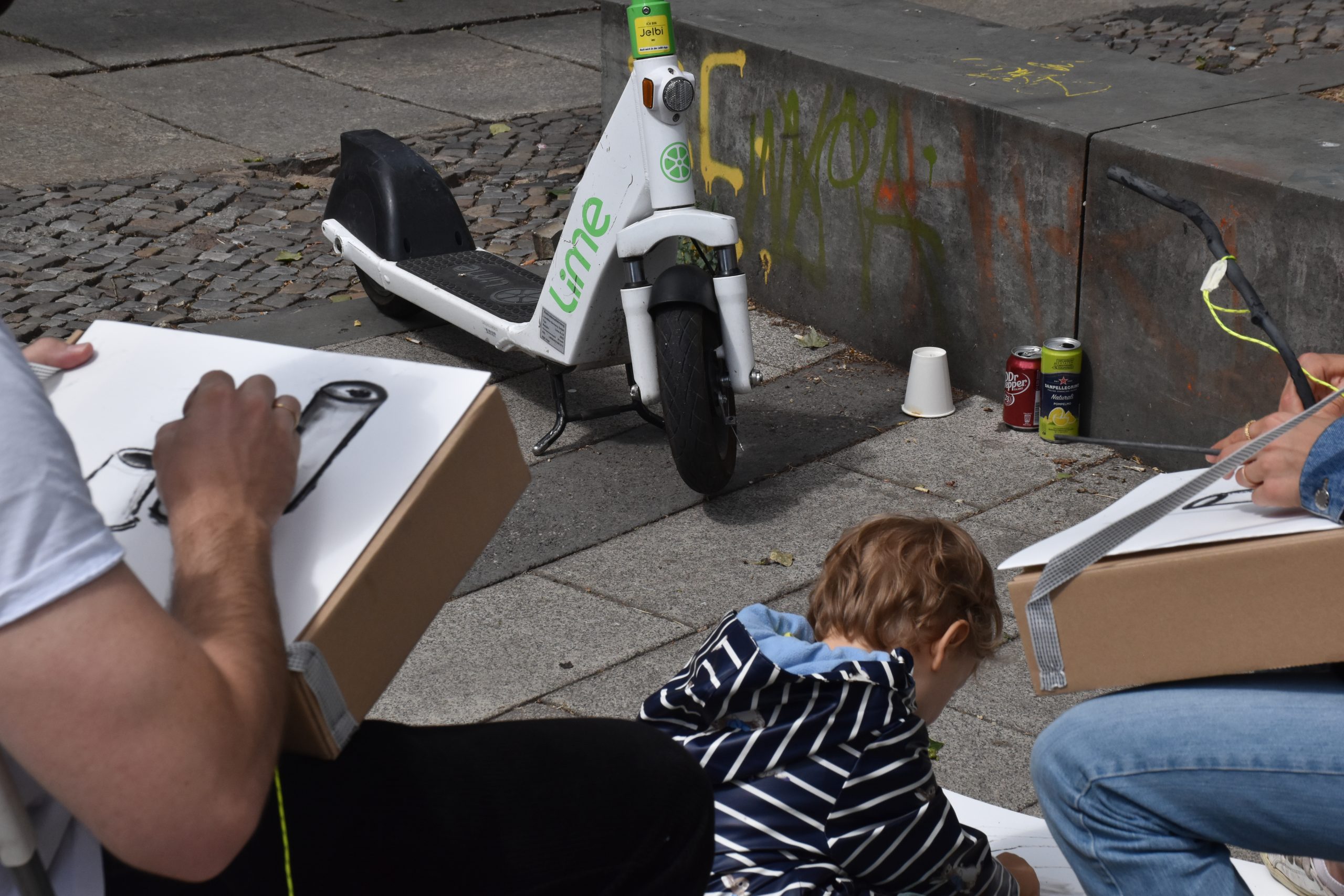
    Lebendiger Müll, ihre phänomenologische Analyse mittels Beobachtung und Aufzeichnung, bringt uns der Abfallmaterie näher.  Ähnlich der Ikebana Philosophie erwecken wir die „Müllblumen“ zum Leben, zeichnen die Arrangements des Unperfekten.  Ikebana bedeutet wörtlich übersetzt „lebende Blume“.  Wir widmen uns dem Geist und der Schönheit des Berliner Strassenmülls.  Durch die künstlerisch-zeichnerische Tätigkeit verhelfen wir dem Müll zur vollen Entfaltung und lassen ihn Teil eines Kunstwerks werden.  Wir schenken der Materie Müll ein neues Leben, den sparsamen und ästhetischen Stilleben aus Hinterlassenschaften ein schöneres Aussehen.

    Ulrike Mohr is a visual artist based in Berlin.She works with the concept of drawing,  space, time and charcoal. Mohr’s artistic approach uses transformation processes of materials,  which are influenced by complex research results, traditional knowledge and coincidence. Through observations of nature and materiality,  the works create their own material presence.

    Living Waste, her phenomenological analysis through observation and drawing, brings us closer to waste matter. Similar to the Ikebana philosophy, we bring „garbage flowers“ to life, drawing the arrangements of the imperfect. Ikebana literally means „living flower“. We devote ourselves to the spirit and beauty of Berlin’s street litter. Through the artistic and graphic activity, we help the garbage to develop fully and let it become part of a work of art. We give the material rubbish a new life, the economical and aesthetic still lifes from legacies a more beautiful appearance.

    + / –

    Als Sozial- und Erziehungswissenschaftler lehrt und forscht Wolfgang Knapp seit 1988 am Institut für Kunst im Kontext an der Universität der Künste Berlin UDK. Seine Schwerpunkte sind interdisziplinäre Kooperationen an der Schnittstelle von Bildproduktion, Kunst und Wissenschaft (seit 1993), Minderheiten in Kunst und Medien, kuratorische Tätigkeiten und Publikationen. Seit 1982 initiierte er u.a. internationale Projekte und Ausstellungen, forschte und lehrte im Ausland. (z.B.: China, Finnland, Frankreich, Ungarn, Iran, Japan, Oman, Russland, Schweiz, Syrien, Südafrika, Türkei, UK, USA;).

    Roses – Rubbish – Readings: Die Besucher können mit einem (oder zwei) Würfeln aus Styropor spielen. Material:  Auf 5 Seiten jedes Würfels ist ein Foto einer Rosenblüte, benannt nach einem Künstler, eine Seite bleibt weiß. Entsprechend dem Rosennamen der ausgewählten 10 Künstler kann der/die SpielerIn laut aus Schriften dieser KünstlerInnen, die durch die Rose auf der Seite über dem Würfel repräsentiert werden, vorlesen (z.B. Briefe, Gedichte, Statements, künstlerische Ideen usw.) – wenn gewünscht liest Wolfgang Knapp vor.(Das Spiel schließt einen Wettbewerb aus und hat keine Gewinner als Endergebnis).

    As a social and educational scientist Wolfgang Knapp has been teaching and researching at the Institute for Art in Context at the University of the Arts in Berlin  UDK since 1988. His focus is on interdisciplinary collaborations on the interface of image production arts and sciences (since 1993), minorities in art and the media, curatorial activities and publications. Since 1982 he frequently was e.g. initiating international projects and exhibitions, researching and lecturing abroad. (e.g.: China, Finland, France, Hungary, Iran, Japan, Oman, Russia, Switzerland, Syria, South Africa, Turkey, UK, USA).

    Roses – Rubbish – Readings: Visitors can play with one (or two) styrofoam dice. The game cubes have artists‘ names and readings from their writings.  On 5 sides of each cube a photo of a rose blossom named after an artist, one side remains white. According to the rose name of the selected 10 artists, the player can read aloud from writings of these artists represented by the rose on the side above the cube (e.g. letters, poems, statements, artistic ideas, etc.) – if desired, Wolfgang Knapp reads aloud. (The game excludes competition and has no winners at the end).

    + / –

    Ivanna Heredia wurde in Mexiko-Stadt geboren und lebt in Berlin. Ihre Arbeit konzentriert sich derzeit auf die Schnittstelle zwischen Mode und zeitgenössischer Kunst. Ihr Beitrag ist ein Metallhemd. Die Stickerei wird als Mittel zum Erzählen von Geschichten verwendet; in dieser Arbeit formt der silberbeschichtete Draht die Werteerzählung des Kleidungsstücks. Grundsätzlich symbolisiert ein weißes Vintage-T-Shirt  einen der wenigen Bereiche, in denen die menschliche „Herstellung“ noch nicht durch eine Maschine ersetzt wurde. Das T-Shirt gewinnt durch jede Person, die es trägt, an Wert, indem es dem Kleidungsstück die auf dem Vintage-T-Shirt-Markt hoch geschätzten Gebrauchsspuren verleiht.

    Ivanna Heredia was born in Mexico City and lives in Berlin. Her work currently focuses on the interface between fashion and contemporary art. Her contribution is the Metal Shirt. Embroidery is used as means of storytelling; in this work, the silver-coated wire shapes the value narrative of the garment. A white vintage T-shirt symbolises one of the few areas where human „making“ has not yet been replaced by a machine. The T-shirt gains value through each person who wears it, giving the garment the traces of use that are highly valued in the vintage T-shirt market.

    + / –

    Hannes Brunner ist ein in der Schweiz geborener und in Berlin lebender Künstler. Er bevorzugt ephemere Materialien in Installationen. In seinen kontextbezogenen Projekten werden unterschiedliche Medien mit gesellschaftlichen Prozessen kombiniert. Er lehrte als Professor, Prorektor und Vorsitzender an der Weißensee Kunsthochschule Berlin, am Royal College of Art London, dem NYIT, New York Institute of Technology, der Muthesius Kunsthochschule Kiel, der ETH Zürich, u.a. Es ist alles in den Karten ist eine öffentliche Übung. Basierend auf dem „Tarot de Marseille“ von M. Ernst, A. Breton und anderen zitieren die Karten Werke von fünf Künstlern, die zuvor in Marseille gefundene Materialien inszeniert haben. Die Fotos evozieren Vorhersagen, die weder künstlerische noch wissenschaftliche Expertise sind, sondern systemische Kombinationen von Fremdbestimmung durch Algorithmen zu gartenbezogenen Vitalismen.

    Hannes Brunner is a swiss born artist based in Berlin. He favors ephemeral materials in installations. In his context-related projects, different media are combined with social processes. He taught as a professor, pro-rector and chairman at the Weißensee Kunsthochschule Berlin, the Royal College of Art London, the NYIT, New York Institute of Technology, the Muthesius Kunsthochschule Kiel, the ETH Zurich, a.o.

    It’s all in the cards is a public exercise. Based on „Tarot de Marseille“ by M.Ernst, A. Breton and others, the cards quote works by five artists who previously staged materials found in Marseille. The photos evoke predictions that are neither artistic nor scientific expertise, but rather systemic combinations of external determination through algorithms to garden-specific vitalisms.

    + / –

    Jérémie Le Hénaff  ist Journalist und Filmemacher, er studierte Politikwissenschaften an der Sorbonne und am Institut d’études politiques de Rennes. Er nimmt an dem Projekt teil, indem er es dokumentiert und recherchiert

    Jérémie Le Hénaff is a journalist and filmmaker, he studied political science at the Sorbonne and the Institut d’études politiques de Rennes. He participates in the project by documenting and researching it.

    + / –

    Die Projekte und ein anschließender Katalog werden unterstützt durch die Kulturstiftung des Kanton Thurgau | The projects and a subsequent catalogue are supported by the Cultural Foundation of the Canton of Thurgau
  • Stefan Panhans & Andrea Winkler
    ANIMA OVERDRIVE

    Ausstellung / Exhibition: 15.9. – 22.10.22
    Öffnungszeiten / Opening hours: Do – Sa / Thu – Sat 14 – 18 h und nach Vereinbarung / and by appointment

    15.10.22 19 h Vortrag der Kuratorin und Kunsthistorikerin / Lecture by the curator and art historian Katharina Brandl *

    22.10.22 19 h Lesung des Romanautors / Reading by novelist Tom McCarthy*

    * Der Kunstverein bleibt an Veranstaltungstagen durchgehend geöffnet. / The Kunstverein remains open throughout on event days.

    (scroll down for English) Kunst ist eine Sirene – die meisten Künstler_innen glauben daran. Sie ertragen Miniwohnungen und ein Leben von der Hand in den Mund, weil sie an etwas fast Heiligem teilhaben: der menschlichen Kreativität. Andere Selbstständige haben diesen Trost nicht. Immerhin – denken viele vermutlich, – führen sie ein freies, auf jeden Fall ein dem 21. Jahrhundert angemessenes Leben. Also akzeptieren sie ein Dasein unter Druck, voller Missionen, die sich nicht auszahlen.

    Die Filme und die mit ihnen verbundenen Installationen der Künstler_innen Stefan Panhans und Andrea Winkler, die in Berlin und Hamburg leben, kreisen seit einiger Zeit um dieses Problem. Dabei argumentieren sie nicht aus überlegener Warte, weil sie von Künstlern und Darstellern gemacht werden, die genau diesen Zwängen ausgesetzt sind, die zunehmend von breiteren Bevölkerungsgruppen geteilt werden.

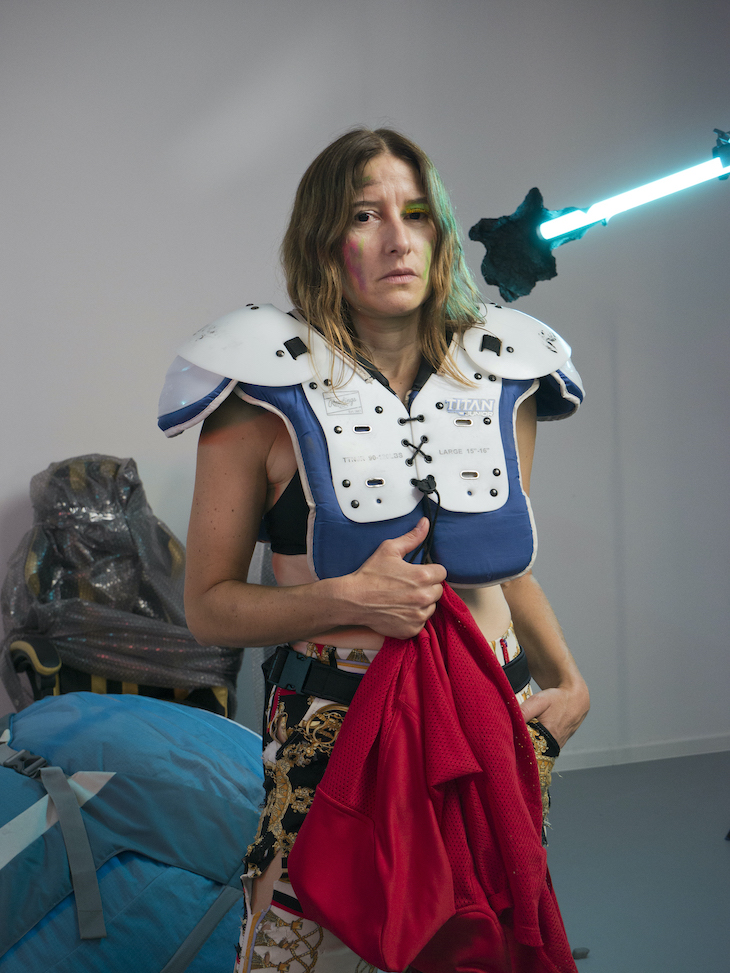
    Genau hier knüpft auch ihr neuestes Projekt Anima Overdrive (2022) an, das im Kunstverein Premiere hat. »Deliver, deliver, deliver, deliver, I’m your deliver delivery, I’m your delivery deliver, I’m your delivery deliver delivery, I deliver tokenism, I deliver you a boss, I deliver your perfect coach & artsy art consulter, I deliver minijobs and alcopops, I deliver all your medicine right before you know you’re ill, I deliver liver! … « rapt die Delivery Heroine (Lisa Marie Janke) im labellosen, gepanzerten American Football Shirt und mit verwildertem Make-up zum treibenden Beat – allein in einem Lagerraum vor einem riesigen Rucksack und in Luftpolsterfolie eingepackte Gaming-Stühlen. Um die allgegenwärtigen Lieferdienste von Amazon über Gorillas bis Zalando geht es hier nur bedingt. Anima Overdrive liefert vielmehr Text und Bild zur um sich greifenden Erschöpfung in einer Welt, die zunehmend von Algorithmen und K.I. im Dienst eines turbobeschleunigten Plattformkapitalismus bestimmt wird. Eine Welt in der alles zur Ware wird: Arbeitskraft, Körper, Gefühle, Bewegungsmuster, Mimik …. Selbstoptimierung versteht sich unter diesen Umständen von selbst: Sie ist ein ständiges Bootcamp für die Bewältigung des Alltags, eine Möglichkeit, mikrokosmische Kontrolle auszuüben, wenn alles andere außer Kontrolle gerät – »I deliver everything!«

    Defender (2021), entstanden in den Pandemie-Jahren und erstmals in Berlin zu sehen, ist ein Mini- (und auch Anti-) Musical. Drei Frauen (Anne Ratte-Polle, Lisa Marie Janke und Olivia Hyunsin Kim) bilden eine Art Arbeits- oder Serviceteam, das auf unbekannte Mission in eine Tiefgarage geschickt wird. Dort steht nur ein einziges Fahrzeug: ein großer schwarzer Geländewagen in einer Art „Erlkönig“-Tarnung, die von der Automobilindustrie verwendet wird, um Design-Neuheiten zu verstecken und gleichzeitig bei Testfahrten mit Prototypen besondere Aufmerksamkeit zu erregen. Um das mysteriöse Objekt, das wie ein ‚McGuffin‘ für das soziale Unbewusste fungiert, entfaltet sich ein kataraktartiger Trialog aus vermeintlich verinnerlichter Selbstverbesserungsrhetorik, Fragmenten aus SUV-Werbespots und Selbsthilfebotschaften von Megachurch-Gurus, nur unterbrochen durch Burn-out-Symptome, sowie der aus Büchners Lenz zitierenden Sprachassistentin des SUV namens Concierge.  Mit Gesangseinlagen, Workout- und Tanzübungen umkreisen sie ihn ergebnislos, um sich schließlich mit Tierlauten zu befreien. Symptome der Bedingungen unserer Arbeits- und Lebenswelt werden direkt verknüpft mit unseren individuellen Ängsten, Wünschen und Sehnsüchten. Resilienztraining, SUVs und Pseudoreligion zumindest scheinen aber nicht die Lösung zu sein.

    Der dritte Film der Ausstellung »  If You Tell Me When Your Birthday Is« (2020), nistet sich in den Schnittstellen zwischen analoger und der virtueller Welt ein und kombiniert 3D-Scanning von realen Objekten und Menschen, CGI- World-building, Avataring und Motion-Capture-Elemente. Wie bei jeder ‚Machinima‘-Produktion wurde in Echtzeit generierte, grafische 3D-Umgebungen verwendet. In dieser virtuellen Welt wurde der gesamte Film gedreht. Inhalt und Methode ist dabei der sogenannte Linguistischen Kapitalismus und dessen aktuelle Trends in der digitalen, K.I.- und Roboter-gesteuerten kulturindustriellen Sprachproduktion. So beruht das Skript vollständig auf Dialogen der Künstler_innen mit sogenannten künstlichen Intelligenzen aus verschiedensten Alltagsbereichen, und Kommunikation derselben – z.B. algorithmisch gesteuerter Chatbots – untereinander. Dabei wurden gezielt die absurden, gelegentlich komischen oder sogar unheimlichen Unzulänglichkeiten dieser ‚Technik-Collage‘ im Film belassen. In Anlehnung an das Bad Painting der ’Neuen Wilden’ Maler Des Deutschland der 1980er Jahre, haben wir es hier vielleicht mit einer ‚Bad Virtual‘ Ästhetik des 21. Jahrhunderts zu tun.

    Über Objekte im Raum, die auch in den Videos eine Rolle spielen, breiten sich die Filme von Panhans & Winkler oft in den Ausstellungraum aus und ziehen uns ins Bild. So begegnen wir dem Rucksack und den Gaming-Stühle aus Anima Overdrive, die jetzt ganz praktische Sitzfunktionen erfüllen. Daneben tauchen weitere Objekte auf, die auf den ersten Blick verwandt wirken, bei näherer Betrachtung  aber zu klein, vernäht, aufgeblasen, kurz: unbrauchbar erscheinen. Sie bestehen vor allem aus Hightech-Stoffen aus den Bereichen Sport, Outdoor, Sicherheit und Schutz. Es sind Materialien, die den Körper sichern, ihn verbessern – sogenannte Enhancer. Aus ihnen fertigt Andrea Winkler ihre dreidimensionalen Stoffcollagen, denen – zwischen Körperfragment und Kleidungsstück changierend – das Versprechen innewohnt, körperliche Defizite auszugleichen, vielleicht sogar unverwundbar zu machen. Sie sind letztlich dysfunktional und doch, in den Worten von Donna Haraway »fähig zur Verbindung mit anderen«, offen für neuartige Strukturen und Werdensformen.

    Die begleitenden Bilder aus der Fotoserie Bringing the WoW Home (2021) von Stefan Panhans – schon im Titel eine Hommage an die ikonische Fotoserie Bringing the War Home von Martha Rosler – erscheinen dann wie ein Kommentar zur Gamifizierung der Gesellschaft. Die Art und Weise, wie Fotograf und Darstellerin (Lisa Marie Janke) kongenial den Spiel-Kontext von den aggressiven Kampfposen und Kabuki-haften Grimassen der monströsen Superhelden aus World of Warcraft (abgekürzt WoW) subtrahieren, bis diese dann in ihrer aggressiven Übertreibung irgendwie etwas verloren in der Wohnküche rumstehen, entblößt die theatralischen Gesten der ‚Originale‘ in ihrer ganzen Affektiertheit und entbehrt nicht eines gewissen Humors.

    Die Ausstellung ist kuratiert von Susanne Prinz.

    |

    Art is a siren – most artists believe this. They endure mini-apartments and hand-to-mouth living because they share in something almost sacred: human creativity. Other self-employed people do not have this comfort. After all – many presumably think – they lead a free life, certainly a life appropriate to the 21st century. So they accept an existence under pressure, full of missions that don’t pay off. The films and the installations associated with them by the artists Stefan Panhans and Andrea Winkler, who live in Berlin and Hamburg, have been revolving around this problem for some time. In doing so, they do not argue from a superior point of view, because they are made by artists and performers who are exposed to precisely these constraints, which are increasingly shared by broader sections of the population.

    This is precisely where their latest project, Anima Overdrive (2022), which is premiering at the Kunstverein, picks up. »Deliver, deliver, deliver, deliver, I’m your deliver delivery, I’m your delivery deliver, I’m your delivery deliver delivery, I deliver tokenism, I deliver you a boss, I deliver your perfect coach & artsy art consulter, I deliver minijobs and alcopops, I deliver all your medicine right before you know you’re ill, I deliver liver! … « raps the Delivery Heroine (Lisa Marie Janke) in an unlabelled, armoured American football shirt and feral make-up to the driving beat – alone in a storage room in front of a huge backpack and gaming chairs wrapped in bubble wrap. The ubiquitous delivery services from Amazon to Gorillas to Zalando are only partly the point here. Rather, Anima Overdrive delivers text and image on the rampant exhaustion in a world increasingly defined by algorithms and A.I. in the service of turbo-accelerated platform capitalism. A world in which everything becomes a commodity: Labour, body, feelings, movement patterns, facial expressions …. Self-optimisation is self-evident under these circumstances: It is a constant boot camp for coping with everyday life, a way of exercising microcosmic control when everything else is spinning out of control – »I deliver everything!«.

    Defender (2021), created in the Pandemic years and first seen in Berlin, is a mini- (and also anti-) musical. Three women (Anne Ratte-Polle, Lisa Marie Janke and Olivia Hyunsin Kim) form a kind of work or service team that is sent on an unknown mission into an underground car park. There is only one vehicle there: a large black SUV in a kind of „Erlkönig“ camouflage, which is used by the automobile industry to hide design novelties and at the same time attract special attention during test drives with prototypes. Around the mysterious object, which acts like a ‚McGuffin‘ for the social unconscious, a cataract-like trialogue unfolds from supposedly internalised self-improvement rhetoric, fragments from SUV commercials and self-help messages from megachurch gurus, interrupted only by burn-out symptoms, as well as the SUV’s voice assistant named Concierge quoting from Büchner’s Lenz.  With song interludes, workout and dance exercises, they circle him fruitlessly, finally freeing themselves with animal sounds. Symptoms of the conditions of our working and living environments are directly linked to our individual fears, wishes and desires. Resilience training, SUVs and pseudo-religion at least do not seem to be the solution.

    The third film in the exhibition, If You Tell Me When Your Birthday Is (2020), nests at the intersection of the analogue and virtual worlds, combining 3D scanning of real objects and people, CGI world-building, avataring and motion-capture elements. As with any ‚machinima‘ production, real-time generated, graphic 3D environments were used. The entire film was shot in this virtual world. The content and method is so-called linguistic capitalism and its current trends in digital, A.I. and robot-controlled culture-industrial language production. The script is based entirely on the artists‘ dialogues with so-called artificial intelligences from various areas of everyday life, and their communication with each other – e.g. algorithmically controlled chatbots. The absurd, occasionally comical or even uncanny shortcomings of this ‚technology collage‘ were deliberately left in the film. In reference to the Bad Painting of the ‚Neue Wilde‘ painters of 1980s Germany, we are perhaps dealing with a ‚Bad Virtual‘ aesthetic of the 21st century.

    Via objects in the room that also play a role in the videos, Panhans & Winkler’s films often spread into the exhibition space and draw us into the picture. Indeed, we encounter the backpack and the gaming chairs from Anima Overdrive, that now fulfil quite practical seating functions. In addition, other objects appear that seem related at first glance, but on closer inspection seem too small, stitched, puffed up, in short: unsuitable for use. They consist mainly of high-tech fabrics from the fields of sport, outdoor, safety and protection. They are materials that secure the body, improve it – so-called enhancers. Andrea Winkler uses them to make her three-dimensional fabric collages, which – oscillating between body fragment and garment – hold the promise of compensating for physical deficits, perhaps even making them invulnerable. They are ultimately dysfunctional and yet, in the words of Donna Haraway, „capable of connection with others“, open to completely new kinds of structures and forms of becoming.

    The accompanying images from the photo series Bringing the WoW Home (2021) by Stefan Panhans – already in the title an homage to the iconic photo series Bringing the War Home by Martha Rosler – then appear like a commentary on the gamification of society. The way the photographer and the actress (Lisa Marie Janke) congenially subtract the game context from the aggressive fighting poses and Kabuki grimaces of the monstrous superheroes from World of Warcraft (abbreviated WoW) until they are standing around in the kitchen in their aggressive exaggeration, somehow somewhat lost, exposes the theatrical gestures of the ‚originals‘ in all their affectation and is not without a certain humour.

    The show is curated by Susanne Prinz.

    |

    Im Zusammenhang mit der Ausstellung entstand eine Edition von NFTs. Release am 17. September via untenstehendem QR Code / An edition of NFTs was created in connection with the exhibition. Release on 17 September via the QR code below:

    Ausstellung und Film werden unterstützt von / Exhibition and film are supported by:

    image

  • Hannes Brunner, ENTWURFSANLAGEN +/- circular economies

    Hannes Brunner                           ENTWURFSANLAGEN +/- circular economies

    Eröffnung: 14 Juli 2022, 18h

    Öffnungszeiten: 15. – 30. Juli 2022 jeweils Do-Sa 14-18h;  1.-27. August 2022 ausschließlich über Terminreservierung über: besuch@einmalvorort.de

    Die öffentlichen Interventionen trash +/- value finden am 16.,24. und 30. Juli 2022* statt. *( 16-19 h)

    „Algorithmen und Künstliche Intelligenz sind gekommen, um zu bleiben. Doch was wissen Menschen […] darüber und wie nehmen sie den Einfluss dieser digitalen Technologien auf ihr Leben und die Gesellschaft wahr?“ (Markus Overdiek / Algorithmenethik).

    Der aus der Schweiz stammende Berliner Künstler Hannes Brunner beschäftigt sich seit langem mit der Modellierung von etablierten Handlungsbereichen, die oft eine lange anthropomorphische Entwicklungsgeschichte haben, sich heute aber zunehmend nach algorithmisch erfassten Expertisen richten. Seine Modelle sind Spiele, Partituren und Übungen und bieten in sinnbildlicher, metaphorischer oder synonymer Übersetzung Verweise auf gedanklich Erfahrbares. Es sind Ansätze zu potenziellen Weiterentwicklungen, Unfertigkeiten, die sich als Angebot zur Kommunikation und damit als Bestandteil eines Dialogs verstehen.

    Die im Kunstverein am Rosa-Luxemburg-Platz gezeigten Arbeiten beziehen sich explizit auf einen derartigen Austausch. Video-Installationen wie Drivers Comments: wären ohne die Beifahrer – allesamt vom Künstler eingeladene Kulturvermittler*innen – nicht denkbar. Sie kommentieren jeweils die Inseln im Zentrum der unzähligen Verkehrskreisel, die Künstler und Vermittler*in in irrwitzigen Kreisfahrten umrunden. Brunner stellt den Videos eine Reihe begehbarer Modelle gegenüber, die jeweils die Kreisbewegung wie ein Karussell in entgegengesetzter Richtung zu drehen scheinen. Bewegung wird so in den Raum übersetzt und ermöglicht verwandte und neue Erfahrungen.

    Brunners Modellierung einer Fahrschule für autonomes Fahren, eine Fiktion als solche, Tautologie oder Pleonasmus, beschäftigt sich mit einer anderen, seit langem viel diskutierten Auswirkung der Automatisierung. Hier möglicherweise einfach eine Art doppelte Erklärung oder die erhoffte Option, Algorithmen doch noch zu beherrschen.

    Im Außenraum baut Brunner, gemeinsam mit einer Gruppe wechselnder Kollaborateur*innen temporäre Gerüstbauten auf und wieder ab. Fragen zur Algorithmisierung des Arbeits- und Materialwertes werden in Spielformaten abgehandelt. trash +/- value ist ein spontaner Versuch, den Tausch von Arbeit und Material aus dem Moment heraus neu zu gestalten und Geschichten über Weggeworfenes und dessen Rückholung zu entwicklen.

    Die Ausstellung entstand in Zusammenarbeit mit dem Kunstmuseum Thurgau und wurde von Markus Landert und Susanne Prinz gemeinsam mit dem Künstler entwickelt und in einem Katalogbuch begleitet.

    + / –

    „Algorithms and artificial intelligence are here to stay. But what do people […] know about them and how do they perceive the influence of these digital technologies on their lives and society?“ (Markus Overdiek / Algorithm Ethics).

    The Berlin-based Swiss artist Hannes Brunner has long been concerned with modelling established areas of action that often have had a long anthropomorphic development, but are now increasingly guided by algorithmically recorded expertise. His models are games, scores and exercises and offer references to the mentally experiential in allegorical, metaphorical or synonymous translation. They are approaches to potential further developments that see themselves as an offer for communication and thus as a component of a dialogue.

    The works shown at the Kunstverein am Rosa-Luxemburg-Platz explicitly refer to such an exchange. Video installations such as Drivers Comments: would be inconceivable without the passengers – all of them cultural mediators invited by the artist. They comment on the islands at the centre of the countless roundabouts that the artist and the mediator drive around in crazy circles. Brunner juxtaposes the videos with a series of walk-in models, each of which seems to turn the circular movement in the opposite direction like a carousel. Movement is thus translated into space and enables related and new experiences.

    Brunner’s modelling of a school for autonomous driving deals with another impact of automation that has been much discussed for a long time – a fiction as such, tautology or pleonasm. Here, possibly simply a kind of double explanation or the hoped-for option of mastering algorithms after all.

    In the outdoor space, Brunner builds temporary scaffolding constructions together with a group of changing collaborators and takes them down again. Questions about the algorithmisation of work and material value are addressed in play formats. trash +/- value is a spontaneous attempt to reshape the exchange of work and material out of the moment and to develop stories about the discarded and its reclamation for this purpose.

    The exhibition was created in collaboration with the Kunstmuseum Thurgau and was developed by Markus Landert and Susanne Prinz together with the artist and accompanied by a catalog book.

    + / –

    Mitwirkende sind | Cooperators are: Alan Trapp, Florian Techel, Marina Resende-Santos+Jakob Wirth, Jérémie Le Hénaff, Paul Ohnesorgen, Abie Franklin, Ulrike Mohr, Wolfgang Knapp, Ivanna Heredia, Hannes Brunner, u.a.

    Hannes Brunner lebt in Berlin und der Schweiz | Hannes Brunner lives in Berlin and Switzerland.

    Die Projekte und ein anschließender Katalog werden unterstützt durch die Kulturstiftung des Kanton Thurgau | The projects and a subsequent catalogue are supported by the Cultural Foundation of the Canton of Thurgau

  • Maja Wirkus & Eric Pries, We Are Millennium Stars

    Ausstellungsdauer 29.April – 1.Juli 2022, Mi-Fr 14-18 h und auf Anfrage oder per Zufall (geschlossen an gesetzlichen  Feiertagen)

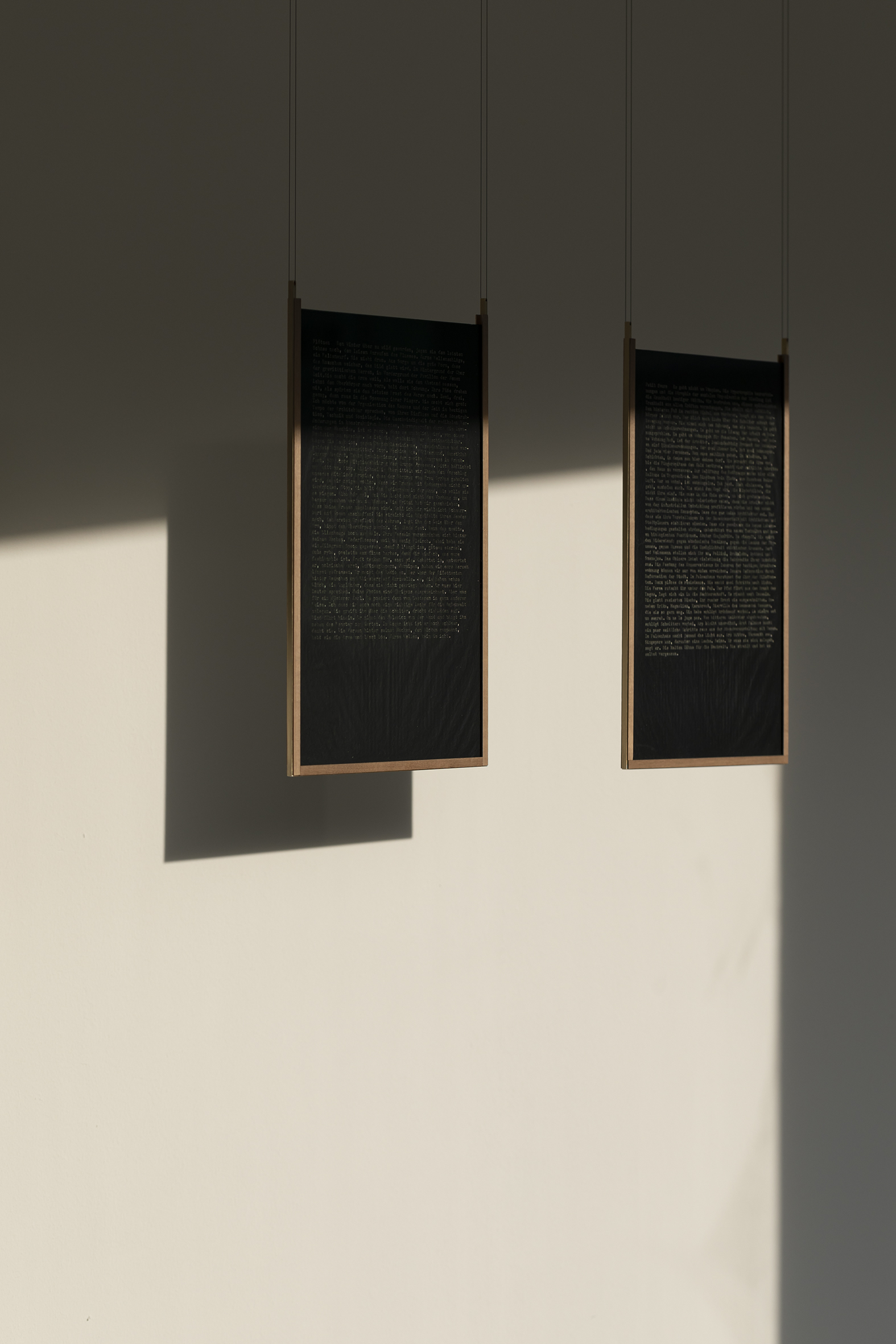
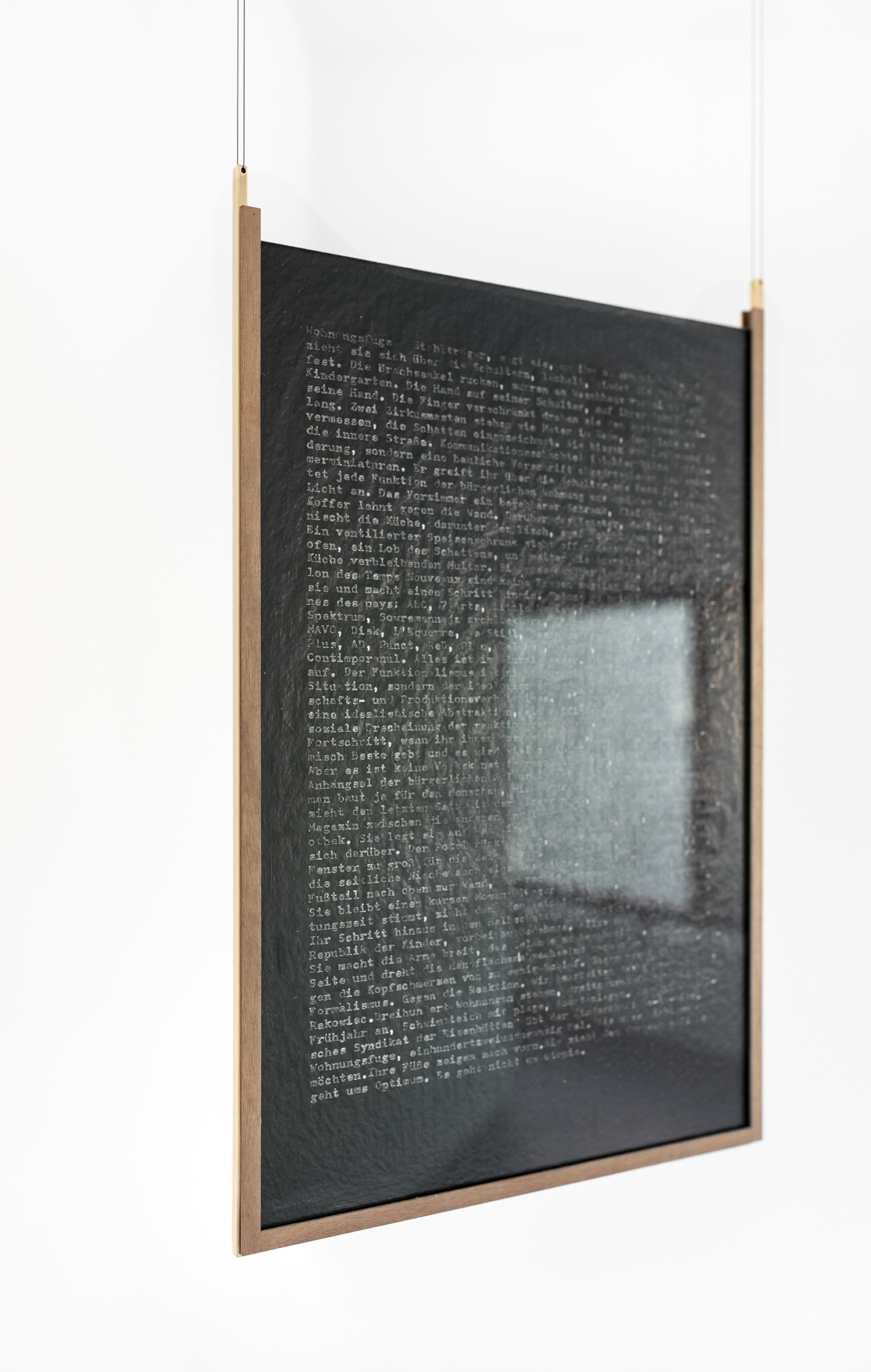
    Das Künstlerpaar Maja Wirkus und Eric Pries setzt sich seit einigen Jahren intensiv mit der Architektur der hierzulande wenig bekannter Moderne in den europäischen Peripherien auseinander. Die Künstler interessiert dabei die darin festgehaltenen Erzählungen und Erfahrungen als Grundlage für die Ergänzung eines zumeist euroamerikanisch geprägten Architekturdiskurses, der noch immer weite Teile des mittel- und osteuropäischen Einflusses auf die gemeinsame Kulturgeschichte ausspart. So entstehen Rechercheprojekte, die in raumbezogenen Installationen eigene Arbeit den in Archiven gewonnenen Einblicken gegenüberstellen. Ihr neuestes Ausstellungsprojekt We Are Millennium Stars beschäftigt sich mit Aspekten der Ökonomie von Netzwerken und der politischen Dimension von Freundschaft.

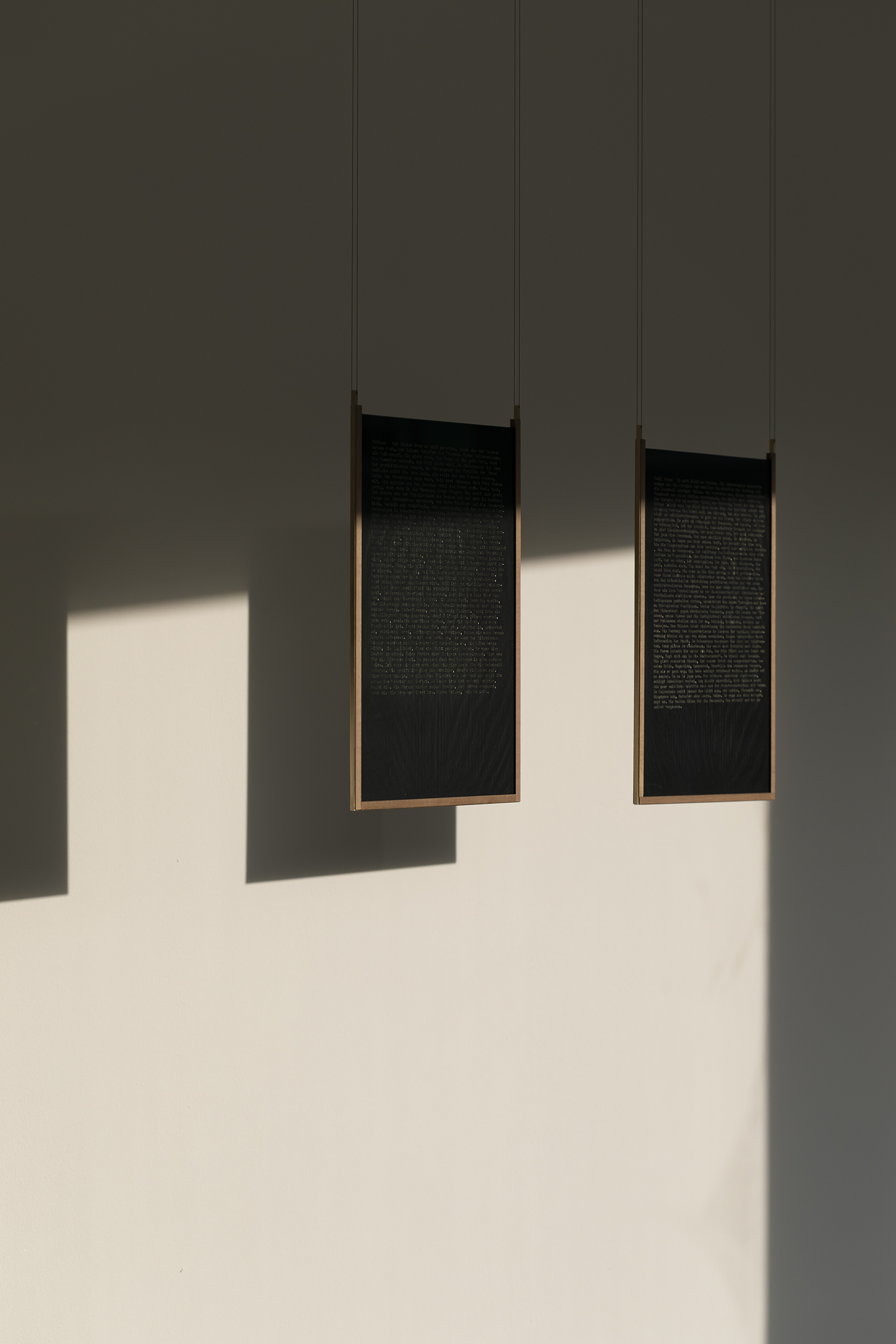
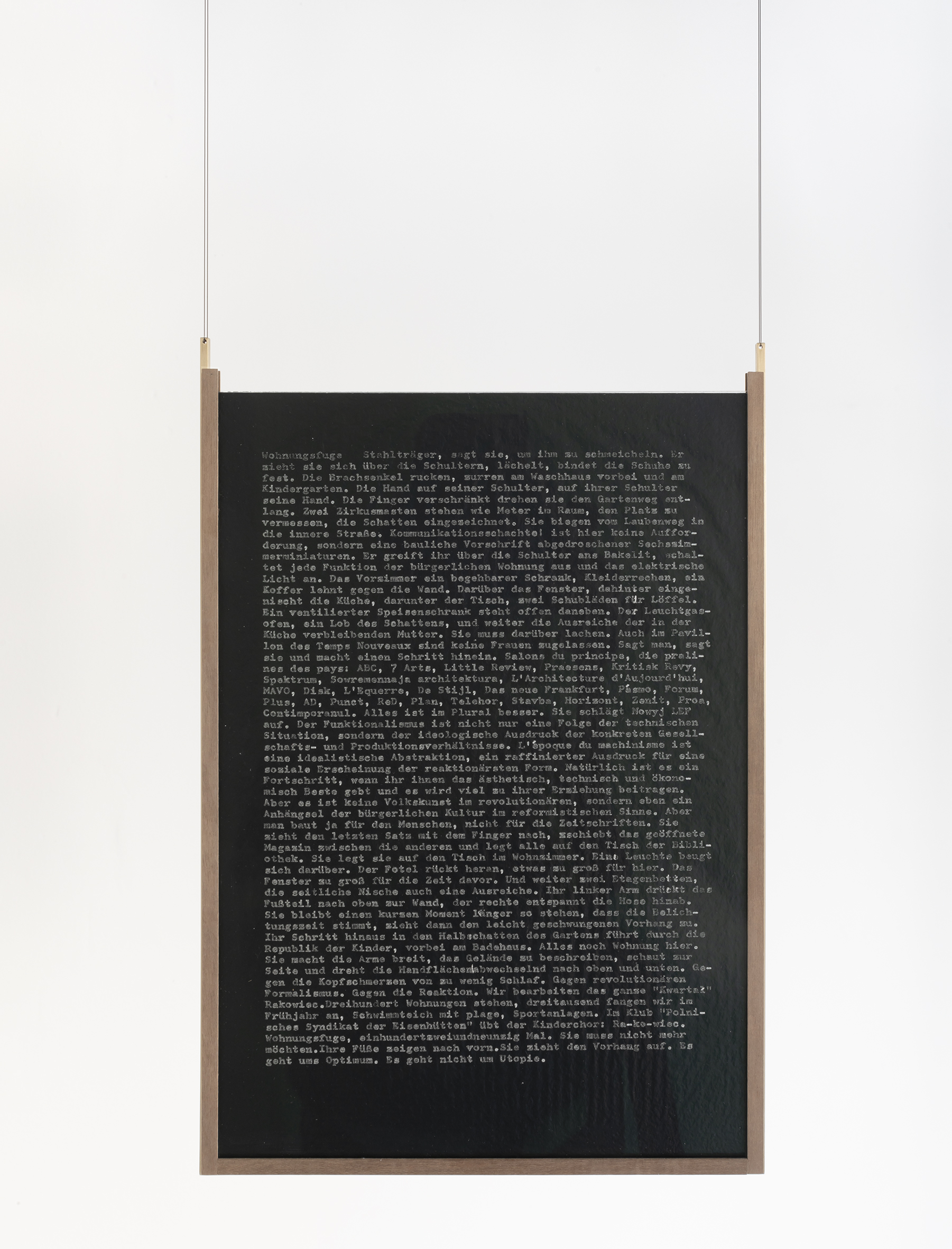
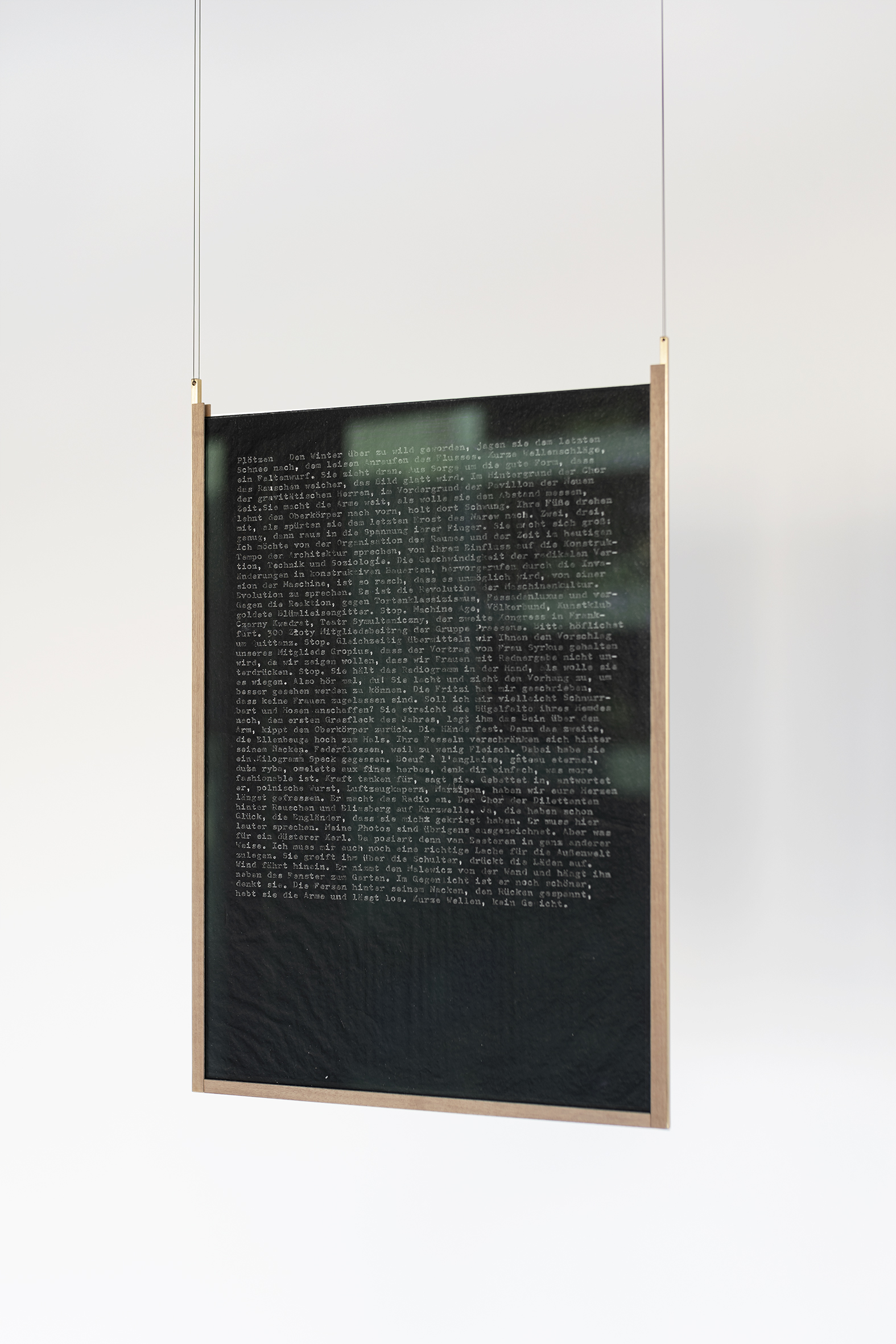
    Inspirationsort der titelgebenden Textarbeit ist ein Haus am Fluss: Serock, Rybaki 2, südlich von Warschau, direkt am Narew gelegen. Es handelt sich um das Wochenendhaus des Architektenpaares Syrkus. We Are Millennium Stars beruht auf der von dort in alle Welt gehenden Korrespondenz von Helena Syrkus mit dem weltumspannenden Netzwerk der internationalen Moderne. In ihr überschreiben sich als private biografische Erinnerung die Ereignisse der 1920er und 1930er Jahre, die Zeit des Zweiten Weltkriegs und die der Blockbildung danach. WIRKUS PRIES übersetzen die Brüche und Lücken in der sich entfaltenden Erzählung in eine poetische Textcollage. Der Text collagiert die historischen Zeitläufe mit den Briefen der Protagonist*innen und anderen Einflüssen, die WIRKUS PRIES bei der künstlerischen Arbeit begleitet haben. So überlagern sich konkrete Wissensräume und verweisen auf die permanente Gleichzeitigkeit von Gegensätzlichen.

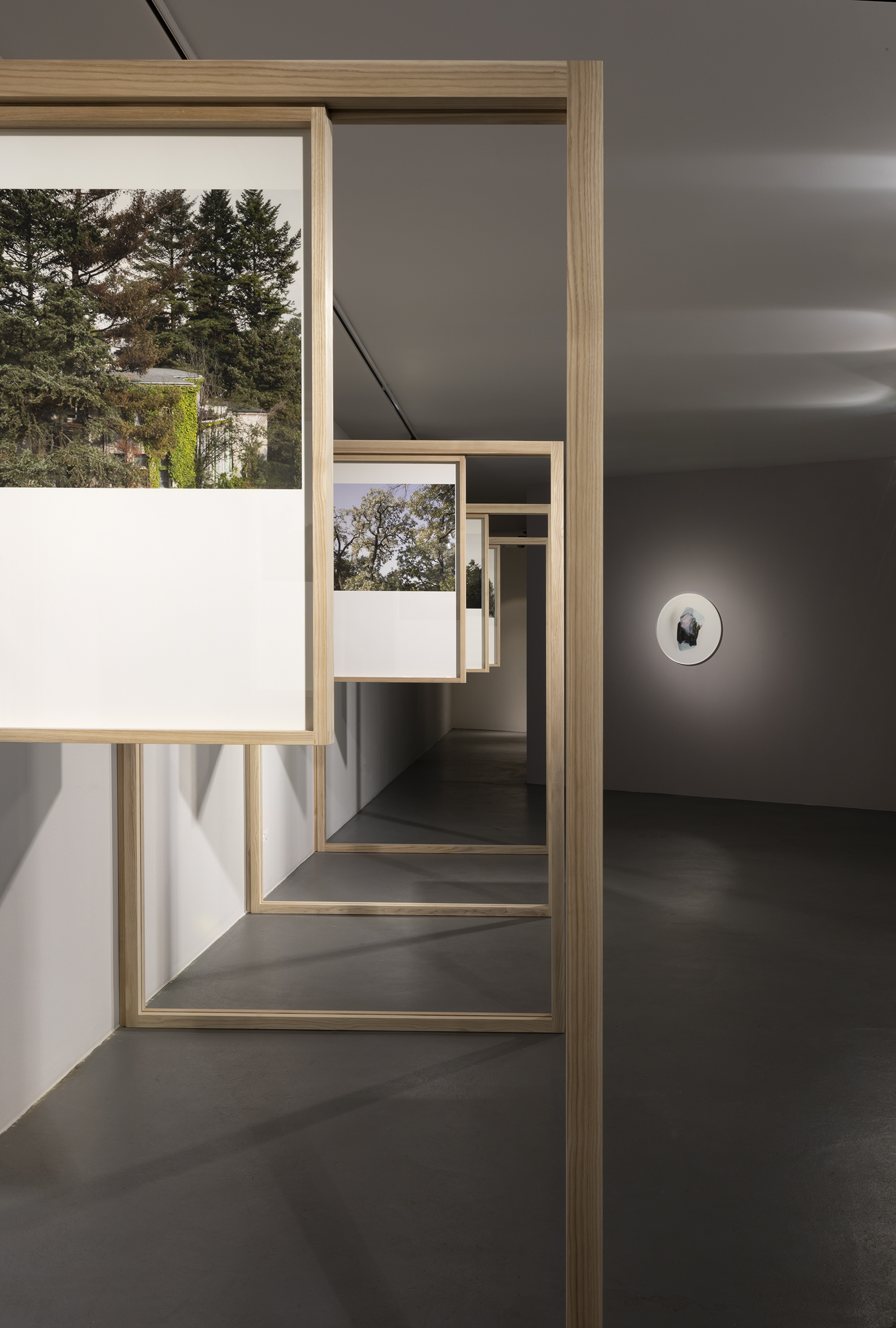
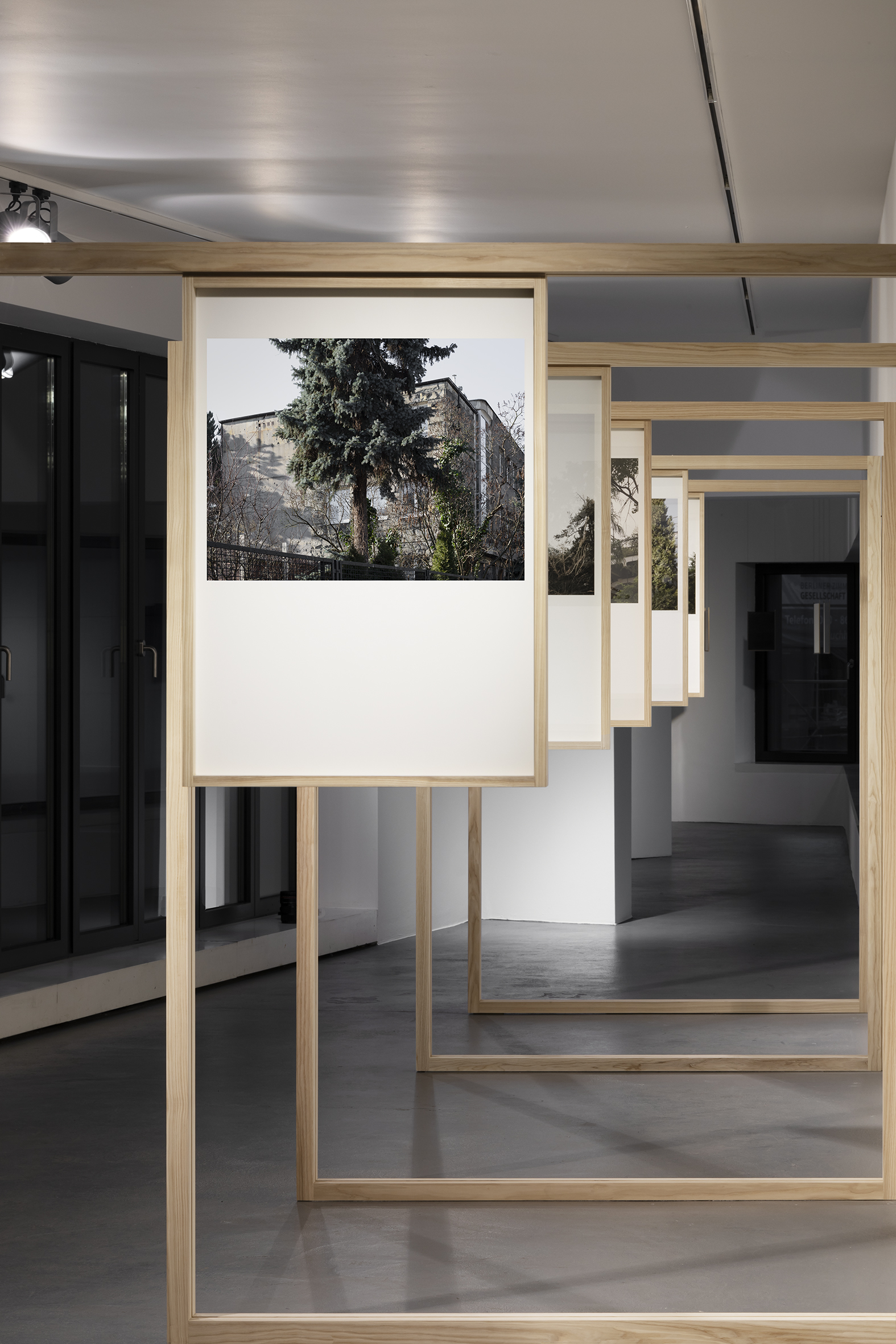
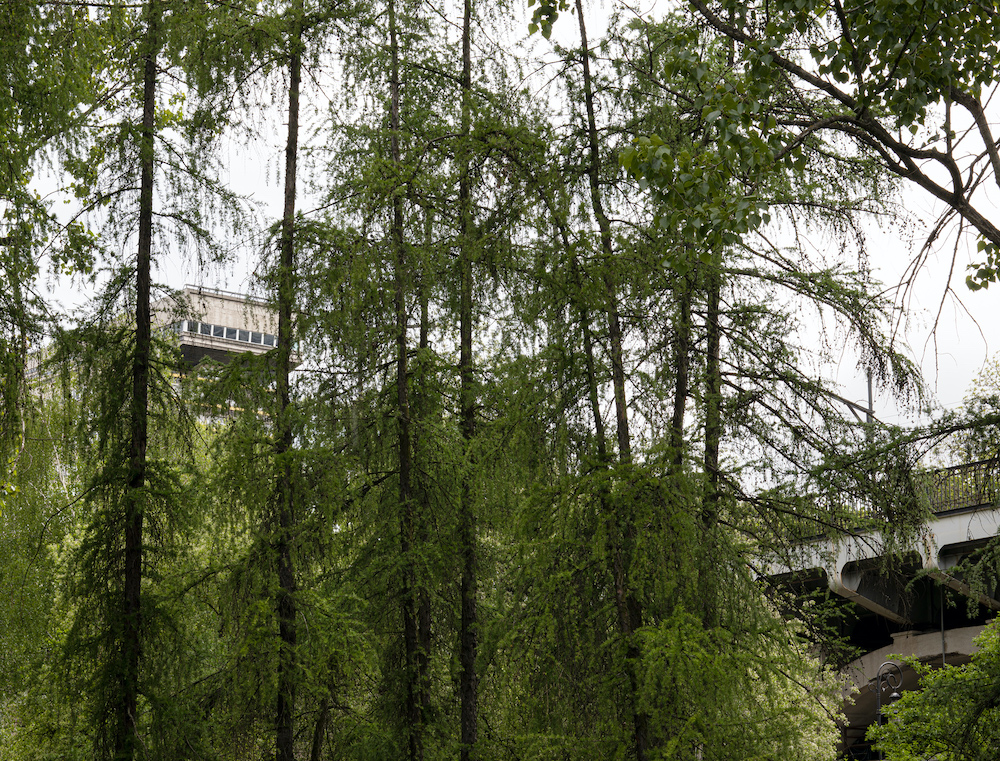
    Konkret wird die Überlagerung in der im Untertitel bereits auf den gelenkten Blick verweisende Installation Ohne Titel (Wzrok).  Die Fotografien zeigen modernistische Architekturen in Warschau, die alle hinter dichten Bewuchs verborgen sind. Diese Bilder reflektieren einerseits unmittelbar die mangelnde Präsenz selbst bedeutender osteuropäischer Architekt*innen und Stadtplaner*innen, und verweisen gleichzeitig auf die hochaktuelle Diskussion einer klimapolitisch notwendigen Veränderung von Stadtarchitektur und -grün.

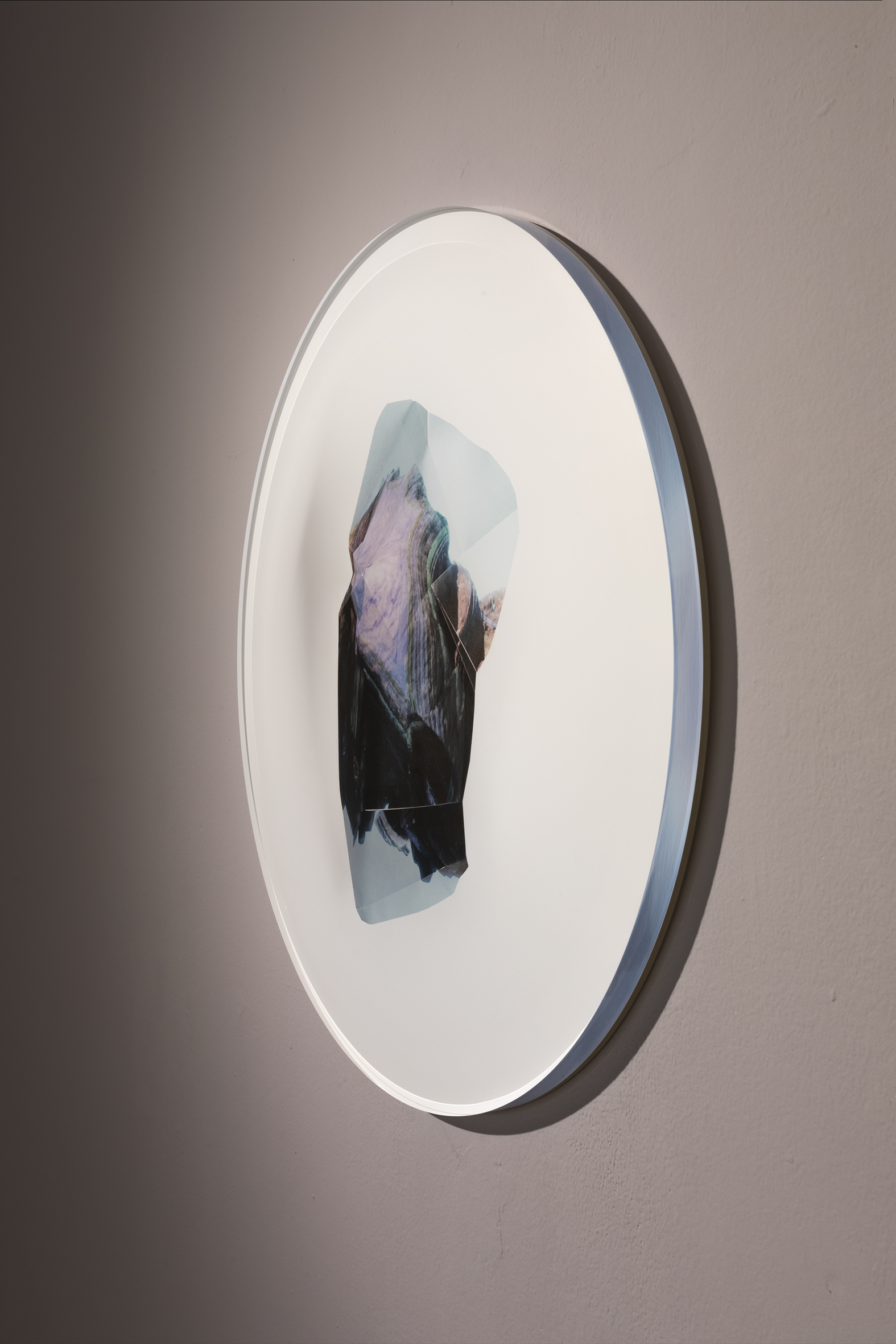
    Grundsätzliche Fragen stellen die Stop-Motion-Filme, an denen WIRKUS PRIES seit 2019 kontinuierlich arbeiten und in deren Kosmos auch der schwere Tondo aus Acrylglas gehört. Beide basieren auf Collagen, Architekturfragmente und Papierobjekte, die während ihrer Recherchen zur Architekturgeschichte entstehen. Auswahl und Überformung der einzelnen Objekte ist dabei stets bedingt durch die jeweilige Fragestellung. Das sind beispielsweise Fragen nach dem Verhältnis von Wirklichkeit und Abbild in der Architekturfotografie, der Transformation von Informationen in Kopierprozessen, der Aneignung von Architektur und dessen Umwertung oder auch der Frage nach Leerstellen – Informationslücken – in Archiven und anderenorts und deren Potential für künstlerische Eingriffe. Ergänzt wird die Filmarbeit durch eine parallele zweistündige Soundarbeit, die sich gemeinsam Zygmunt Baumanns Konzept der „flüssigen Moderne“ zu eigen machen und die Artefakte, die vordergründig für das Immobile stehen, in Bewegung setzen.

    Die Ausstellung wurde kuratiert von Susanne Prinz.

    For several years now, the artist couple Maja Wirkus and Eric Pries have been intensively examining the architecture of modernism in the European peripheries, which is little known in this country. In doing so, the artists are interested in the narratives and experiences recorded in them as a basis for supplementing a mostly Euro-American architectural discourse that still leaves out large parts of the Central and Eastern European influence on our common cultural heritage. This results in research projects that juxtapose their own work with insights gained in archives in space-related installations. Her latest exhibition project We Are Millennium Stars deals with aspects of the economy of networks and the political dimension of friendship.

    The place of inspiration for the titular text work is a house on the river: Serock, Rybaki 2, north of Warsaw, situated directly on the Narew. It is the weekend house of the architect couple Syrkus. We Are Millennium Stars is based on Helena Syrkus‘ correspondence with the global network of international modernism, which goes out from there to all corners of the world. In it, the events of the 1920s and 1930s, the period of the Second World War and the subsequent formation of the blocs thereafter, are overwritten with private biographical memories. WIRKUS PRIES translate the breaks and gaps in the thus unfolding narrative into a poetic text collage. The text collages the historical periods with the letters of the protagonists and other influences that accompanied WIRKUS PRIES in their artistic work. In this way, concrete spaces of knowledge overlap and refer to the permanent simultaneity of opposites.

    The superimposition becomes concrete in the installation Untitled (Wzrok), which refers to the directed gaze in its subtitle.  The photographs show modernist architecture in Warsaw, all hidden behind dense vegetation. On the one hand, these images directly reflect the lack of presence of even important Eastern European architects and urban planners, and at the same time refer to the highly topical discussion of a change in urban architecture and city green that is necessary for climate policy.

    The stop-motion films, which WIRKUS PRIES has been working on continuously since 2019 and whose cosmos also includes the heavy acrylic glass tondo, pose fundamental questions. Both are based on collages, architectural fragments and paper objects created during their research into architectural history. The selection and reshaping of the individual objects is always conditioned by the respective question. These are, for example, questions about the relationship between reality and image in architectural photography, the transformation of information in copying processes, the appropriation of architecture and its revaluation, or the question of empty spaces – gaps in information – in archives and elsewhere and their potential for artistic intervention. The film work is complemented by a parallel two-hour sound work, both appropriating Zygmunt Baumann’s concept of ‚liquid modernity‘ and setting in motion the artefacts that ostensibly stand for the immobile.

    The exhibition was curated by Susanne Prinz.

    Maja Wirkus und Eric Pries leben in Warschau, Berlin und Kassel. Beide arbeiten auch unabhängig. | Maja Wirkus and Eric Pries are based in Warsaw, Berlin and Kassel. Both also work individually.

    Während der Ausstellung erscheint ein Überblickskatalog | An overview catalogue will be published during the exhibition.

  • 2052 – KUNST ZUR KLIMAKATASTROPHE

    Vergrößern

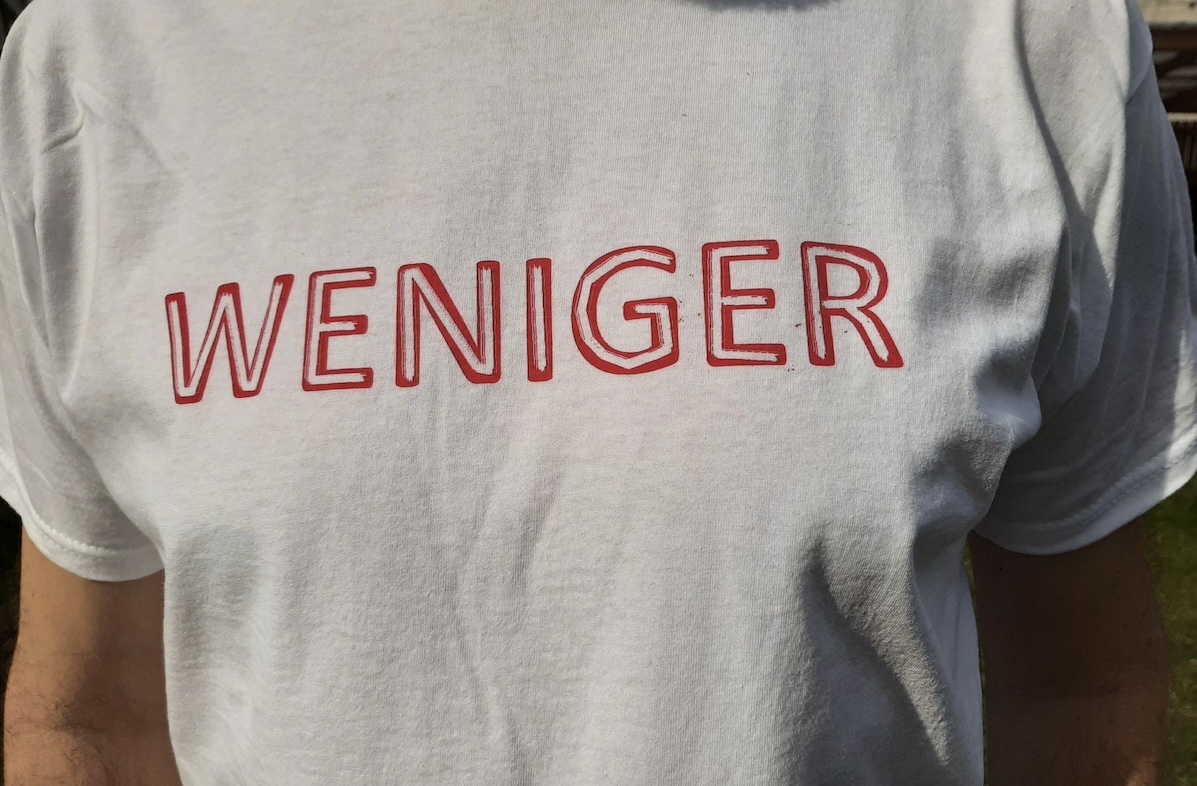
    shirtweniger-beschnitten
    Das T-Shirt von Beat Gipp ist beim Kunstverein für 10 Euro käuflich zu erwerben.

    Eröffnung mit Performance von Katrin Glanz: 14. April 2022 | 18h

    Künstler*Innen: Monica Bonvicini, Elisa Sophia Braun, Claus Föttinger, Katrin Glanz, Beat Gipp, Shila Khatami, Dan Perjovschi, Andrea Pichl, Jost Wischnewski, Johannes Wohnseifer, Marina Naprushkina, Christine Würmell, Matthias Sturm, Andreas Templin, Oliver Ressler, Stefanie von Schroeter, Silke Wagner, Lena von Goedeke, Joulia Strauss, Andreas Koch, Marie S. Ueltzen, Anna Meyer, Peter Niemann, Jonathan Monk, Bhima Griem

    Kurator: Raimar Stange

    Anschließend vom 14.4. – 18.6.2022 im Foyer des Kunstvereins und Tor-/Karl-Liebknecht-Straße

    Die Eisschmelze an den Polarkappen nimmt rapide zu, der CO2-Ausstoß ist nicht in den Griff zu bekommen und die Erderwärmung steigt unentwegt – der Klimawandel ist nicht mehr aufzuhalten. Der Corona-Krise und jetzt dem Ukraine-Krieg aber ist es geschuldet, den Klimawandel wieder weitestgehend aus der öffentlichen Aufmerksamkeit verdrängt zu haben. Die aktuelle Notlage scheint dringender zu sein als die vermeintlich weniger akute des Klimawandels. Aber nicht nur der Philosoph und Kulturkritiker Slavoj Zizek hat richtig festgestellt, dass die Klimakatastrophe von uns weit mehr abverlangen wird als derzeit die Corona-Pandemie.

    Die Ausstellung „2052“ versucht den Klimawandel wieder in das Licht der Öffentlichkeit zu stellen. Um möglichst viele Menschen ansprechen zu können, begibt sie sich darum mit ihren Exponaten aus dem white cube heraus und geht mitten hinein in den öffentlichen Raum. 22 nationale und internationale Künstler*innen unterschiedlicher Generationen hat Raimar Stange für „2052“ um künstlerische Beiträge gebeten, die in Form von im Außenraum platzierbare Plakate sowie als dort zu verteilende Flugblätter konzipiert sind.

    Thematisch schließt die Ausstellung „2052“ an die Ausstellung „2050“ an, die 2019 im Kunstverein am Rosa-Luxemburg-Platz zu sehen war.

    Es erscheint ein Katalog

    Dank an Dipl.-Ing. Ingo Sturm, München

  • THE LAST BROADCAST

    THE LAST BROADCAST

    by DECLAN CLARKE

    Finissage with launch of the catalogue The Museum of Broadcasting and Loneliness: April 7, 2022 | 18 h*

    25.02. – 8.04.22  |  Mi-Fr / Wed-Fri 14-18:00 h + nach Vereinbarung und per Zufall / upon appointment and randomly

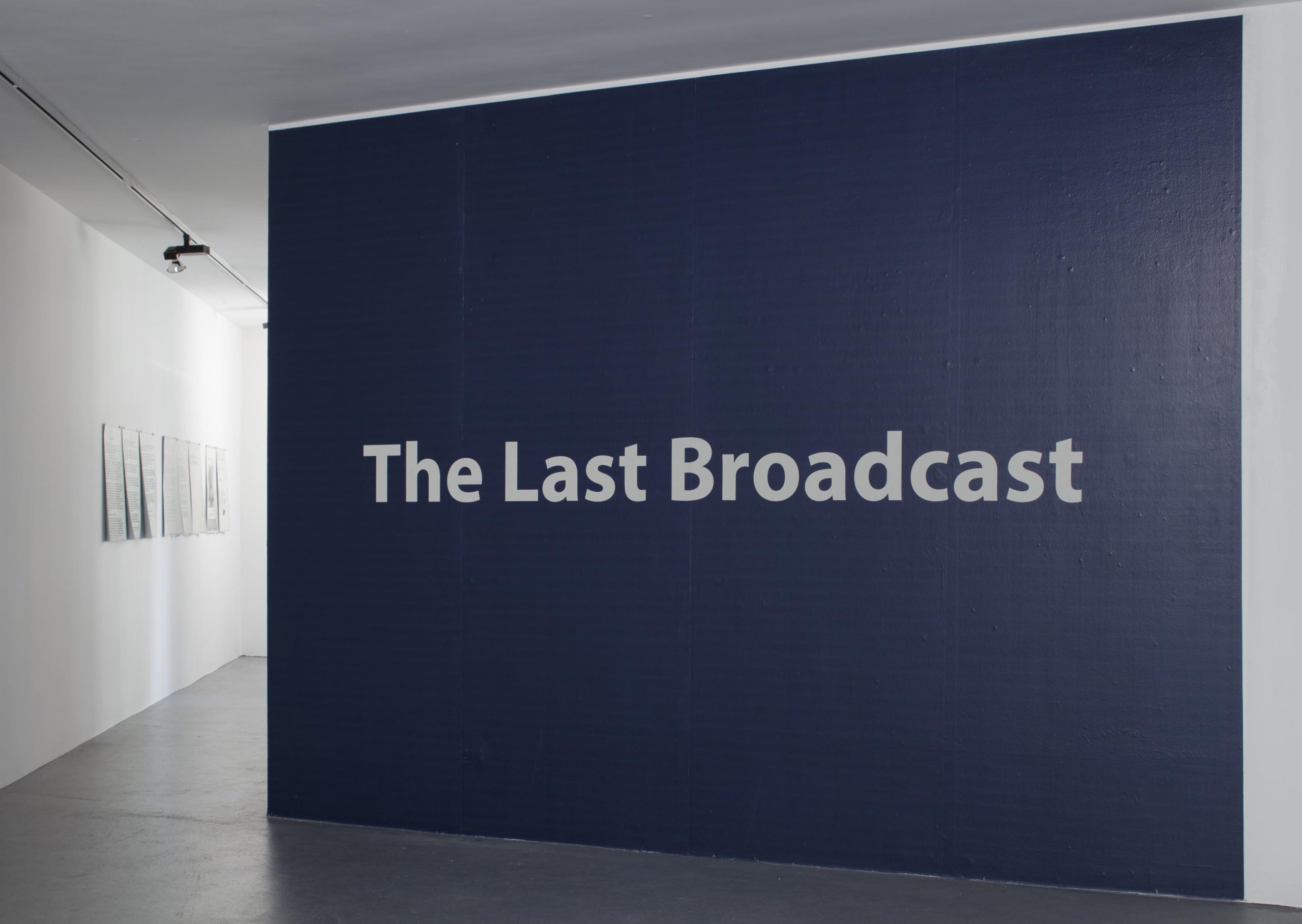
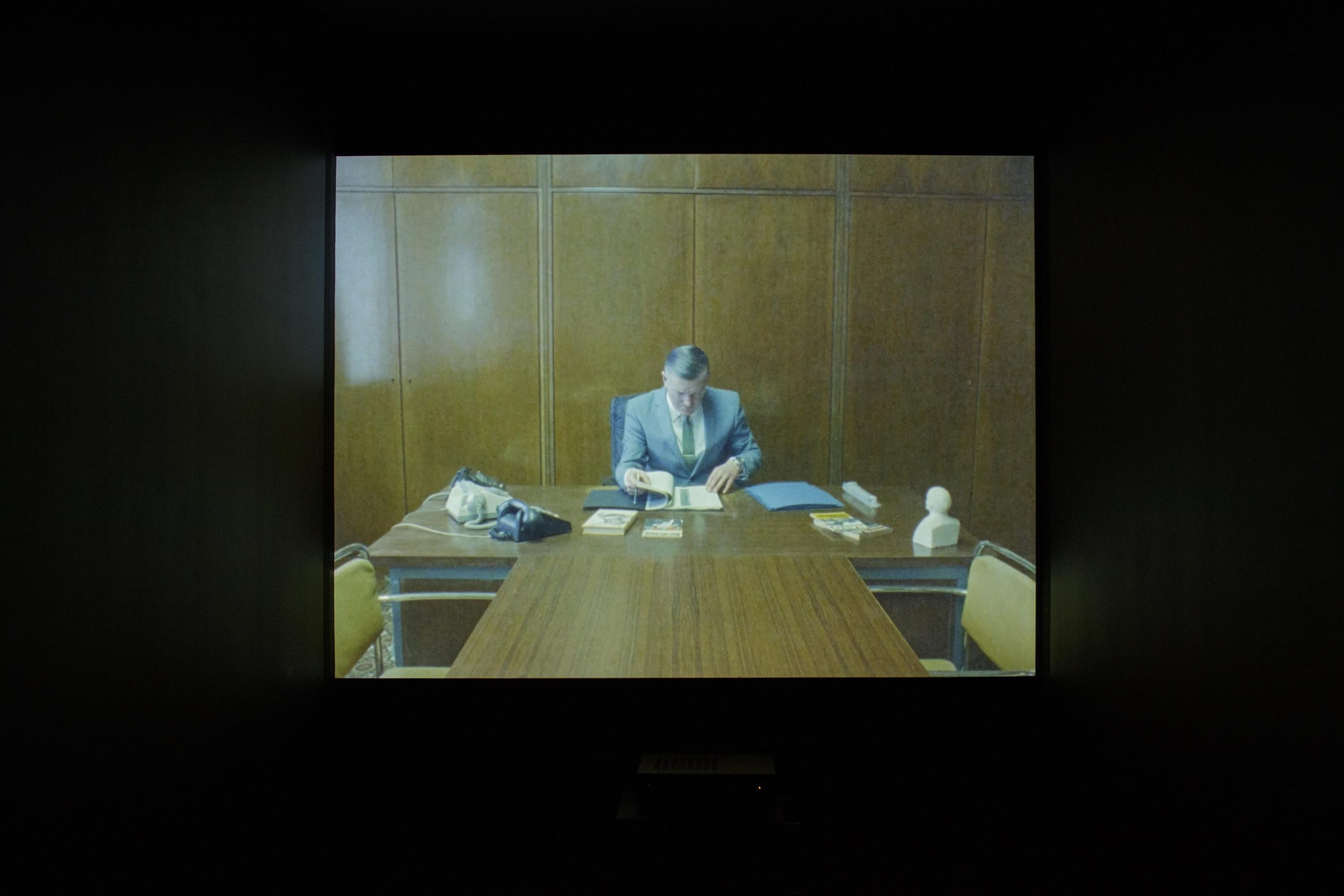
    Im Zentrum von Declan Clarkes Ausstellung The Last Broadcast steht sein neuer Film What Are the Wild Waves Saying?, der hier Premiere hat. Der romantische Titel, der auf ein Lied aus der Mitte des 19. Jhdts zurückgeht, dass einen Dialog des berühmten Geschwisterpaares aus Dickens Dombey and Son imaginiert, dient Clarke in erster Linie als metaphorische Analogie zwischen den Wellen des Meeres und denen des Rundfunks.

    Tatsächlich erzählt der Film eine vielschichtige und komplexe Geschichte von Transition und Transmission, von medialer Beeinflussung, von überraschenden Zusammenhängen und gewissen historischen Parallelen zwischen einem geteilten Irland und einem gleichermaßen getrennten Deutschland, inklusive der dazugehörigen Geschichte von Desinformation und Spionage. Mit Stuart Ryan steht erstmals eine reale Figur im Mittelpunkt, die ihre fiktiven Vorläufer aus früheren Filmen des Künstlers an suspekter Undurchsichtigkeit und charakterlicher Ambiguität weit übertrifft.

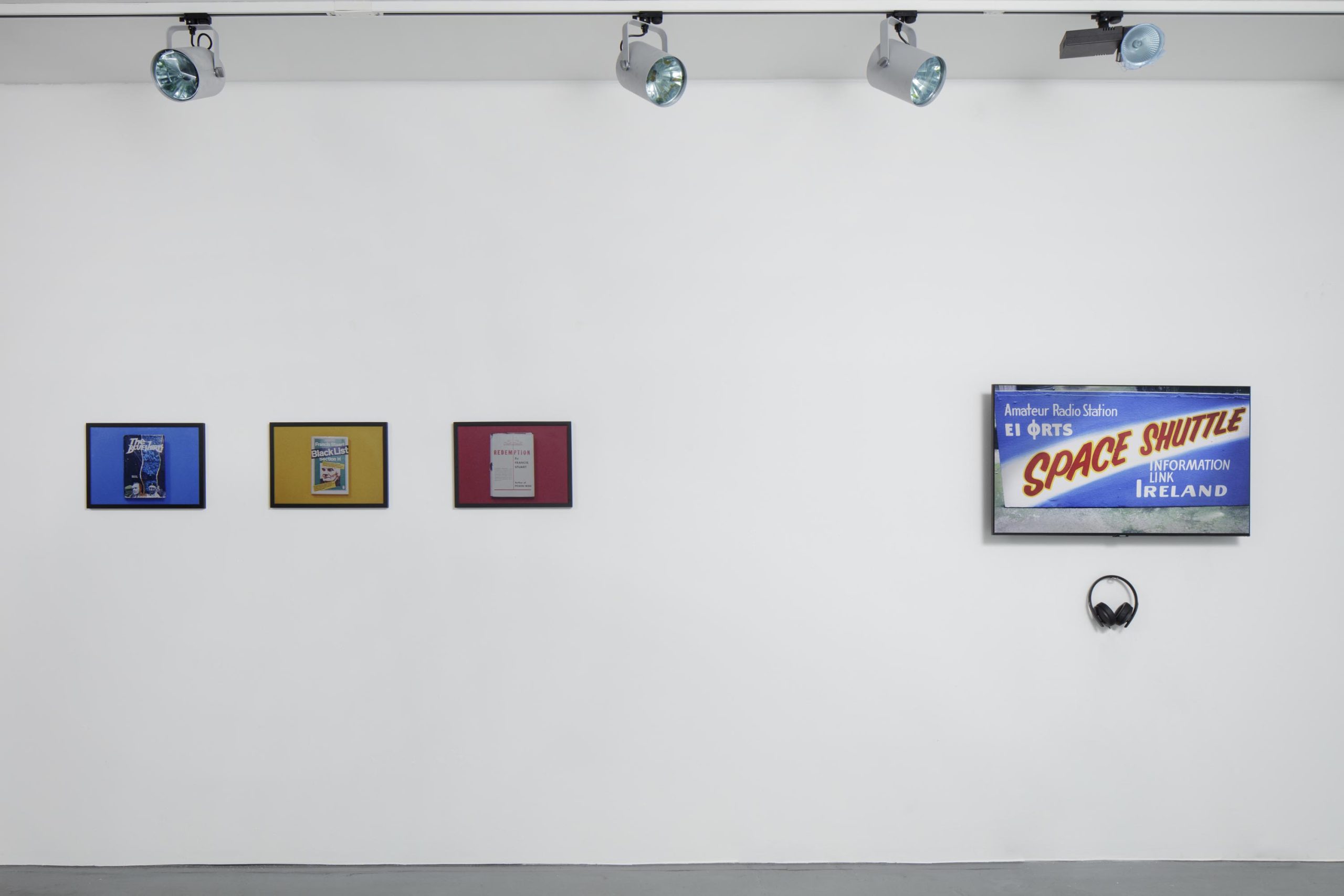
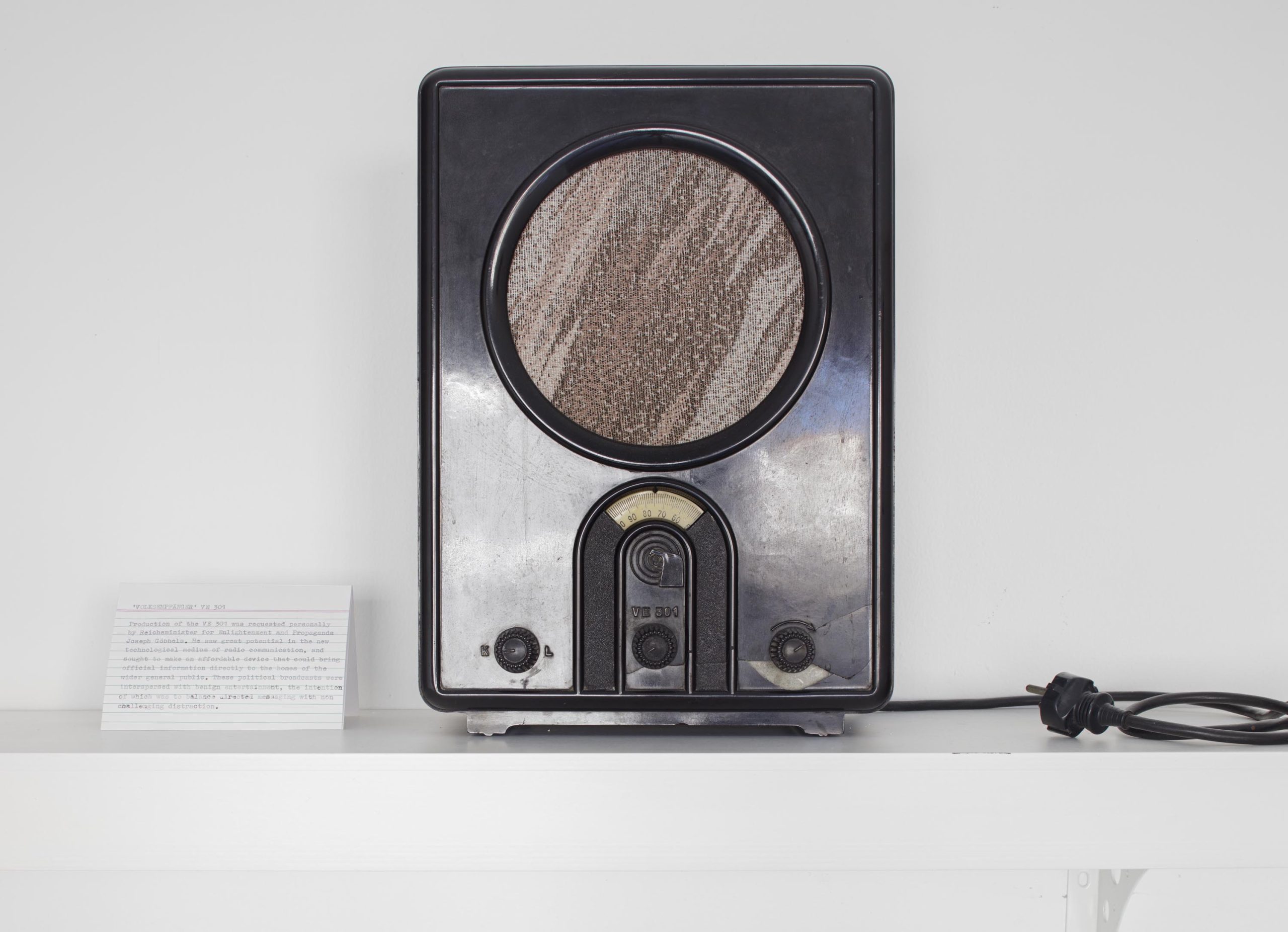
    Wie mehrmals zuvor arbeitet Clarke auch in diesem Film parallel im narrativen und im Dokumentationsmodus und verbindet diese mit Elementen des Noir- und Spionagegenres. Speziell für die Ausstellung im Kunstverein  produziert, wird der Film von einer Installation begleitet, die Requisiten, Fotos, Texte und historische Exponate aus einem realen, aber heute geschlossenen Rundfunkmuseum zu einem assoziationsreichen Netz verwebt.

    Der Film wie auch die Installation nehmen intensiv Bezug auf die Rolle des Rundfunks in Konfliktzeiten, wie er sie durch die Verbreitung politischer Propaganda besonders während des Zweiten Weltkriegs und des darauffolgenden Kalten Krieges spielte. Als in Berlin lebender Ire war es naheliegend, diese zentralen Themen anhand einer Reihe historischer Verbindungen zwischen Irland und Deutschland zu untersuchen.

    Die Ausstellung hatte 2021 ein Prequel im Kunstverein am Rosa-Luxemburg-Platz und knüpft thematisch an Clarkes Einzelaustellung 2020 im Salzburger Kunstverein an. 2023 wird sie eine Forstsetzung in der RHA (Royal Hibernian Academy) in Dublin finden, wo die Gesamtschau aller ‚Museum of Loneliness’-Filme und -Installationen geplant ist.

    Declan Clarke, geb. 1971, lebt in Berlin, wohin er nach seinem Studium am Chelsea College of Art (London) und National College of Art & Design in Dublin zog. Seine Filme werden auf internationalen  Filmfestivals wie dem Tromsø International Film Festival , dem New York Underground Film Festival  und dem FID Marseille gezeigt, wo er 2021 mit dem Georges de Beauregard International Award ausgezeichnet wurde. Er hat im PS1 MoMA (New York) der Tate Britain (London) dem HKW Berlin, dem Beijing Art Museum of Imperial City, der 2. Moskauer Biennale und dem Centre for Contemporary Art (Lagos) ausgestellt.

    Ausstellung und Film sind von Susanne Prinz produziert.


    At the heart of Declan Clarke’s exhibition The Last Broadcast is his new film What Are the Wild Waves Saying?, which premieres here. The romantic title, which harks back to a mid-19th-century song imagining a dialogue between the famous Dickens siblings from his novel Dombey and Son, serves Clarke primarily as a metaphorical analogy between the waves of the sea and those of the radio.

    In fact, the film tells a multi-layered and complex story of transition and transmission, of media influence, of surprising connections and certain historical parallels between a divided Ireland and an equally divided Germany, including the associated history of disinformation and espionage. With Stuart Ryan, a real character is the focus for the first time, who far surpasses its fictional predecessors from the artist’s earlier films in terms of suspicious opacity and character ambiguity.

    As some times before, Clarke works in this film in parallel in narrative and documentary mode and combines them with elements of the noir and espionage genre. Produced especially for the exhibition at the Kunstverein, the film is accompanied by an installation that weaves props, photos, texts and historical exhibits from a real but now closed broadcasting museum into a network rich in associations.

    Both the film and the installation make intense reference to the role of broadcasting in times of conflict, as it played it through the dissemination of political propaganda, particularly during World War II and the subsequent Cold War. As an Irishman living in Berlin, it was natural to explore these central themes through a range of historical connections between Ireland and Germany.

    Our exhibition had a prequel in 2021 and ties in thematically with his solo exhibition in 2020 at the Salzburger Kunstverein. It will be continued in 2023 at the RHA (Royal Hibernian Academy) in Dublin, where the overall view of all ‚Museum of Loneliness‘ films and installations is planned.

    Declan Clarke, born in 1971, lives in Berlin, where he moved after studying at Chelsea College of Art (London) and the National College of Art & Design in Dublin. His films are screened at international film festivals such as Tromsø International Film Festival, New York Underground Film Festival and FID Marseille, where he received the Georges de Beauregard International Award in 2021. He has exhibited at PS1 MoMA (New York), Tate Britain (London), HKW Berlin, Beijing Art Museum of Imperial City, 2nd Moscow Biennale and Center for Contemporary Art (Lagos).

    Exhibition and film are produced by Susanne Prinz.

    * Die Eröffnung findet unter Berücksichtigung der gültigen Covid-Regeln statt (2G+ und FFP2 Maske) / The opening will be withing established covid-19 guidelines.

    Film und Ausstellung wurden ermöglicht durch / film and exhibition have been supported by:

  • Gill Gatfield, ALTER EGO

    Duration: December 1, 2021 – April 9, 2022

    Visible daily until midnight, 2nd floor opening hours: Wed. – Fri. 14-18 or by appointment

    On the occasion of her first solo presentation in Berlin, Alter Ego, Aotearoa New Zealand born artist Gill Gatfield conceived a project in two chapters – a large scale crystal-glass sculpture and a public space virtual reality installation – which talk and expand towards the human being. Renowned for her minimal, conceptual and abstract sculptures, and for her inclusive public monuments, Gatfield’s project relates to the public, the architecture, structures and infrastructures of the city, the area of Berlin Mitte and the L40 building, home of the Kunstverein am Rosa-Luxemburg-Platz.

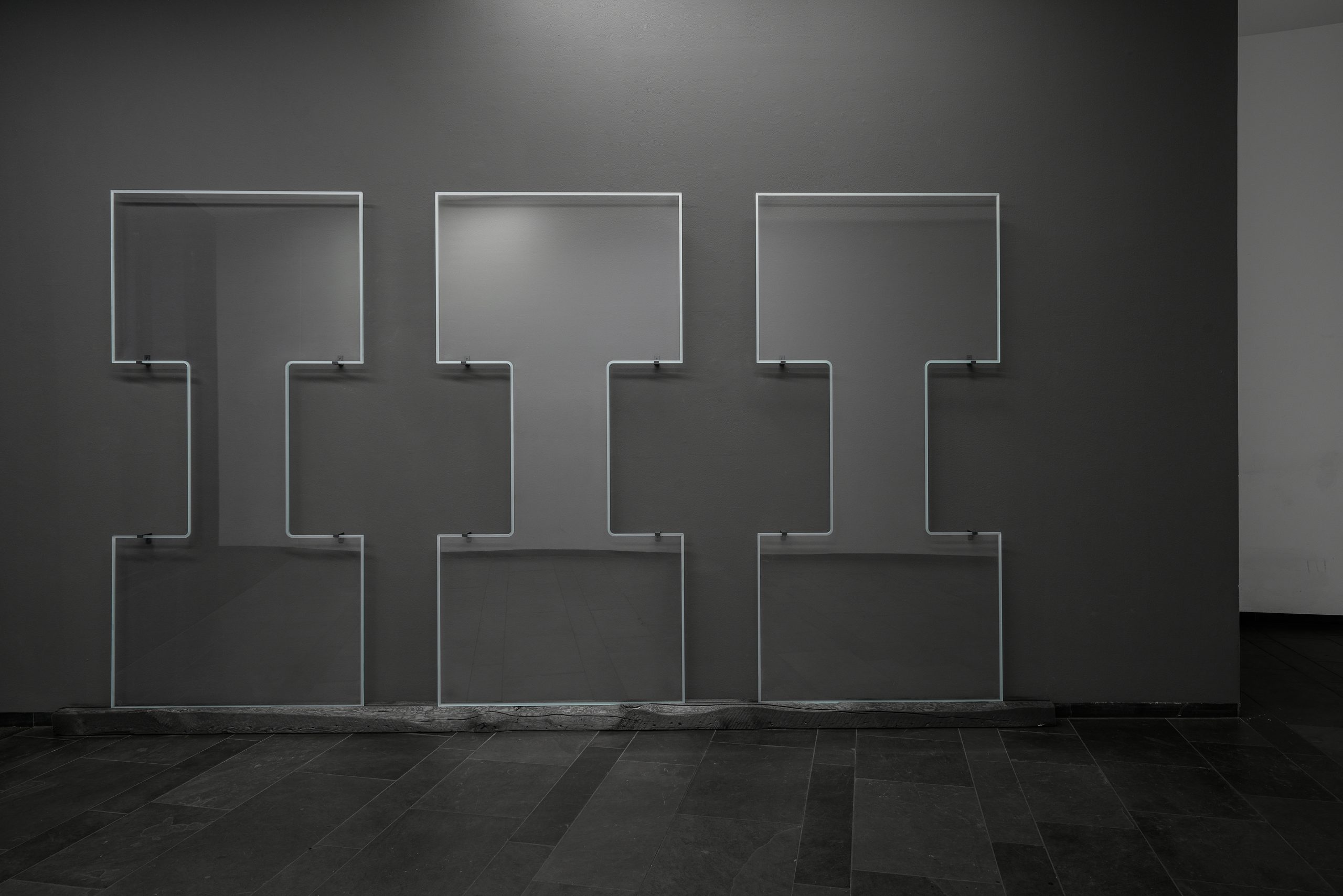
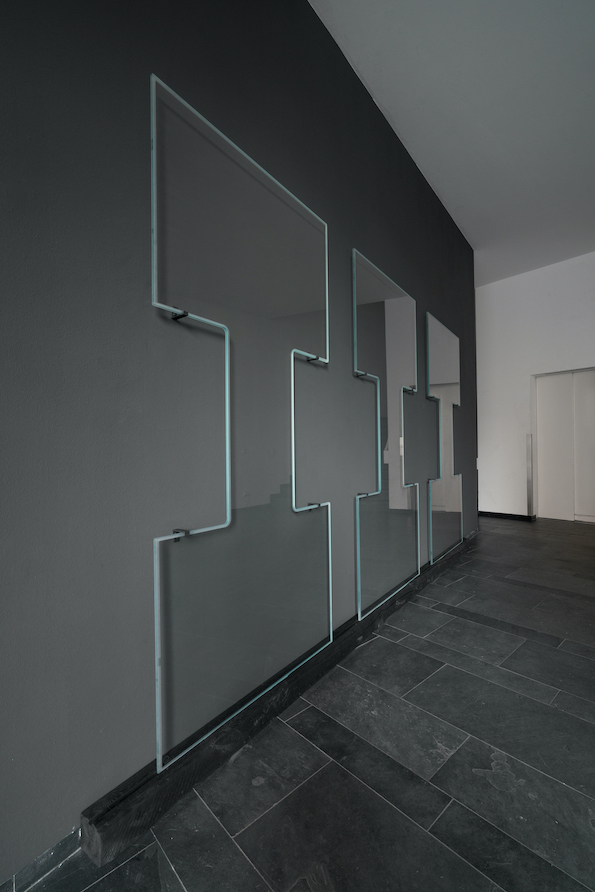
    Inside the foyer of the L40, The Muses vibrate, float and emerge from the space and reverberate meanings. The installation centers the eye on three monumental glass figures, shining outward from halos of soft white shaded edges, lightly held to the ground by an over one-hundred year old pine timber beam. They are shaped as ‘I’, as pure ancestral forms, as deeply rooted and recognised syntagms, as totemic figures.

    The sculptural elements – translucent glass planes, blackened timber and wall, measured space, fine lines and internal curves, create unexpected volume and speak about light and shadow, form and material, material as matter and language, ephemeral nuances and reflections. The language of the artist – her process, her system of references – takes shape into monochromatic transparent paradigms, suggesting fluidity and transitional moments in a realm located between sign, signifier and signified.

    The Muses occupy a transient space yet they convey a transcript about form, shape, proportions and abstract figures that stand as guardians, protectors of meanings and visions. They tell stories through the material, stories that anchor on to the material itself and on the substance, the matter that constitutes the observable, the shadows and the light, as elements of a discursive approach. The Muses seem to decipher society’s paradigms through a magic lens by being, by echoing through phenomena. Hence the work is perceived as resolving complex, philosophical and sociological expressions by bending the matter and reasoning about atavistic shapes. Ultimately, The Muses reclaim our attention, enclose social and interactional paths, invite us to touch them, to feel, perceive them; they guide us through narrations whence we relate, they suggest an alternate path of intentionality, of meaning-making.

    As the doors open on the second floor, the Siren awaits. The piece reveals itself in the form of an elongated ‘I’, red, crisp, bright. She stands as an Island, a siren who sings without sound and charms the eye, guarding our origin and destination coordinates.

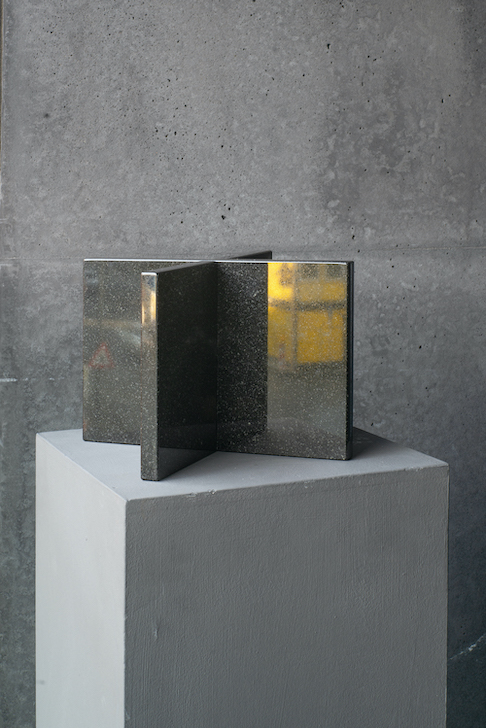
    Another ancestral form is to be seen in the sculpture Aroha (meaning love in Māori), a molten stone ‘X’, an emblematic shape, the witness of the process of connection, it marks a place, a message, anchored to the Earth’s core.

    The second chapter of Gatfield’s Alter Ego lies beyond the L40 walls. Native Tongue XR is the extended reality alter ego of a sculpture carved from the heartwood of a giant tree buried in Aotearoa New Zealand before the last Ice Age. The analogue twin is a public artwork, a taonga (treasure), a totem steeped in its own place, another continent half a world away. The virtual reality sculpture, to be presented in the public green space between Almstadt- and Rosa-Luxemburg-Straße in mid-January, stands in simpatico with The Muses. It is a fourth I-figure, a sculptural volume described digitally in air, yet lifelike and perceivable, a spirit figure, proof of life, bringing the past into the present tense. Through the virtual rendering of Native Tongue XR, Gill Gatfield translates and transforms further her production, demonstrating her finesse of the artistic process, media and materials perception. At the threshold of reality and digital stimulation, the sensation of synaesthesia occurs, completing the Alter Ego journey into a multi-layered, poetic, philosophical world.

    – Chiara Valci Mazzara

    Gill Gatfield (1963) transforms ancient and futuristic materials and media into otherworldly abstract forms, sparking connections between nature, time, humanity and place. Her work has won international awards, commissions for place-making art, and is held in public and private collections in NZ, Australia, USA and Europe. International exhibitions include Sculpture by Sea Perth Australia 2021, VSC Alumx USA 2020, Venice Architecture Biennale 2018, A18 New York, Chicago Expo 2018, SCAPE Public Art 2017, and Sculpture by Sea Aarhus Denmark 2015. Gill Gatfield holds an MA(Hons) Auckland University. Awards and recognition include sole Juror, WomanMade International Open Chicago 2015, residency and solo exhibition Kvindemuseet/KØN Denmark 2015, international CODAaward 2017 Public Art Landscape Award, New Zealand Woman of Influence award 2018, Sculpture Fellowship and residency Vermont Studio Centre 2019, Creative NZ Art Grants 2019 and 2020, CODAworx Creative Revolutionary 2020.

    Native Tongue XR supported by: Spark Foundation NZ and Creative New Zealand Toi Aotearoa

  • Moos oder eine Studie über zerebrale Abgründe, die durch das Leben unter borealen Bedingungen verursacht werden

    Finissage, 29.1.22, 14-18 h

    20.11.21 — 28.1.22  |  Mi-Sa / Wed-Sat 14-18 h und auf Anfrage oder per Zufall / upon request and randomly  |

    for English please scroll down 
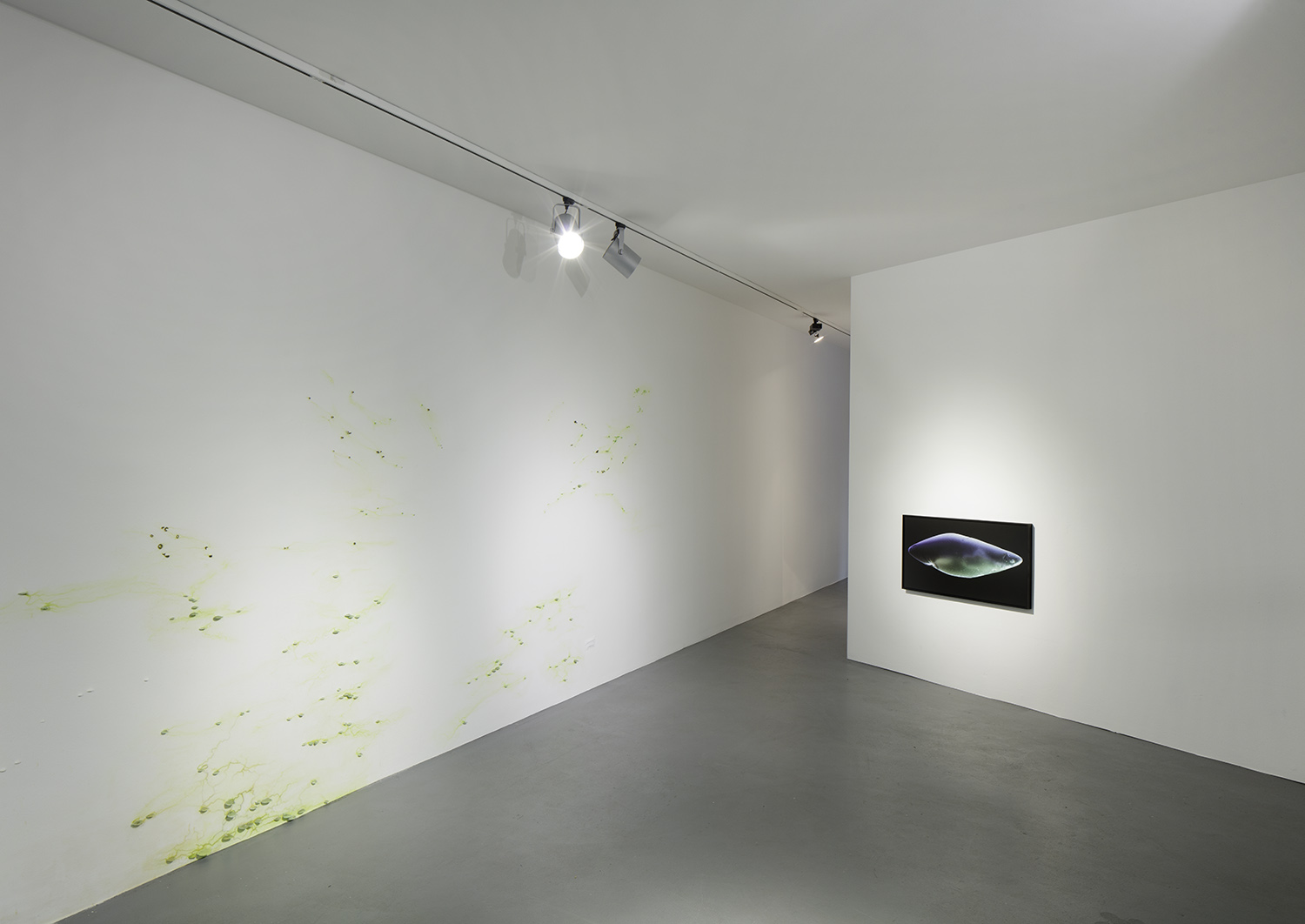
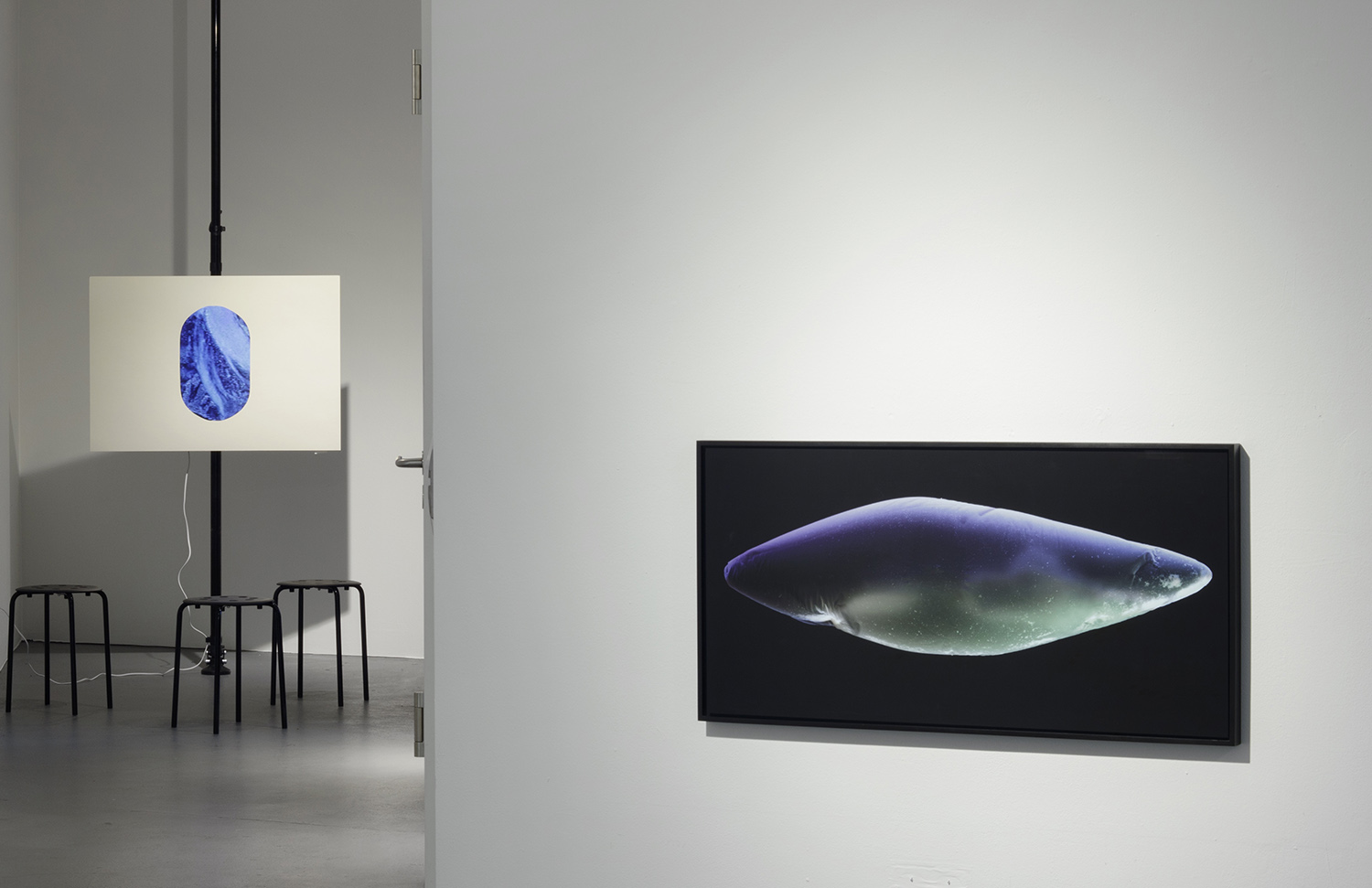
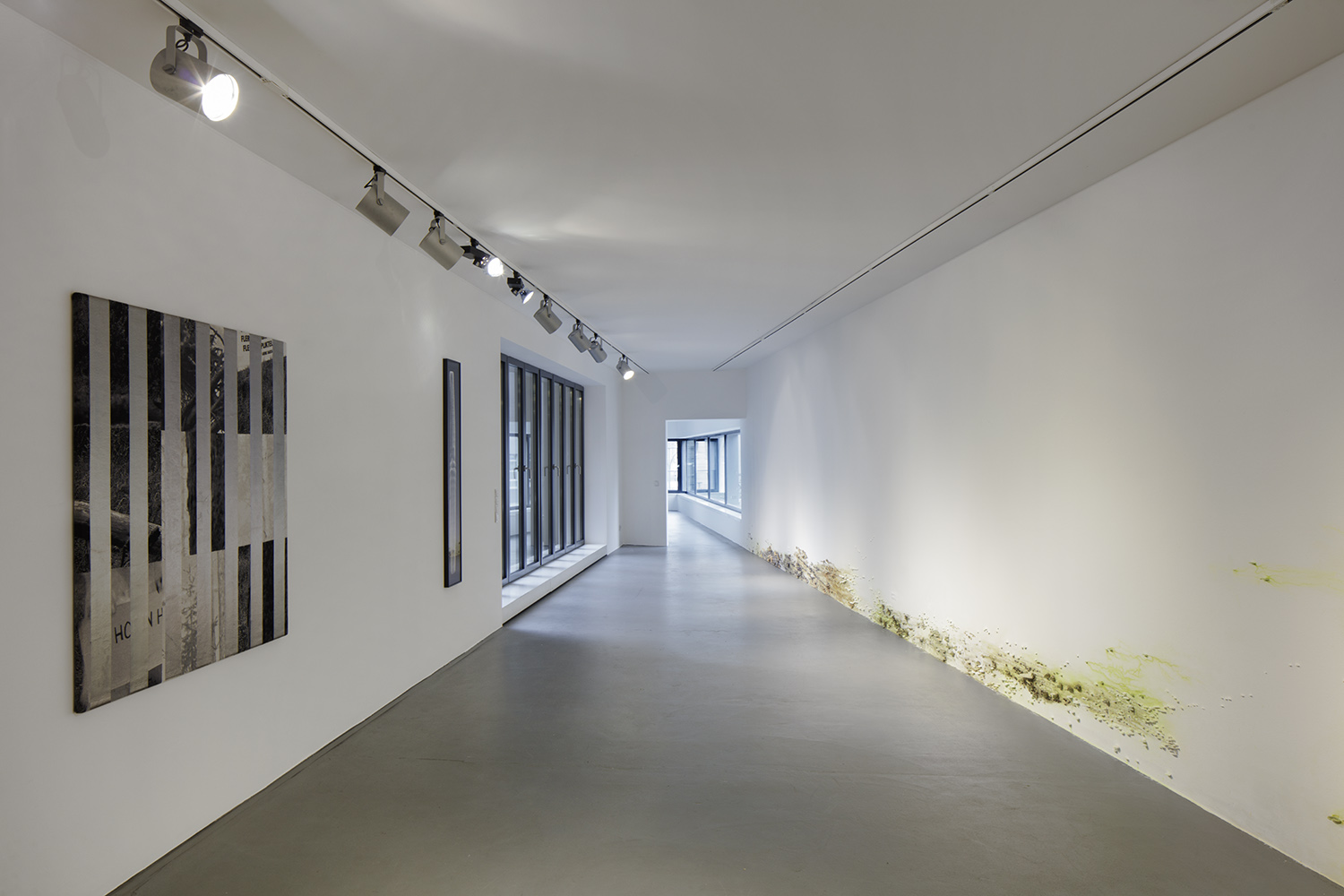
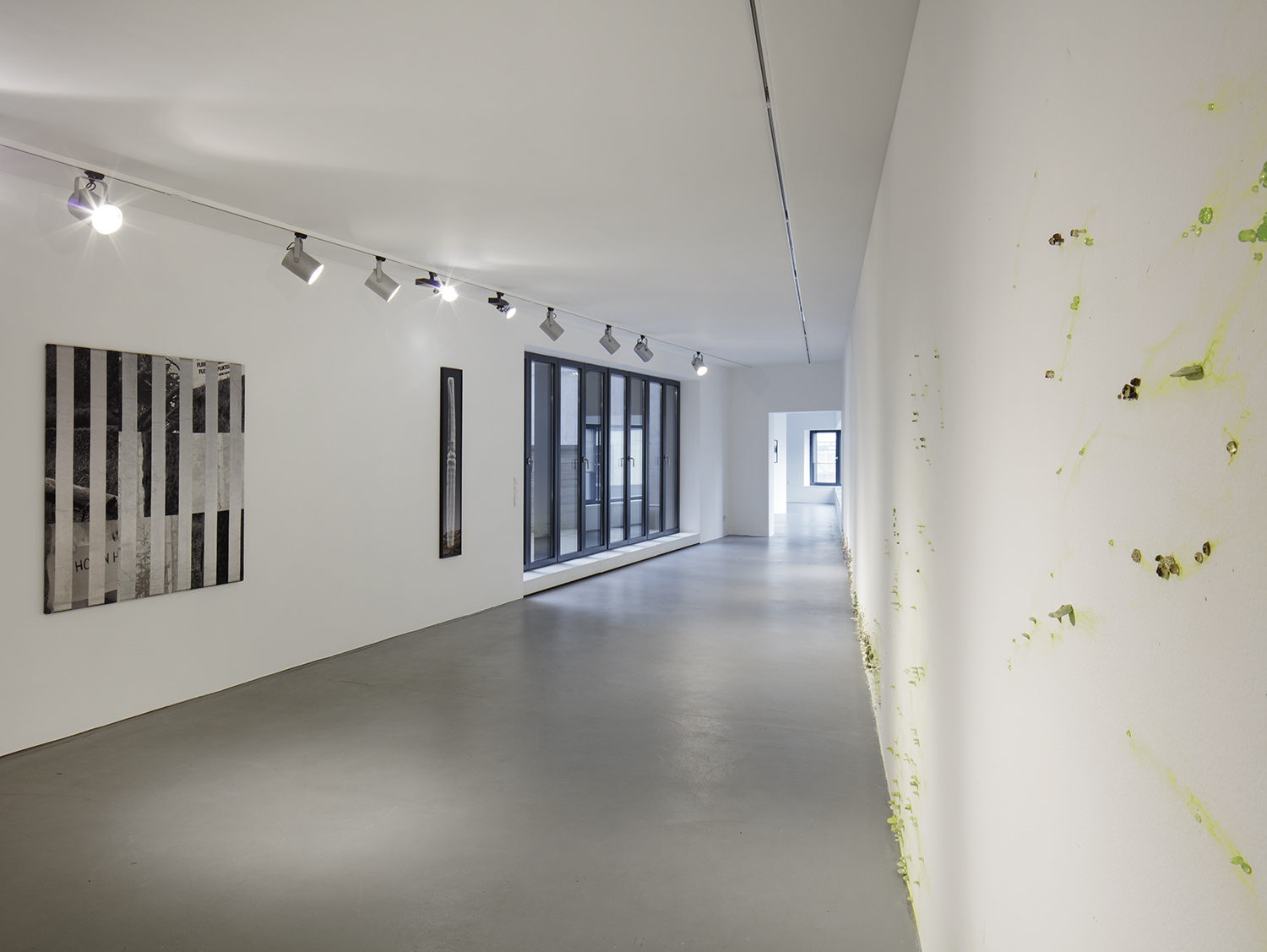
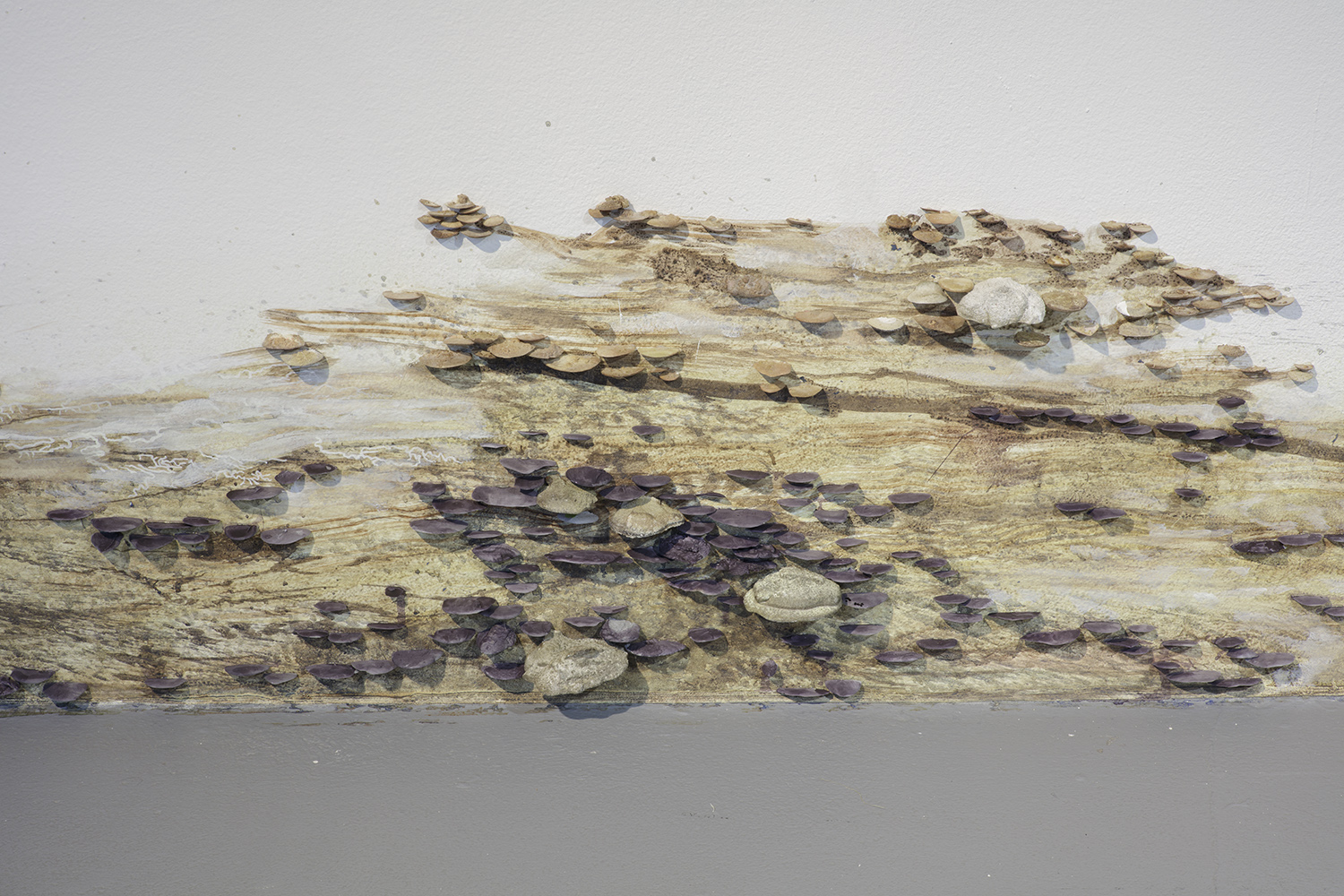
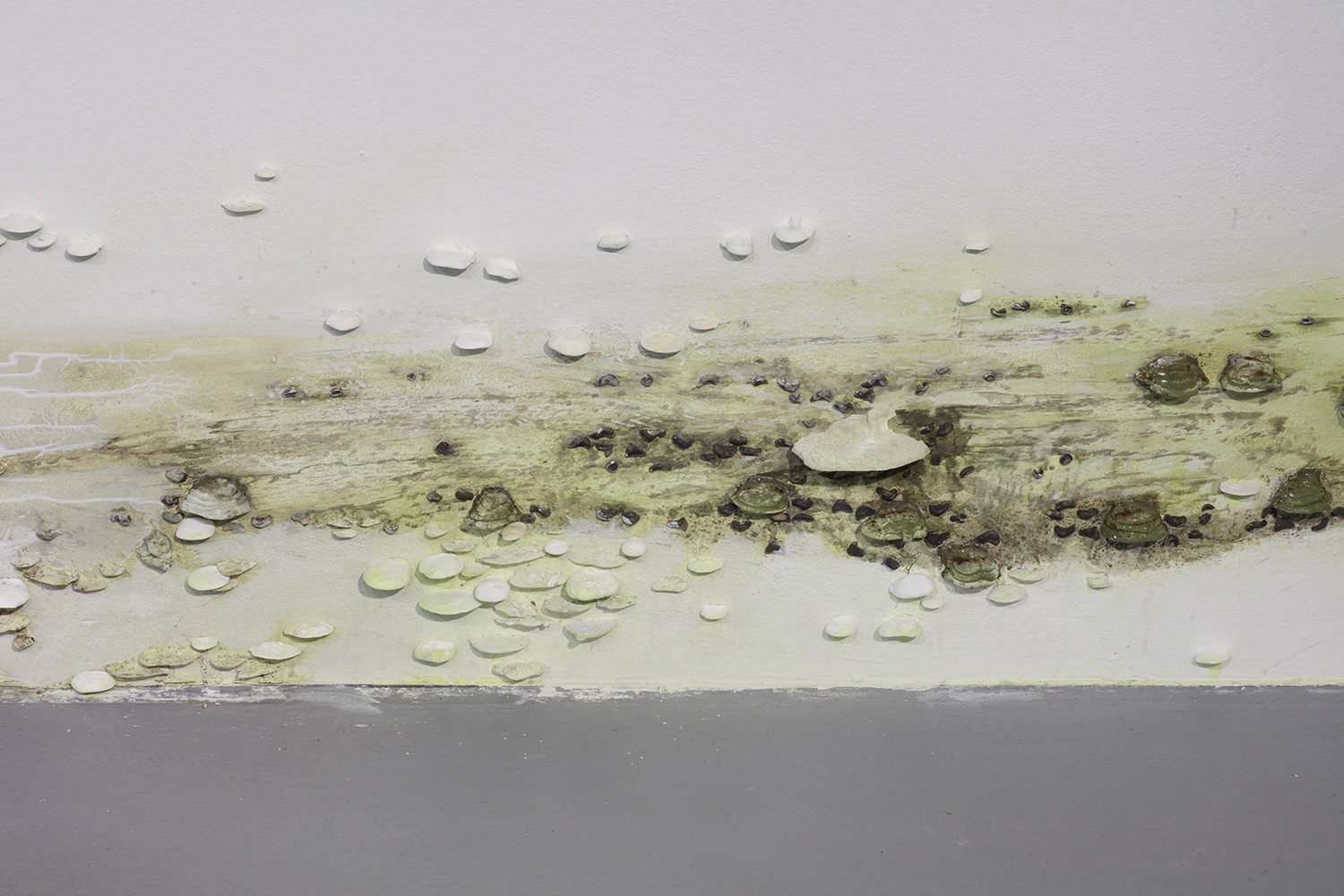
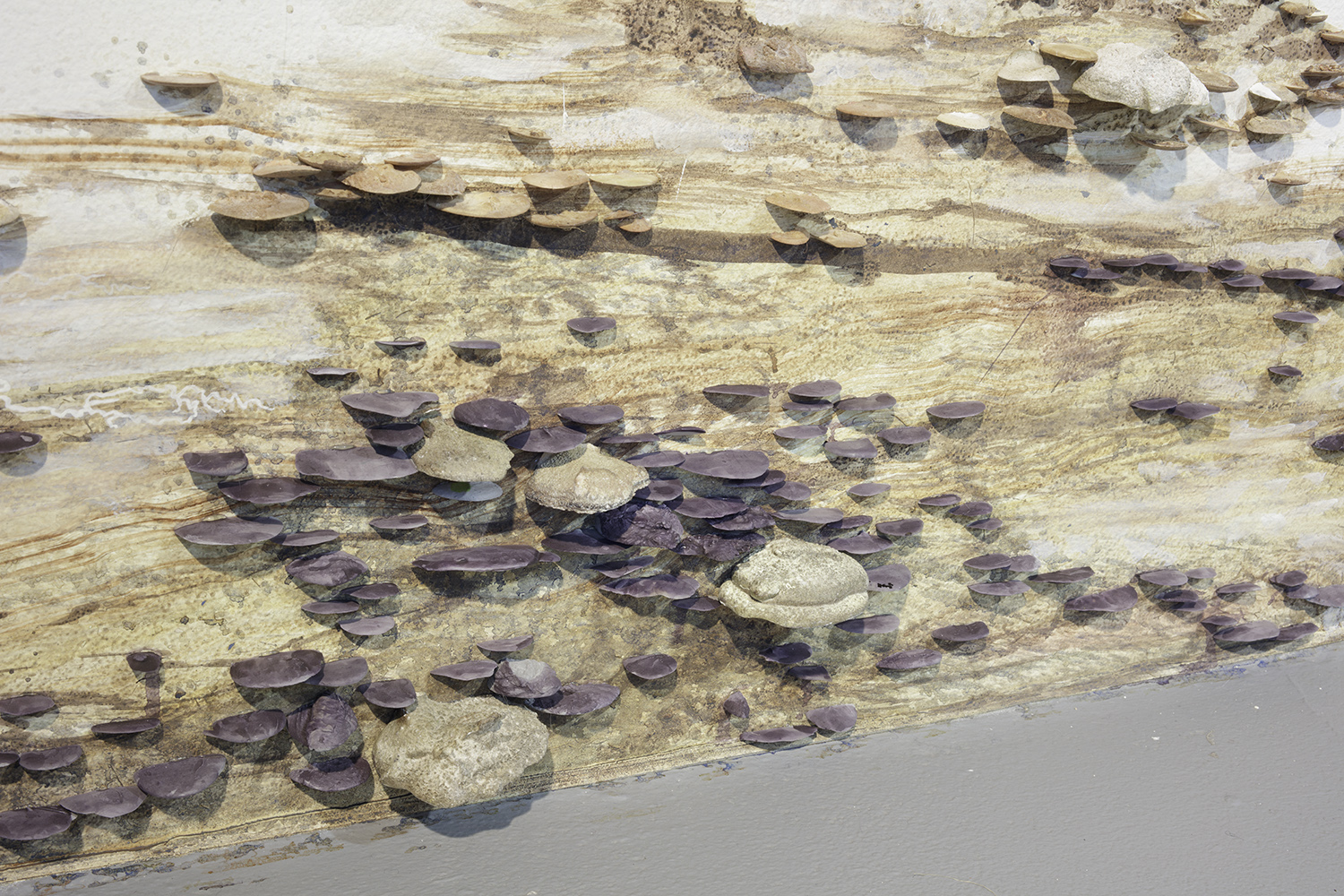
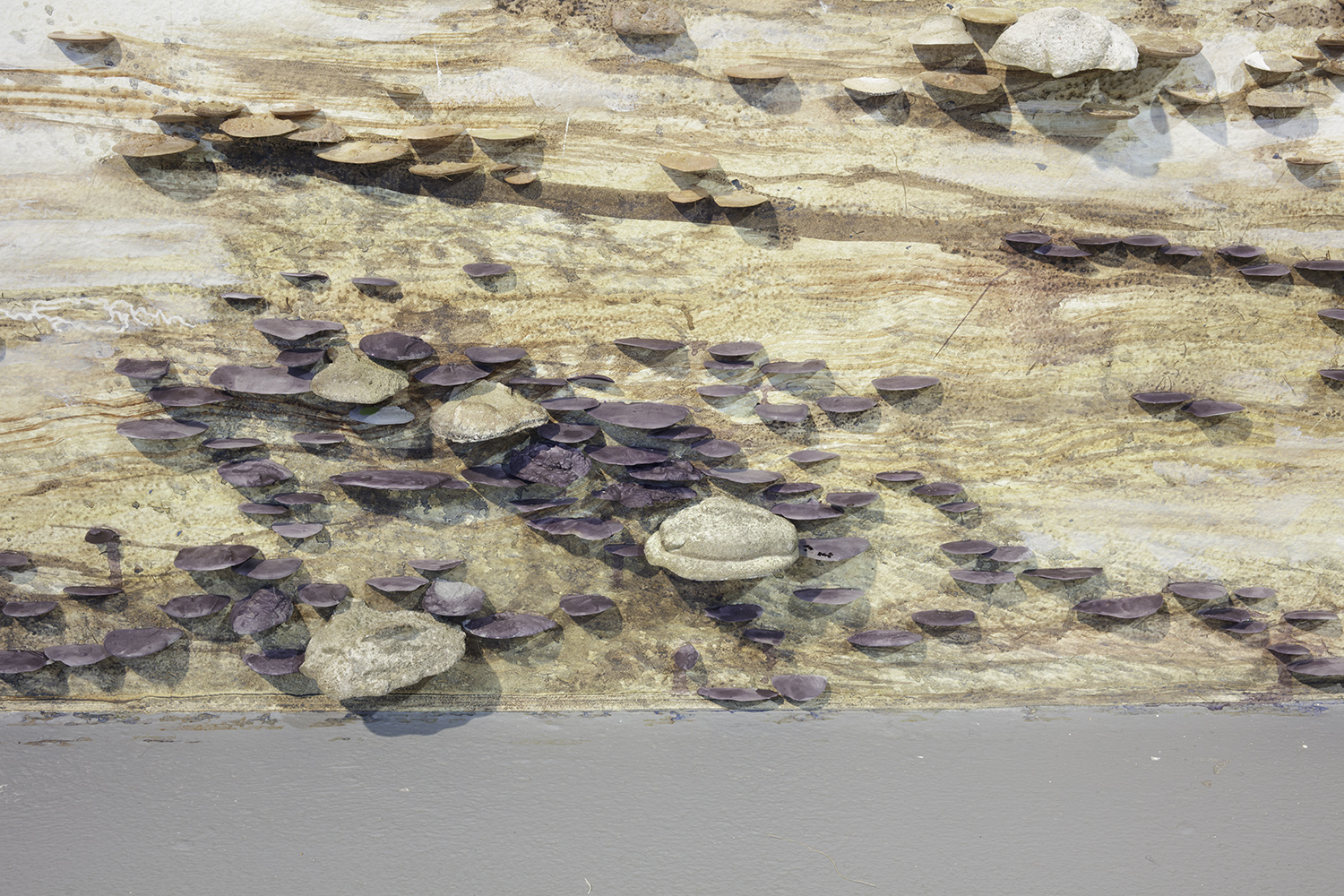
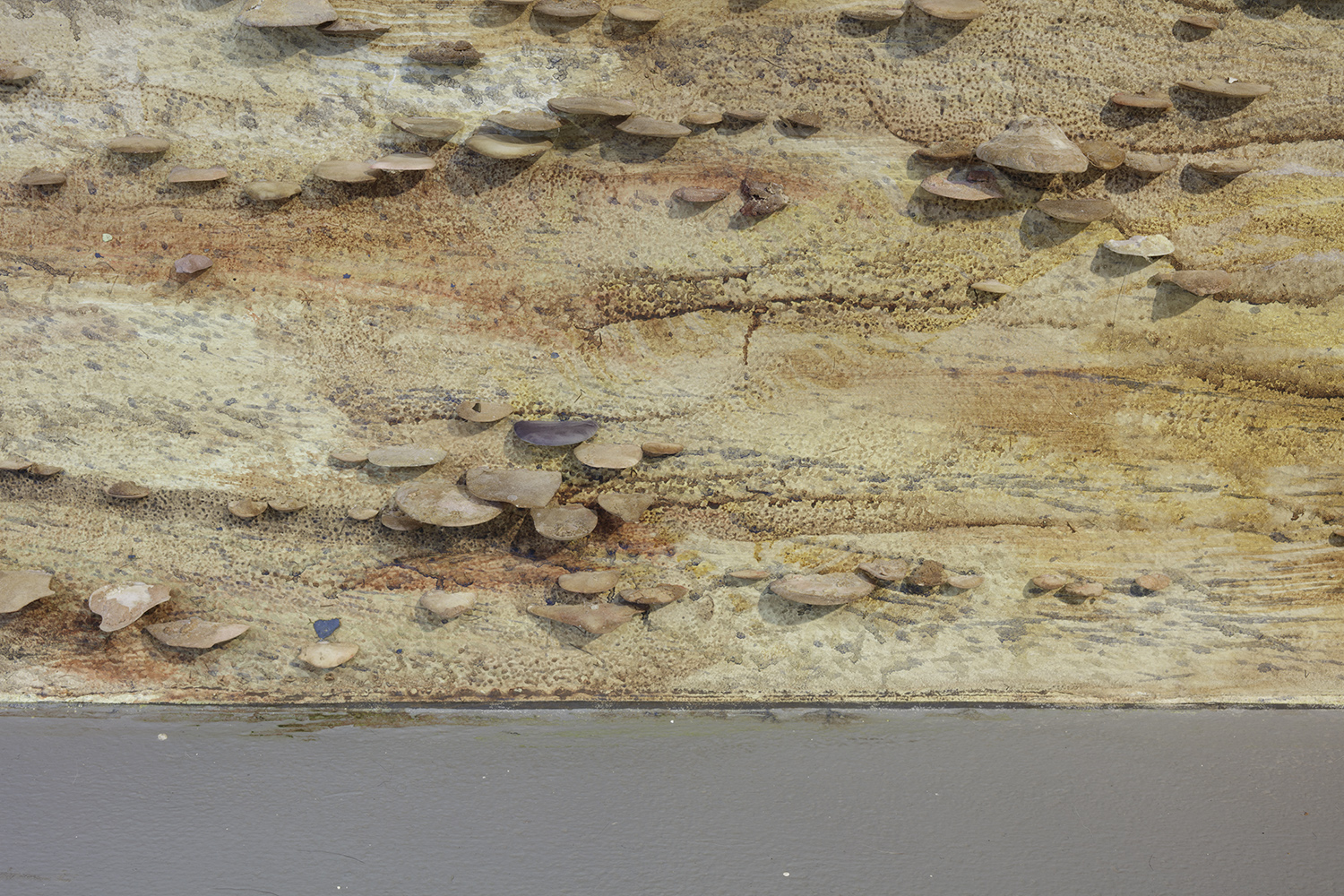
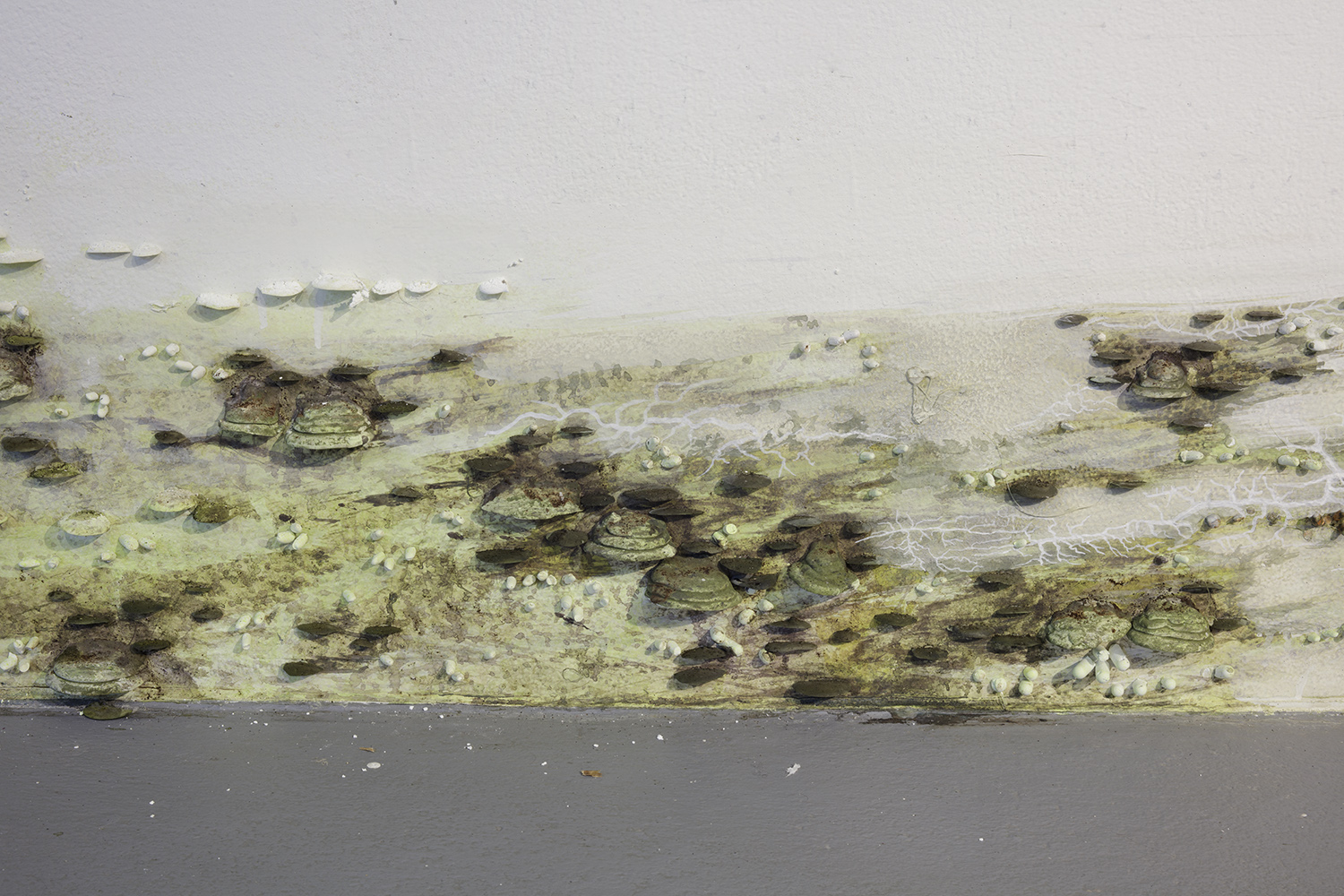
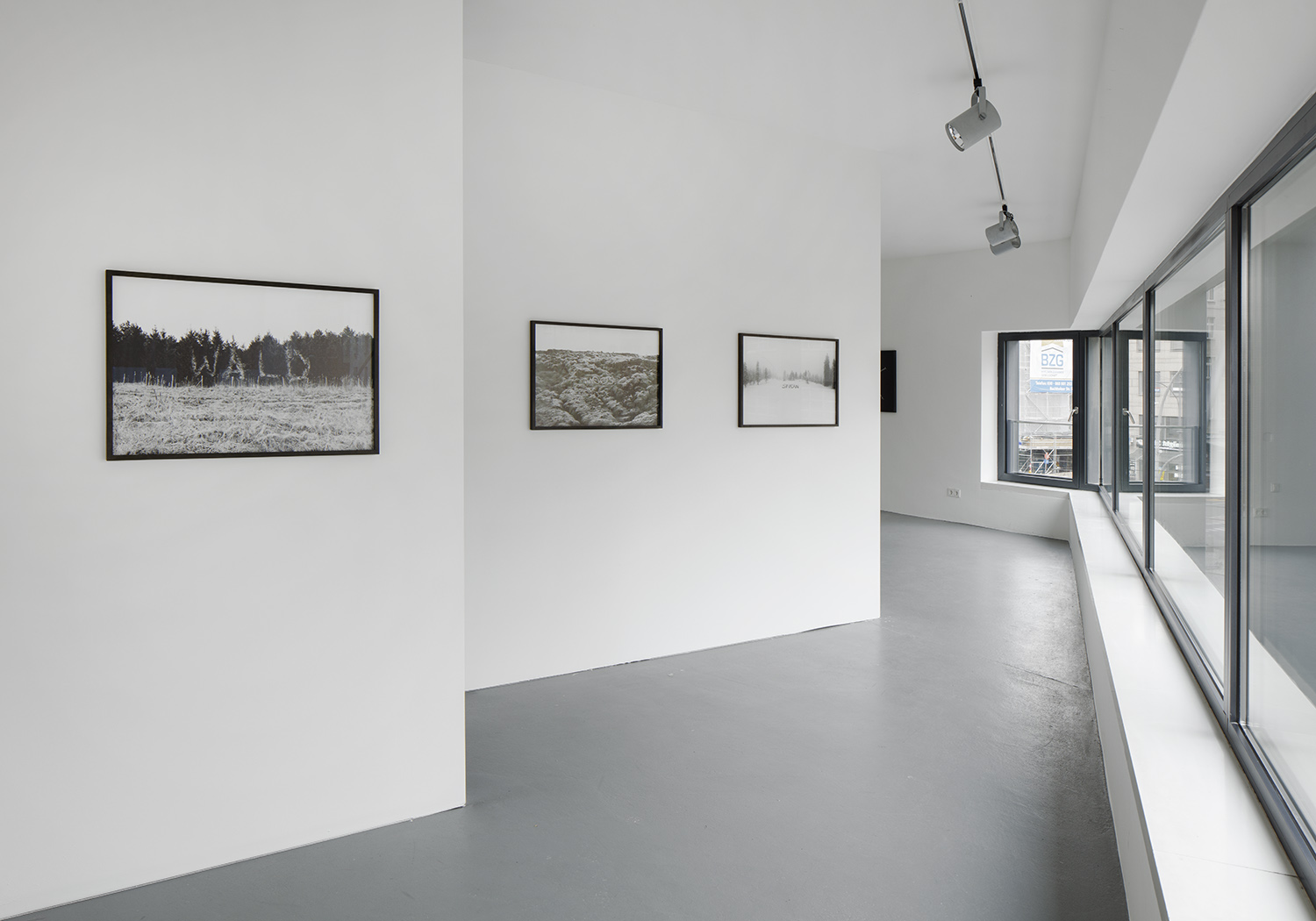
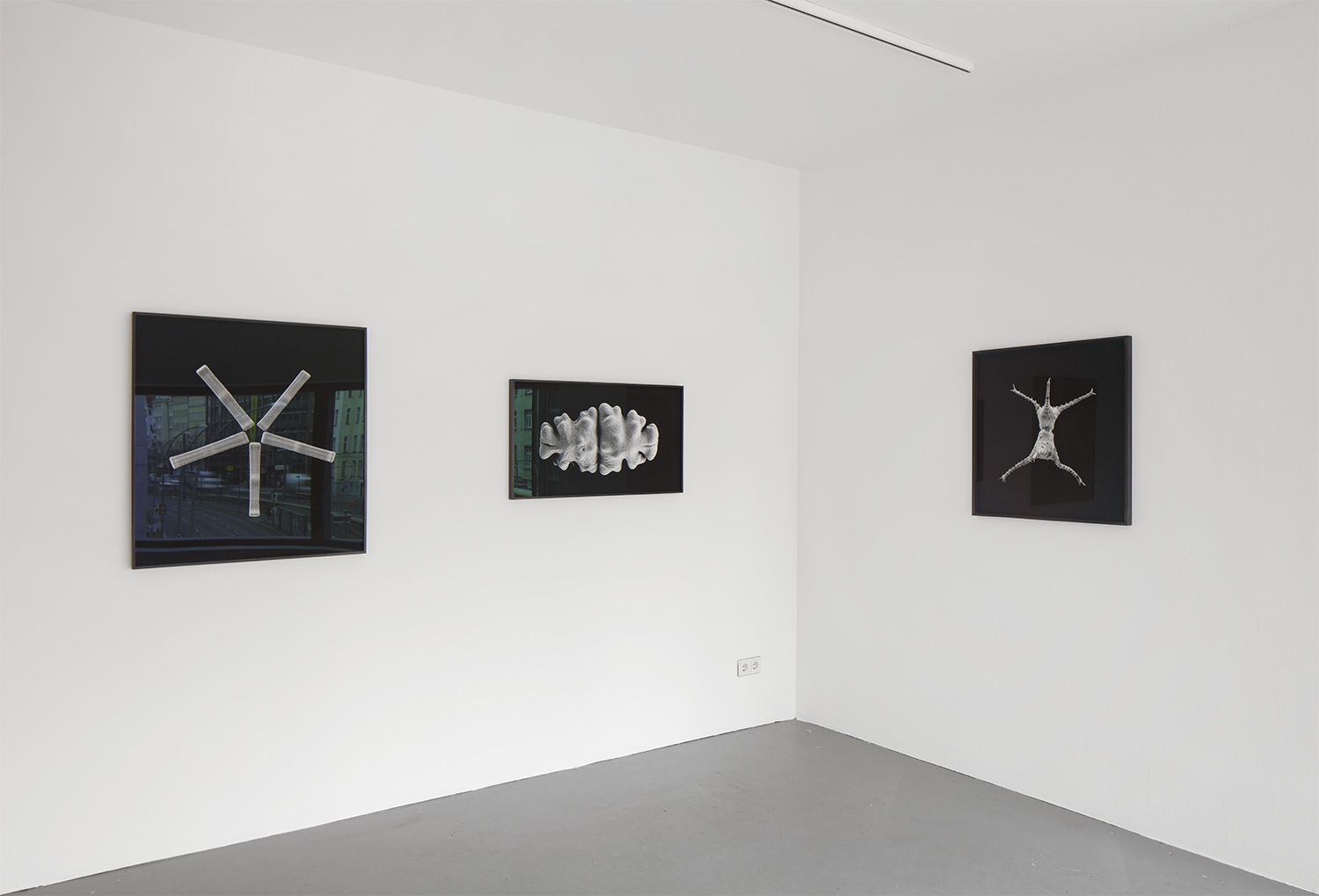
    Aus Unkenntnis, hedonistischem Desinteresse oder im Zuge der Verdrängung der eigenen Mitverantwortung nehmen wir den drastischen Kahlschlag der Arten und Spezies gar nicht wahr. Die Systemökologie hat die Zusammenhänge, die dazu führen, längst geklärt, dennoch dominiert abseits der Biologie noch heute die Vorstellung von der Natur als harmonischem System, in das sich der Mensch mit etwas gutem Willen einordnen kann.Unzweifelhaft ist das Anthropozän noch nicht im Kopf angekommen. Natur ist dort zu tief als Metapher eingeschrieben. Was ihr nicht entspricht, genießt kaum Aufmerksamkeit. So verändert sich der globale Norden, aus dem das schmelzende Eis und der zusätzliche Regen kommen, die in absehbarer Zukunft erst das Bikini-Atoll und dann Amsterdam untergehen lassen, nahezu unbemerkt. Tatsächlich ist die Landschaft dort relativ artenarm und erholt sich daher im Vergleich zu anderen Vegetationen ungleich langsamer von menschlichen Eingriffen und Umweltkatastrophen. Dennoch spekulieren nicht wenige unverdrossen mit den im schwindenden Eismeer zu erwartenden neuen offenen Schiffrouten, mit der leichteren Zugänglichkeit und damit Wirtschaftlichkeit beim Abbau von Bodenschätzen, mit ganzjährig abbaubaren Torfbeständen und frostfreien Erdölfeldern.Je kleiner die Lebensform desto weniger wird dabei über sie nachgedacht. Moos – genau wie Pilze, Flechten oder Bakterien – existiert in dieser Vorstellungswelt unterhalb des Radars. Sie alle sind kleine, aber zentrale Teile des Ökosystems borealer Landschaften, deren Bild – wie es sowohl die Soziologie als auch die Anthropologie lehren – ein kultureller Entwurf ist, der sich aber dennoch, oder gerade deshalb wirkmächtig in Mentalitäten einschreibt. Moos verweist im Rahmen des Ausstellungskonzepts daher nicht nur auf sich selbst, sondern steht für die Zukunft und die Vergangenheit, aber auch für Sensualismus und Idealismus. Moos steht für ‚imaginierten Norden‘, der von außen an die Region herangetragen wurde und tief im Selbstbild der Bewohner ganzer Nationen verankert ist. Die Ausstellung vereint Arbeiten von Künstler*innen, die sich vor dem Hintergrund der realen Entwicklung und mit dem Erbe eines gescheiterten romantischen Idealismus im Gepäck, explizit mit den Bildern und Realitäten des globalen Nordens auseinandersetzen. Sie alle teilen die Überzeugung, dass Kunst neben dem visuellen vor allem für das kritische Bewusstsein einer Gesellschaft Verantwortung trägt.Das finnische Duo IC-98 (Visa Suonpää und Patrik Söderlund) inszeniert in seinem Film Omnia mutantur (2018) in poetischen Bildern die Langsamkeit subpolarer Natur, indem sie an einer einzigen Stelle Versionen der gleichen Landschaft zu verschiedenen Zeiten zeigen– wie es vor den Menschen war und wie es aussehen wird, wenn wir schon lange nicht mehr da sind. Die Kollaboration mit kleinsten, nicht-menschlichen Organismen kennzeichnet die Bilder und Installationen von Alma Heikkilä, denen sich auch die Rasterelektronenmikroskopbilder aus den Serien 8 Heads High (2016) und Hybrid Matter (2018) von Andreas Greiner zuwenden. Julian Charriére & Julius von Bismarcks Fotografien dokumentieren eine Serie von Interventionen in die Natur 2012/13, die sich mit der disparaten Wahrnehmung der Natur zwischen Realität und Vorstellung und den daraus resultierenden Problemen auseinandersetzt. Ähnlich argumentiert Goshka Macugas Teppichbild Latent Image (2020) aus der Serie ihrer großen Wald-Bilder. Es reflektiert das historisch und ökonomisch bedingte, sich in vielschichtigen inneren Bildern manifestierende Verhältnis des Menschen zum Ökosystem Wald. Antti Majava wird im Rahmen der Ausstellung eine Lecture Performance über ökonomische Aspekte des Waldes als CO2-Speicher halten.Die Ausstellung ist kuratiert von Susanne Prinz und entstand in Kooperation mit dem Finnland-Institut, Berlin.*ITINERANT INTERLUDES präsentiert kurze performative Interventionen in ausgewählten Berliner Galerien/Kunstvereine. Performances reichen von der zeitgenössischen Avantgarde über Elektroakustik bis hin zu Improvisation und sind in Zusammenarbeit mit den beteiligten Künstler, Galeristen und Musiker konzipiert. Ziel der Serie ist es, eine Schnittstelle anzubieten und damit einen lebendigeren Dialog zwischen Rezipienten visueller und audio-akustischer Künste anzuregen. ITINERANT INTERLUDES 2021 wird durch die freundliche Unterstützung der initiative neue musik (INM) ermöglicht und kuratiert von Laurie Schwartz.
    Bitte haben Sie Verständnis dafür, dass für alle Veranstaltungen die 2G+ Regeln gelten. | Please understand that the 2G+rules apply to all events.

    Out of ignorance, hedonistic disinterest, or due to suppressing our own shared responsibility, we do not even notice the drastic elimination of all kinds of species. Systems ecology has long since clarified the connections that lead to this. Besides that, the idea of nature as a harmonious system still dominates today, into which, with a little good will, humans can integrate themselves.

    There is no doubt that the Anthropocene has not yet reached our heads. Nature is inscribed in us too deeply as a metaphor. What does not relate to it attracts hardly any attention. With the exeption of the poles the global north, from which melting ice and extra rain come which in foreseeable future will first sink Bikini Atoll and then Amsterdam, is changing almost unnoticed. This is despite the fact, that the landscape there is relatively poor in species and recovers much more slowly from human interference and environmental disasters compared to other vegetations. Nevertheless, many speculate undauntedly that the new expected open shipping routes through the dwindling Arctic Ocean will bring easier accessibility and thus economic efficiency while mining of mineral resources as well as year-round degradable peat stocks and frost-free oil fields are  an added plus. 

    The smaller the life form, the less thought is given about it. Moss – just like fungi, lichens or bacteria – exists in our world of imagination under the radar. They are all small but central parts of the ecosystem of boreal landscapes. That image – as both sociology and anthropology teach – is a cultural blueprint that nevertheless, or precisely because of this, is effectively inscribed in mentalities. In the context of the exhibition concept, Moss not only refers to itself, but also stands for the future and the past, and for sensualism and idealism. Moss stands for ‚imagined north‘, which once was brought to the region from outside and is now deeply anchored in the self-image of the inhabitants of entire nations. The exhibition connects works by artists who explicitly deal with the images and realities of the global north with the background of real developments and the legacy of failed romantic idealism. They all share the conviction that art, in addition to the visual, is primarily responsible for a society’s critical awareness.

    In their film Omnia mutantur (2018), the Finnish duo IC-98 (Visa Suonpää and Patrik Söderlund) stages the slowness of subpolar nature in poetic images by showing versions of the same landscape at different times in a single place – how it was before the people and what it will look like when we have not been there for a long time. The collaboration with the smallest, non-human organisms characterizes the images and installations by Alma Heikkilä, to which the scanning electron microscope images from the series 8 Heads High (2016) and Hybrid Matter (2018) by Andreas Greiner also is directed. Julian Charrière & Julius von Bismarck’s photographs document a series of interventions in nature 2012/13, which deal with the disparate perception of nature between reality and imagination and the problems resulting from it. Goshka Macuga’s carpet work Latent Image (2020) argues similarly. The work reflects the historically and economically determined relationship between humans and the forest ecosystem, which manifests itself in multi-layered inner images. As part of the exhibition, Antti Majava will give a Lecture Performance on economic aspects of forests as CO2 storage.

    Interludes are by Martyna Poznańska, who is a transdisciplinary artist and explores symbiotic relationships between human and non-human beings, and the British-Pakistani soprano Mimi Doulton who will deconstruct some Scandinavian classics from the age of romanticism.*

    The exhibition is curated by Susanne Prinz in collaboration with the Finland-Institute, Berlin.

    19.11.21, interludes von Mimi Doulton (Sopran) und Martyna Poznańska (Electronics)*

    ITINERANT INTERLUDES presents pop-up performances in select galleries and institutions of art throughout Berlin. Programs range from the contemporary avant-garde to improvisation, from the acoustic to the electronic, and are curated in collaboration with respective galleries, artists and musicians. The series aims to provide a point of intersection and, ultimately, to stimulate a more vibrant dialogue between audiences of the visual and aural arts. The 2021 series is made possible with support from the initiative neue musik berlin. The project is curated by Laurie Schwartz.

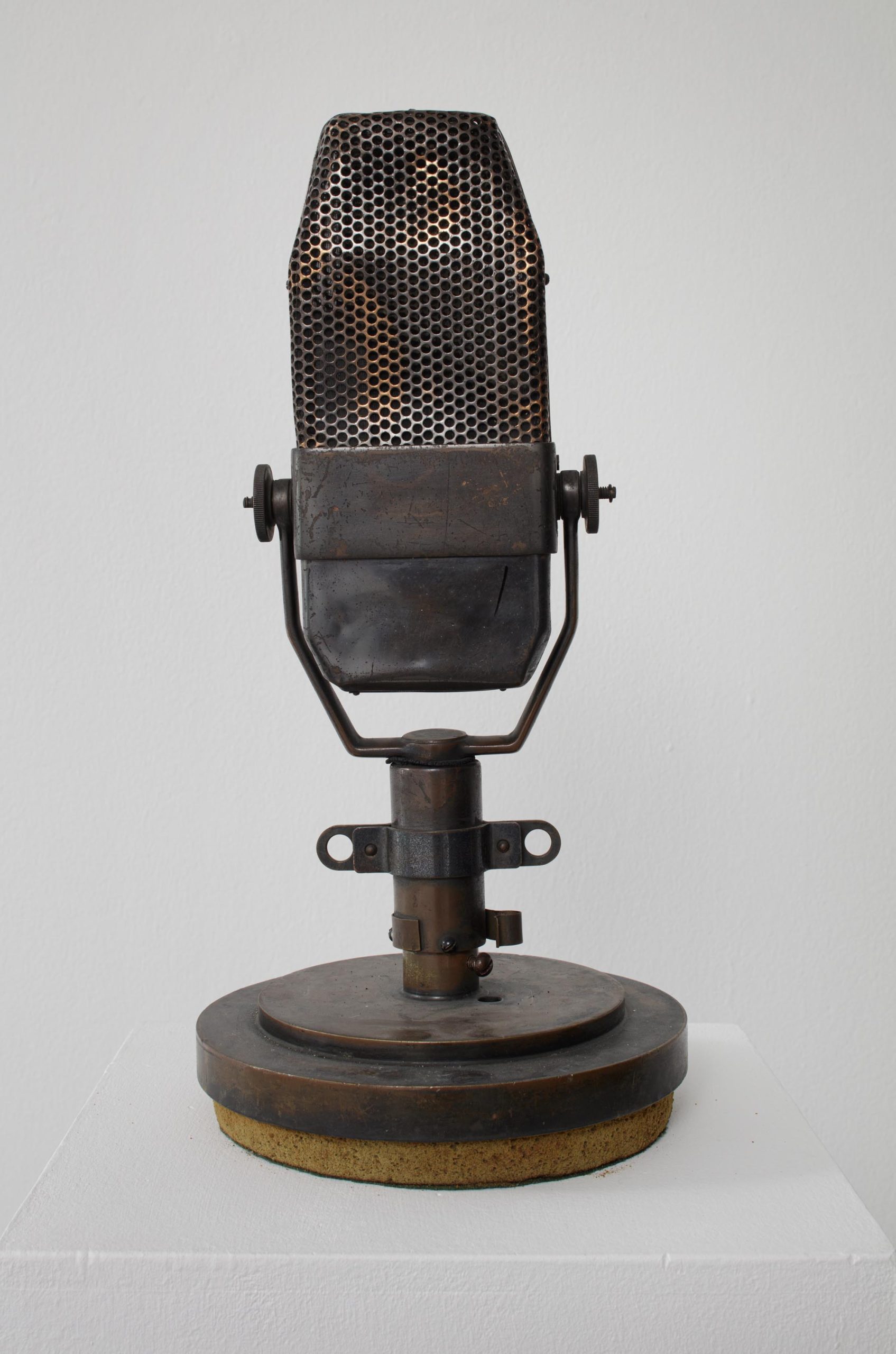
  • 29.1.22, object amnesic: a compost manifesto by Henrik Strömberg and Jens Soneryd. Book release.

    29.1.22, Book presentation and reading on the occasion of the release of object amnesic: a compost manifesto by Henrik Strömberg and Jens Soneryd.

    Part of the Moss or A Study of Cerebral Chasms Caused by Living Under Boreal Conditions.

    “The Compost implies viscosity, it is slippery, it mutates. It is both ephemeral and permanent; dissolves the narrative, reverberates symptoms of life. Words.“
    Chiara Valci Mazzara

    Henrik Strömberg (artist) and Jens Soneryd (writer) started their joint project The Compost in 2016. For them, the compost is a point of departure to explore alternative ways of being in the world, alternative practices of doing, thinking, sensing, seeing, and understanding. With “alternative ways of being in the world” they refer to perspectives that challenge the instrumental and reductionist ones that are predominant today, which provide a technocratic attitude towards the world, its objects, structures and societal institutions, but also toward its humans and other living beings, its nature, language and art.According to the technocratic attitude, art works are means for communicating simple messages or for performing certain functions, and they are valued according to their potential of doing so – the aim of the work of art is to deliver certain measurable results that are decided in advance. Thus, contemporary art is part of the creative economy, it is attuned to the logic of advertising, design, and tech companies.Within this view, lives are translated into projects, human beings are translated into brands that compete on various markets such as the labour market, the education market, the love market and so on, while nature appears first and foremost as something to be predicted, controlled and dominated, translated into a function as convenient resource. Thus, forests are transformed into either agricultural land or tree plantations, rivers into hydro-plants, mountains into mineral reserves or ski-resorts.

    Failures, eccentricities and deficits are hidden in the pursuit for simplicity, success, and perfection. Human-as-brands lead active, social and eventful lives, not primarily for the joy of learning, experiencing, meeting people, and so on. Verbs like “living”, “experiencing”, “encountering”, “loving”, “desiring” have no intrinsic but only functional values. The actions they signify aim only to stage an eventful and prosperous life on social media; living as branding, that is.

    Is it possible to love a forest that has become a tree-plantation? A river that has become a hydro-plant? A human being that has become a brand? A work of art that can be translated into a simple message without anything being lost in translation? A nature whose meaningfulness has been replaced with functionality? Probably not. Therefore, object amnesic: a compost manifesto aims to contribute to the re-enchantment of the world, by translating back functions into meanings, tree-plantations into forests, answers into questions, and first and foremost by turning our attention to the processes rather than to the intended results.

    The book deals with topics such as growth and decay, memory and forgetting, permanence and change, the desiring gaze and the detached gaze. It also reflects on technologies for understanding, such as writing and photography. These are powerful technologies developed as aides for making visible, mapping, fixing, organising and governing. In short, they are powerful tools for keeping, controlling and preserving. object amnesic: a compost manifesto explores if and how these technologies also can be applied in opposition to their intended usages, if they can also be deployed to un-learn what we have learned from them.

    It questions the predominant technocratic Cartesian view on nature as something to be measured, predicted and controlled. It challenges the very notion that control is a desirable achievement. Instead of trying to control and to govern artistic or natural processes, the book encourages us to join these very processes, to become part of them, or simply to acknowledge that we already are part of them despite that we most often pretend not to be.

    And just like any compost, the book is an assemblage of things in various stages of completeness as the objects in the compost are not registered, and no actions are undertaken to save them from oblivion or decay – forgetting is just as important as remembering, ambivalence and doubt are just as important as knowledge and certainty. To reach without being able to reach is just as important as grasping. The aim of a compost is not to reach answers, explanations, or conclusions, but to produce fertile soil. So is the aim of this book.

    INFO:

    Photographs: Henrik Strömberg
    Poetry: Jens Soneryd
    Essay: Chiara Valci Mazzara
    Book design: Aneta Kowalczyk

    Cover: Fedrigoni Materica Clay with hot stamping
    Inside: Munken Pure, Fedrigoni Pergamenata Naturale
    Format: 224×300 mm
    Number of pages: 296
    Number of photographs: 75
    Language version: English

    Print run: 800 copies
    Printing & binding: Argraf, Warsaw, Poland

    Publication date: November 2021
    Publisher: BLOW UP PRESS
    ISBN: 978-83-952840-8-3

    https://blowuppress.eu/products/object-amnesic-a-compost-manifesto

  • 28.1.22, 24h Videoart at Midnight #118: IC-98

    Vergrößern

    IC-98_Filmstill_Omnia-mutantur-2018jpg-Klein
    IC-98, Realms, 2018 (Filmstill)

    28.1.22, Videoart at Midnight #118 mit / with IC-98 im/at the Babylon, 24h (Eintritt frei / free entrance)*

    Though their practice is essentially conceptual, IC-98 has been best known for animations, which combine classical drawing and digital effects, depicting landscapes shaped by long time durations, natural and human histories and climate. Mythical, material, factual and fictional elements are weaved together into visual stories, which – though deeply political and meticulously researched, scripted and executed – are presented as open-ended poetic narratives. The mood of the works alternates between a sense of crisis, melancholy, acceptance and resigned optimism.

    *BABYLON, Rosa-Luxemburg-Platz, Berlin, big cinema hall
    Get your ticket online to avoid queuing and to help complying with the Babylon’s covid-19 guidelines and regulations  (2G+ rule and FFP2 mask).

    IC-98 (Patrik Söderlund and Visa Suonpää) will show:

    Realms, 2018, 19:38 min (dir. Patrik Söderlund)
    Realms is a voyage through time, evolution and the kingdoms of life towards the natural destruction wrought upon the planet by the human species. As Ovid writes in Metamorphoses, everything changes but nothing perishes. Things change shape, energy becomes matter and matter becomes energy. Realms is a film about this constant metamorphosis, a succession of states, epochs, species, kingdoms and realms, a journey through past and future strata, organic and inorganic phases and spheres of our planet.

    The story unfolds on a remote fisherman’s farm, where we begin our journey hundreds of millions of years ago in the depths of the primeval ocean. We reach the shore, make our way through to the farm-yard, through the house to the garden in the rear and onwards to the nearby forest, followed by a swidden, a rocky ridge and the sand dunes beyond. Finally, millions of years into the future, we stand on the shore again, animate and inanimate nature levelled to black dust. Grounded on the building blocks of life, carbon and water, we gaze towards the stars of the Milky Way. And so the cycle begins again.
    All that time, we have stayed within the perimeter of the farm and seen versions of how the same landscape has appeared at different times – how it was before humans and how it will look after we are long gone. Though our own era is just a blink in the eye of the long continuum of epochs, this blind moment with its reliance on energy provided by fossil fuels and the wholesale exploitation of nature threatens the future of the entire planet.

    A View from the Other Side, 2011, 70:00 min
    Already considered by many as a classic piece of contemporary Finnish art, A View from the Other Side shows Gylich’s Doric colonnade in Turku, built in 1836, and its transformations across the centuries. Originally, stalls operated behind the columns selling produce caught by the local fishermen. Subsequently, the space has served, amongst other things, as a bazaar, a restaurant, a café, and a petrol station. In the early 2010s the city sold the property to private owners.
    The portico was modelled on the ancient Greek stoa, the only public building in the agora, which had no predefined use. The stoa could thus be seen as a model for free civil society. The work is based on this interconnection between architecture and politics.
    The portico, the river, and the street between them, form a stage without dramatis personae. The idea was to create a play with time, weather and nature as its protagonists. In this narrative, in which multiple temporal rhythms are overlaid to form a seamless moving image, humans are only a fleeting presence – even though humanity’s imprint on the environment is constantly visible. The ceaseless flow of time is a central theme in the work, alongside the persistent presence of history. Here, the present and the future of the city are intertwined with the diverse ecologies of the built environment and nature. The conditions underlying public space are also revealed here as they relate to migration and homelessness.

    IC-98’s work since 2010s addresses the environmental crisis and artistic-political methods of finding solutions to it. The projects seek to replace anthropocentric worldview with modes better suited to take into consideration the interrelationships, dependencies and myriad temporal rhythms of all animate and inanimate nature.
    With backgrounds in visual arts and cultural studies, IC-98’s 24-year collaboration has produced artist publications, site and context specific projects and interventions, animated moving image installations, short films and various public commissions. IC-98 received the Finnish State Art Prize in 2009 and represented Finland at the Venice Biennale in 2015. Their work has been showed extensively at museums, biennials and festivals in Europe, Asia and the Americas. They often collaborate with scientists and other arts professionals

    The animations Nekropolis (2016), Epokhe (2017) and Lands of Treasure (2021), as well as the film Realms (2018), are allegorical descriptions of time, climate, and how environmental and cultural histories merge in different eras. On the other hand, the site-sensitive projects House of Khronos (2016-), Mare tranquillitatis (2020), IÄI (2020) and the ongoing Misi-Raaka Park of Wounded Earth (2019-) have instead of mere artistic depiction sought to create tools – free zones, novel languages, new founding myths – to help this community of all organisms emerge from the crisis.

    The  screening is a collaboration between the Kunstverein and Video Art at Midnight (Olaf Stüber & Ivo Wessel) and the Babylon.

    The project kindly supported by the Finnish Institut and VAM.