Kategorie: Veranstaltungen

  • SINE GREY with NOR: performing sounds, visuals, and text

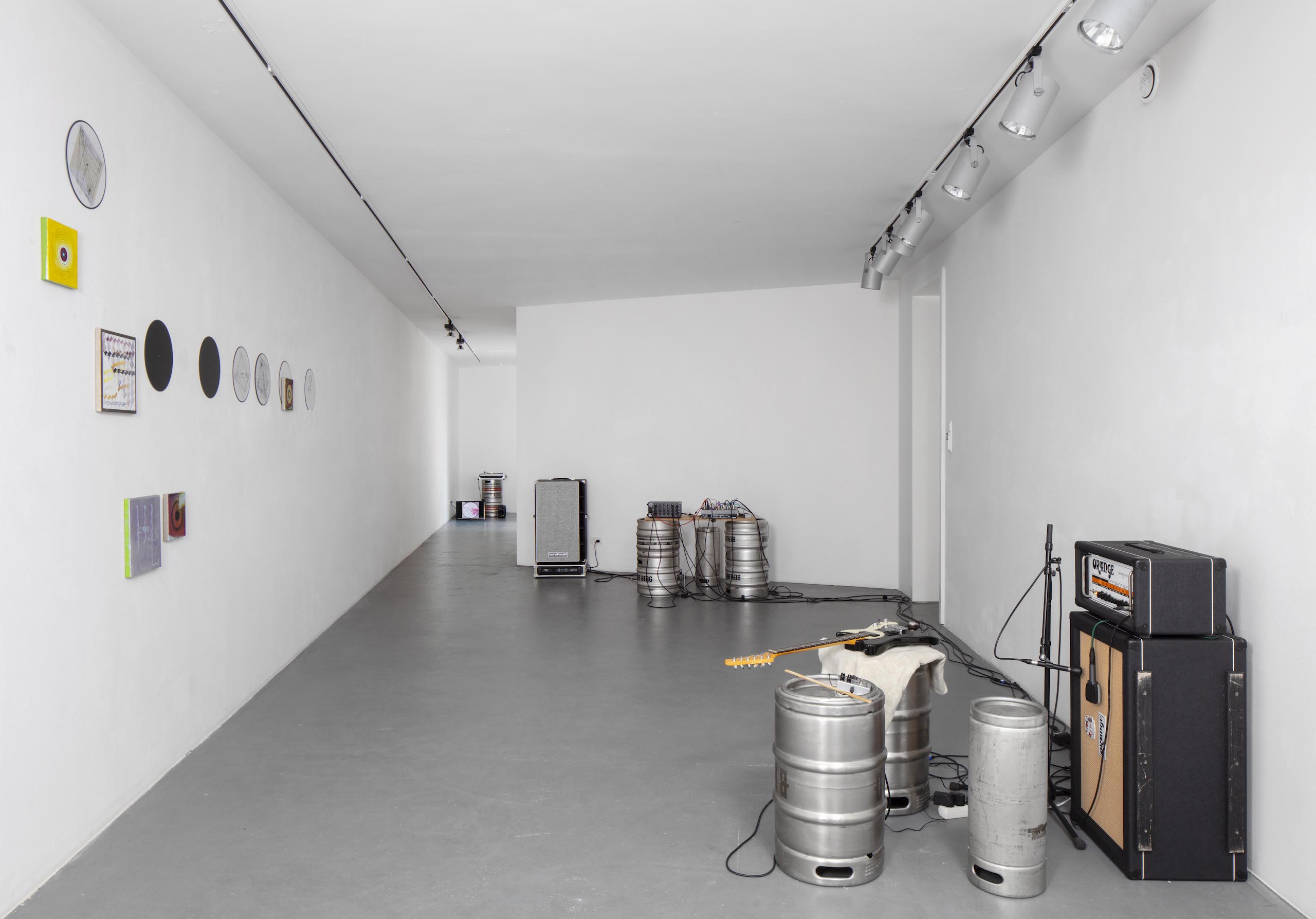
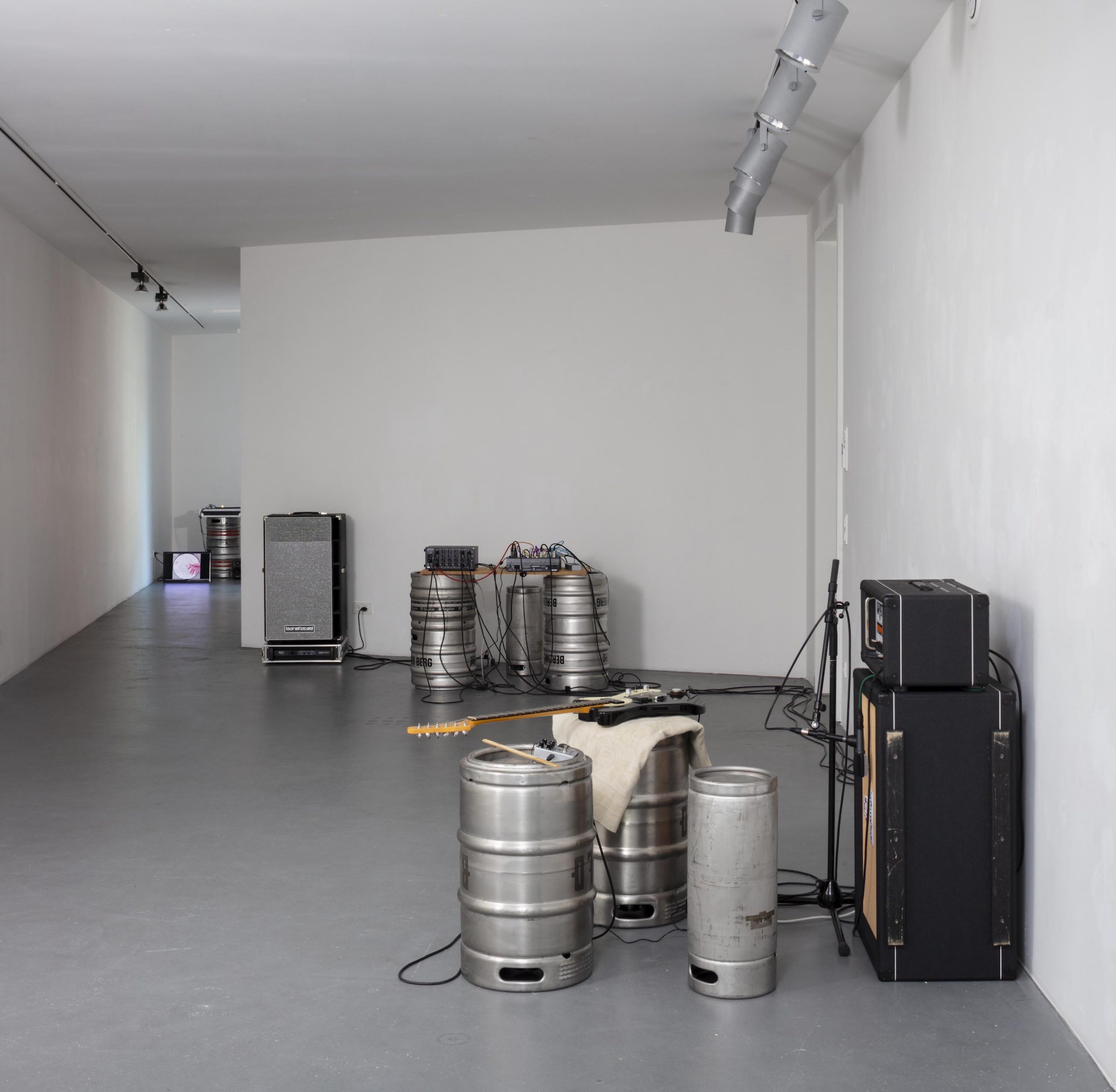
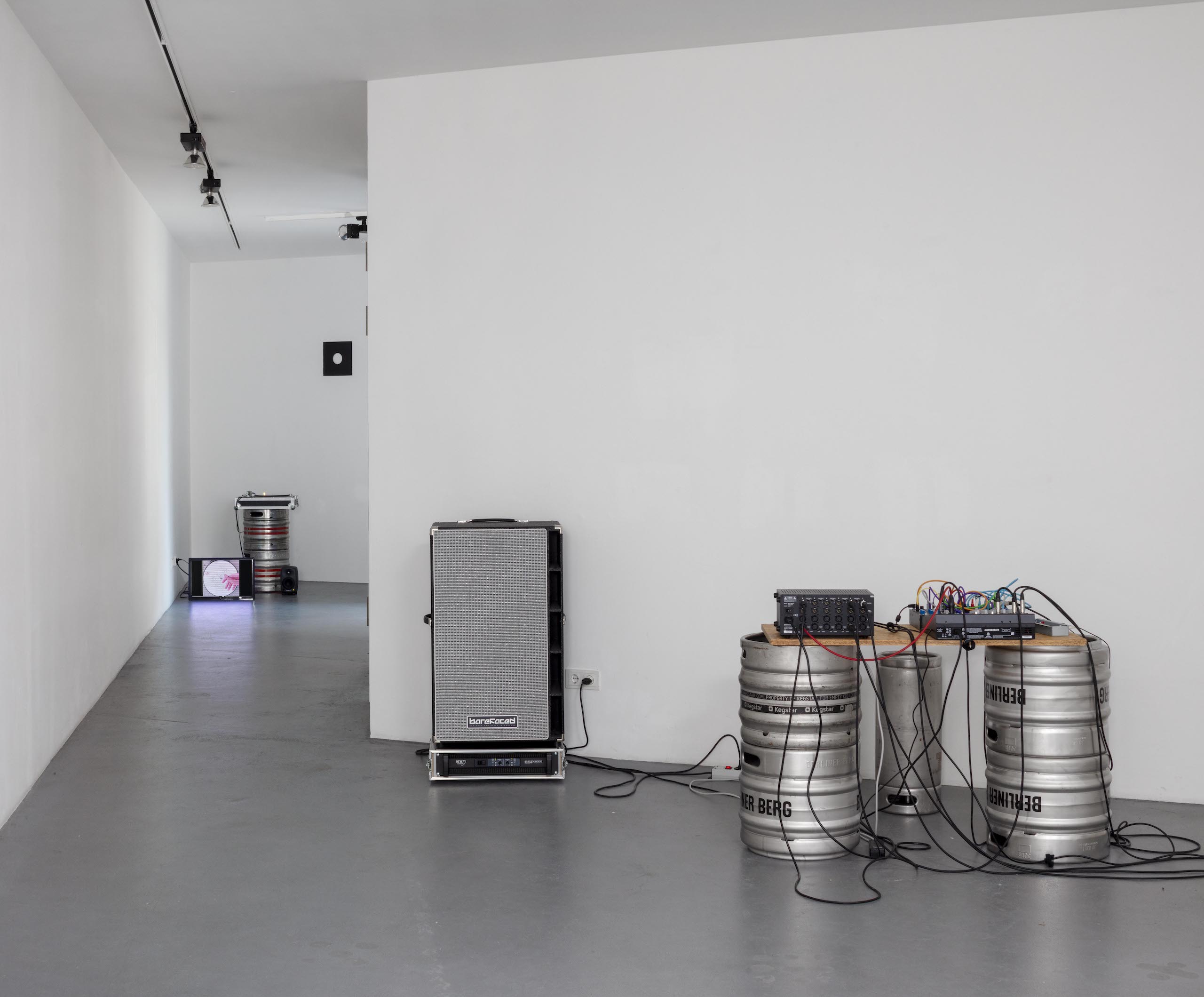
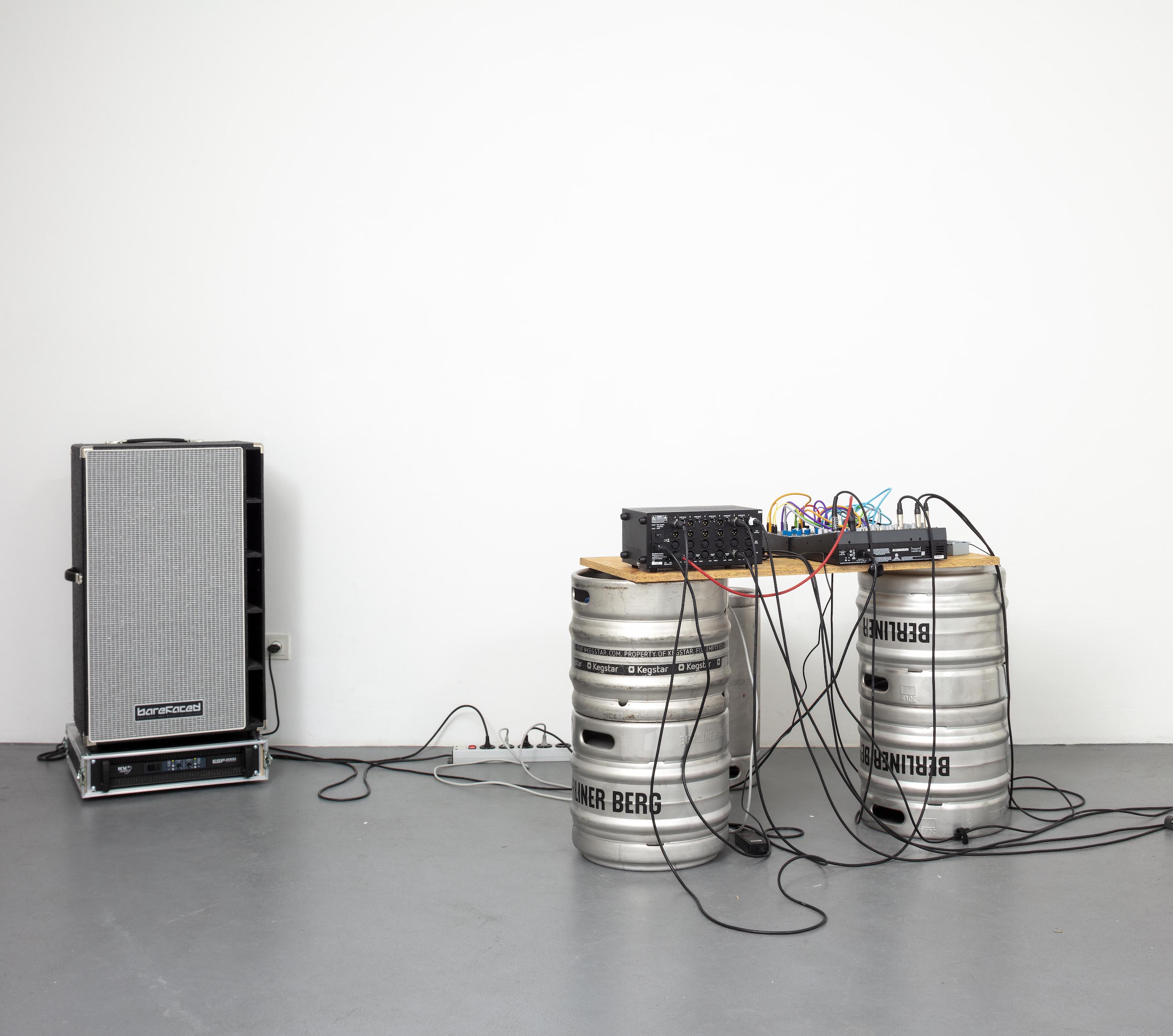
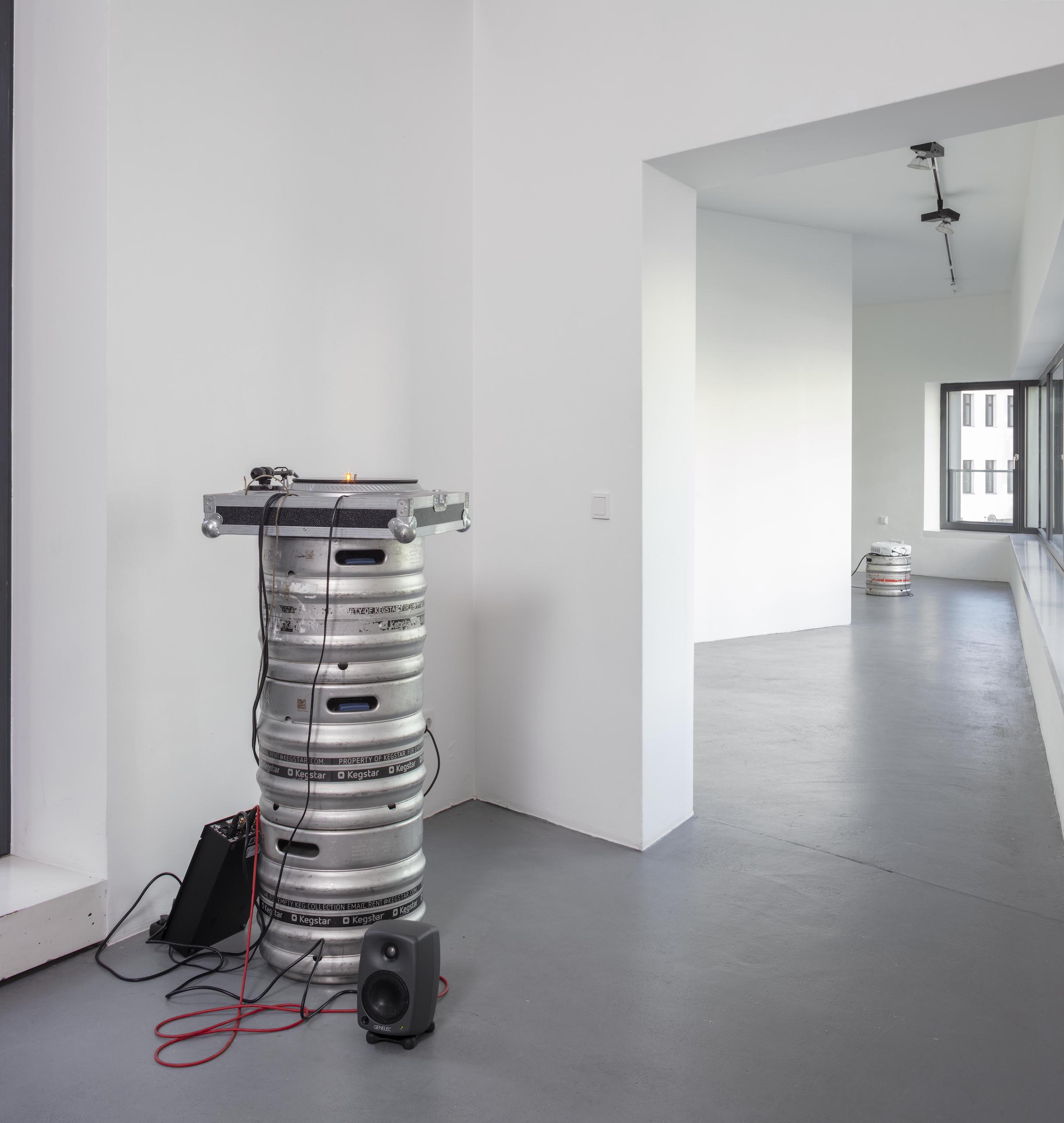
    25.2.2024 ab 17 h:   Sonntagsmatinee mit performing sounds, visuals, and texts von und mit Silva Reichwein,  Martin Lorenz und Karl-Stéphan Bouthillette für SINE GREY und Luc Döbereiner mit Martin Lorenz für NOR

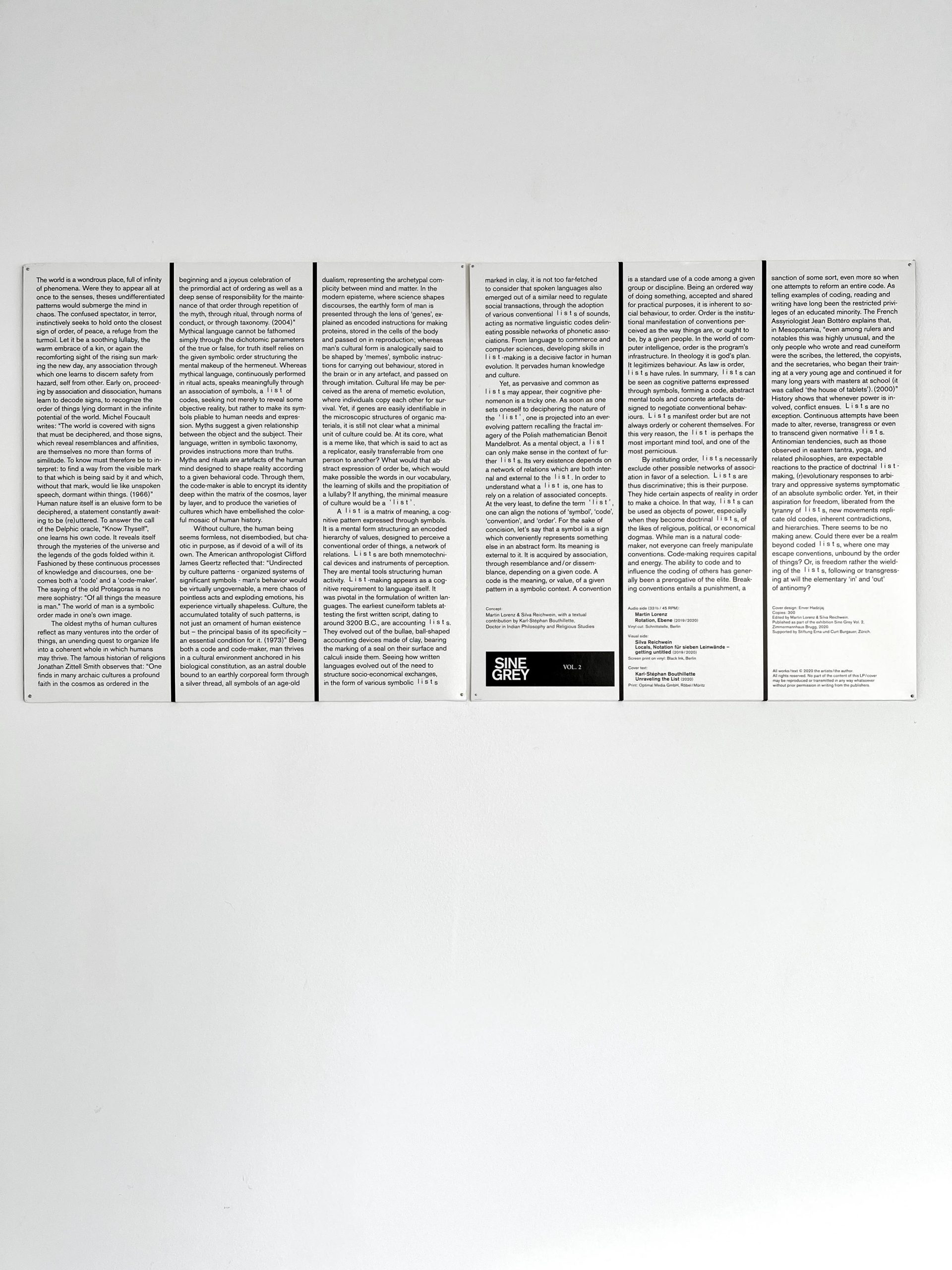
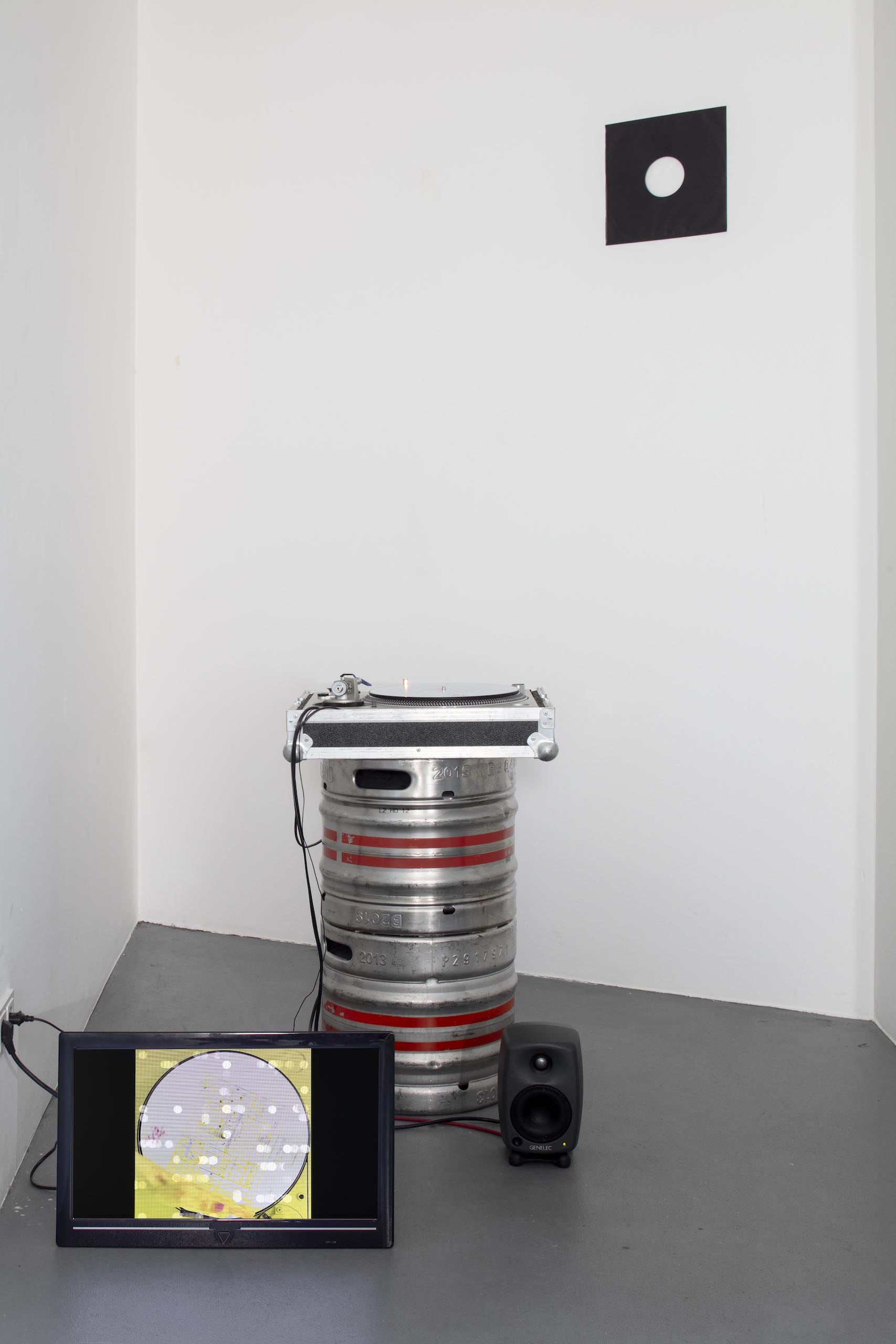
    SINE GREY LP
    Silva Reichwein  Martin Lorenz  Karl-Stéphan Bouthillette

    …getting untitled   

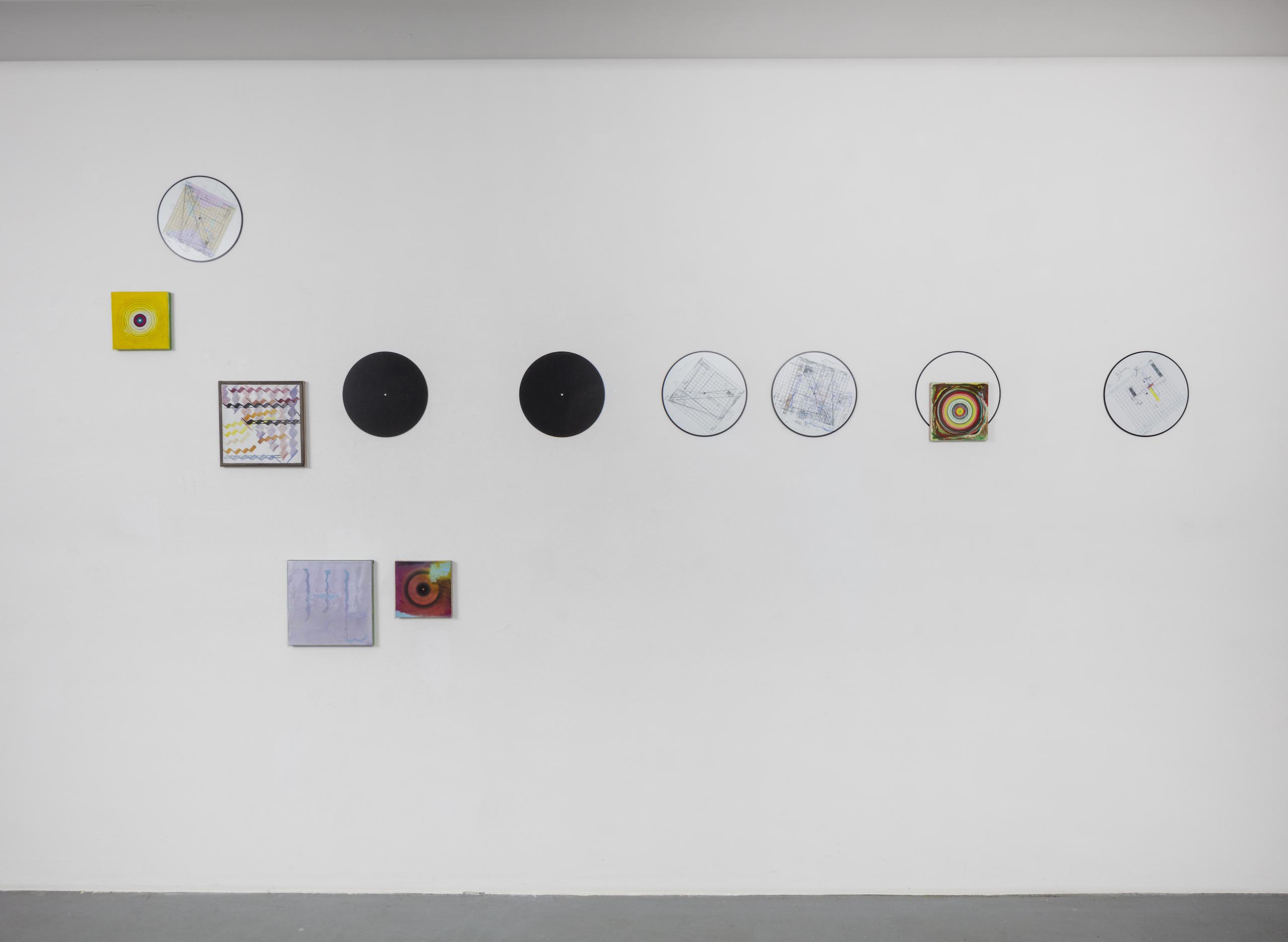
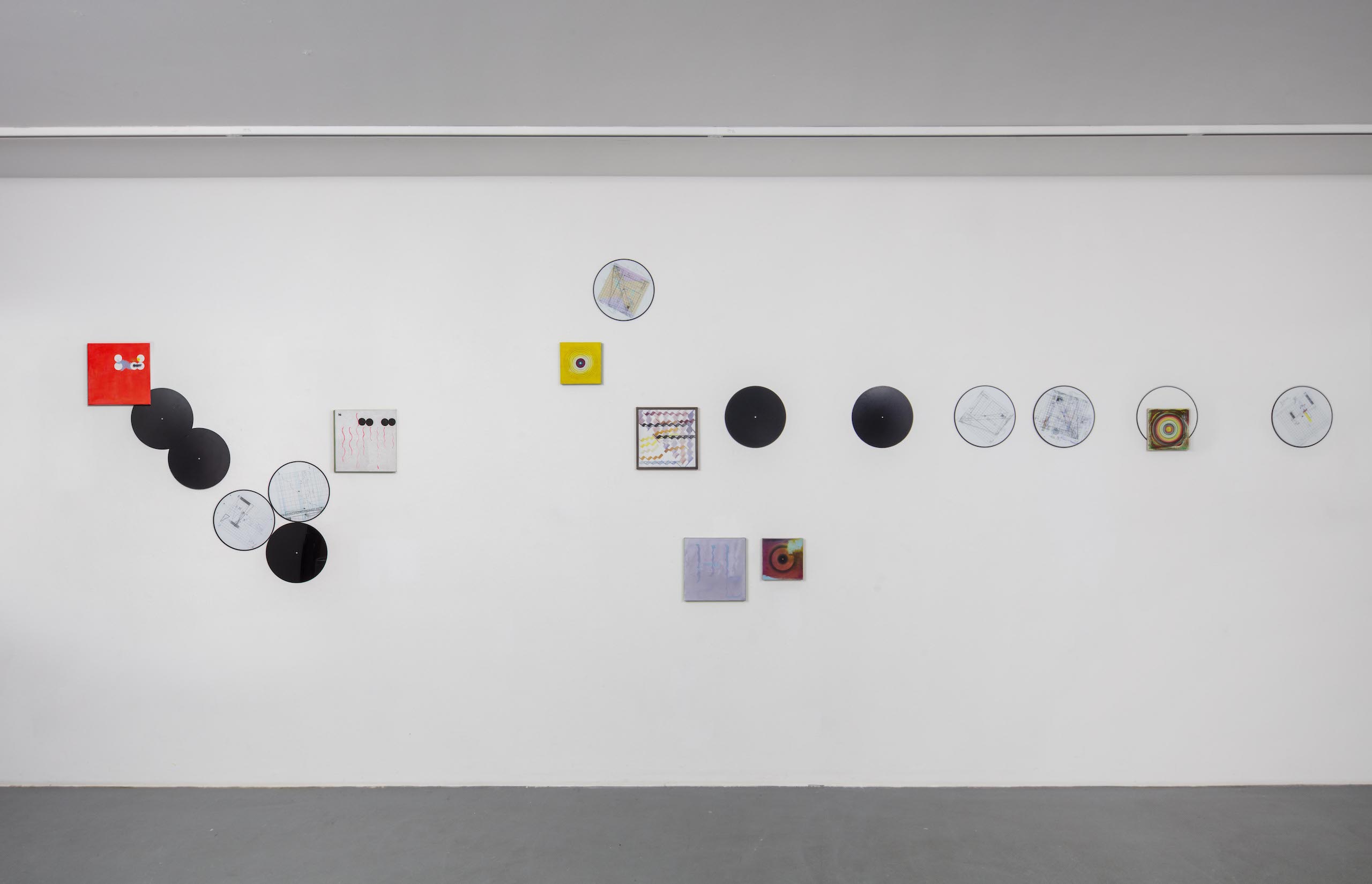
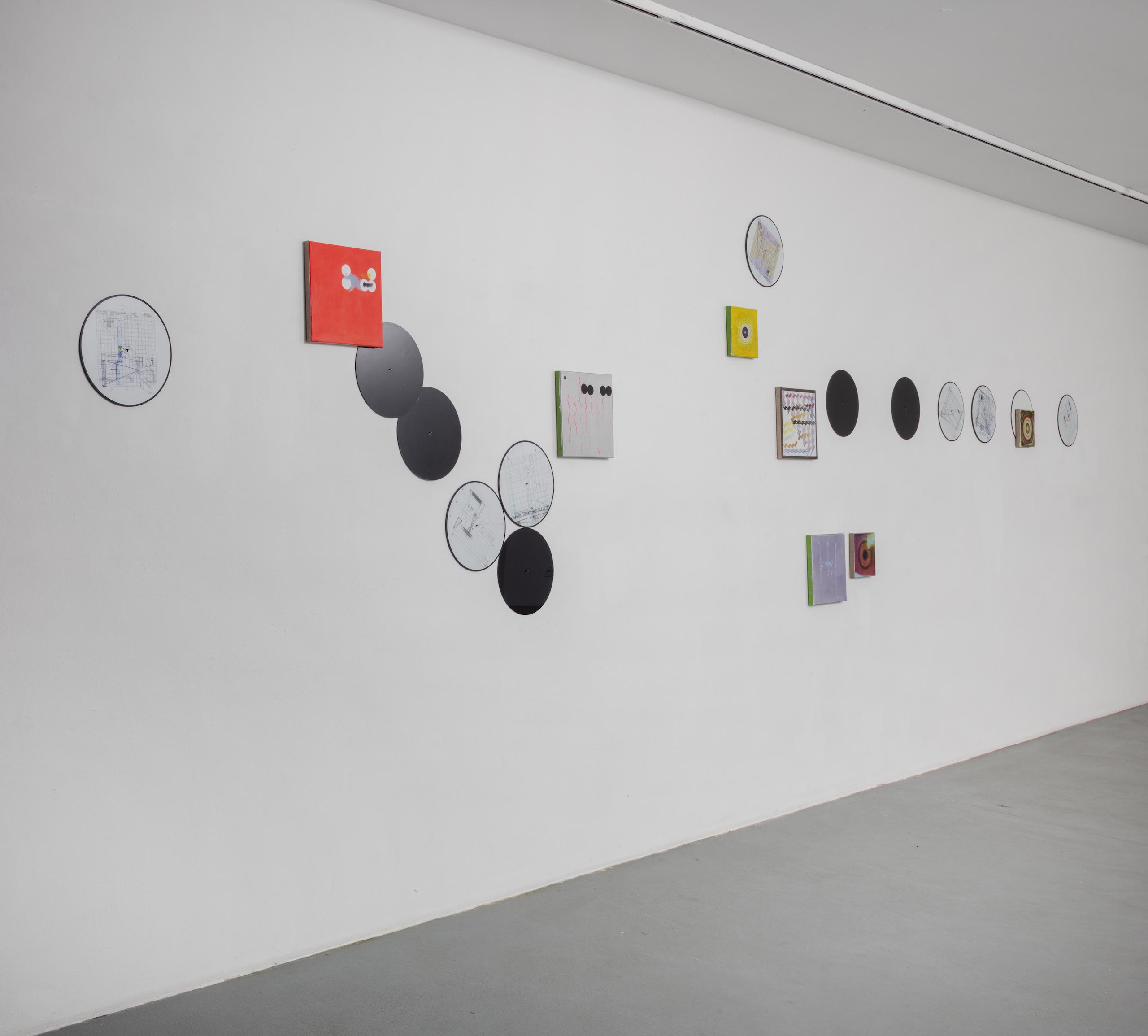
    Bild-Seite (Siebdruck auf Vinyl) Konzept:
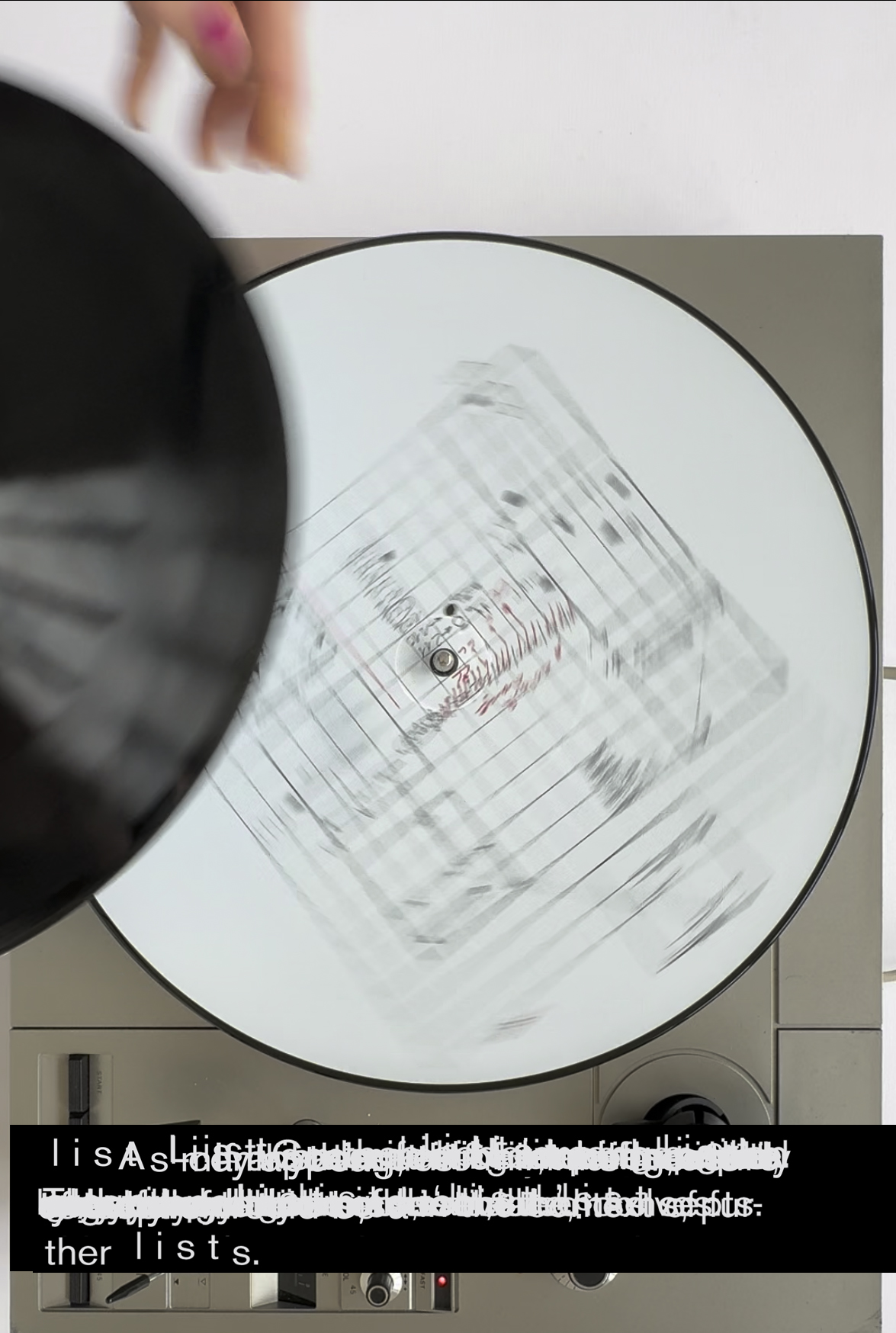
    Silva Reichwein benutzt eine bestehende Zeichnung, eine sog. Partitur, die Anleitung für die Entstehung ihrer kleinformatigen Bilderserie ist, den LocalsNonLocalities. Silva Reichweins LocalsNonLocalities-Notation erhält nicht nur durch die Übertragung via Siebdruckverfahren auf die LP einen Mittelpunkt, der zu einer optischen Leerstelle wird, sondern transformiert sich auch zu einem erweiterten, sich quasi auflösenden Medium, einem notation, getting untitled.
    Die drehende LP löst die quadratische Zeichnung auf. Deren räumliche Stabilität weicht einer durch die drehende LP initiierten Verwischung, die zu einer neuen Qualität von (Bild)Raum –
    zu einer Qualität des „Titellosen“ („untitled“) wird.

    Rotation, Ebene

    Audio-Seite: Klangarbeit auf Vinyl, Konzept:
    Martin Lorenz‘ Komposition Rotation, Ebene leitet sämtliche harmonische und rhythmische Strukturen aus dem Zahlenverhältnis der gängigen Umlaufgeschwindigkeiten von Schallplatten, 33 1/3 und 45 Umdrehungen pro Minute ab. Als Klangmaterial werden Sinustöne verwendet, Schwingungen ohne Obertöne. Diese Archetypen der elektronischen Musik erlauben es in ihrer Absolutheit, die Musik sehr abstrakt zu denken, ohne Klangfarbe, nur mit Tonhöhe.
    Durch die Addition verschiedener Sinusschwingungen bzw. Tonhöhen, die immer im Verhältnis 33 1/3 zu 45 stehen, wird unabhängig von der Abspielgeschwindigkeit der LP das akustische Resultat identisch bleiben. Lorenz leitet durch die Technik des Plattenspielers ein numerisches System ab, das die Komposition direkt beeinflusst und den entstehenden Hörraum von der Zeit entkoppelt. Er wird zu einer kompositorischen Vision eines Moments von Ewigkeit.

    Unraveling the List

    Covertext, Konzept:
    In den vergangenen fünf Jahren konzentrierte sich die akademische Forschung von Karl-Stéphan Bouthillette auf die Erforschung der Bedeutung der metaphysischen Listenerstellung als bestimmendes Merkmal der „spirituellen Übungen“ in den wissensorientierten Praktiken des Yoga in Südasien. Da ich der Meinung bin, dass diese taxonomischen Übungen auch heute noch von Bedeutung sind, insbesondere angesichts der extrem polarisierten und brisanten Meinungswelt, in der wir uns wieder befinden, reflektiert meine Forschung die Praxis der Taxonomie im Allgemeinen als eine universelle Gewohnheit, die das Studium der Human- und Naturwissenschaften bestimmt, mit besonderem Augenmerk auf religiöser Literatur, Philosophie und Psychologie, und zeigt, wie wichtig Kategorisierung und Taxonomie für unser tägliches Leben sind. Diese Forschung bot den Hintergrund für die Überlegungen, die ich in dem LP-Umschlagtext auf ästhetischere Weise formuliert habe. Dieser Text lädt das Publikum dazu ein, die Rolle von Listen und Taxonomie für die eigene Wahrnehmung der Realität zu überdenken. Für jeden, der sich fragt: „Was weiß ich?“, ist der bequemste und intuitivste Weg, diese Frage mit einer Liste zu beantworten. Aber gibt es einen Haken? Könnte sie eine Falle sein? Die Literatur der gnostischen Yogas legt nahe, dass wir in einer repräsentativen Dimension des Bewusstseins gefangen sind. Man kann sich diese große Illusion als eine fehlerhafte Taxonomie vorstellen, die unsere Beziehung zur Welt bestimmt, indem sie uns in einem fortwährenden Zustand der Knechtschaft gegenüber einer bestimmten Ordnung der Dinge hält, die trügerischerweise immanent zu sein scheint, natürlich und unmittelbar real zu sein scheint. Mit anderen Worten: Die Welt, die wir kennen und mit der wir interagieren, ist nichts als eine Liste.

    NOR – Luc Döbereiner und Martin Lorenz

    Für NOR steht weniger virtuoses Musizieren im Vordergrund als die Kopplung und Verschränkung von akustischen, instrumentalen, elektronischen und algorithmischen Prozessen, die gemeinsam navigieren. Das Verhältnis zwischen Musikern und Instrumenten, sowie die Formen des Zusammenspiels und die Art und Weise, wie Technologie diese Formen verändert und ermöglicht stehen dabei im Mittelpunkt. Performance bedeutet hier also wesentlich gemeinsames Wahrnehmen und Entscheiden, wobei Technologie und die Instrumente auch zu Handelnden werden indem sie Impulse setzen.

    Eingeladen von Susanne Prinz.

  • Paul McDevitt & Tommy Støckel
    UNWEARABLE

    |

    Paul McDevitt & Tommy Støckel UNWEARABLE

    Eröffnung|Opening: 23.2.23, 18-21h, mit|with Sodomland

    Zu sehen|On view: 24.2.-4.3.23

    Täglich 14-18h, außer So/Mo | daily 2-6pm, not Su/Mo

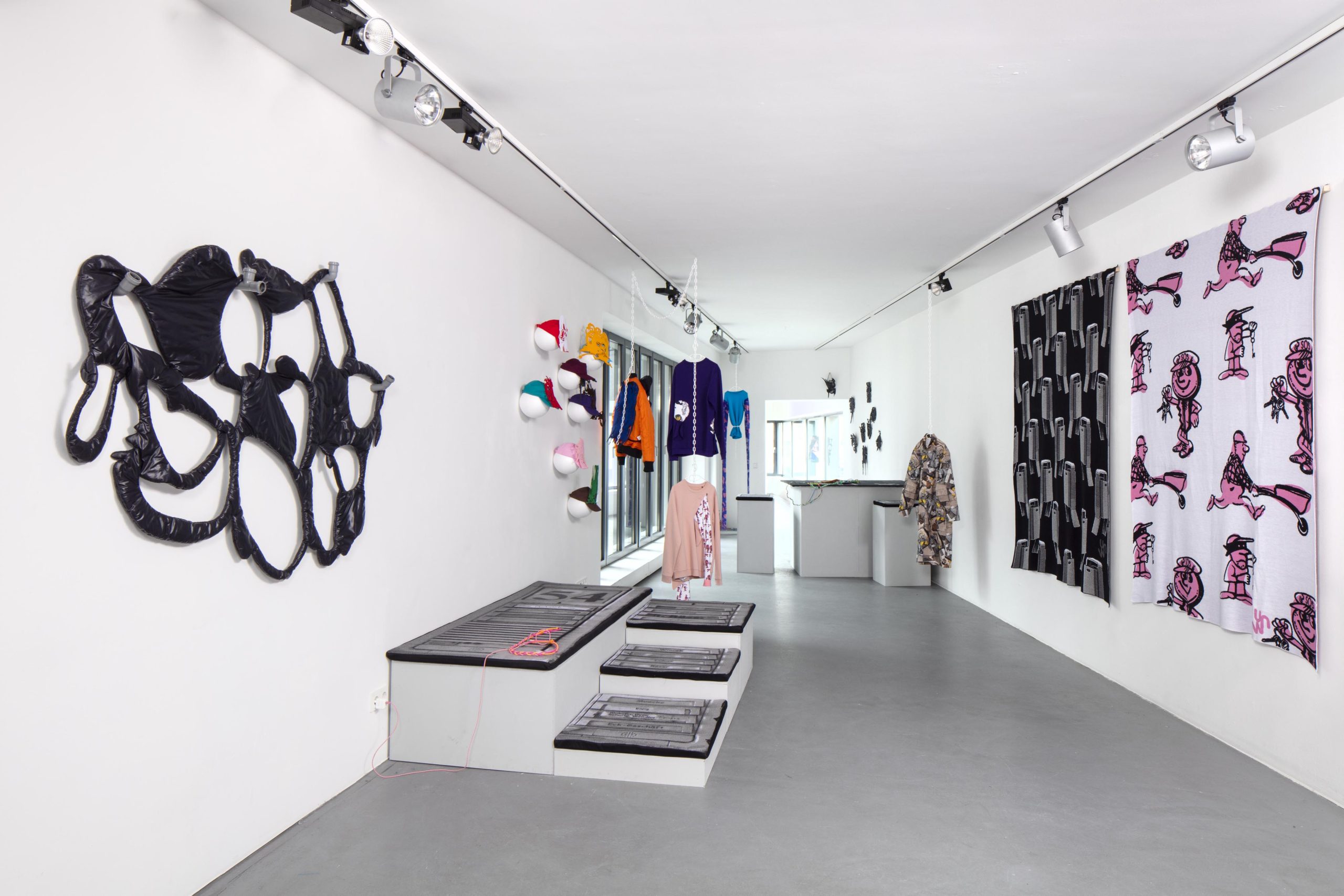
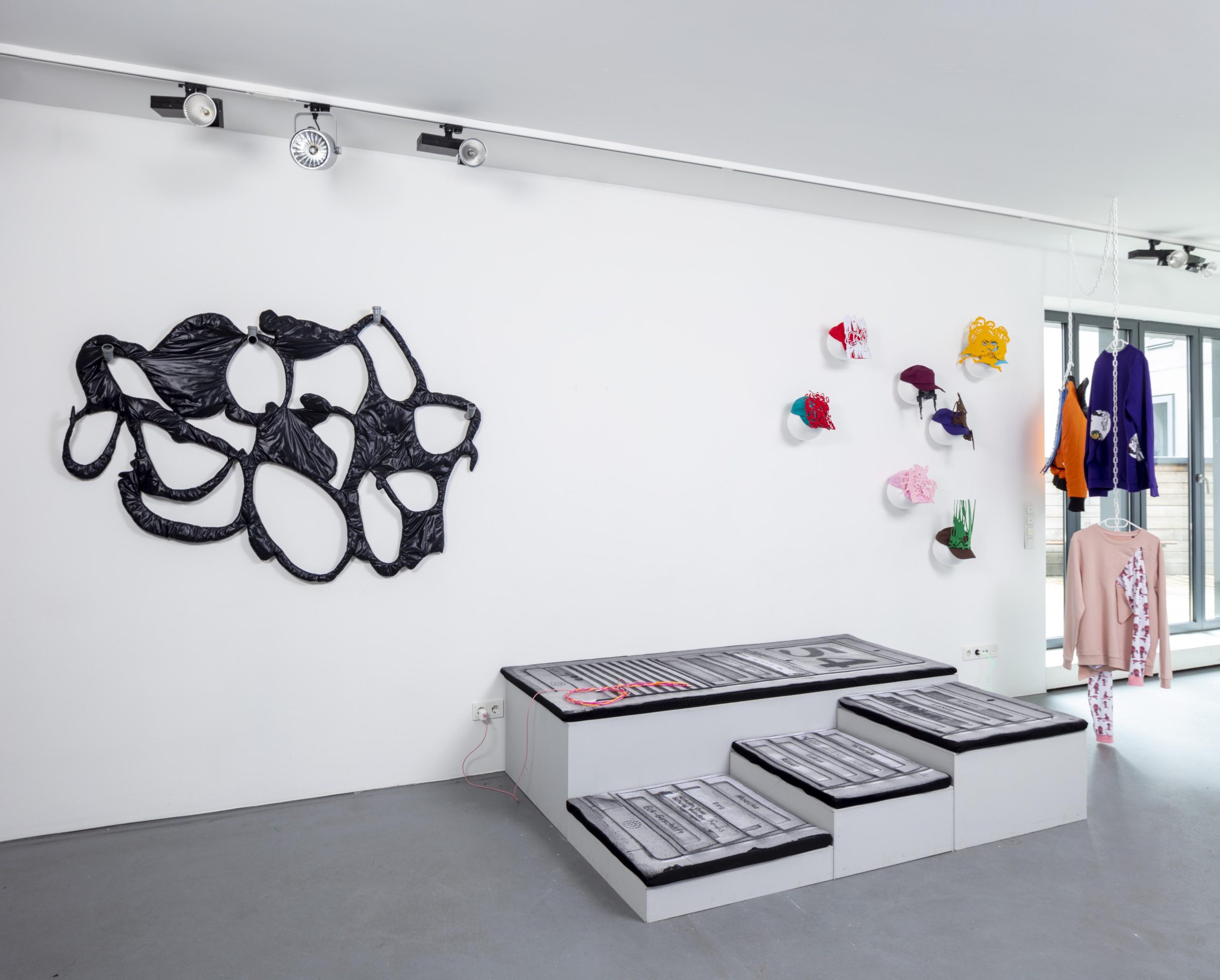
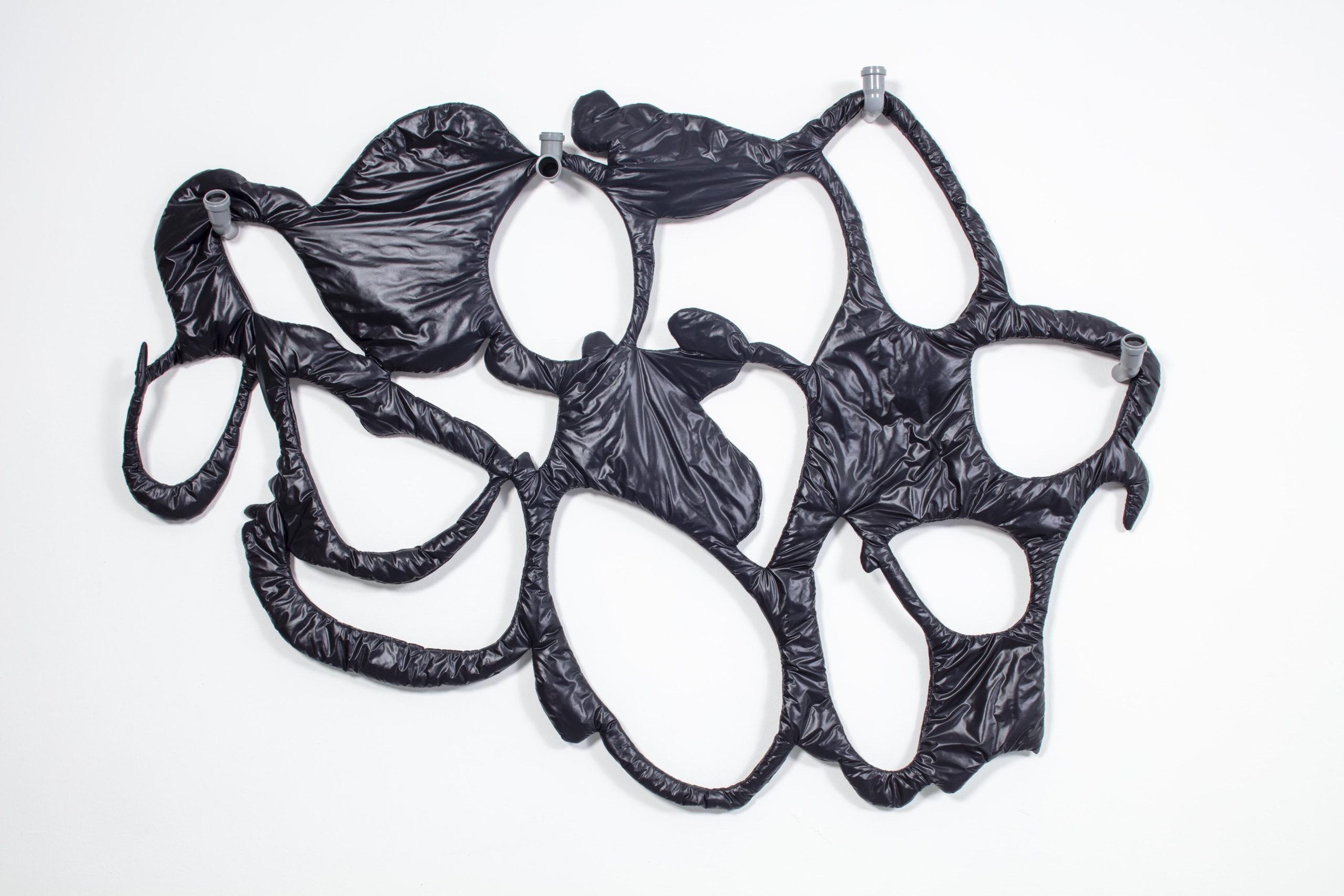
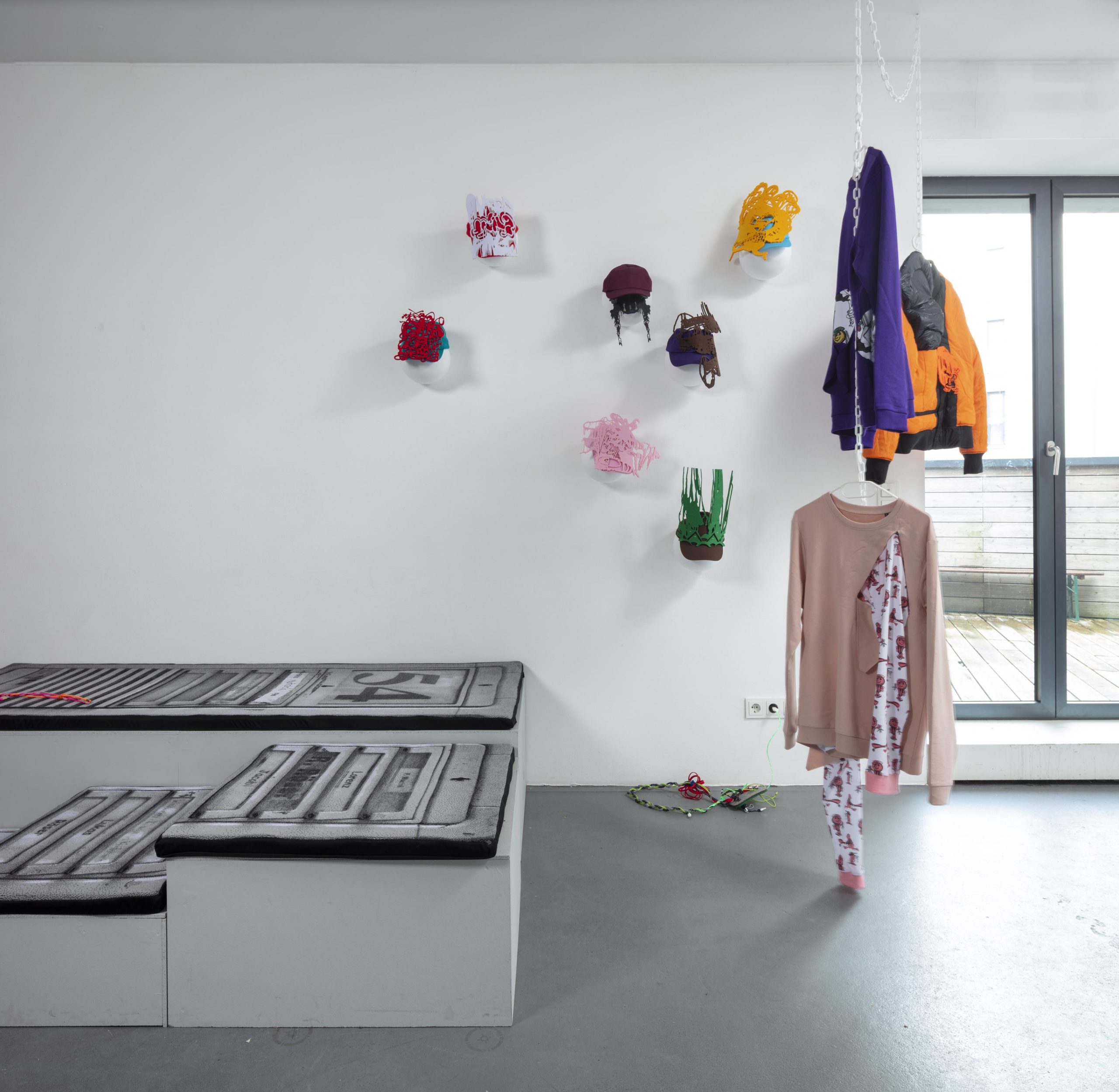
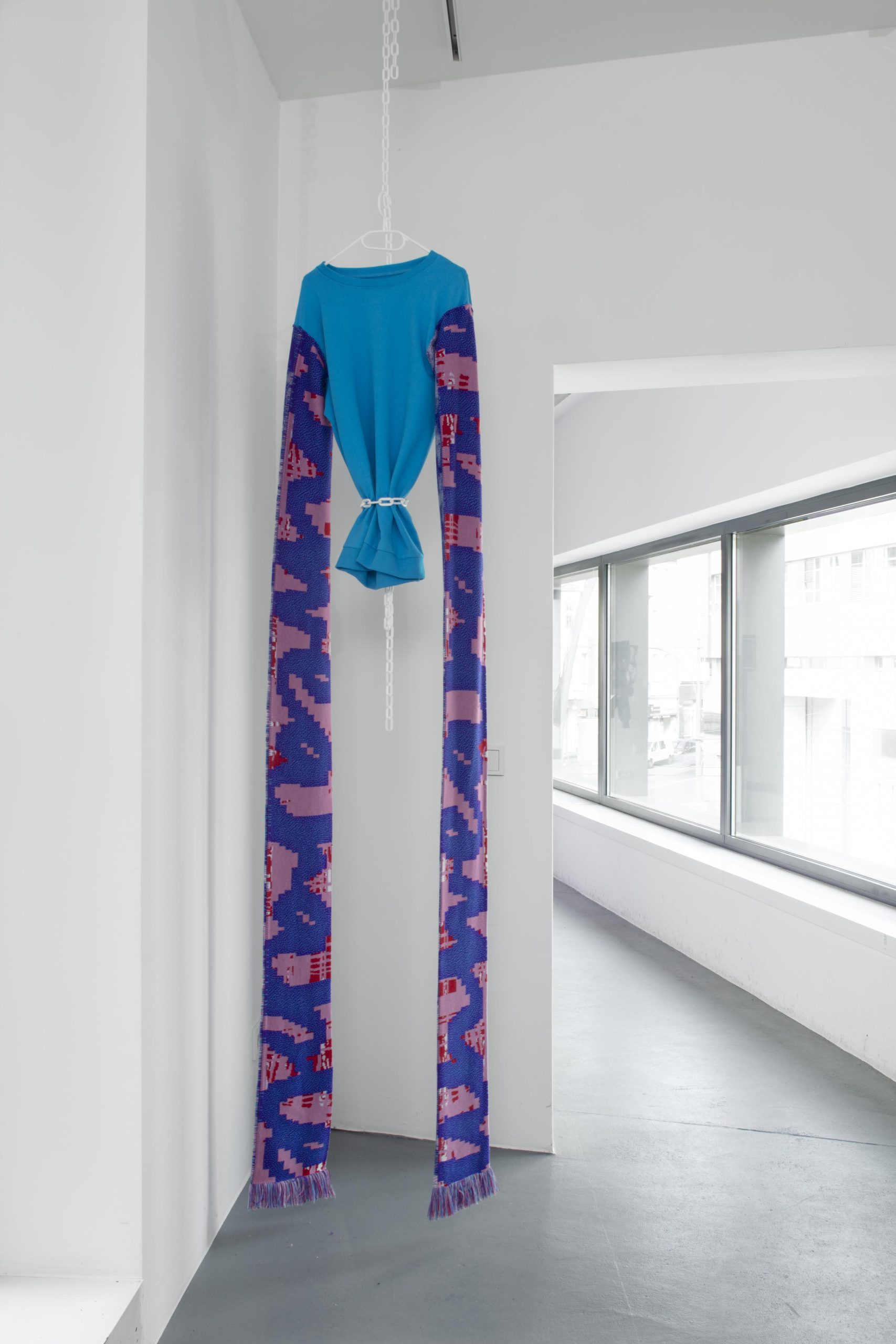
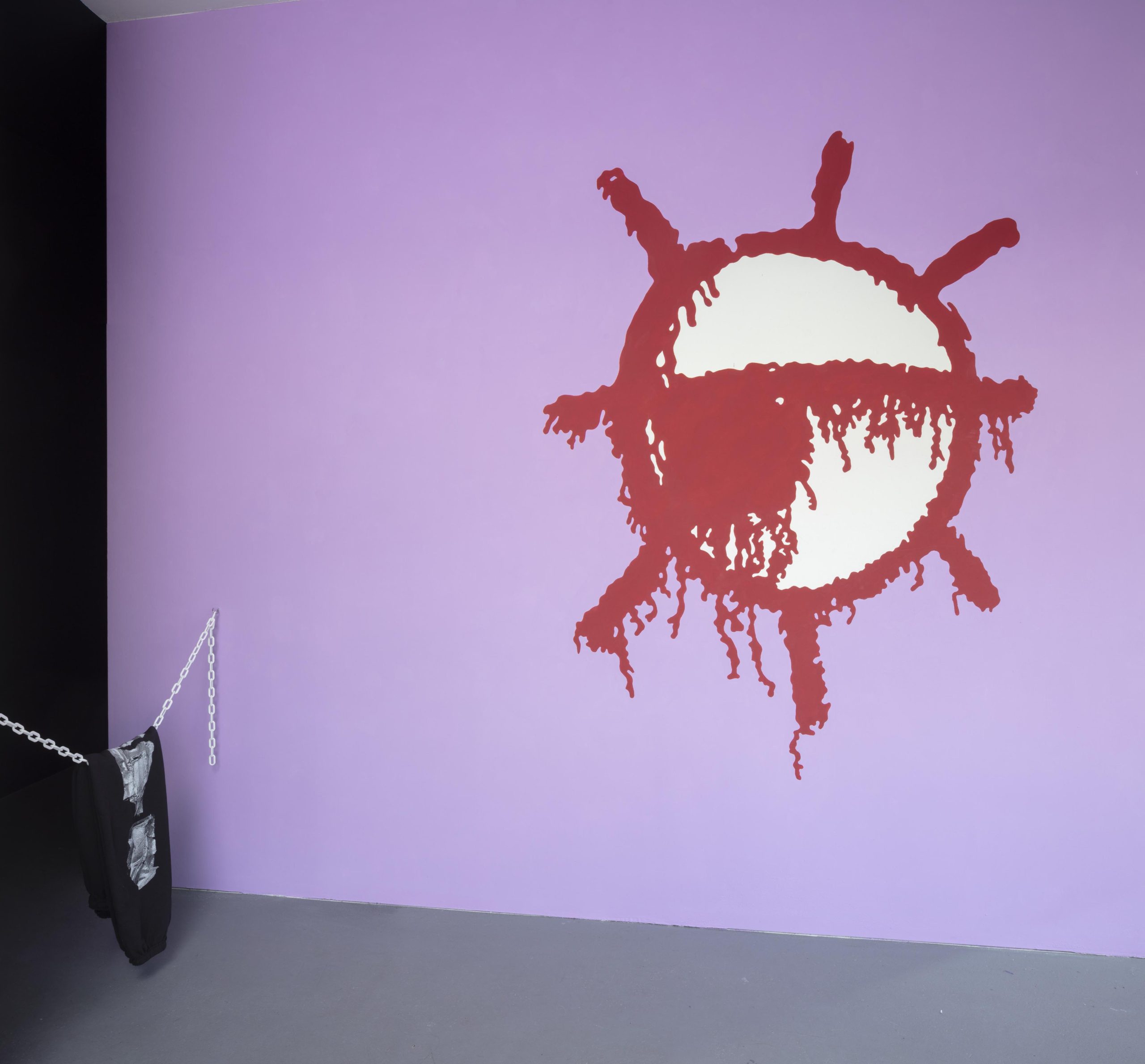
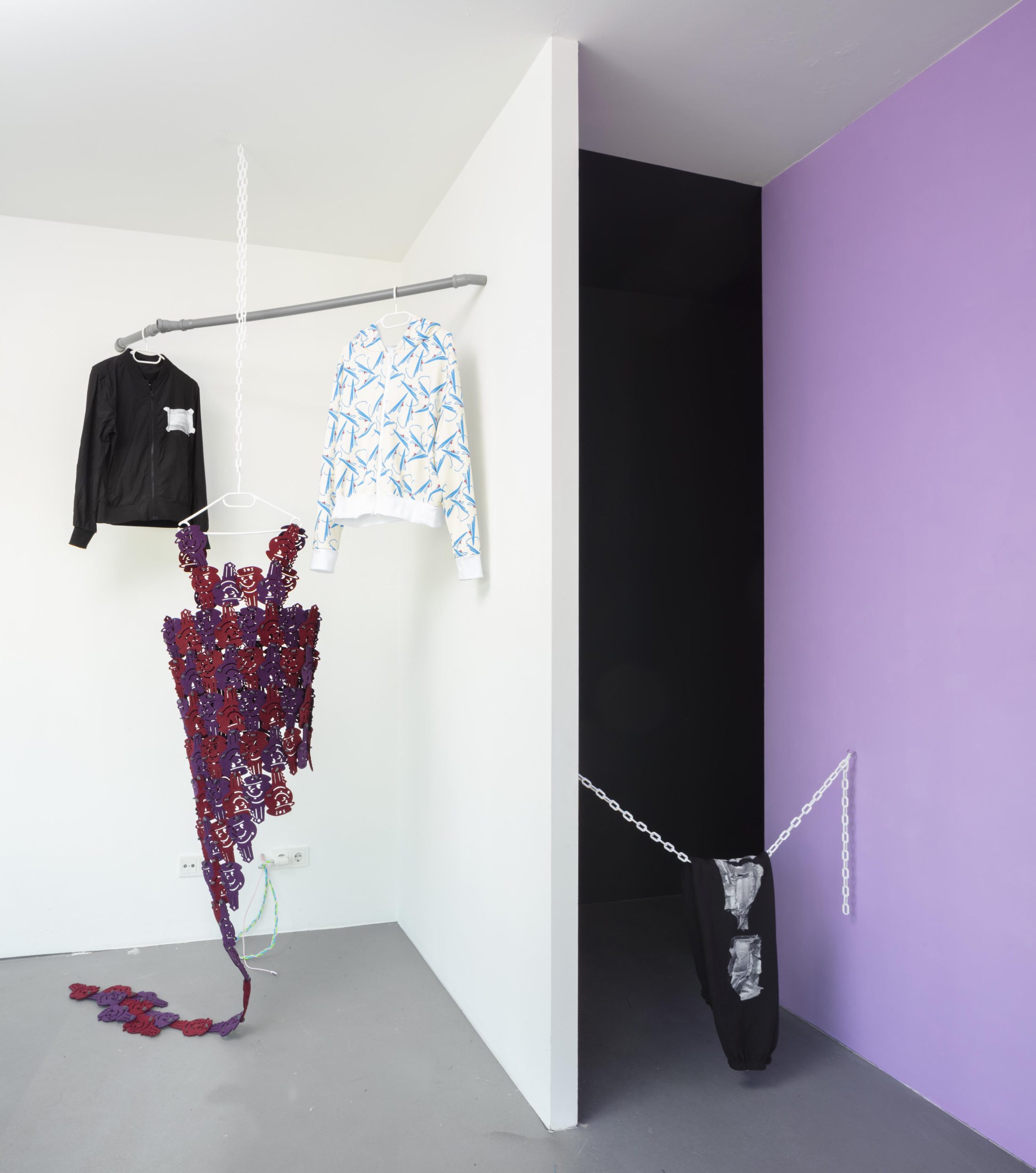
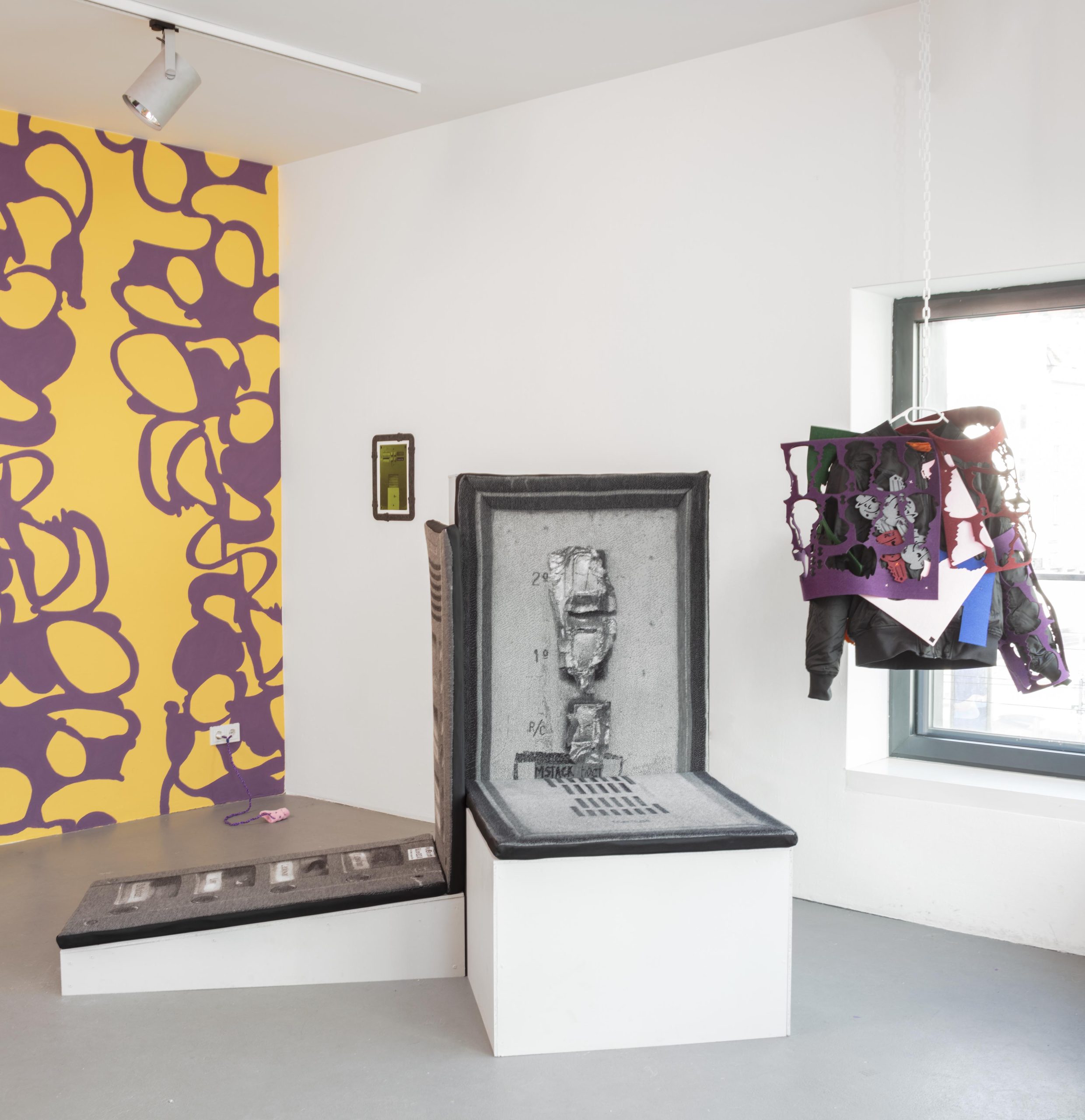
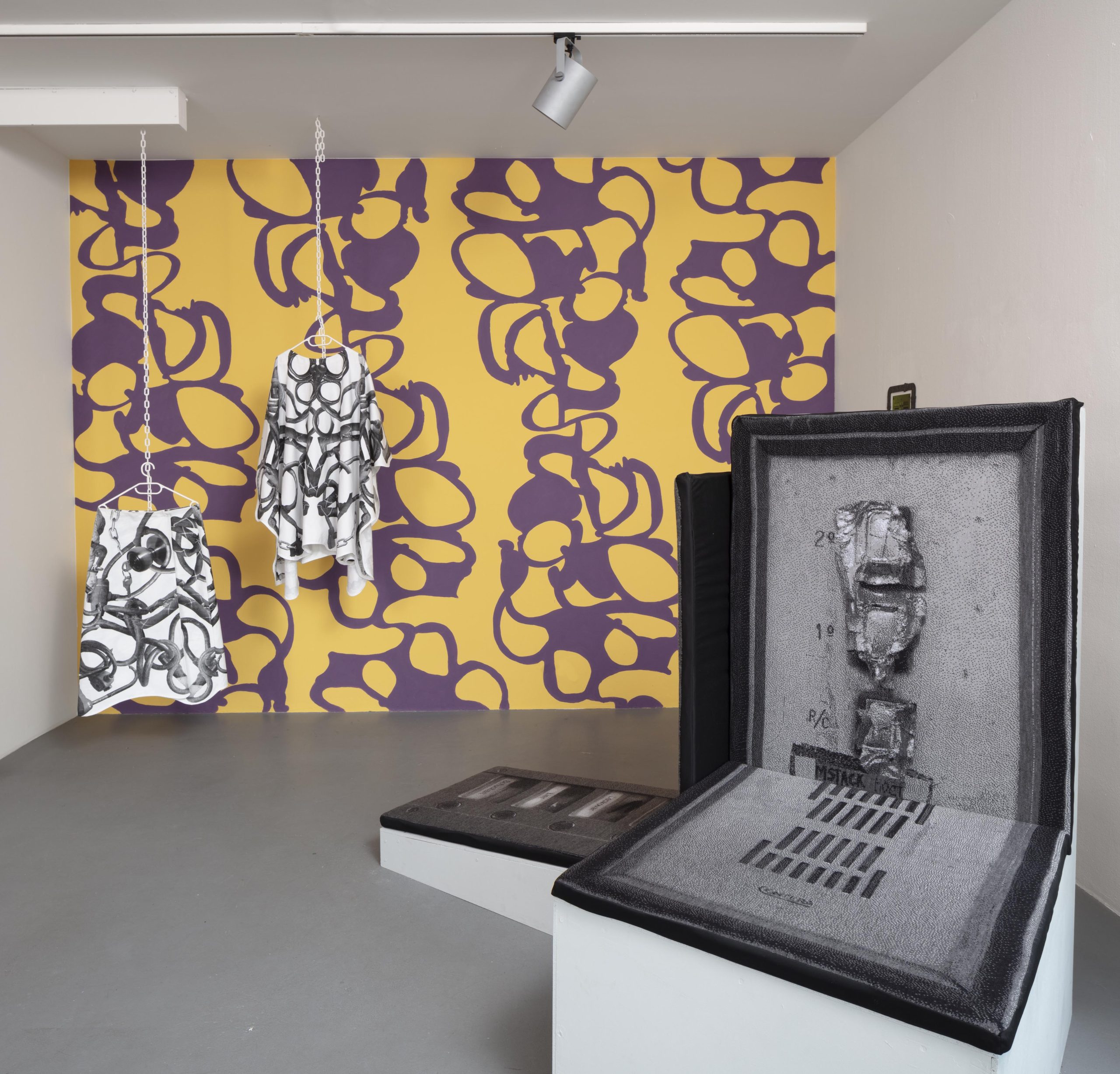
    Unwearable ist ein gemeinsames Projekt der Künstler Paul McDevitt und Tommy Støckel. In verschiedenen Formaten erweitert es McDevitts zweidimensionale grafische Bilder in eine räumliche Dimension, die durch Støckels skulpturale Sprache definiert wird.

    Schon in einem früheren Projekt verschmolzen die beiden ihre jeweiligen Praktiken zu neuen, eigenwilligen Produkten. Gezeigt wurden sie in Form eines Pop-up-Ladens, in dem alles außer „Kunstobjekten“ verkauft wurde. Angeboten wurden Dinge wie Regale, Rahmen, Stühle, Spiegel, Kissen, Taschen, Pullover und Schals – allesamt als erschwingliche und funktionale Editionen hergestellt.

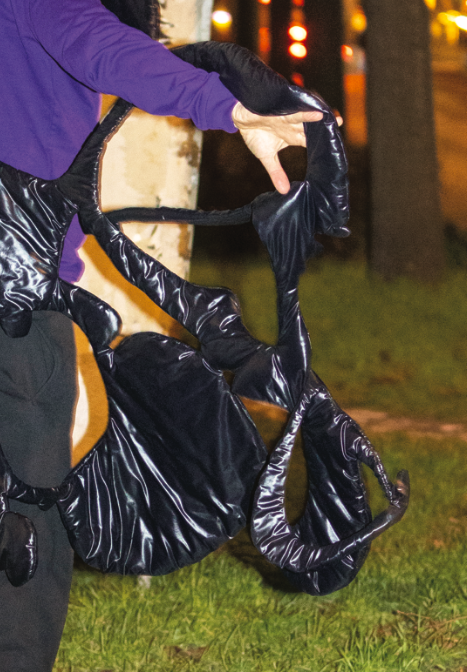
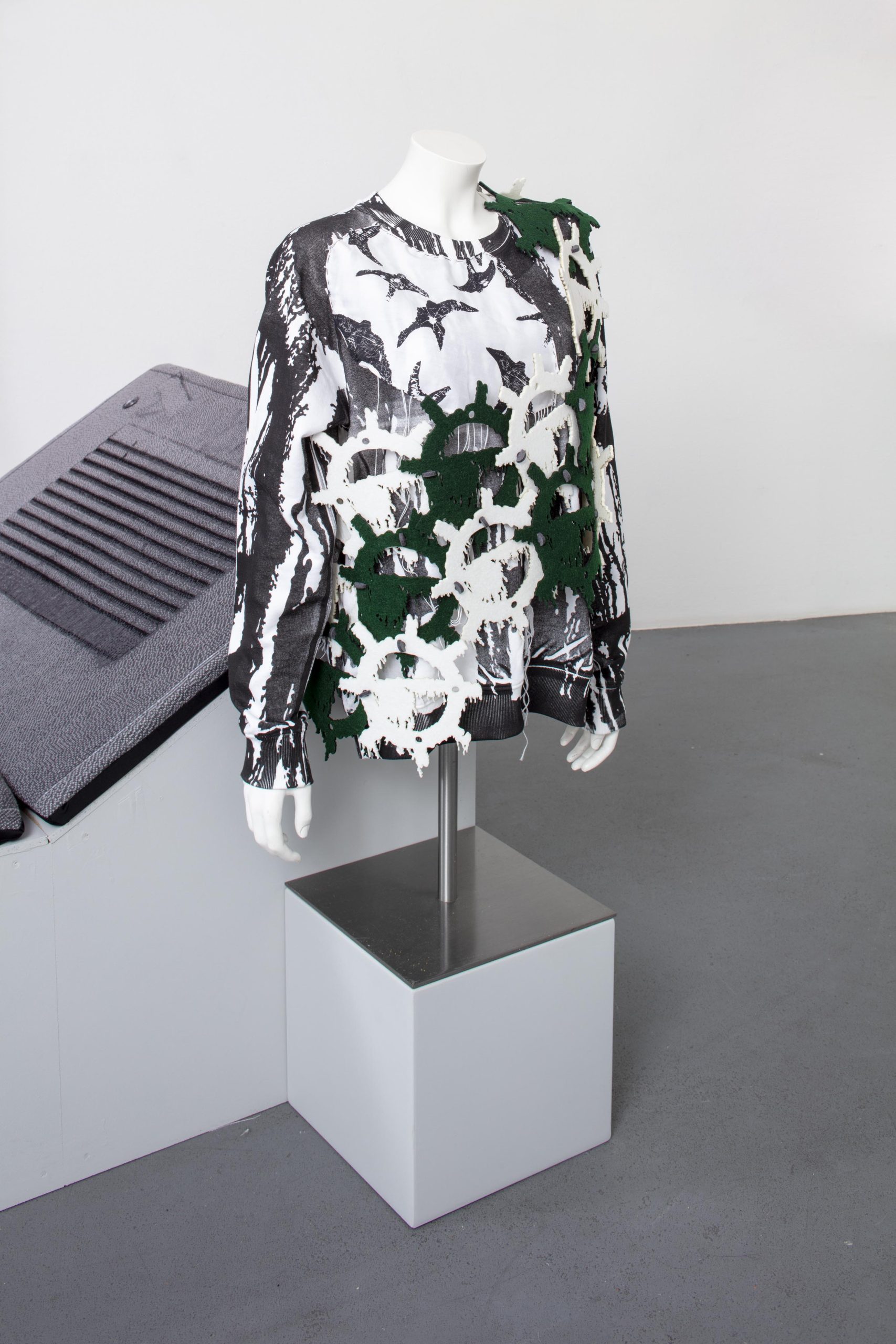
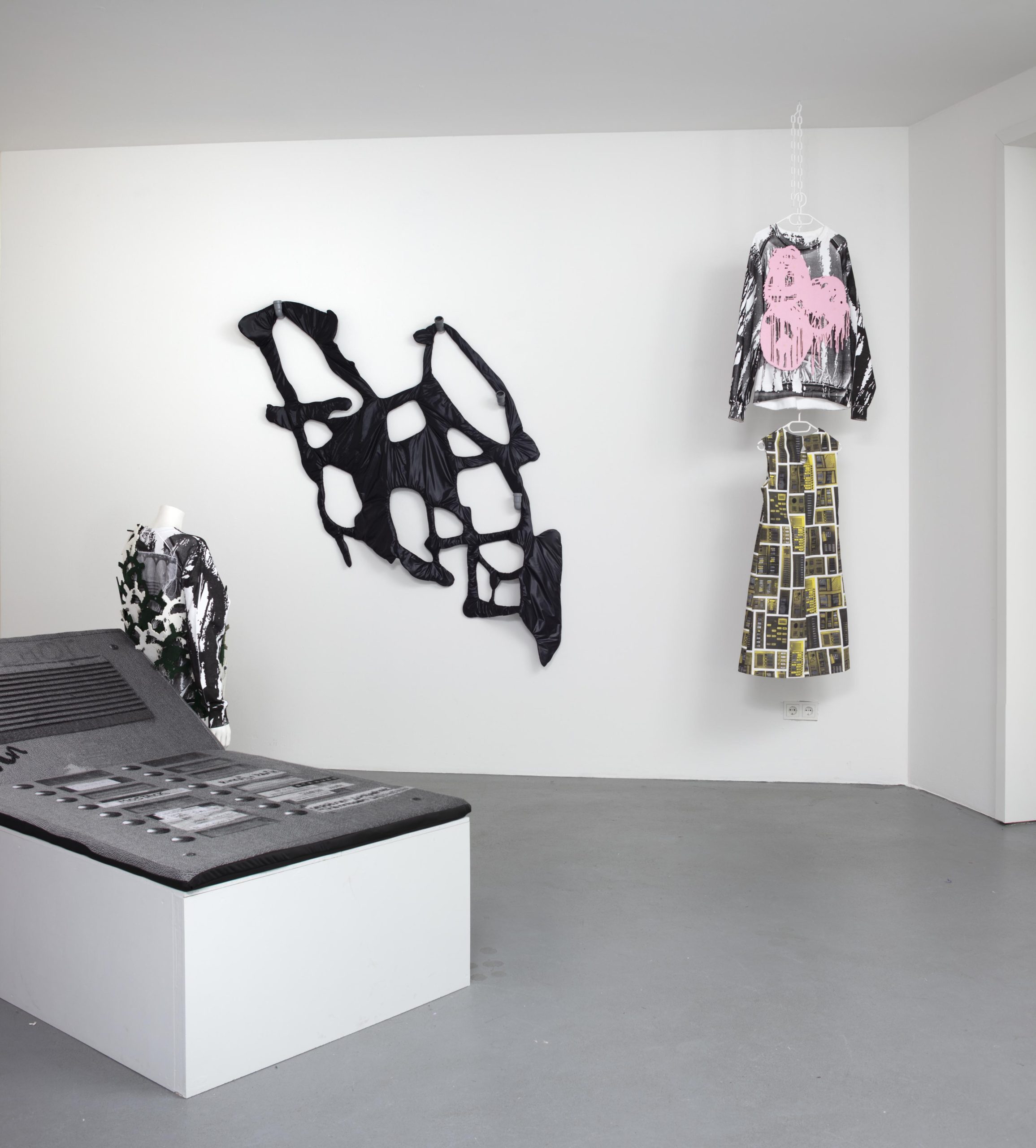
    Bei Unwearable stehen Kunstwerke als tragbare Formen experimenteller skulpturaler Kleidung und Accessoires im Mittelpunkt, die den Träger der Kunstwerke dazu einladen, sie in seinen Alltag zu integrieren. Das Format ist durch unsere allgemeine Vertrautheit mit der Sprache des Einzelhandels, speziell von Modedisplays, sofort zugänglich. Die einzelnen Objekte sind Dinge, die man gerne anfassen, anziehen und im Alltag benutzen würde. Sie haben sowohl eine Form als auch eine Funktion – auch wenn diese nicht immer offensichtlich ist.

    Anders als etablierte künstlerische Tradition, die sich mit Kleidung und Kostümen als Teil von Performances beschäftigen –  Oskar Schlemmer, Yayoi Kusama, Jana Sterbak, Franz Erhard Walther oder Hélio Oiticica sind nur einige Beispiele dafür –  fordert McDevitts & Støckels Unwearable dazu auf, die Werke ins tägliche Leben zu integrieren. Es gilt, für sich herauszufinden, wo und wann Kunst zu Mode wird und ob ein Objekt noch als Skulptur betrachtet werden kann, wenn es getragen wird

    *Paul McDevitts Praxis basiert auf einer umfassenden Erkundung der Zeichnung und einer Vielzahl von grafischen Medien. Seine Werke sind vielschichtige und spielerische Kompositionen, die auf Bildern der Hoch- und Popkultur aufbauen. So stammt ein Großteil seines Bildmaterials unmittelbar aus modifiziert, was auf der Straße zu beobachten ist. Diese Referenzen sind sehr unterschiedlich und reichen von Postern für vermisste Haustiere über Firmenlogos auf weißen Lieferwagen bis hin zu gekritzelten Graffitis.

    *Die skulpturale Arbeiten des dänischen Künstlers Tommy Støckel haben sich durch ein langes Experimentieren mit Räumen, Formen und Materialien entwickelt. Sein Interesse an der Ästhetik der digitalen Medien und Werkzeuge spiegelt sich in den Objekten wider, die die Übersetzung zwischen dem Analogen und dem Digitalen zum Thema haben. Wie McDevitt greift auch Støckel für seine Kunstwerke auf gefundenes Material zurück, sowohl auf Readymades aus der realen als auch aus der digitalen Welt.

    Die Künstler wurden von Susanne Prinz eingeladen.

    Unwearable is the joint project of artists Paul McDevitt and Tommy Støckel. In various formats, it extends McDevitt’s two-dimensional graphic images into a spatial dimension defined by Støckel’s sculptural language. In an earlier project, the two already merged their respective practices to create new, idiosyncratic products. They were shown in the form of a pop-up shop selling everything but „art objects“. On offer were things like shelves, frames, chairs, mirrors, cushions, bags, jumpers and scarves – all made as affordable and functional editions.

    Unwearable focuses on artworks as wearable forms of experimental sculptural clothing and accessories that invite the wearer of the artworks to integrate them into their everyday life. The format is immediately accessible through our general familiarity with the language of retail, specifically fashion displays. The individual objects are things that people would like to touch, wear and use in their everyday lives. They have both a form and a function – even if this is not always obvious.

    Unlike established artistic traditions that deal with clothing and costumes as part of performances – Oskar Schlemmer, Yayoi Kusama, Jana Sterbak, Franz Erhard Walther or Hélio Oiticica are just a few examples – McDevitts & Støckels Unwearable calls for the works to be integrated into everyday life. It is a matter of finding out for oneself where and when art becomes fashion and whether an object can still be considered a sculpture when it is worn.

    The artists were invited by Susanne Prinz.

    Die Ausstellung wird unterstützt von |  the exhibition is supported by:

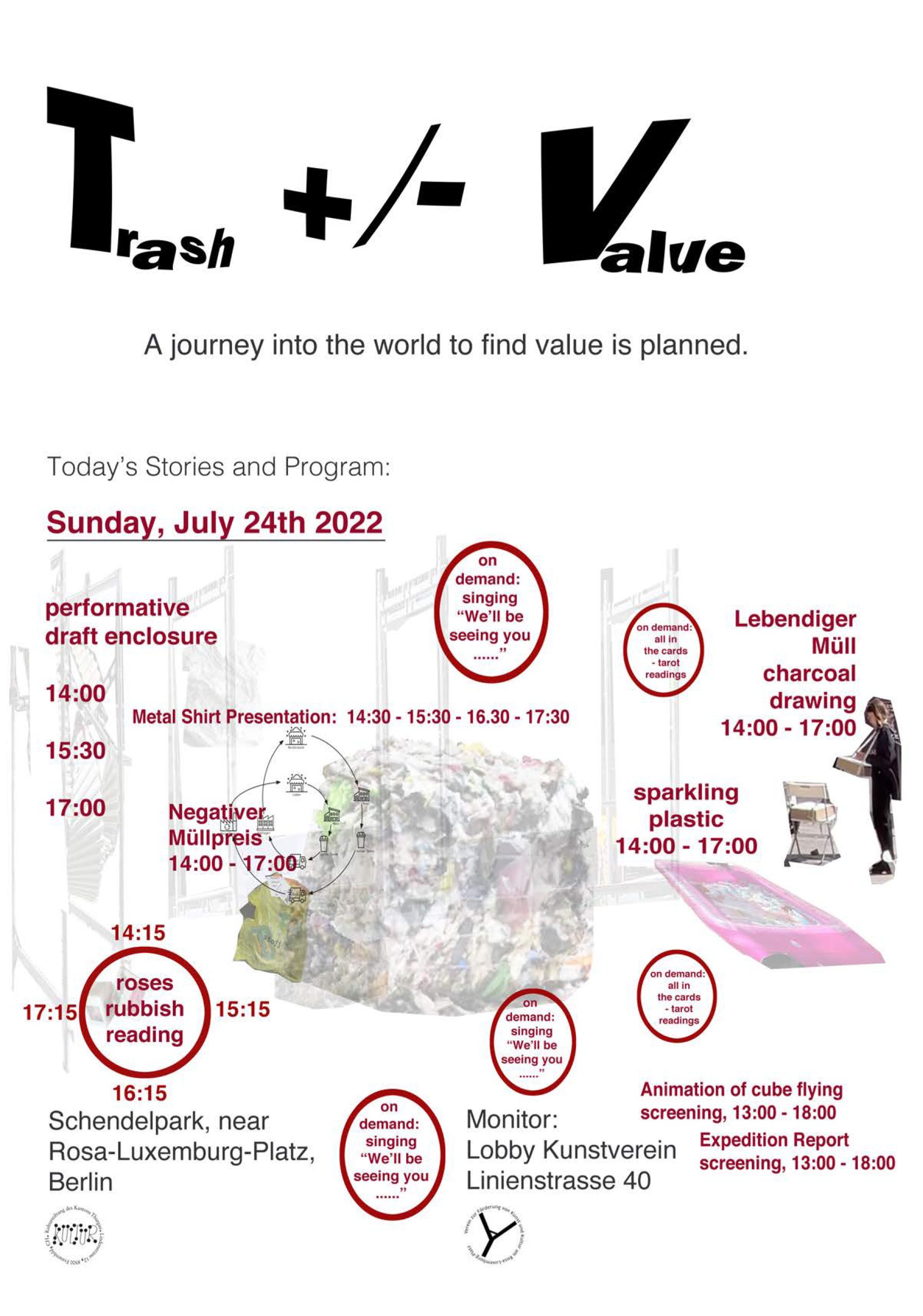
  • 16., 24. + 30.7.2022: trash +/- value

    Öffentliche Interventionen von und mit u.a. Hannes Brunner, Alena Trapp, Florian Techel, Marina Resende-Santos + Jakob Wirth, Jérémie Le Hénaff, Paul Ohnesorgen, Olga Shalashova, Abie Franklin, Ulrike Mohr, Wolfgang Knapp, Ivanna Heredia

    16., 24. und 30. Juli 2022*    (letzte Vorstellung *16-19h)

    Die Interventionen sind Teil der Ausstellung ENTWURFSANLAGEN +/- circular economies von Hannes Brunner, zu sehen 15. – 31. Juli 2022 jeweils Do-Sa 14-18h;  1.-27. August 2022 mit Terminreservierung über: besuch@einmalvorort.de

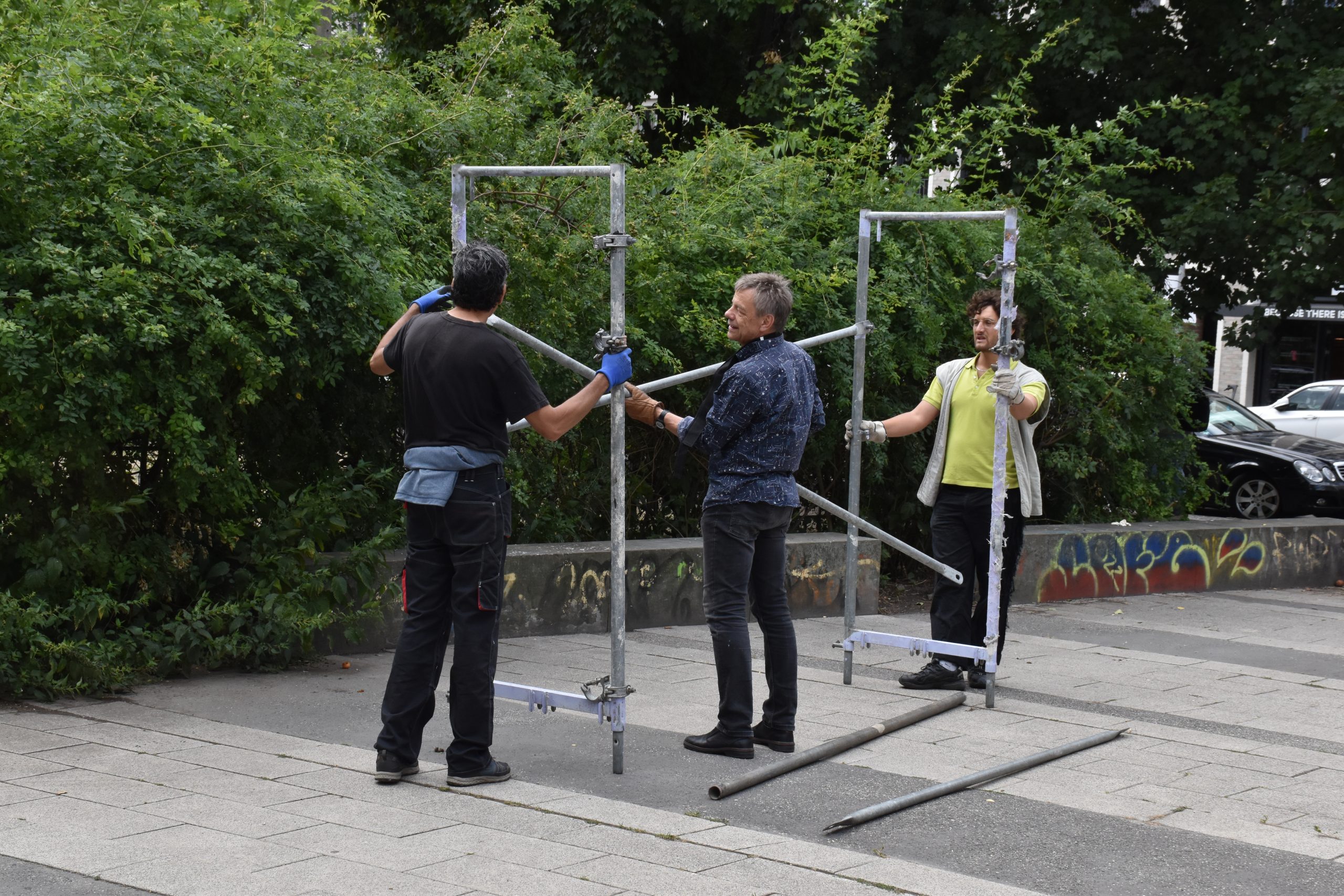
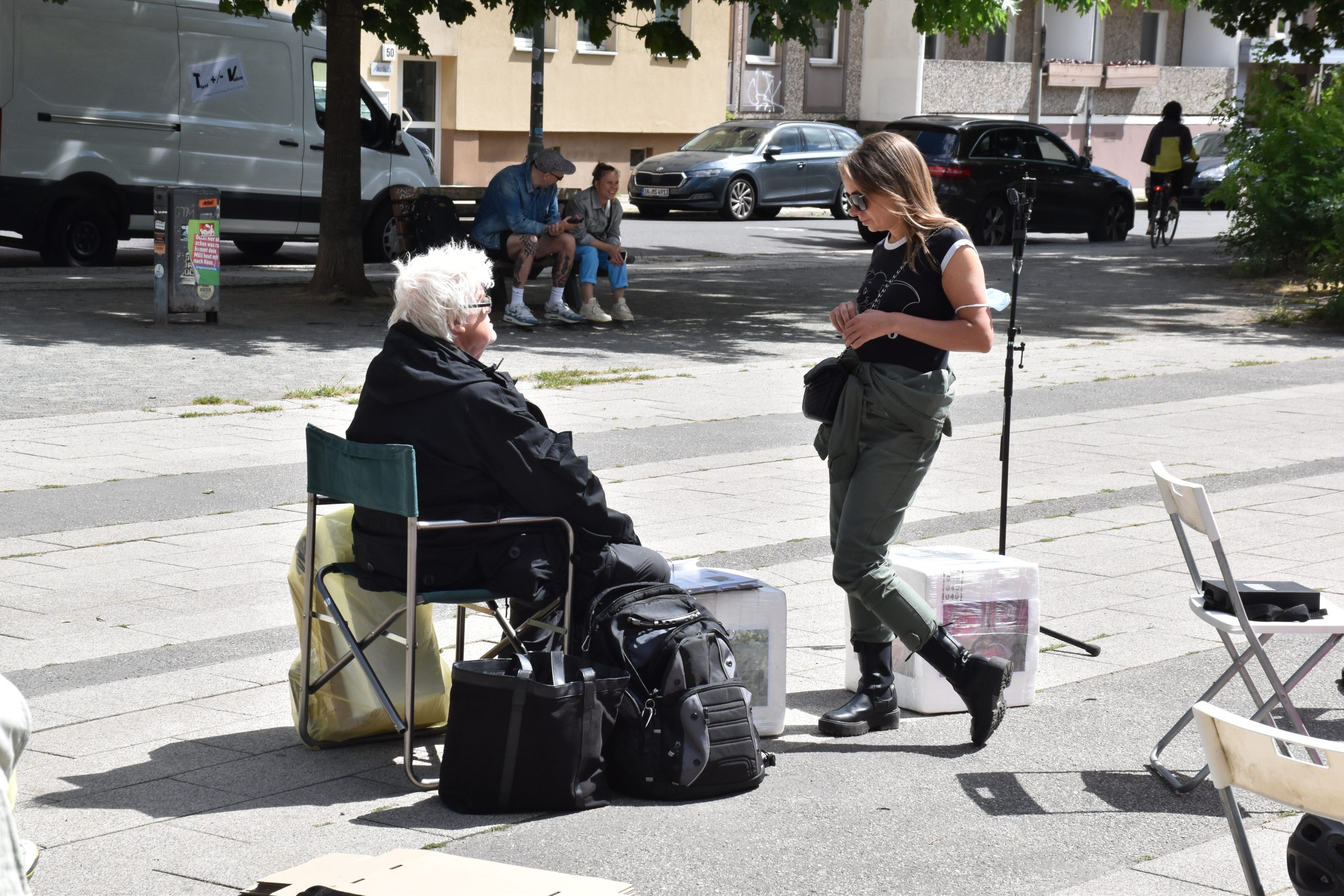
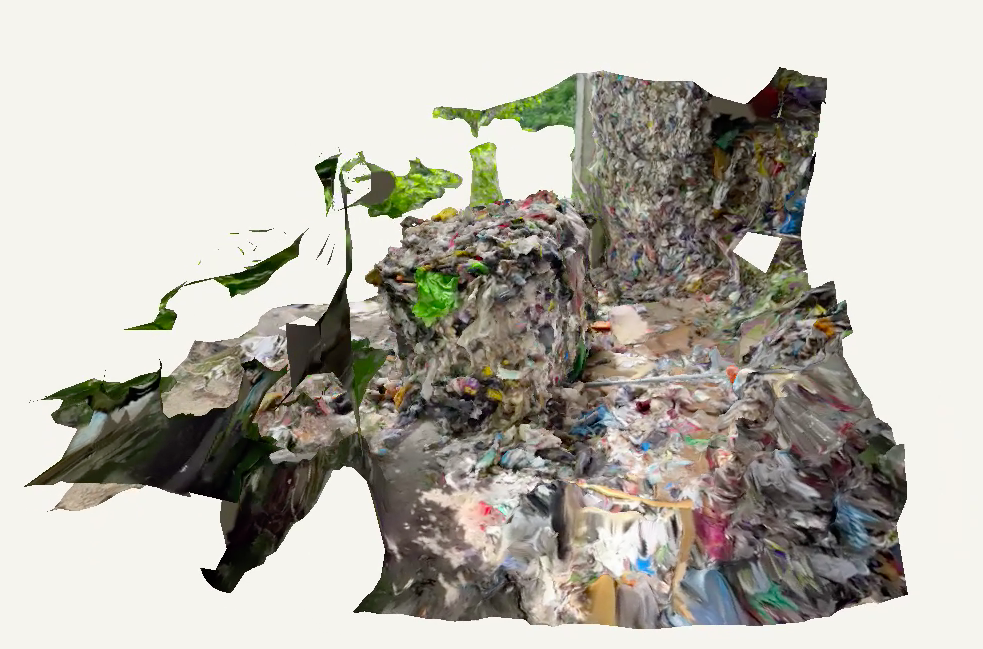
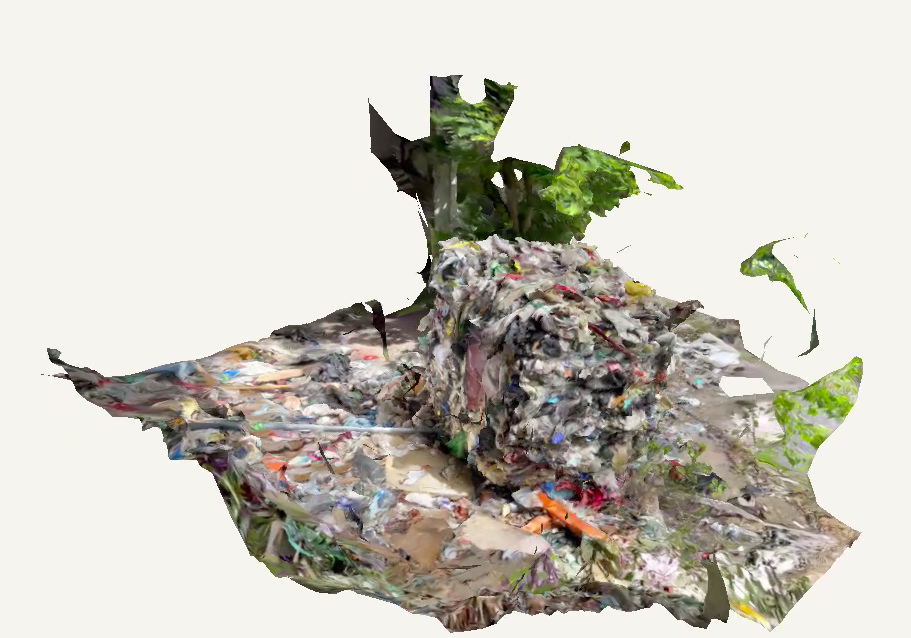
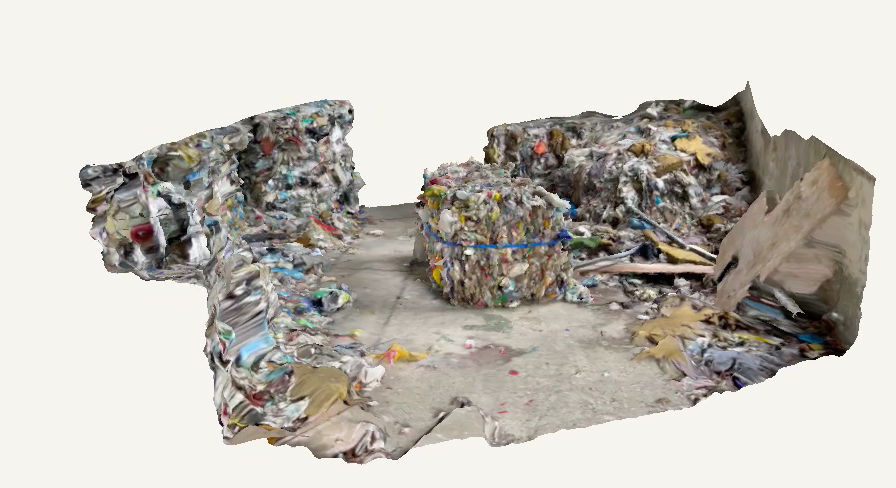
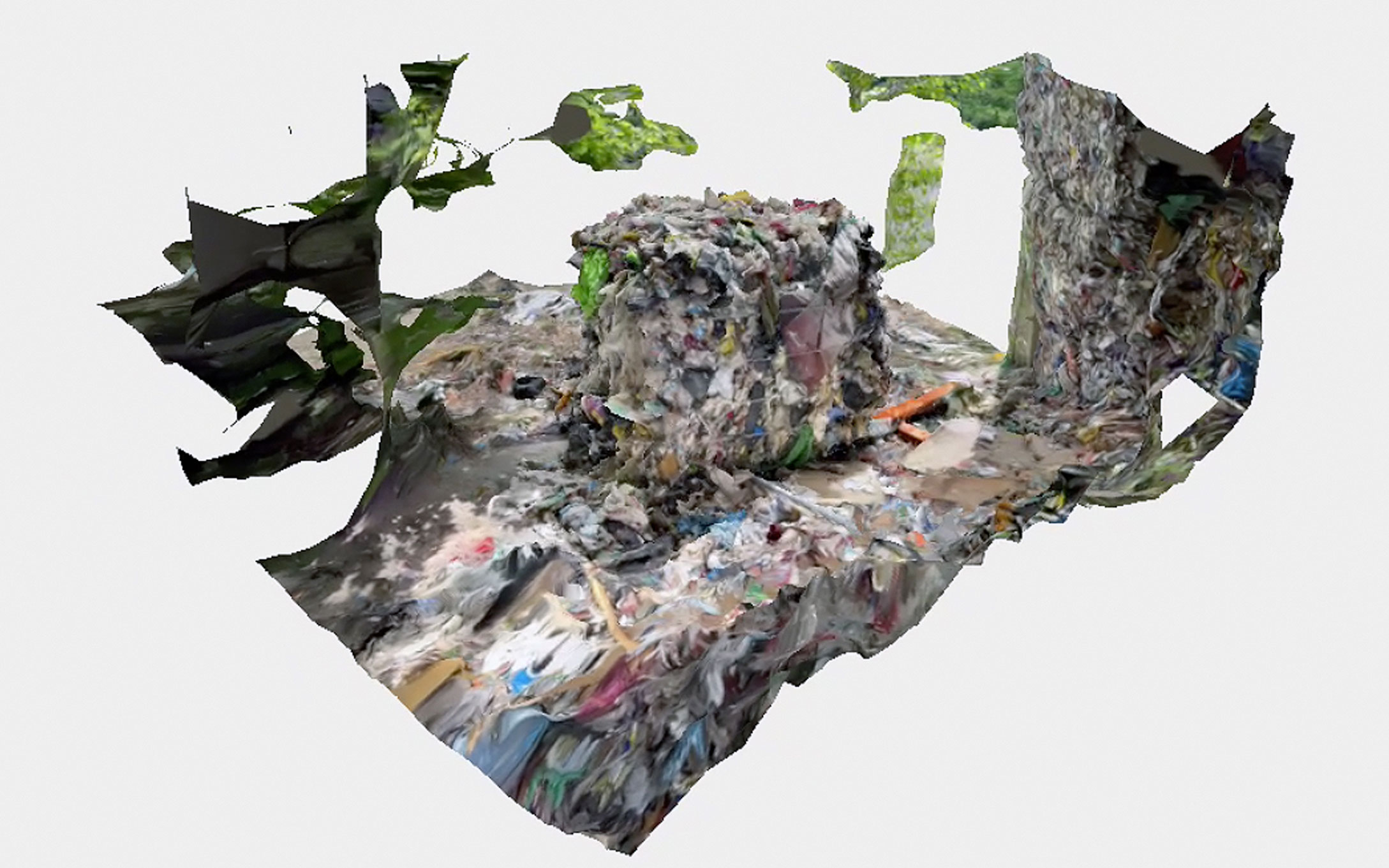
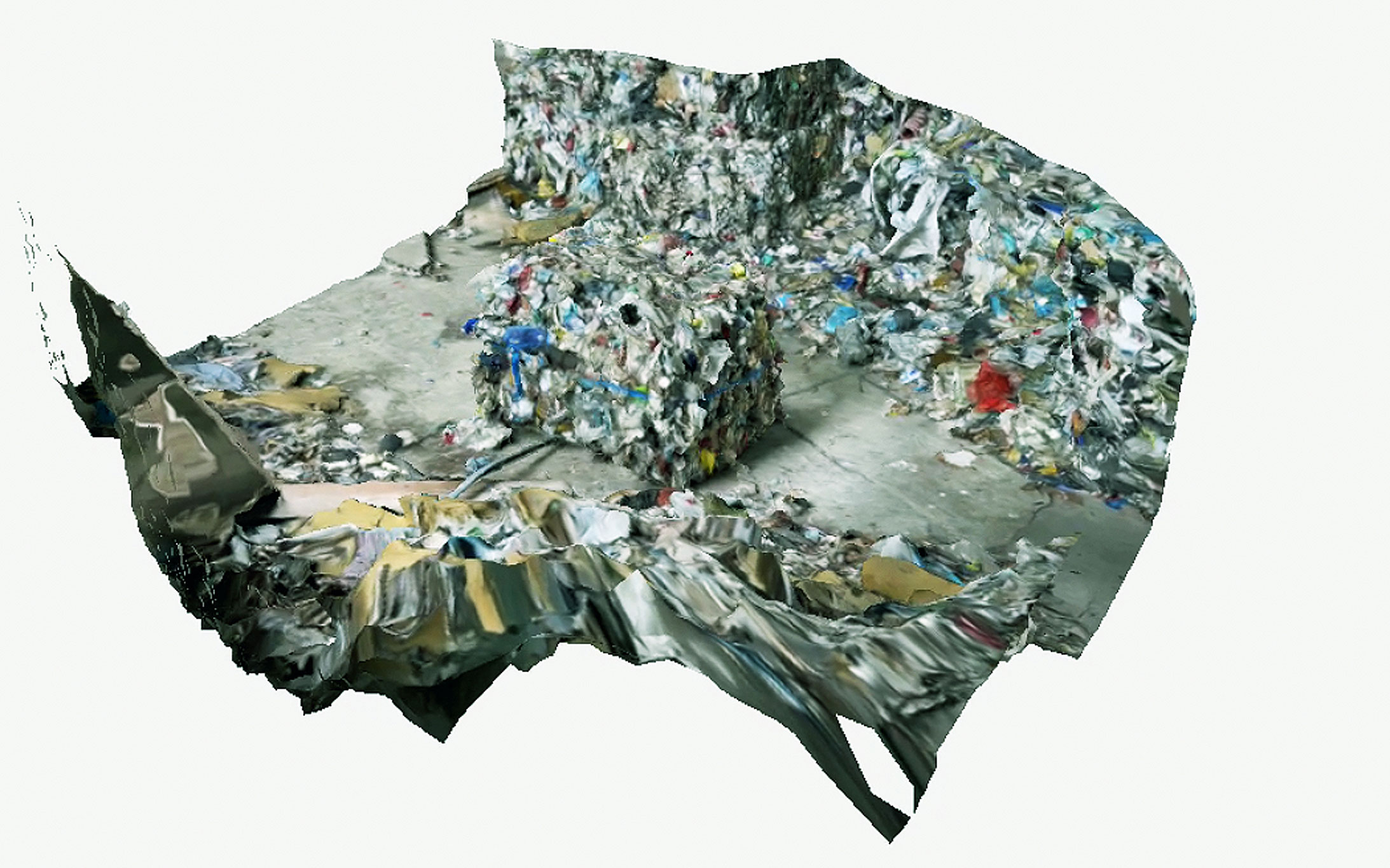
    Die Installation aus Gerüststangen ist ein Informations- und Marktstand sowie eine Bühne für wechselnde performative Aktionen im öffentlichen Raum. Sie ermöglicht es, kulturelle Produktion aus dem Moment heraus in neue Kontexte zu stellen. Sie ist Ort des symbolischen und realen Austauschs. Das bevorzugte Mittel ist das Spiel. Es geht um das Weggeworfene, scheinbar Wertlose, um den Umgang mit dem Material, um Vorschläge und Ideen für einen alternativen Umgang mit dem Zurückgelassenen.

    The small installation made of scaffolding poles is an information and market stand as well as a stage for changing performative actions in public space. It allows cultural production to be placed in new contexts out of the moment. It is a place of symbolic and real exchange. The preferred means is play. It is about the discarded, seemingly worthless, about dealing with the material, about suggestions and ideas for an alternative way of dealing with what is left behind.

    + / –

    Die gemeinsam von Marina Resende-Santos und  Jakob Wirth  konzipiere Arbeit Negativer Preis für Müll schließt den Wert(stoff)kreislauf, der normalerweise durch die Ablagerung von Kunststoff auf Deponien unterbrochen wird. Verbraucher haben bei dem Kunstprojekt die Möglichkeit, etwas Müll zurückzunehmen und die zuvor gezahlte Recyclinggebühren zurückzuerhalten, um ihn dann erneut in die Gelbe Tonne und dadurch zurück in die Müllwirtschaft zu geben.

    Das Projekt kommentiert die weitgehend intransparente Ökonomie des Wertstoffs und aller daran Beteiligten: Produzenten, Staat, Verbraucher, Transport- und Recyclingunternehmen. Es zielt speziell auf die Reihe von Wertübertragungen, die üblicherweise zu einer extremen Wertminderung führen. Ein Verlust, der letztlich nicht nur des Material, sondern auch die Chancen am menschlichen Verhältnis zur Erde etwas zu verändern, betrifft.

    The work Negative Price for Garbage, conceived jointly by Marina Resende-Santos + Jakob Wirth, closes the value (material) cycle that is normally interrupted by the dumping of plastic in landfills. In the art project, consumers have the opportunity to take back some rubbish and get back the recycling fees they previously paid, only to put it back into the yellow bin and thus back into the waste industry.

    The project comments on the largely non-transparent economy of recyclables and all those involved in it: producers, the state, consumers, transport and recycling companies. It specifically targets the series of value transfers that usually lead to extreme depreciation. A loss that ultimately affects not only the material, but also the chances of changing something about the human relationship to the earth.

    Marina Resende ist Künstlerin, Autorin und Forscherin. Ihre Arbeiten sind meist ortsspezifisch und umfassen Interventionen im öffentlichen Raum, Installationen und konzeptionelle Systeme, die sich mit Fragen der Nachhaltigkeit und Technologie, der Raumpolitik und der Wertschöpfung befassen.

    Marina Resende is an artist, writer and researcher. Her work is mostly site-specific and includes public space interventions, installations and conceptual systems that address issues of sustainability and technology, spatial politics and value creation.

    Jakob Wirth ist Künstler, Aktivist und Soziologe. Er arbeitet im öffentlichen Raum und wählt seine künstlerische Sprache prozesshaft, je nach Kontext und Thema. Sie reicht von Performancekunst, sozialer Praxis und direkten Guerilla-Interventionen, die fast ausschließlich im öffentlichen Raum realisiert werden. (www.jakobwirth.net)

    Jakob Wirth is an artist, activist and sociologist. He works in public space and chooses his artistic language processually, depending on context and theme. It ranges from performance art, social practice and direct guerrilla interventions, which are almost exclusively realised in public space. (www.jakobwirth.net)

    + / –

    Alena Trapp ist Künstlerin, Musikerin, Politikwissenschaftlerin und queer-feministische Aktivistin und lebt in Berlin und Bremen. Sie hat Kommunikations- und Medienwissenschaft und Politik studiert. Sie (re)kombiniert und programmiert verschiedene Disziplinen und Felder neu. Mit diesem Ansatz versucht sie, die Grenzen zwischen Wissenschaft, Kunst und Aktivismus zu verwischen. Sie ist vor allem im Bereich der Performance, der bildenden Kunst und der (sozialen) Bildhauerei zu Hause.

    Mit ihrer Performance für das Projekt Trash +/- Value thematisiert Alena die Rolle des Abfalls in westlichen Gesellschaften. Wie gehört der Abfall zu uns? Welche Art von Aufmerksamkeit schenken wir ihm, oder sogar wie sichtbar wollen wir ihn haben? Wie beeinflussen wir andere Wesen mit unserem Verhalten im Alltag, in der Arbeit und im Kreislauf von Produktion und Konsum? Als ein Teil des gesamten Forschungsprozesses adressiert die Performance diese Fragen im öffentlichen Raum.

    Alena Trapp is an artist, musician, political scientist and queer-feminist activist living in Berlin and Bremen. She studied communication, media science, and politics. She (re)combines and reprograms different disciplines and fields. With this approach she tries to blur the boundaries between science, art and activism. She is particularly at home in the fields of performance, visual art and (social) sculpture.

    With her performance for the project Trash +/- Value, Alena wants to explore the role of waste in Western societies. How does waste belong to us? What kind of attention do we pay to it, or even how visible do we want it to be? How do we influence other beings with our behaviour in everyday life, in work and in the cycle of production and consumption? As a part of the whole research process, the performance addresses these questions in public space.

    + / –

    Olga Shalashova ist eine in Paris lebende Künstlerin. In ihren Arbeiten verwendet sie recycelte und gebrauchte Materialien wie Haushaltsgeräte, Plastik und Textilien. Sie gibt Objekten, die zuvor als nutzlos und unansehnlich galten, eine neue Bedeutung und Interpretation, indem sie ihnen durch ihre verbesserte Ästhetik Schönheit und Poesie verleiht.

    Ein Performance-Projekt mit dem Titel Sparkling Plastic wirft Fragen über den täglichen Konsum und die Schuldgefühle auf, die er hervorruft. Es gibt Aufschluss über die Wünsche und den freien Willen des Menschen. Gibt es eine Entscheidung zwischen Konsum und Abfallzirkulation, oder ist es ein unendlicher, unaufhaltsamer Prozess?

    Olga Shalashova is an artist living in Paris. In her work, she uses recycled and used materials such as household appliances, plastic and textiles. She gives new meaning and interpretation to objects that were previously considered useless and unsightly, infusing them with beauty and poetry through their enhanced aesthetics.

    A performance project titled Sparkling Plastic raises questions about everyday consumption and the guilt it creates. It sheds light on human desires and free will. Is there a choice between consumption and waste circulation, or is it an endless, unstoppable process?

    + / –

    Abie Franklin is an Israeli artist living in Berlin. His practice centers around boundaries: between mediums, artificial and natural, body and space, material and matter. He is mainly engaged in projects that supplant the painterly conception of landscape. He studied fine art- painting at Weißensee academy of Art Berlin, where he worked as a tutor for Prof. Nader Ahriman.

    Speculative Action Cards wurde von Abie Franklin und der Kuratorin Annalena Amthor Basierend auf der formalen Struktur von Tarotkarten entwickelt. Die Karten zeigen Auszüge aus Franklins Werk, das sich mit aquatischen Hybriden befasst. Die Karten weisen Portale für spekulative Aktionen und Erzählungen auf, wobei die Durchlässigkeit zwischen Individuen und Ökosystemen im Mittelpunkt steh

    Abie Franklin ist ein in Berlin lebender israelischer Künstler. In seiner Praxis geht es um Grenzen: zwischen Medien, künstlich und natürlich, Körper und Raum, Material und Materie. Er beschäftigt sich hauptsächlich mit Projekten, die eine rein malerische Auffassung von Landschaft ablösen. Er studierte Bildende Kunst – Malerei an der Kunsthochschule Weißensee Berlin, wo er als Tutor bei Prof. Nader Ahriman arbeitete.

    Speculative Action Cards was developed by Abie Franklin and curator Annalena Amthor based on the formal structure of tarot cards. The cards feature excerpts from Franklin’s work dealing with aquatic hybrids. The cards allocate portals for speculative action and narrative, focusing on the permeability between individuals and ecosystems.

    + / –

    Als ausgebildetet Architekt beschäftigte sich Florian Techel seit seinen Studium in den 1980er Jahren intensiv mit der Integration von Computern in den Entwurf, die Planung und Durchführung von Gebäuden, seit der Jahrtausendwende speziell mit Building Information Modeling (BIM). In ca. 30 Jahren als Hochschullehrer in Deutschland und den Vereinigten Arabischen Emiraten hat er diese Paradigma über 1500 Studenten nahe gebracht. Unter anderem hat er diese Technologie zuletzt für den Bau seines Null-Energie-Hauses praktisch verwendet. Für dieses Projekt hat Florian Techel Animationen und Renderings beigesteuert.

    As a trained architect, Florian Techel has been intensively involved with the integration of computers in the design, planning and execution of buildings since his studies in the 1980s, and especially with Building Information Modelling (BIM) since the turn of the millennium. In about 30 years as a university lecturer in Germany and the United Arab Emirates, he has taught this paradigm to over 1500 students. Among other things, he most recently used this technology in practice for the construction of his zero-energy house. Florian Techel contributed animations and renderings for this project

    + / –

    Paul Ohnesorgen studiert derzeit Bildhauerei an der Kunsthochschule Weissensee in Berlin. Seine multidisziplinäre Praxis dreht sich um die Themen räumliche Gestaltung und Transformation, Wahrnehmung und soziales Verhalten sowie die Kommunikation von Ideen durch Materialien, Erfindungen und kreative Prozesse.

    Performative Draft Enclosure ist ein einaktiges Theaterstück über die Geschichte des menschlichen Designs, seine Methoden, Prozesse und Auswirkungen auf die soziale Ordnung der Gegenwart.  Intellekt, Kultur und Technologie haben die menschliche Errungenschaft in das Zeitalter des Anthropozäns gebracht, in dem die menschlichen Gestaltungs- und Ordnungssysteme eine Schwelle erreicht haben, die ihre eigene Nachhaltigkeit bedroht.

    Paul Ohnesorgen is currently studying sculpture at the Weissensee School of Art in Berlin. His multidisciplinary practice revolves around spatial design and transformation, perception and social behaviour, and the communication of ideas through materials, invention and creative processes.

    Performative Draft Enclosure is a one-act play about the history of human design, its methods, processes and impact on the social order of the present.  Intellect, culture and technology have brought human achievement into the age of the Anthropocene, where human systems of design and order have reached a threshold that threatens their own sustainability.

    + / –

    Ulrike Mohr ist eine bildende Künstlerin. Sie lebt in Berlin und arbeitet mit dem Konzept der Zeichnung, des Raums, der Zeit und der Kohle. Mohrs künstlerischer Ansatz nutzt Transformationsprozesse von Materialien, die von komplexen Forschungsergebnissen, traditionellem Wissen und Zufall beeinflusst sind. Durch die Beobachtung von Natur und Materialität schaffen die Arbeiten ihre eigene materielle Präsenz.

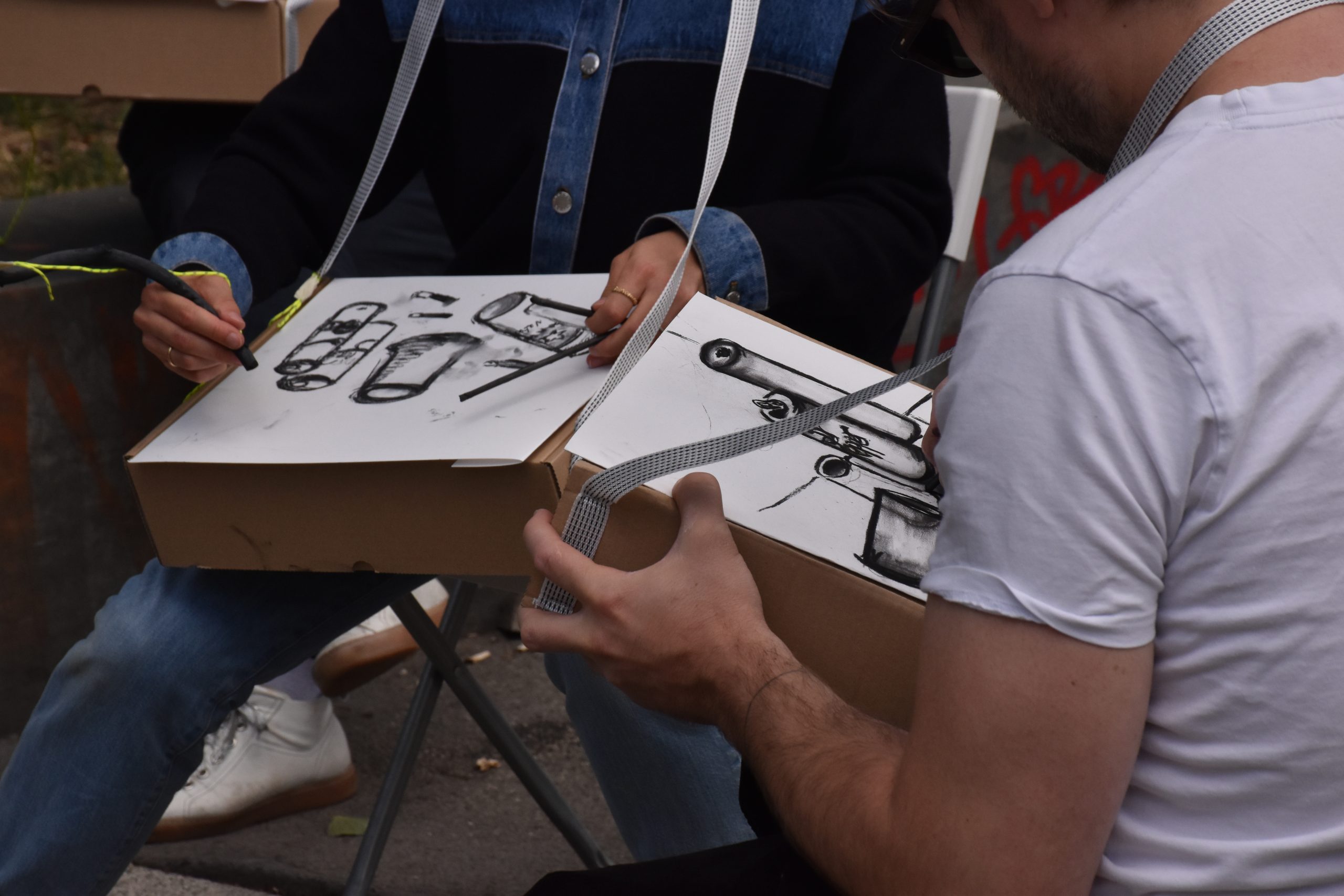
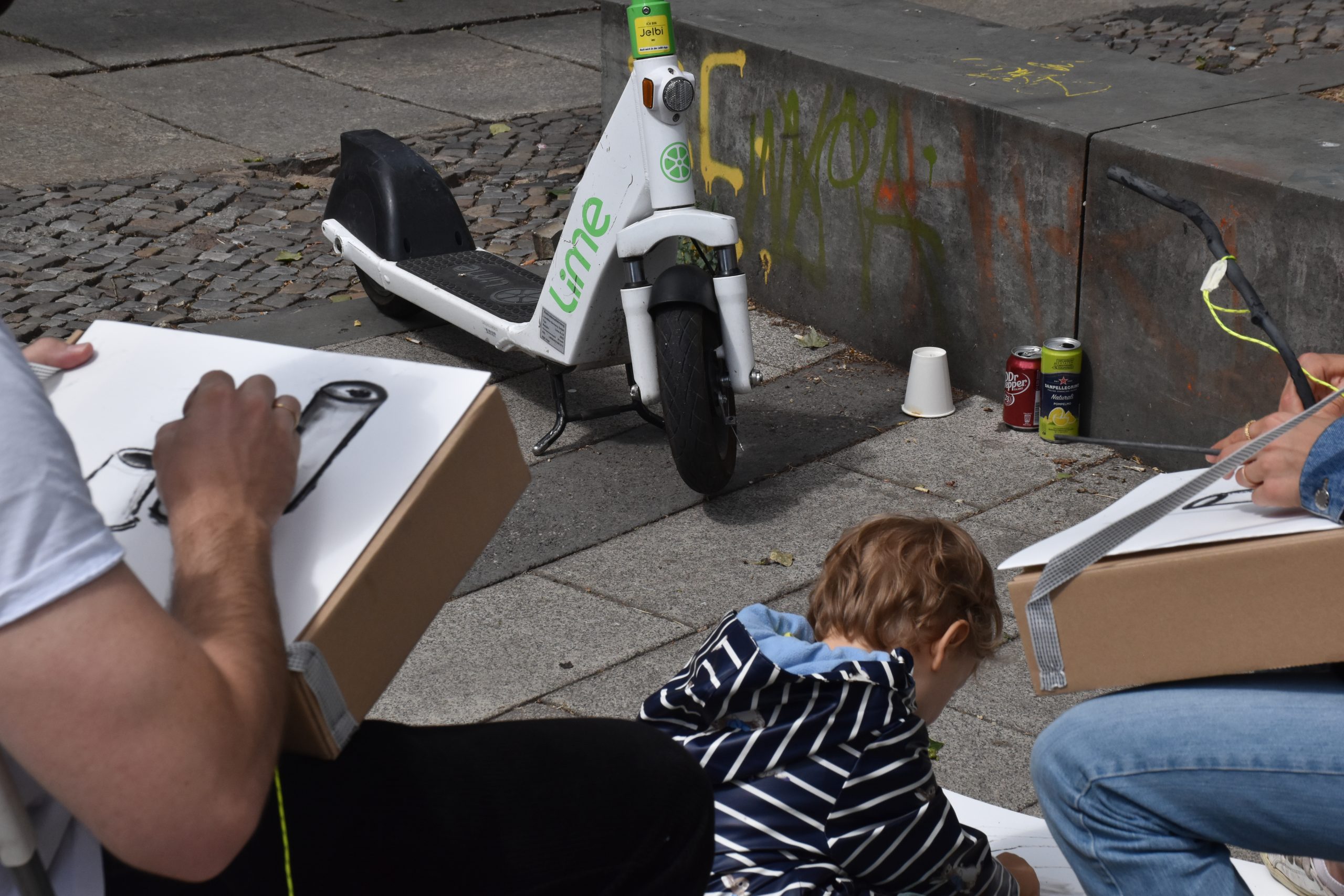
    Lebendiger Müll, ihre phänomenologische Analyse mittels Beobachtung und Aufzeichnung, bringt uns der Abfallmaterie näher.  Ähnlich der Ikebana Philosophie erwecken wir die „Müllblumen“ zum Leben, zeichnen die Arrangements des Unperfekten.  Ikebana bedeutet wörtlich übersetzt „lebende Blume“.  Wir widmen uns dem Geist und der Schönheit des Berliner Strassenmülls.  Durch die künstlerisch-zeichnerische Tätigkeit verhelfen wir dem Müll zur vollen Entfaltung und lassen ihn Teil eines Kunstwerks werden.  Wir schenken der Materie Müll ein neues Leben, den sparsamen und ästhetischen Stilleben aus Hinterlassenschaften ein schöneres Aussehen.

    Ulrike Mohr is a visual artist based in Berlin.She works with the concept of drawing,  space, time and charcoal. Mohr’s artistic approach uses transformation processes of materials,  which are influenced by complex research results, traditional knowledge and coincidence. Through observations of nature and materiality,  the works create their own material presence.

    Living Waste, her phenomenological analysis through observation and drawing, brings us closer to waste matter. Similar to the Ikebana philosophy, we bring „garbage flowers“ to life, drawing the arrangements of the imperfect. Ikebana literally means „living flower“. We devote ourselves to the spirit and beauty of Berlin’s street litter. Through the artistic and graphic activity, we help the garbage to develop fully and let it become part of a work of art. We give the material rubbish a new life, the economical and aesthetic still lifes from legacies a more beautiful appearance.

    + / –

    Als Sozial- und Erziehungswissenschaftler lehrt und forscht Wolfgang Knapp seit 1988 am Institut für Kunst im Kontext an der Universität der Künste Berlin UDK. Seine Schwerpunkte sind interdisziplinäre Kooperationen an der Schnittstelle von Bildproduktion, Kunst und Wissenschaft (seit 1993), Minderheiten in Kunst und Medien, kuratorische Tätigkeiten und Publikationen. Seit 1982 initiierte er u.a. internationale Projekte und Ausstellungen, forschte und lehrte im Ausland. (z.B.: China, Finnland, Frankreich, Ungarn, Iran, Japan, Oman, Russland, Schweiz, Syrien, Südafrika, Türkei, UK, USA;).

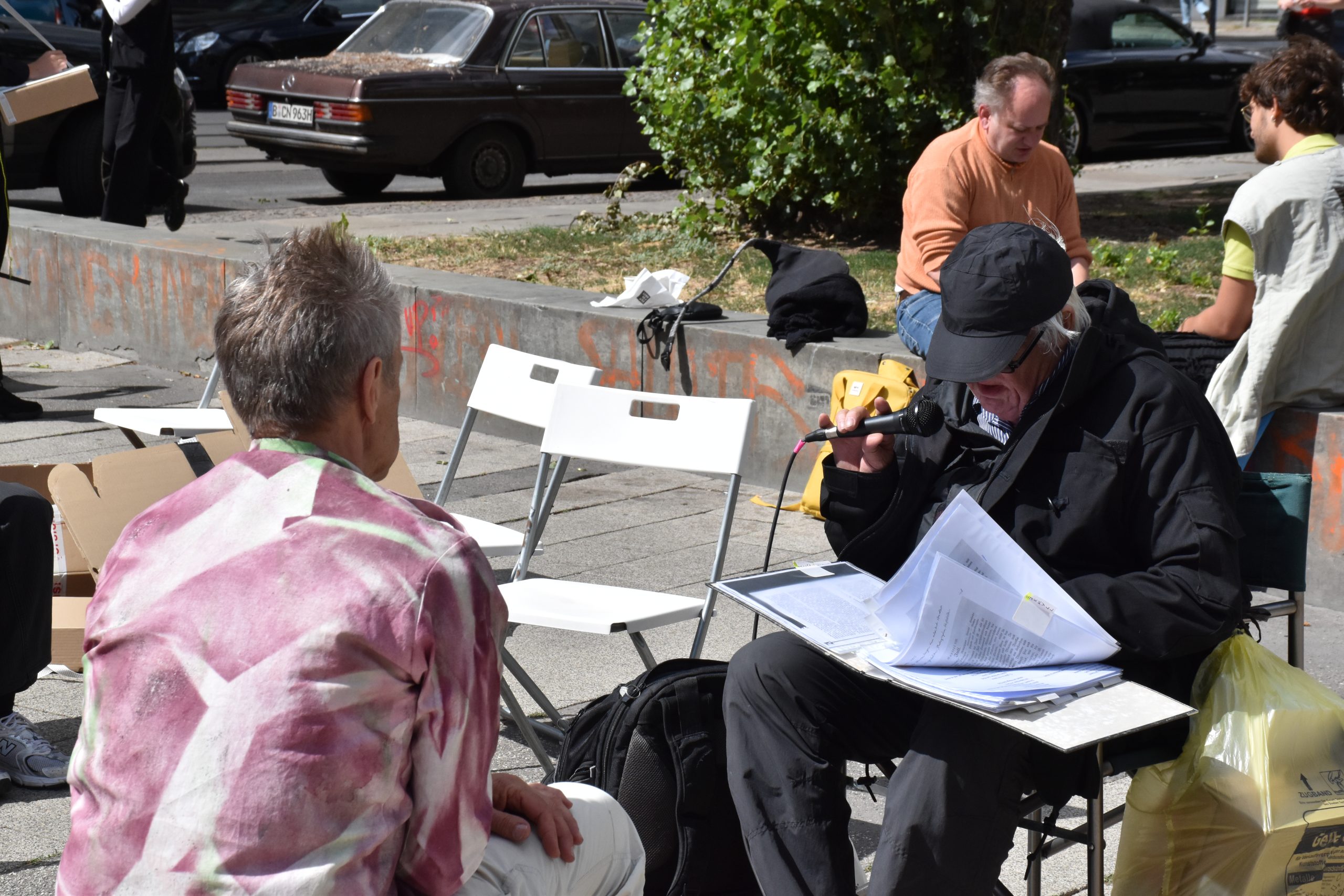
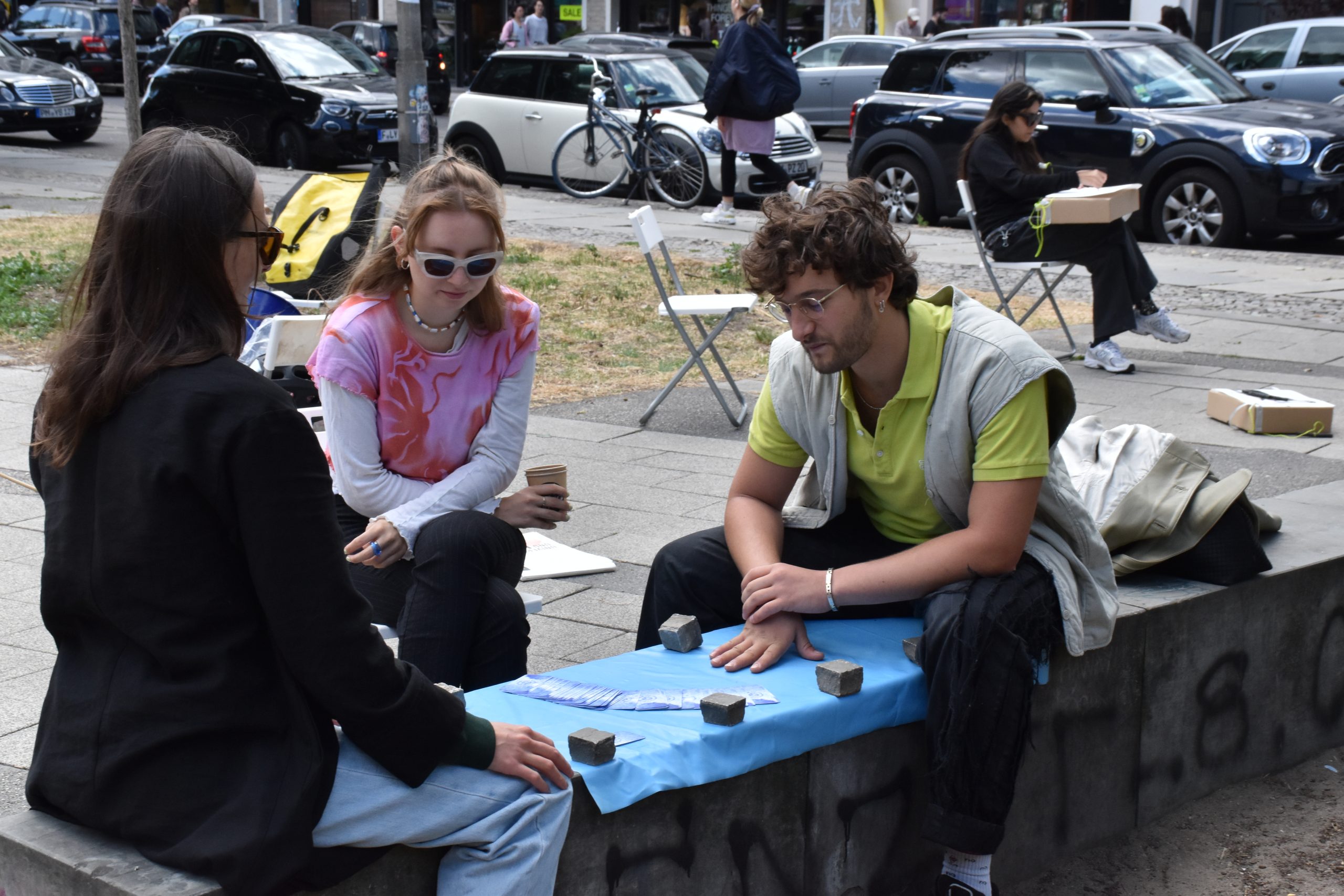
    Roses – Rubbish – Readings: Die Besucher können mit einem (oder zwei) Würfeln aus Styropor spielen. Material:  Auf 5 Seiten jedes Würfels ist ein Foto einer Rosenblüte, benannt nach einem Künstler, eine Seite bleibt weiß. Entsprechend dem Rosennamen der ausgewählten 10 Künstler kann der/die SpielerIn laut aus Schriften dieser KünstlerInnen, die durch die Rose auf der Seite über dem Würfel repräsentiert werden, vorlesen (z.B. Briefe, Gedichte, Statements, künstlerische Ideen usw.) – wenn gewünscht liest Wolfgang Knapp vor.(Das Spiel schließt einen Wettbewerb aus und hat keine Gewinner als Endergebnis).

    As a social and educational scientist Wolfgang Knapp has been teaching and researching at the Institute for Art in Context at the University of the Arts in Berlin  UDK since 1988. His focus is on interdisciplinary collaborations on the interface of image production arts and sciences (since 1993), minorities in art and the media, curatorial activities and publications. Since 1982 he frequently was e.g. initiating international projects and exhibitions, researching and lecturing abroad. (e.g.: China, Finland, France, Hungary, Iran, Japan, Oman, Russia, Switzerland, Syria, South Africa, Turkey, UK, USA).

    Roses – Rubbish – Readings: Visitors can play with one (or two) styrofoam dice. The game cubes have artists‘ names and readings from their writings.  On 5 sides of each cube a photo of a rose blossom named after an artist, one side remains white. According to the rose name of the selected 10 artists, the player can read aloud from writings of these artists represented by the rose on the side above the cube (e.g. letters, poems, statements, artistic ideas, etc.) – if desired, Wolfgang Knapp reads aloud. (The game excludes competition and has no winners at the end).

    + / –

    Ivanna Heredia wurde in Mexiko-Stadt geboren und lebt in Berlin. Ihre Arbeit konzentriert sich derzeit auf die Schnittstelle zwischen Mode und zeitgenössischer Kunst. Ihr Beitrag ist ein Metallhemd. Die Stickerei wird als Mittel zum Erzählen von Geschichten verwendet; in dieser Arbeit formt der silberbeschichtete Draht die Werteerzählung des Kleidungsstücks. Grundsätzlich symbolisiert ein weißes Vintage-T-Shirt  einen der wenigen Bereiche, in denen die menschliche „Herstellung“ noch nicht durch eine Maschine ersetzt wurde. Das T-Shirt gewinnt durch jede Person, die es trägt, an Wert, indem es dem Kleidungsstück die auf dem Vintage-T-Shirt-Markt hoch geschätzten Gebrauchsspuren verleiht.

    Ivanna Heredia was born in Mexico City and lives in Berlin. Her work currently focuses on the interface between fashion and contemporary art. Her contribution is the Metal Shirt. Embroidery is used as means of storytelling; in this work, the silver-coated wire shapes the value narrative of the garment. A white vintage T-shirt symbolises one of the few areas where human „making“ has not yet been replaced by a machine. The T-shirt gains value through each person who wears it, giving the garment the traces of use that are highly valued in the vintage T-shirt market.

    + / –

    Hannes Brunner ist ein in der Schweiz geborener und in Berlin lebender Künstler. Er bevorzugt ephemere Materialien in Installationen. In seinen kontextbezogenen Projekten werden unterschiedliche Medien mit gesellschaftlichen Prozessen kombiniert. Er lehrte als Professor, Prorektor und Vorsitzender an der Weißensee Kunsthochschule Berlin, am Royal College of Art London, dem NYIT, New York Institute of Technology, der Muthesius Kunsthochschule Kiel, der ETH Zürich, u.a. Es ist alles in den Karten ist eine öffentliche Übung. Basierend auf dem „Tarot de Marseille“ von M. Ernst, A. Breton und anderen zitieren die Karten Werke von fünf Künstlern, die zuvor in Marseille gefundene Materialien inszeniert haben. Die Fotos evozieren Vorhersagen, die weder künstlerische noch wissenschaftliche Expertise sind, sondern systemische Kombinationen von Fremdbestimmung durch Algorithmen zu gartenbezogenen Vitalismen.

    Hannes Brunner is a swiss born artist based in Berlin. He favors ephemeral materials in installations. In his context-related projects, different media are combined with social processes. He taught as a professor, pro-rector and chairman at the Weißensee Kunsthochschule Berlin, the Royal College of Art London, the NYIT, New York Institute of Technology, the Muthesius Kunsthochschule Kiel, the ETH Zurich, a.o.

    It’s all in the cards is a public exercise. Based on „Tarot de Marseille“ by M.Ernst, A. Breton and others, the cards quote works by five artists who previously staged materials found in Marseille. The photos evoke predictions that are neither artistic nor scientific expertise, but rather systemic combinations of external determination through algorithms to garden-specific vitalisms.

    + / –

    Jérémie Le Hénaff  ist Journalist und Filmemacher, er studierte Politikwissenschaften an der Sorbonne und am Institut d’études politiques de Rennes. Er nimmt an dem Projekt teil, indem er es dokumentiert und recherchiert

    Jérémie Le Hénaff is a journalist and filmmaker, he studied political science at the Sorbonne and the Institut d’études politiques de Rennes. He participates in the project by documenting and researching it.

    + / –

    Die Projekte und ein anschließender Katalog werden unterstützt durch die Kulturstiftung des Kanton Thurgau | The projects and a subsequent catalogue are supported by the Cultural Foundation of the Canton of Thurgau

  • 2052 – KUNST ZUR KLIMAKATASTROPHE

    Vergrößern

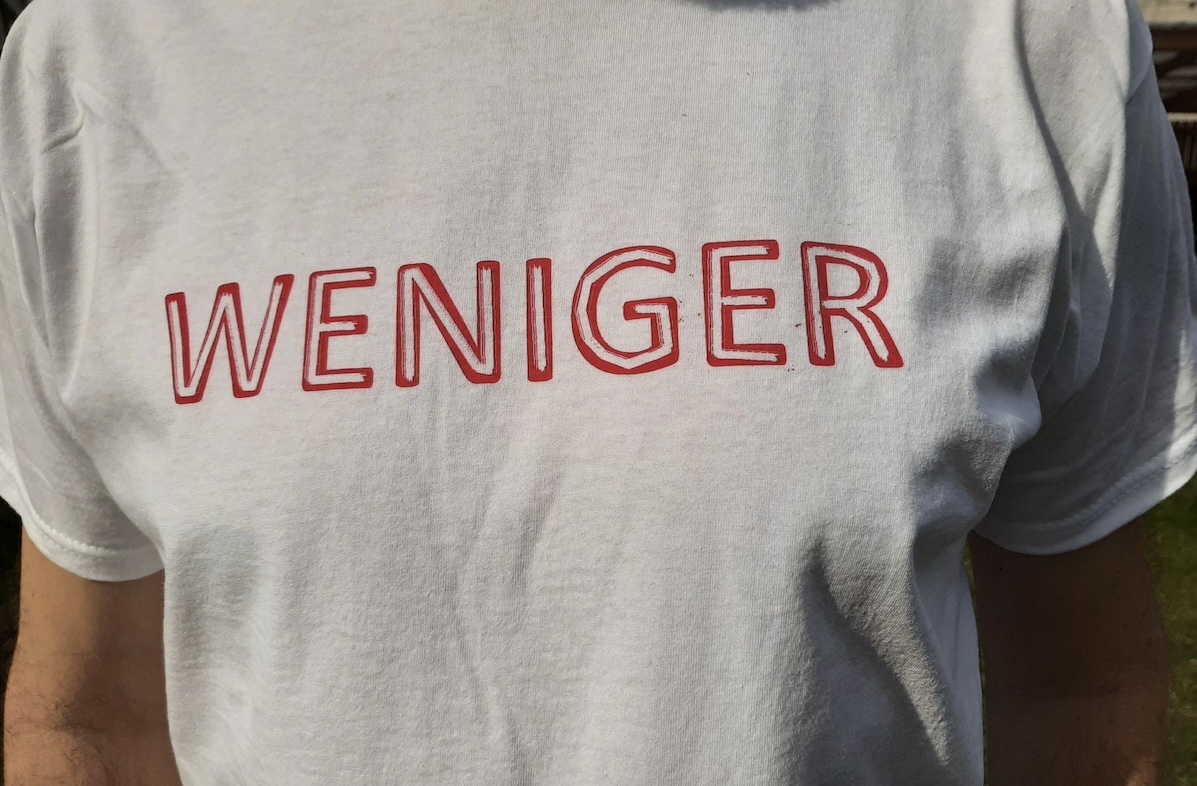
    shirtweniger-beschnitten
    Das T-Shirt von Beat Gipp ist beim Kunstverein für 10 Euro käuflich zu erwerben.

    Eröffnung mit Performance von Katrin Glanz: 14. April 2022 | 18h

    Künstler*Innen: Monica Bonvicini, Elisa Sophia Braun, Claus Föttinger, Katrin Glanz, Beat Gipp, Shila Khatami, Dan Perjovschi, Andrea Pichl, Jost Wischnewski, Johannes Wohnseifer, Marina Naprushkina, Christine Würmell, Matthias Sturm, Andreas Templin, Oliver Ressler, Stefanie von Schroeter, Silke Wagner, Lena von Goedeke, Joulia Strauss, Andreas Koch, Marie S. Ueltzen, Anna Meyer, Peter Niemann, Jonathan Monk, Bhima Griem

    Kurator: Raimar Stange

    Anschließend vom 14.4. – 18.6.2022 im Foyer des Kunstvereins und Tor-/Karl-Liebknecht-Straße

    Die Eisschmelze an den Polarkappen nimmt rapide zu, der CO2-Ausstoß ist nicht in den Griff zu bekommen und die Erderwärmung steigt unentwegt – der Klimawandel ist nicht mehr aufzuhalten. Der Corona-Krise und jetzt dem Ukraine-Krieg aber ist es geschuldet, den Klimawandel wieder weitestgehend aus der öffentlichen Aufmerksamkeit verdrängt zu haben. Die aktuelle Notlage scheint dringender zu sein als die vermeintlich weniger akute des Klimawandels. Aber nicht nur der Philosoph und Kulturkritiker Slavoj Zizek hat richtig festgestellt, dass die Klimakatastrophe von uns weit mehr abverlangen wird als derzeit die Corona-Pandemie.
    Die Ausstellung „2052“ versucht den Klimawandel wieder in das Licht der Öffentlichkeit zu stellen. Um möglichst viele Menschen ansprechen zu können, begibt sie sich darum mit ihren Exponaten aus dem white cube heraus und geht mitten hinein in den öffentlichen Raum. 22 nationale und internationale Künstler*innen unterschiedlicher Generationen hat Raimar Stange für „2052“ um künstlerische Beiträge gebeten, die in Form von im Außenraum platzierbare Plakate sowie als dort zu verteilende Flugblätter konzipiert sind.

    Thematisch schließt die Ausstellung „2052“ an die Ausstellung „2050“ an, die 2019 im Kunstverein am Rosa-Luxemburg-Platz zu sehen war.

    Es erscheint ein Katalog

    Dank an Dipl.-Ing. Ingo Sturm, München

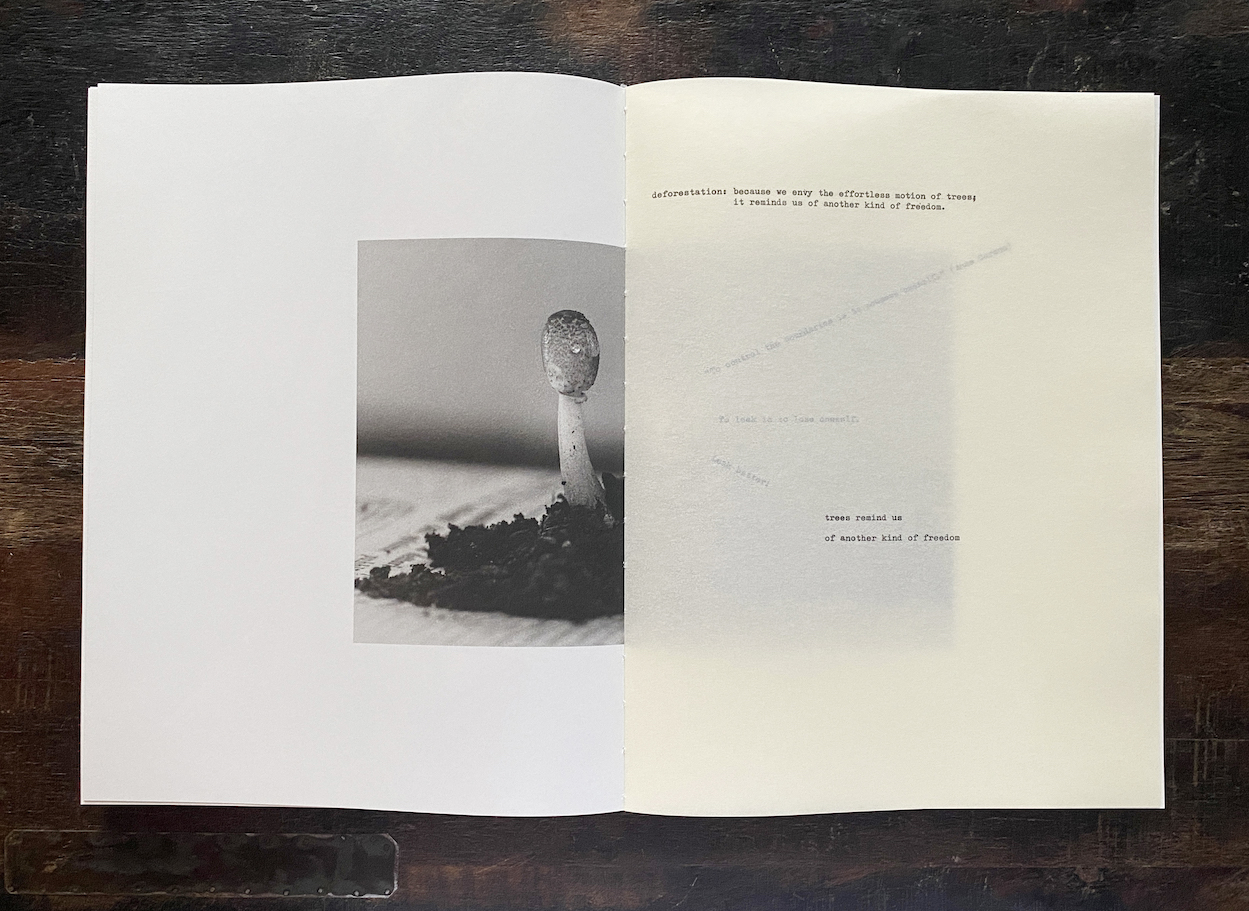
  • 29.1.22, object amnesic: a compost manifesto by Henrik Strömberg and Jens Soneryd. Book release.

    29.1.22, Book presentation and reading on the occasion of the release of object amnesic: a compost manifesto by Henrik Strömberg and Jens Soneryd.

    Part of the Moss or A Study of Cerebral Chasms Caused by Living Under Boreal Conditions.

    “The Compost implies viscosity, it is slippery, it mutates. It is both ephemeral and permanent; dissolves the narrative, reverberates symptoms of life. Words.“
    Chiara Valci Mazzara

    Henrik Strömberg (artist) and Jens Soneryd (writer) started their joint project The Compost in 2016. For them, the compost is a point of departure to explore alternative ways of being in the world, alternative practices of doing, thinking, sensing, seeing, and understanding. With “alternative ways of being in the world” they refer to perspectives that challenge the instrumental and reductionist ones that are predominant today, which provide a technocratic attitude towards the world, its objects, structures and societal institutions, but also toward its humans and other living beings, its nature, language and art.According to the technocratic attitude, art works are means for communicating simple messages or for performing certain functions, and they are valued according to their potential of doing so – the aim of the work of art is to deliver certain measurable results that are decided in advance. Thus, contemporary art is part of the creative economy, it is attuned to the logic of advertising, design, and tech companies.Within this view, lives are translated into projects, human beings are translated into brands that compete on various markets such as the labour market, the education market, the love market and so on, while nature appears first and foremost as something to be predicted, controlled and dominated, translated into a function as convenient resource. Thus, forests are transformed into either agricultural land or tree plantations, rivers into hydro-plants, mountains into mineral reserves or ski-resorts.

    Failures, eccentricities and deficits are hidden in the pursuit for simplicity, success, and perfection. Human-as-brands lead active, social and eventful lives, not primarily for the joy of learning, experiencing, meeting people, and so on. Verbs like “living”, “experiencing”, “encountering”, “loving”, “desiring” have no intrinsic but only functional values. The actions they signify aim only to stage an eventful and prosperous life on social media; living as branding, that is.

    Is it possible to love a forest that has become a tree-plantation? A river that has become a hydro-plant? A human being that has become a brand? A work of art that can be translated into a simple message without anything being lost in translation? A nature whose meaningfulness has been replaced with functionality? Probably not. Therefore, object amnesic: a compost manifesto aims to contribute to the re-enchantment of the world, by translating back functions into meanings, tree-plantations into forests, answers into questions, and first and foremost by turning our attention to the processes rather than to the intended results.

    The book deals with topics such as growth and decay, memory and forgetting, permanence and change, the desiring gaze and the detached gaze. It also reflects on technologies for understanding, such as writing and photography. These are powerful technologies developed as aides for making visible, mapping, fixing, organising and governing. In short, they are powerful tools for keeping, controlling and preserving. object amnesic: a compost manifesto explores if and how these technologies also can be applied in opposition to their intended usages, if they can also be deployed to un-learn what we have learned from them.

    It questions the predominant technocratic Cartesian view on nature as something to be measured, predicted and controlled. It challenges the very notion that control is a desirable achievement. Instead of trying to control and to govern artistic or natural processes, the book encourages us to join these very processes, to become part of them, or simply to acknowledge that we already are part of them despite that we most often pretend not to be.

    And just like any compost, the book is an assemblage of things in various stages of completeness as the objects in the compost are not registered, and no actions are undertaken to save them from oblivion or decay – forgetting is just as important as remembering, ambivalence and doubt are just as important as knowledge and certainty. To reach without being able to reach is just as important as grasping. The aim of a compost is not to reach answers, explanations, or conclusions, but to produce fertile soil. So is the aim of this book.

    INFO:

    Photographs: Henrik Strömberg
    Poetry: Jens Soneryd
    Essay: Chiara Valci Mazzara
    Book design: Aneta Kowalczyk

    Cover: Fedrigoni Materica Clay with hot stamping
    Inside: Munken Pure, Fedrigoni Pergamenata Naturale
    Format: 224×300 mm
    Number of pages: 296
    Number of photographs: 75
    Language version: English

    Print run: 800 copies
    Printing & binding: Argraf, Warsaw, Poland

    Publication date: November 2021
    Publisher: BLOW UP PRESS
    ISBN: 978-83-952840-8-3

    https://blowuppress.eu/products/object-amnesic-a-compost-manifesto

  • 28.1.22, 24h Videoart at Midnight #118: IC-98

    Vergrößern

    IC-98_Filmstill_Omnia-mutantur-2018jpg-Klein
    IC-98, Realms, 2018 (Filmstill)

    28.1.22, Videoart at Midnight #118 mit / with IC-98 im/at the Babylon, 24h (Eintritt frei / free entrance)*

    Though their practice is essentially conceptual, IC-98 has been best known for animations, which combine classical drawing and digital effects, depicting landscapes shaped by long time durations, natural and human histories and climate. Mythical, material, factual and fictional elements are weaved together into visual stories, which – though deeply political and meticulously researched, scripted and executed – are presented as open-ended poetic narratives. The mood of the works alternates between a sense of crisis, melancholy, acceptance and resigned optimism.

    *BABYLON, Rosa-Luxemburg-Platz, Berlin, big cinema hall
    Get your ticket online to avoid queuing and to help complying with the Babylon’s covid-19 guidelines and regulations  (2G+ rule and FFP2 mask).

    IC-98 (Patrik Söderlund and Visa Suonpää) will show:

    Realms, 2018, 19:38 min (dir. Patrik Söderlund)
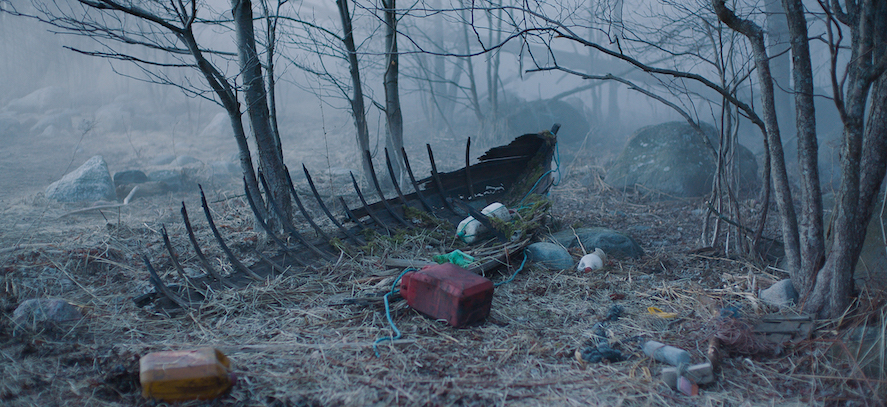
    Realms is a voyage through time, evolution and the kingdoms of life towards the natural destruction wrought upon the planet by the human species. As Ovid writes in Metamorphoses, everything changes but nothing perishes. Things change shape, energy becomes matter and matter becomes energy. Realms is a film about this constant metamorphosis, a succession of states, epochs, species, kingdoms and realms, a journey through past and future strata, organic and inorganic phases and spheres of our planet.

    The story unfolds on a remote fisherman’s farm, where we begin our journey hundreds of millions of years ago in the depths of the primeval ocean. We reach the shore, make our way through to the farm-yard, through the house to the garden in the rear and onwards to the nearby forest, followed by a swidden, a rocky ridge and the sand dunes beyond. Finally, millions of years into the future, we stand on the shore again, animate and inanimate nature levelled to black dust. Grounded on the building blocks of life, carbon and water, we gaze towards the stars of the Milky Way. And so the cycle begins again.
    All that time, we have stayed within the perimeter of the farm and seen versions of how the same landscape has appeared at different times – how it was before humans and how it will look after we are long gone. Though our own era is just a blink in the eye of the long continuum of epochs, this blind moment with its reliance on energy provided by fossil fuels and the wholesale exploitation of nature threatens the future of the entire planet.

    A View from the Other Side, 2011, 70:00 min
    Already considered by many as a classic piece of contemporary Finnish art, A View from the Other Side shows Gylich’s Doric colonnade in Turku, built in 1836, and its transformations across the centuries. Originally, stalls operated behind the columns selling produce caught by the local fishermen. Subsequently, the space has served, amongst other things, as a bazaar, a restaurant, a café, and a petrol station. In the early 2010s the city sold the property to private owners.
    The portico was modelled on the ancient Greek stoa, the only public building in the agora, which had no predefined use. The stoa could thus be seen as a model for free civil society. The work is based on this interconnection between architecture and politics.
    The portico, the river, and the street between them, form a stage without dramatis personae. The idea was to create a play with time, weather and nature as its protagonists. In this narrative, in which multiple temporal rhythms are overlaid to form a seamless moving image, humans are only a fleeting presence – even though humanity’s imprint on the environment is constantly visible. The ceaseless flow of time is a central theme in the work, alongside the persistent presence of history. Here, the present and the future of the city are intertwined with the diverse ecologies of the built environment and nature. The conditions underlying public space are also revealed here as they relate to migration and homelessness.

    IC-98’s work since 2010s addresses the environmental crisis and artistic-political methods of finding solutions to it. The projects seek to replace anthropocentric worldview with modes better suited to take into consideration the interrelationships, dependencies and myriad temporal rhythms of all animate and inanimate nature.
    With backgrounds in visual arts and cultural studies, IC-98’s 24-year collaboration has produced artist publications, site and context specific projects and interventions, animated moving image installations, short films and various public commissions. IC-98 received the Finnish State Art Prize in 2009 and represented Finland at the Venice Biennale in 2015. Their work has been showed extensively at museums, biennials and festivals in Europe, Asia and the Americas. They often collaborate with scientists and other arts professionals

    The animations Nekropolis (2016), Epokhe (2017) and Lands of Treasure (2021), as well as the film Realms (2018), are allegorical descriptions of time, climate, and how environmental and cultural histories merge in different eras. On the other hand, the site-sensitive projects House of Khronos (2016-), Mare tranquillitatis (2020), IÄI (2020) and the ongoing Misi-Raaka Park of Wounded Earth (2019-) have instead of mere artistic depiction sought to create tools – free zones, novel languages, new founding myths – to help this community of all organisms emerge from the crisis.

    The  screening is a collaboration between the Kunstverein and Video Art at Midnight (Olaf Stüber & Ivo Wessel) and the Babylon.

    The project kindly supported by the Finnish Institut and VAM.

  • THE DAY AFTER TOMORROW

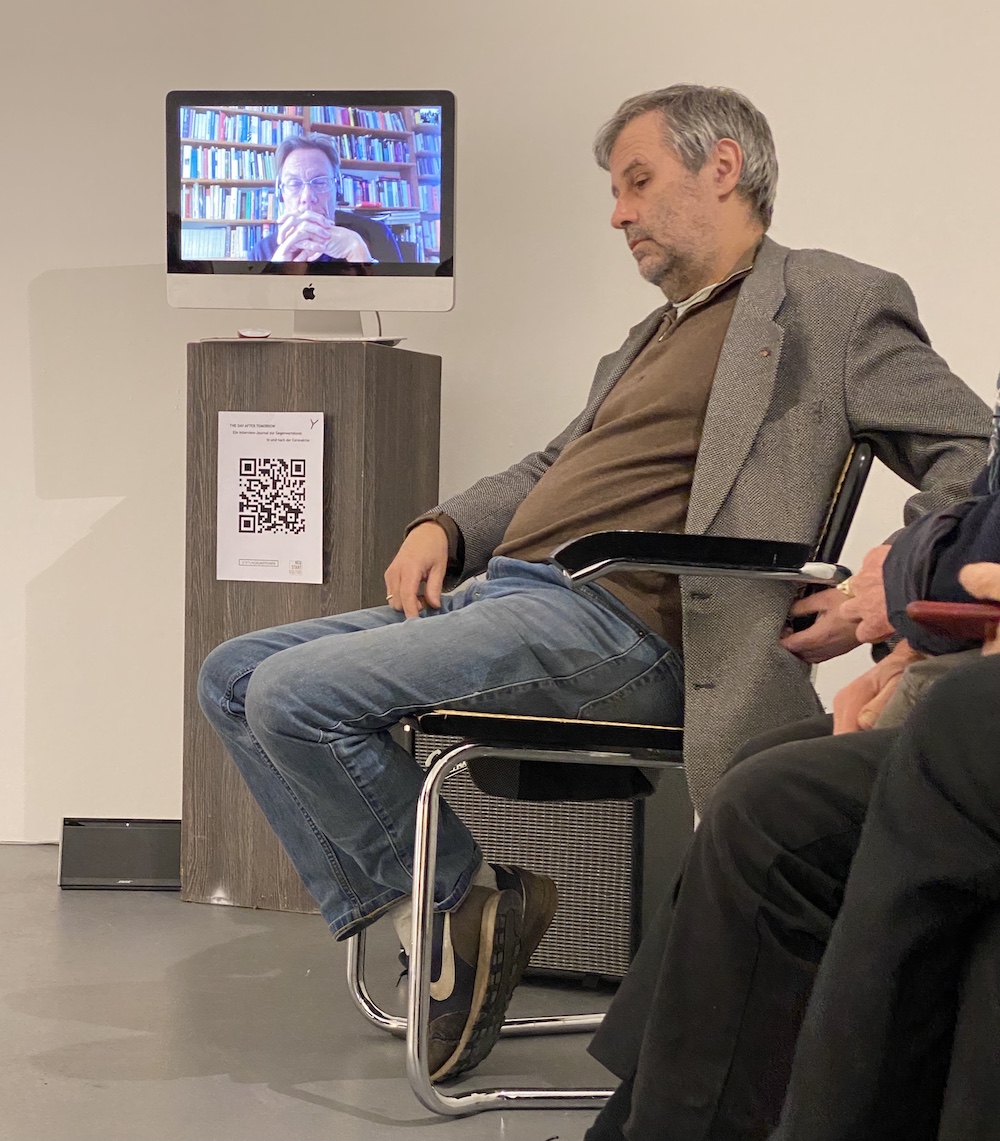
    Sechs Fragen – 168 Antworten: 28 Künstler*innen wurden für das Projekt „THE DAY AFTER TOMORROW“ sechs gleiche Fragen zu ihrer Erfahrung mit der Corona-Pandemie gestellt. Das Ergebnis ist ein widersprüchliches Stimmungsbild, das Fragen aufwirft nach der prekären Situation der Bildenden Kunst angesichts der Pandemiere

    18:00 h / Launch des Online-Projekts
    18:30 h / Konzert des Art Critics Orchestra: im here und jazz
    19:30 h / Panel mit Heidi Sill (bbk berlin), Harald Welzer (Soziologe), Andreas Templin, (Künstler) Moderation: Raimar Stange

    THE DAY AFTER TOMORROW ist ein Projekt von Raimar Stange in Zusammenarbeit mit dem Kunstverein am Rosa-Luxemburg-Platz e.V. Koordination und mehr: Andreas Templin.

    Das Projekt wurde gefördert durch StiftungKunstfonds / Neustart

    THE DAY AFTER TOMORROW

    Six questions – 168 answers: For the project 28 artists were asked six identical questions about their experiences during the Covid-pandemic. The result is an multifacetted representation of experiences and opinions which raises questions about the precarious situation of the visual arts in the face of the ongoing pandemic. 

    18:30 h / Art Critics Orchestra Concert: im here und jazz

    19:30 h / Panel discussion with Heidi Sill (bbk berlin), Harald Welzer (sociologist), Andreas Templin, (artist) moderation: Raimar Stange

    THE DAY AFTER TOMORROW is a project by Raimar Stange in collaboration with the Kunstverein am Rosa-Luxemburg-Platz e.V. Coordination and more: Andreas Templin.

    The project is supported StiftungKunstfonds / Neustart.

  • Activist Neuroaesthetic
    Filmscreening im Babylon

    with films by The Telepathy Project (Veronica Kent and Sean Peoples), Benjamin Denham, Shoufay Derz, Tabita Rezaire, Gabriele Stellbaum, Lorenzo Sandoval, Haines & Hinterding, Jacquelene Drinkall, Sarah Breen Lovett, Anna Munster (in collaboration with Michele Barker), Linda Dement and Nancy Mauro-Flude, a.o.                                              

    Tickets are free but need to be booked in advance: https://babylonberlin.eu/film/3955-activist-neuroaesthetics-further-explorations-of


    Activist Neuroaesthetics – further explorations of Brain without Organs (BrWO), sleep and altered states, telepathy and new labor in recent art videos
    Following the show and conference this special screening event further illuminates Activist Neuroaesthetics in recent video art. Activist Neuroaesthetics refuses the cynicism of Big Data, neural consumerism and defence research generated technologies, and instead promotes an ethics of neural plastic emancipation and neural diversity to produce artistic facts, rather than scientific ones, that are organized into a generalized paradigm of resistance. This event extends the three-part Activist Neuroaesthetics exhibition (Brain Without Organs, Sleep and Altered States of Consciousness, and Telepathy and New Labor) that took place at Kunstverein am Rosa-Luxemburg-Platz e.V. earlier this year in celebration of the 25th anniversary of artbrain.org. The screening also augments and supports the Activist Neuroaesthetics Conference that took place in collaboration with Saas-Fee Summer Institute of Art publications, developed by lead institution Kunstverein am Rosa-Luxemburg-Platz e.V. along with various local partners that has been taking place online and at different venues on Rosa-Luxemburg-Platz in Berlin over the course of 2021.

    Activist Neuroaesthetics in Video Art is curated by the guest curator of Telepathy and New Labor, Jacquelene Drinkall.

    More about the films below.

    This project is made possible with support from Hauptstadtkulturfonds and private donors. This project is supported by the NSW Government through Create NSW (Australia).

    Tabita Rezaire, “Premium Connect”, 2017, 13:04
    Premium Connect envisions a study of information and communication technologies (ICT). It explores African divination systems, the fungi underworld, ancestors’ communication, and quantum physics to (re)think our information conduits. Embracing the idea that ICT acts as a mirror for the organic world capable of healing or harming, depending on its usage and users, Premium Connect investigates the cybernetics spaces where the organic, technological, and spiritual worlds connect. How can we use biological and esoteric systems to fuel technological process of information, control, and governance? Overcoming the organism/spirit/device dichotomies, this work explores spiritual connections as communication networks and the possibilities of decolonial technologies.

    Gabriele Stellbaum, „Let The Silence Rest“, 2019, 6:18
    Somewhere in the not too distant future, when jobs have lost meaning and fulfilment is the key to enlightenment: two guards in a data center are struggling to elevate their boredom into higher awareness. Meditation and AI coaching frame her days, while he escapes into mind control and aspires to become a telepathic player. A forbidden fence reminds us that the future might not be all that bright after all.

    Jacquelene Drinkall, “Data Centre Seance: Titanpointe”, 2016-2017, 7:09
    ’Data Centre Séance’ captures a collaborative psychogeographic focus on an austere data centre in Manhattan known as ‘33 Thomas Street’ and the ‘Long Lines Building’. This unusual Brutalist building was built in 1973-4 as a windowless concrete and granite fortress, strong enough to withstand a nuclear blast. Collaborative proxies of the artist Jacquelene Drinkall included the New York art collective Art Codex, a psychic, a hacker, and an Australian art critic for ARTnews. These proxies, together with some artist activists from ABC No Rio, braved a snow blizzard to execute the psychogeographic investigation of this building. This building had only recently been identified by Edward Snowden as the National Security Agency’s ‘Titanpointe’. The work demonstrates belief that public and psychic space want to be free, just as data wants to be free. Commissioned by Cementa Art Festival.

    The Telepathy Project (Veronica Kent and Sean Peoples), “Dreaming the Collection“, 2013, 8:09
    In this work the act of dreaming serves as a metaphor and working methodology through which they explore alternate ways of being and communicating. For this project, the artists use works of art in the National Gallery of Victoria (NGV) collection as catalysts for a series of dreaming events. Seven works featuring sleeping figures will form the basis for seven nights’ dreams which the artists and guest performers will recount through scripts and performances. Drawing on ideas derived from Democritus, an ancient Greek philosopher who hypothesised that images emanated from material objects and could enter the pores of a sleeping person and directly influence their dreams, The Telepathy Project offer alternative interpretations of works in the NGV collection fuelled by the logic of dreams.

    Benjamin Denham, “What is psychedelic art?”, 2020, 1:11 and “Interdimensional communication, transdimensional solidarity”, 2020, 3:18
    The short videos introduce the work of Sound Site Academy, a school for anarcho-syndicalist witch-doctors. Sound Site Academy is an initiative of the Inner West Union of Anarcho-syndicalist Witch-doctors, based in the Cooks River Valley in the Inner West of Sydney. The Academy’s key media liaison officer is the fictional entity Bernie Dernheim. These videos were created in response to the Covid-19 pandemic as a means to deliver our course ‚Foundations in Art, Ethics and Biology‘ to aspiring witch-doctors and other interested parties.

    Shoufay Derz, “Ritual of Eels: Loving the Alien”, ongoing project since 2019, 5 minutes TBC
    This mesmerising video performance features uncanny video portraits of friends, family, acquaintances, and strangers who have taken part in Derz’s “eel ritual.” For the artist, the figure of the alien, conjured in the work’s title and her sitters’ green faces, stands as a metaphor for transformation and our shared unknowns. The potentials of disappearance and transformation are shared, mirrored between the landscape and green faces. Spanning a conversation on belonging, alienation and the potentialities of kinship with others and the natural environment, the work reveals rituals for the end of the world, so that we may collectively imagine other possibilities.

    Sarah Breen Lovett, “Blue Body”, Guided Meditation, 2021, 5 minutes
    Dr Sarah Breen Lovett is engaged in a combined practice of: academia, architecture, biophilia, contemporary art, curation and mindfulness. This practice is focused on deepening interconnectivity between ourselves and the environment around us. This has taken the form of landscape installations, socially engaged practices, participatory performances, digital video and voice recording. “Blue Body” is an extension of this practice, utilizing her mindfulness teacher training to create a voice work that sits between guided meditation and spoken word performance.

    Michele Barker and Anna Munster, „évasion duet”, 2016, 6:18
    Michele Barker and Anna Munster have collaborated for over twenty years. „évasion (duet)“ is a 2 channel moving image and audio installation that restages Harry Houdini’s famous straightjacket escape. It works across dance, performance and the moving image with a Dickensian aesthetic. An escape artist seems to be breaking free from a straightjacket but the video (and/or installation) ‘traps’ him and the audience. It is the second iteration of a multi-channel video and responsive environment called évasion that was created in 2014.

    Linda Dement and Nancy Mauro-Flude, „Awry Signals” (video version), 2015-2021, 5 minutes TBC
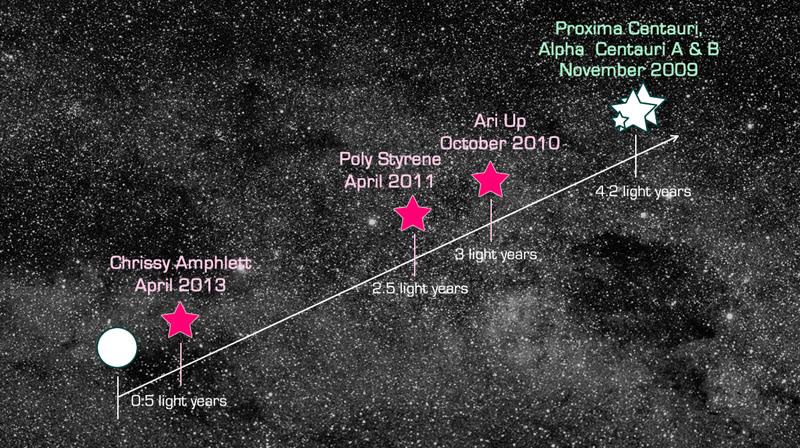
    In some belief systems, it is said that deceased warriors first disappear beyond all visible horizons and then reappear in the firmament as multitudinous star clusters. Awry Signals is a homage to the radical lives of three great women: Ari Up of the Slits (1962–2010), Poly Styrene of X-Ray Spex (1957–2011), and Chrissy Amphlett of the Divinyls (1959–2013). It is our calculation that some of the light we see in the night sky comes to us from a time when all three were still alive. A direct beam of starlight Wi-Fi is now passing back through their last days, deaths and afterlives. This video documents a live computer code séance device as data heirloom that taps into a starlight beam that picks-up the WIFI transmissions as they travel to Alpha Centauri. The programming language Python is used to manipulate this and the text we ask Chrissy, Ari and Poly about their travels out to the firmament, their lyrics resonating on the earthly plane still guide us.
    Haines & Hinterding, “Planchon Portal Future/Past 1.1”, 2016-2017, 13:29  In the centre of a small park near the station in Montpellier France, we were enchanted by a verdant dripping moss-covered boulder, spouting a fine mist of spray that seemed to have come out of nowhere. This remarkable object, the work of Denis and Eugen Buhler, landscape artists of the nineteenth-century forms the centrepiece of a park opened in 1858 and dedicated to the famous viticulturist Jules Emile Planchon. In our work, the fountain comes to represent a singular moment of primeval nature, rising up out of the cultured space of the city like a hallucinatory portal that is signalling to numbered galaxies that exist across the micro and macro scales of the earth.  Pointing toward Science Fiction the work gathers together in a cinematic assemblage some of our abiding aesthetic concerns with geomancy, orgone, olfaction, energy scavenging and occult field recordings around the labyrinthine wilderness of the Blue Mountains. Shot in France, the Netherlands and the Blue Mountains, Australia, the work gathers moments from several locations and extracts from prior works to form part of a wider and ongoing fiction of sensation.

  • Activist Neuroaesthetics / Can Art Change the Brain

    The 21st century is the century of the brain. This can have both exciting and terrifying implications. New discoveries in neuroscience concerning neural plasticity and epigenesis have become entangled with new technologies like Brain Computer Interfaces., as well as the Internet and Virtual Reality. The term Activist Neuroaesthetics is a discursive art practice that challenges the hegemony of neuroscience to be the sole arbitrator of these types of conversations and will be front and center in this discussion.  This symposium brings together experts in the field of art history, philosophy of mind, neuroscience and technology to discuss this exciting subject and its ethical, moral and economic implications. Speakers: Elena Agudio, Warren Neidich, Joerg Fingerhut and Ida Momennejad.
  • Activist Neuroaesthetics:The Symposium,

    The first Activist Neuroaesthetics symposium will take place online March 5-6, 2021 from 17:00 h. It includes a number of important thinkers to Activist Neuroaesthetics including Franco “Bifo” Berardi, Cecile Malaspina, Bonaventure Soh Bejeng Ndikung, Warren Neidich, Victoria Pitts-Taylor and Charles T. Wolfe, with a panel discussion moderated by Elena Agudio. This event will also form the basis for a book on Activist Neuroaesthetics to be published by Archive Books later this year.

    Activist Neuroaesthetics includes three exhibitions, a conference, a symposion, a filmscreening and additional events between March 5–August 7, 2021

    https://vimeo.com/showcase/8312503

    Warren Neidich
    Activist Neuroaesthetics, Symposion
    Franco „Bifo“ Berardi
    Activist Neuroaesthetics, Symposion
    Victoria Pitts-Taylor
    Activist Neuroaesthetics,
    Symposion March 2021
    Bonaventure Soh Bejeng Ndikung
    Activist Neuroaesthetics, Symposion
    Charles T. Wolfe
    Activist Neuroaesthetics,
    Symposion March 2021
    Cécile Malaspina
    Activist Neuroaesthetics, Symposion
    Panel Discussion moderated by Elena Agudio
    Activist Neuroaesthetics, Symposion

    About Activist Neuroaesthetics
    Under cognitive capitalism, the brain and mind are the new factories of the twenty-first century. We are no longer proletarians working on assembly lines, but cognitarians generating behavioural data that is bought and sold on futures markets (Zuboff, 2019). This data is not passive, but constitutes a new distribution that polices the sensible, perceptible, and cognitive through apparatuses of control such as Google Bubbles and Meme Magic. Just as the pioneers of cognitive capitalism realized the coming digital economy would create a crisis for labor and the production of subjectivity, so too another crisis is brewing exemplified by neural-based technologies (and their corporate counterparts like brain-computer interfaces and Neuralink) which focus upon the brain’s plasticity as its locus for capitalist speculation.

    Activist Neuroaesthetics is a generalized theoretical and aesthetic approach that refutes the dogma of what is known as Positive Neuroaesthetics. Positivist neuroaesthetics is a reductionist methodology that attempts to explain the aesthetic field and its production (artworks) by referring to neuroanatomical models aided by technology (i.e. neuroimaging). Its goals are to explain artworks, such as paintings, through its effects upon the brain’s neural processing itself rather than as something happening independently, or outside of the material brain’s jurisdiction (for example, in relation to events and processes happening in the world of art). It refutes the importance of the history of art as a causal factor in art production and conspires with capitalism to recuperate its most radical claims in order to make it palatable and normalized.

    Activist Neuroaesthetics rather concerns artists using their own histories, techniques, apparatuses, materials and theoretical constructs to investigate the same fields of knowledge as cognitive neuroscience, but to produce an alternative discourse concerning perception and cognition where events going on inside and outside the brain coevolve together and our cognitive abilities are expanded, rather than normalized. Here, the brain not only refers to the intracranial brain consisting of neurologic matter, but also the situated body and the extracranial brain composed of gestalts, affordances, linguistic atmospheres and socially-engaged interactions. Activist Neuroaesthetics refuses the cynicism of Big Data, neural consumerism and DARPA generated technologies (such as optogenetics), and instead promotes an ethics of neural plastic emancipation and neural diversity to produce artistic facts, rather than scientific ones, that are organized into a generalized paradigm of resistance.

    The first ACTIVIST NEUROAESTHETICS Symposium will be followed by a three-part exhibition (Brain Without Organs, Sleep and Altered States of Consciousness, and Telepathy and New Labor) at Verein zur Förderung von Kunst und Kultur am Rosa-Luxemburg-Platz e.V. on view May through August.

    In July, an ACTIVIST NEUROAESTHETICS Conference will take place in collaboration with Saas-Fee Summer Institute of Art in continued celebration of the 25th anniversary of artbrain.org.

    SPEAKERS BIOS

    Elena Agudio is a Berlin-based art historian and curator. She studied Art History at the University of Venice – Ca’ Foscari and in 2010 she received her PhD in Contemporary Art and Design. She is interested in curatorial practices as forms of troubling, with a focus on its performative and relational aspects. Since 2013 she has been artistic co-director of SAVVY Contemporary, where she curates and co-curates exhibition projects, discursive programmes and series, among which recently: Ultrasanity. On Madness, Sanitation, Antipsychiatry and Resistance; Soil is an Inscribed Body. On Sovereignty and Agropoetics; and the series Speaking Feminisms/We Who Are Not The Same dedicated to an exploration of current feminist practices and alliances. She is also artistic director of the non-profit association Association of Neuroesthetics (AoN)_Platform for Art and Neuroscience, a project in collaboration with the Medical University of Charité and The School of Mind and Brain of the Humboldt University encouraging both a dialogue and lasting cooperation between contemporary art and the cognitive sciences. She writes and teaches, and since 2017 she has been invited to offer art histories classes and run seminars at the Weissensee School of Art in Berlin. In 2017 and 2018 she was Guest professor at HfBK (Kunsthochschule für Bildende Künste) in Hamburg and Resident Fellow at Helsinki University of the Arts.

    Franco “Bifo” Berardi, founder of the famous “Radio Alice” in Bologna and an important figure of the Italian Autonomia Movement, is a writer, media theorist, and media activist. He currently teaches Social History of the Media at the Accademia di Brera, Milan.

    Cécile Malaspina is directeur de programme at the Collège International de Philosophie, Paris, and Visiting Research Fellow at King’s College London. She is the author of An Epistemology of Noise (Bloomsbury 2018) and principal translator of Gilbert Simondon’s On the Mode of Existence of Technical Objects (Minnesota University Press 2017).  She completed her PhD in Philosophy, Epistemology and History of Science and Technology at Paris 8 Denis Diderot, under the supervision of Alain Leplège and Iain Hamilton Grant, and obtained her MA in Contemporary French Philosophy & Critical Theory from the Centre for Research in Modern European Philosophy (CRMEP), UK.

    Dr. Bonaventure Soh Bejeng Ndikung (born in 1977 in Yaoundé, Cameroon), is an independent curator, author and biotechnologist. He is founder and artistic director of SAVVY Contemporary in Berlin and the artistic director of sonsbeek20–24, a quadrennial contemporary art exhibition in Arnhem, the Netherlands. Ndikung was curator-at-large for documenta 14 in Athens, Greece and Kassel, Germany in 2017; a guest curator of the Dak’Art biennale in Dakar, Senegal, in 2018; and the artistic director of the 12th Bamako Encounters photography biennial in Mali last year. He is currently a professor for the Spatial Strategies MA program at the Weissensee Academy of Art in Berlin and is also a recipient of the first OCAD University International Curators Residency fellowship in Toronto, Canada.

    Having studied photography, neuroscience, medicine and architecture, Warren Neidich brings to any discussion platform a unique interdisciplinary position that he calls “trans-thinking.” He currently uses video and neon to create cross pollinating conceptual text-based works that reflect upon situations at the border zone of art, science and social justice. His performative and sculptural work Pizzagate Neon (2018), recently on display at the Venice Biennial 2019, analyzed through a large hanging neon sculpture the relations of Fake News, networked attention economy, evolving techno-cultural habitus and the co-evolving architecture of the brain. His recent conceptual project Drive-By-Art (Public Sculpture in This Moment of Social Distancing) just opened on the South Fork of Long Island and Los Angeles to some acclaim including reviews in the NY Times, Hyperallergic, The Art Newspaper, Time Out and LA Magazine. He is founder and director of the Saas-Fee Summer Institute of Art (2015-), a theory intensive postgraduate course that attracts students worldwide operating in Los Angeles, NYC and Berlin. Additionally he was a tutor in the departments of visual art, computer science and cultural studies at Goldsmith College London as well as recently serving as Professor of Art at the Weissensee Kunsthochschule, Berlin. He has been a visiting lecturer at the departments of art at Brown University, GSD Harvard University, Columbia University, Princeton University, Southern California Institute of Architecture, UCLA, La Sorbonne Paris, University of Oxford and Cambridge University, UK. He is American editor of Archive Books and author of over 20 books. His recent books include The Glossary of Cognitive Activism, Archive Books, Berlin, and Neuromacht (in German) Merve, Leipzig.

    Victoria Pitts-Taylor is Professor of Feminist, Gender and Sexuality Studies, Science in Society and Sociology at Wesleyan University. Her scholarly focus is on the body in culture, medicine and science. Her recent work has appeared in the journals Science, Technology and Human Values; Health; and Sexualities. These articles address brain-based claims about the effects of poverty, the development of a quasi-diagnosis around gender disorder, and the temporal politics of gender affirmation medicine. She is also author of three books including The Brain’s Body: Neuroscience and Corporeal Politics (Duke, 2016), which won the Feminist Philosophy of Science Prize from the Philosophy of Science Association and the Robert K. Merton Prize from the American Sociological Association. The Brain’s Body addresses the questions of embodiment and difference for materialist notions of the mind/brain, and reads neuroscience through the lens of queer and feminist onto-epistemology. She is also editor of the anthology Mattering: Feminism, Science, and Materialism (NYU Press, 2016), and the two-volume Cultural Encyclopedia of the Body (Greenwood Press, 2008).

    Charles T. Wolfe is a Professor in the Department of Philosophy, Université de Toulouse Jean-Jaurès. He works primarily in history and philosophy of the early modern life sciences, with a particular interest in materialism and vitalism. He is the author of Materialism: A Historico-Philosophical Introduction (2016), La philosophie de la biologie: une histoire du vitalisme (2019) and Lire le matérialisme (2020), and has edited or co-edited volumes on monsters, brains, empiricism, biology and vitalism, including currently (w. D. Jalobeanu) the Encyclopedia of Early Modern Philosophy and the Sciences and (w. J. Symons) The History and Philosophy of Materialism. He is co-editor of the book series ‘History, Philosophy and Theory of the Life Sciences’ (Springer).

    About artbrain.org
    Over the last 25 years, artbrain.org has developed alternative vocabularies and practices with which to rethink the fields that describe sensation, perception and cognition. Founded in 1996, artbrain.org was established by Warren Neidich and Nathalie Angles. Since 1998, Neidich has continued the project and developed the term Activist Neuroaesthetics to describe an enactive approach to neuroaesthetics that not only understands the importance of neural plasticity in the material brain, but recognizes art as a generator of diversity which has the capacity to induce complexity and variability – an important factor for understanding and consciously enacting social and political transformation.